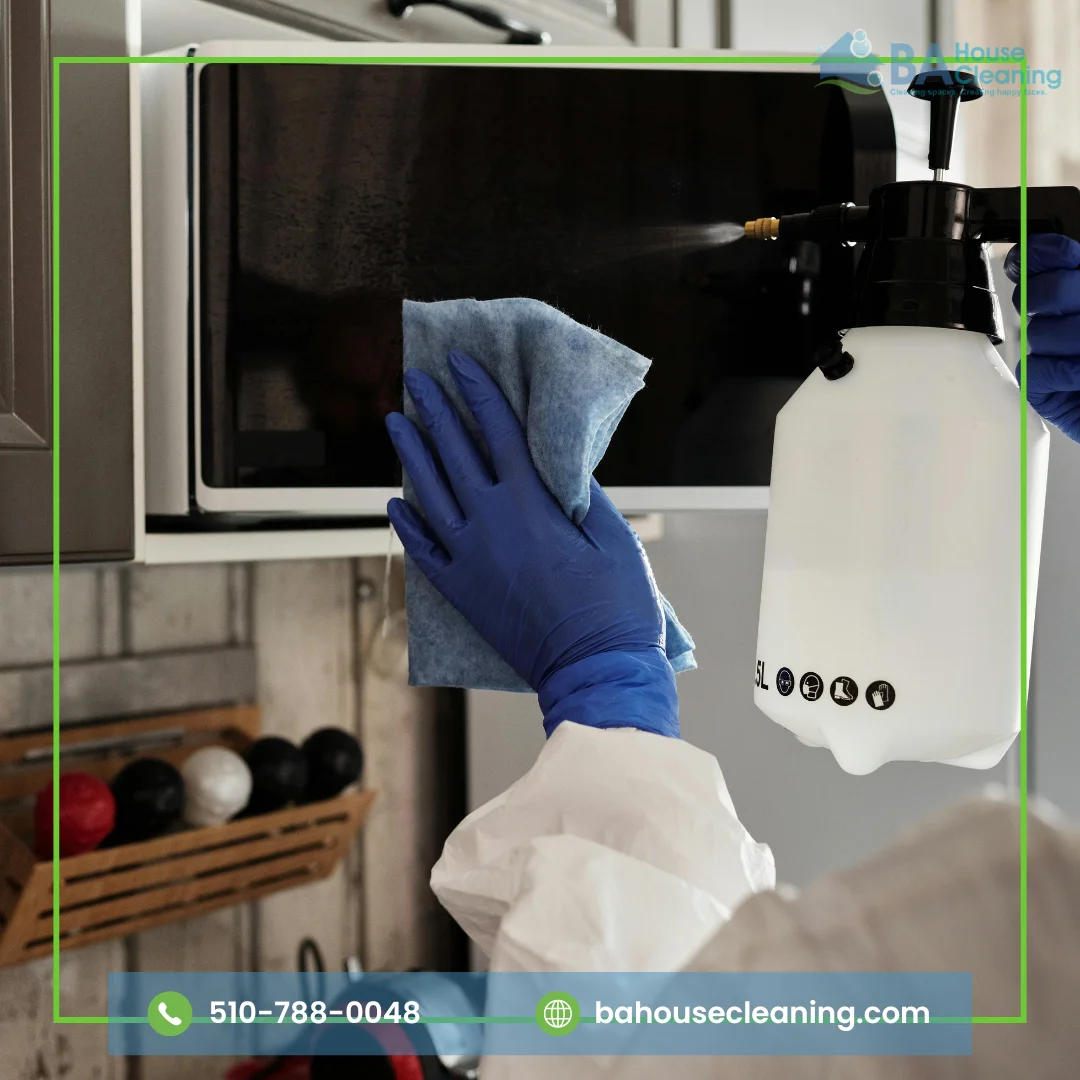
A microwave is one of the most frequently used appliances in any kitchen, but it is also one of the easiest places for food residue, grease, and unpleasant odors to build up. Learning how to clean a microwave properly helps remove stains, reduce smells, and keep your kitchen appliance fresh without using harsh chemicals.
Daily heating of meals, sauces, leftovers, and drinks can leave behind splashes and dried food particles on the microwave walls, ceiling, glass plate, and door. Over time, these small messes can become harder to remove if they are not cleaned regularly.
The good news is that you do not need expensive products to maintain a clean microwave. Simple methods using steam, vinegar, lemon, baking soda, and mild dish soap can help loosen buildup and make cleaning easier.
For homeowners in Oakland and the East Bay, maintaining a clean kitchen is an important part of keeping a comfortable home environment. Along with regular appliance care, professional house cleaning services can help maintain kitchens and living spaces with consistent cleaning routines.
Why Does a Microwave Get Dirty and Develop Bad Smells?
Microwaves become dirty when food particles, grease, and liquids remain inside the appliance after cooking or reheating. When these residues are repeatedly exposed to heat, they can dry and become difficult to remove.
Common areas where buildup appears include:
Microwave interior walls
Ceiling surface
Glass turntable
Roller ring underneath the plate
Door edges and seals
Control panel
Food odors often remain because small particles are hidden in areas that are overlooked during quick cleaning.
A complete microwave cleaning routine should include:
Interior surfaces
Turntable and roller ring
Microwave door
Exterior surface
Control buttons
Regular maintenance makes it easier to prevent heavy grease buildup and reduces the need for intensive cleaning later.
What Do You Need to Clean a Microwave?
Before learning how to clean a microwave, prepare a few simple supplies:
Microwave-safe bowl
Warm water
White vinegar
Lemon slices or lemon juice
Baking soda
Mild dish soap
Microfiber cloth
Soft sponge
Dry towel
Avoid using:
Steel wool
Abrasive powders
Sharp tools
Bleach
Oven cleaners
Manufacturers recommend using gentle cleaning methods to avoid damaging microwave surfaces and finishes.
For example, appliance manufacturers such as Whirlpool recommend using mild cleaning solutions and soft materials when cleaning microwave interiors.
Best Ways to Clean a Microwave Naturally
The best way to clean a microwave is to soften dried food and grease before wiping. Steam is usually the first step because it loosens stubborn residue and reduces the effort needed for scrubbing.
How to Clean a Microwave with Steam
Steam is one of the easiest microwave cleaning methods because it helps loosen dried food and grease.
Follow these steps:
Fill a microwave-safe bowl with one cup of water.
Heat the water for several minutes until steam forms.
Keep the microwave door closed for a few minutes.
Carefully remove the bowl.
Wipe the inside using a microfiber cloth.
Steam does not remove grease completely by itself, but it makes stains much easier to clean.
How to Clean a Microwave with Vinegar
Many homeowners search for how to clean a microwave with vinegar because vinegar is a simple household solution that can help loosen residue and reduce odors.
Steps:
Mix one cup of water with one tablespoon of white vinegar.
Place the solution inside a microwave-safe bowl.
Heat until steam develops.
Allow the steam to loosen buildup.
Wipe all interior surfaces.
Avoid applying concentrated vinegar directly to sensitive finishes unless recommended by the manufacturer.
How to Clean a Microwave with Lemon
Another popular method is learning how to clean a microwave with lemon because lemon water helps freshen the appliance while loosening light grease.
Steps:
Add lemon slices or lemon juice to a bowl of water.
Heat the mixture until steam forms.
Leave it inside briefly.
Wipe the microwave using a soft cloth.
This method works well for regular maintenance, especially when you want a fresh smell without strong cleaners.
How to Clean a Microwave with Baking Soda
If you want to know how to clean a microwave with baking soda, this method works well for odors and small areas of stubborn residue.
To use baking soda:
Mix baking soda with warm water.
Apply the solution to dirty areas.
Wipe gently with a microfiber cloth.
For tougher stains:
Mix baking soda with a small amount of water.
Create a soft paste.
Apply it to the stain.
Remove completely after a few minutes.
Avoid aggressive scrubbing because some microwave interiors can be damaged.
How to Remove Microwave Odors
Many people search for how to remove microwave odors after heating strong-smelling foods such as popcorn, sauces, or spices.
The best approach is removing the source of the smell first.
Steps:
Remove leftover food particles.
Clean the turntable and hidden areas.
Wipe the interior with mild soap and water.
Use vinegar or lemon steam.
Leave the door open after cleaning.
For strong smells, placing an open container of baking soda inside a cool microwave overnight can help absorb remaining odors.
How to Clean Microwave Grease and Stubborn Stains
Microwave grease usually builds up around:
Ceiling areas
Corners
Door edges
Turntable surfaces
To clean microwave grease:
Start with steam to soften buildup.
Use mild dish soap.
Wipe with a microfiber cloth.
Repeat if necessary.
Avoid scraping hardened grease with sharp objects because this can damage the appliance surface.
How to Clean the Microwave Turntable and Door
A complete microwave cleaning routine should include removable parts.
Cleaning the Turntable
Steps:
Remove the glass plate carefully.
Wash it with warm water and mild soap.
Clean the roller ring underneath.
Dry completely before replacing.
Cleaning the Microwave Door
Pay attention to:
Door edges
Glass surface
Seals
Handle area
Use:
Soft cloth
Mild soap solution
Cotton swab for narrow areas
Never spray liquid directly into vents, buttons, or openings.
How Often Should You Clean a Microwave?
Most frequently used microwaves should be cleaned weekly.
Simple habits can prevent buildup:
Cover food before heating.
Wipe spills immediately.
Clean underneath the turntable.
Remove food residue regularly.
A consistent cleaning routine keeps your kitchen cleaner and reduces the need for deep cleaning.
When Professional Kitchen Cleaning Can Help in Oakland
Cleaning a microwave regularly helps maintain one appliance, but kitchens often collect buildup in many areas, including:
Cabinets
Countertops
Floors
Appliances
Hard-to-reach spaces
For homeowners who need a more detailed cleaning approach, Deep Cleaning Services can help remove accumulated dirt and buildup throughout the home.
For ongoing maintenance, Recurring Cleaning Services provide scheduled cleaning visits that help keep homes consistently clean.
If you are preparing a property for a move,Move Out Cleaning Services can help create a cleaner space before handing over the home.
BA House Cleaning provides professional cleaning solutions for homeowners throughout Oakland and the East Bay.
Frequently Asked Questions
What is the easiest way to clean a microwave?
The easiest way to clean a microwave is using steam from heated water to loosen food residue, then wiping the interior with a soft cloth.
How to clean a microwave with vinegar?
Mix diluted vinegar with water, heat the solution until steam forms, and wipe the microwave interior afterward.
Can I clean a microwave with lemon?
Yes. Lemon water can help loosen light grease and reduce unpleasant odors.
How do I clean a microwave with baking soda?
Mix baking soda with water and use it to remove odors and small areas of stubborn residue.
How do I remove microwave odors?
Remove leftover food particles first, then use vinegar, lemon steam, or baking soda to reduce remaining smells.
How often should I clean my microwave?
A microwave used regularly should be cleaned about once per week.
Is it safe to spray cleaner inside a microwave?
It is better to apply cleaner to a cloth instead of spraying directly inside the microwave.