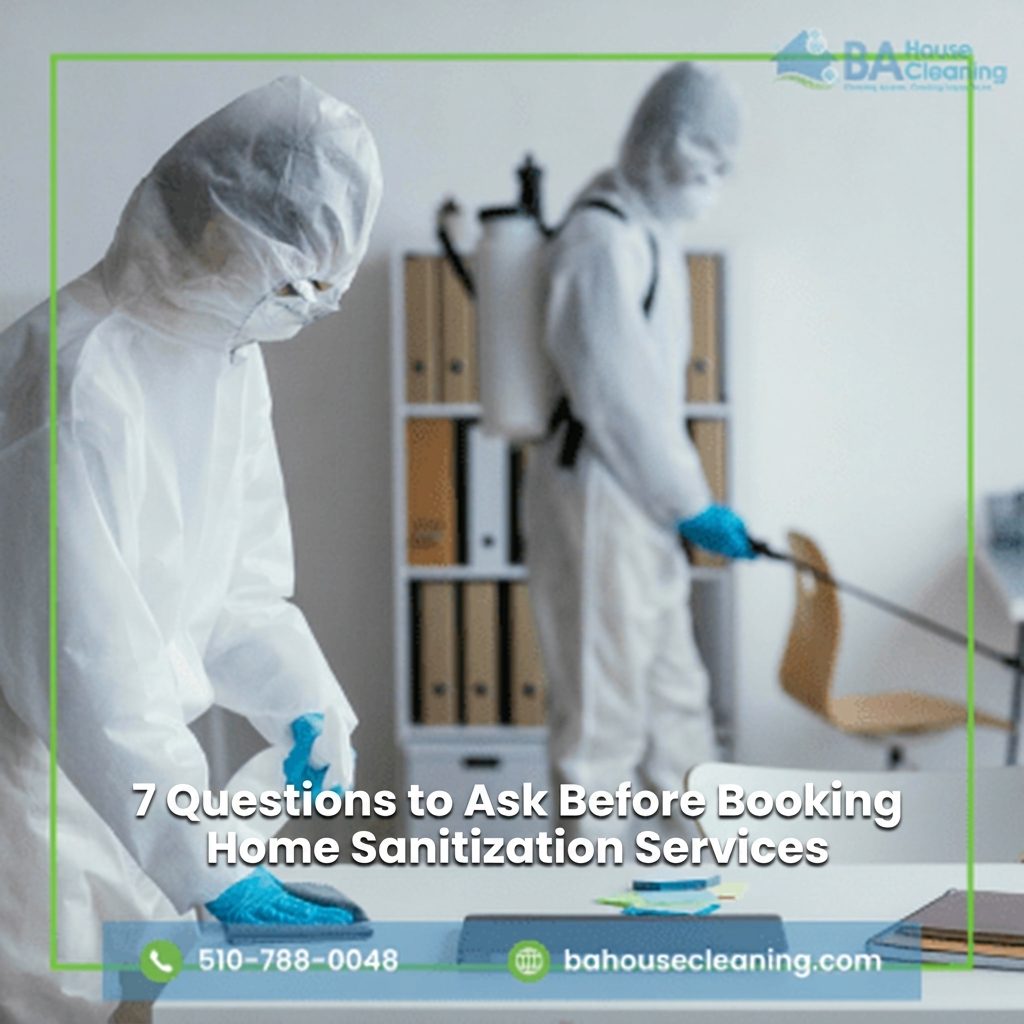
Before booking home sanitization services, confirm whether your home needs targeted disinfection, which surfaces will be treated, and whether cleaning is included. Routine cleaning is enough in many household situations.CDC guidance recommends adding disinfection when someone is sick or has a weakened immune system.
For Oakland and East Bay homeowners, these seven questions can help clarify the proposed work, product instructions, and preparation before an appointment.
Start with the concern you want addressed. A shared bathroom after an illness, accumulated kitchen grease, and a home that needs regular upkeep may require different approaches.
1. Does My Home Need Disinfection or More Thorough Cleaning?
The condition of a room and the reason for your request help determine the appropriate work. Greasy cabinets, dusty baseboards, and soap buildup point toward a need for more detailed cleaning. A concern about germs on shared surfaces calls for a conversation about whether disinfection is appropriate.
Before requesting a quote, identify:
What prompted your concern.
Which rooms and surfaces need attention.
Whether visible dirt or residue has accumulated.
Whether you need a specific treatment or help with ongoing upkeep.
A busy household does not automatically need every surface disinfected on a fixed schedule. CDC guidance links the need for additional disinfection to household circumstances, including illness.
If your main concern is neglected buildup, reviewdeep cleaning services to understand the available cleaning scope.
2. What Does “Sanitizing” Mean in the Proposed Service?
Cleaning, sanitizing, and disinfecting describe different actions. Before comparing home sanitization services, establish what each provider means by the term.
According toEPA’s explanation of cleaning products, surface sanitizers target bacteria, while disinfectants target bacteria and viruses according to their registered uses. Some products are registered for both purposes.
The practical question is:
“Which product will you use, and what is it labeled to do on the surfaces we are discussing?”
For a specific disinfection concern, request the product name and EPA registration number. The registration number identifies the product, while its label describes the supported uses and microorganisms.
Descriptions such as “professional strength” or “advanced treatment” need that additional detail to help you evaluate the proposal.
3. Which Surfaces Do Home Sanitization Services Cover?
The agreed scope should identify surfaces rather than relying only on room names. “Kitchen treatment,” for example, could refer to selected counters and handles without including appliance interiors, cupboards, or everything stored inside them.
Use this table to prepare your priorities:
Area
Examples to discuss
What to clarify
Kitchen
Faucet controls, refrigerator handles, counters
Which surfaces are included and whether rinsing is required
Bathroom
Flush handles, faucets, door handles
The fixtures and surrounding areas covered
Shared living spaces
Handrails, switches, frequently used handles
Suitability for the surface material and finish
Electronics
Remote controls, keyboards, touchscreens
Whether these items are accepted within the scope
Soft furnishings
Upholstery, rugs, curtains
Whether separate cleaning methods or appointments are needed
These are discussion points, rather than a checklist of what every provider includes.
Product selection also matters.EPA guidance on disinfectant labels explains that directions specify where and how a product can be used. Confirm suitability before treatment, particularly for delicate finishes or unfamiliar materials.
4. Is Surface Cleaning Included Before Treatment?
Cleaning removes dirt and residue that can interfere with sanitizing or disinfecting. The CDC advises cleaning surfaces before these treatments because impurities can make it harder for chemicals to reach germs.
Your quote should make responsibility for that step clear.
For example, a bathroom counter with visible residue may need cleaning before the agreed treatment can begin. A counter covered with personal belongings also needs to be made accessible.
Confirm whether the appointment includes:
Cleaning the selected surfaces before treatment.
Moving small items or working around them.
Additional time for heavier buildup.
Preparation that you need to complete yourself.
You do not need to repeat the professional’s work before arrival. Describe the condition of the rooms and obtain clear preparation instructions.
For households mainly seeking consistent maintenance,recurring cleaning services may be the more relevant option.
5. Why Does Disinfectant Contact Time Matter?
Disinfectant contact time is the period a treated surface must remain visibly wet for the product to work as directed. The required time depends on the product and its labeled use.
This detail helps you understand the proposed method. Applying a product and immediately wiping it away may not satisfy its directions.
A useful question is:
“How will you allow for the required contact time during the appointment?”
The explanation should relate to the actual product, rather than a universal promise that every surface can be treated in the same number of minutes.
Also clarify any instructions afterward, including whether particular surfaces need rinsing and when they can be used again.
6. How Are Cleaning Materials Handled Between Areas?
Understanding how cloths and reusable equipment are managed can help you assess the working process behind the service description.
For example, a team moving from a bathroom to a kitchen should be able to explain how it handles used materials and prepares supplies for the next area.
Discuss:
How materials used in bathrooms are kept separate from kitchen supplies.
Where used cloths are placed during the visit.
How reusable tools are cleaned between properties.
Which supplies the provider brings.
A clear explanation is more useful than a general statement about attention to detail.
If a particular procedure matters to your household, discuss it before the appointment. Include any agreed special instructions in the booking details so both sides understand the expectation.
7. What Should Families With Children or Pets Ask Before Treatment?
Instructions for children and pets should match the product and application method. Discuss where household members should stay during the work and what must happen before treated areas can be used again.
EPA’s advice for protecting pets includes keeping children and animals away from treated areas as directed by the label and avoiding application near pet food or water dishes.
Before the visit, obtain instructions covering:
Whether anyone needs to leave the work area.
Any ventilation requirements.
When treated surfaces can be touched or used.
Whether toys, feeding items, or pet bowls need to be moved.
Mention relevant product sensitivities when arranging the appointment. This gives the provider an opportunity to explain the proposed products and discuss your requirements before arrival.
What to Include When Requesting a Quote
A specific description makes it easier to compare proposals for home sanitization services. Include the property type, your main concern, the surfaces you want addressed, and their current condition.
You can adapt this message:
I’m looking for help with [specific concern] in my [apartment or house] in [city]. My priorities are [rooms and surfaces], and the surfaces currently have [description of dirt or buildup].
Please confirm whether cleaning is included, which products and surfaces the treatment covers, and what preparation or aftercare is required. We also have [pets, children, or relevant product preferences] to account for.
For an apartment, add building entry instructions and any arrangements needed to access the property. Identify surfaces or belongings you want excluded from treatment.
Before confirming, request a written scope covering:
The selected rooms and surfaces.
Cleaning included before treatment.
Exclusions and separately priced additions.
Preparation and aftercare instructions.
The total quoted price.
A detailed quote gives you a useful basis for comparison when proposals use different service names.
Frequently Asked Questions
How Much Do Home Sanitization Services Cost?
Request pricing for the specific scope you need. Confirm whether the quote includes cleaning before treatment, which surfaces are covered, and whether additional work is priced separately. Compare proposals with equivalent coverage rather than comparing totals alone.
Should I Schedule Sanitization Every Month?
There is no single schedule that suits every home. CDC guidance supports regular cleaning for most household situations, with disinfection added when circumstances call for it. Discuss the reason for repeat treatment before committing to an interval.
Does Surface Treatment Include Carpets and Upholstery?
Confirm these items separately. Ask which materials the provider accepts, what method is proposed, and whether the work requires a separate appointment or price. A general sanitizing service description does not establish that soft furnishings are included.
How Long Before I Can Use a Treated Room?
Obtain instructions for the actual products and surfaces involved. Ask the provider to explain any required waiting, drying, ventilation, or rinsing steps before the visit so you can plan access to the room.
Discuss the Scope With BA House Cleaning
BA House Cleaning’s sanitizing service focuses on frequently touched surfaces, including door handles, light switches, countertops, and appliance handles. Its service description also explains that sanitizing may be combined with deeper cleaning.
If you are considering treatment for your Oakland or East Bay home, review thesanitizing cleaning service and discuss your priorities with the team. Use these seven questions to confirm the appropriate scope, preparation, and appointment details before booking.