Search their name on Google + city they live in. Are they professional? (Note: Any criminal record found, pictures smoking or any other unprofessional type of information found online disqualifies them)
Rugs are a great piece of decoration. They can give an elegant and colorful appearance to every room. And, as any other implement in your house, it needs care, cleaning and (sometimes) emergency actions to save their beauty.
Rugs are an essential part of any home décor, adding warmth, texture, and style to your living spaces. However, over time, rugs can accumulate dirt, dust, and stains, making them look dull and lifeless. Regular vacuuming can only do so much; deep cleaning is often necessary to restore your rugs to their former glory.
Rug care is determined by size, construction, and material. However, the first step to have is to limit how much dirt gets into the rug and then to procure a frequent cleaning process.
As with any carpet, if the rug covers a larger area, vacuum it regularly. If a rug is reversible, vacuum both sides. This removes grit and grime that can wear out your rug prematurely. Take care to not vacuum the fringe of your rug.
Remember that sometimes, vacuums leave pet hair behind. You can use a stiff brush to remove the hair, brushing in the direction of the nap of the rug.
Take it out
If the rug is small enough, you can take it outside and shake it or beat it vigorously to remove dirt and grit. This is recommended for large rugs as well, because the dust that collects in them may contribute to health problems—particularly asthma.
Cleaning according to your rug’s type
Woven or braided rugs
Check rugs for stitching breaks before and after cleaning.
Check labels to determine whether small braided rugs are washable.
If they are, place them in a zippered pillowcase or mesh laundry bag. Wash in cool water on a gentle cycle, rinsing thoroughly. Tumble dry on a low setting.
Place large braided rugs on a vinyl or concrete floor or place an old blanket beneath them.
Sponge commercial carpet-cleaning foam over the surface and rub it in according to the product directions. Finish by rinsing or vacuuming. Dry thoroughly before replacing the rug on the floor.
Oriental rugs, handmade, hand-knotted or antique
Vacuum a new Oriental rug as you would carpet and wool area rugs.
Use special care with delicate vintage or antique rugs.
Protect them from the vacuum by placing a piece of nylon screen over the rug and weighting it down with books or bricks.
Vacuum over the screen.
Have these rugs professionally cleaned once a year?
Coir, sisal, rush, and grass rugs
Vacuum frequently, removing the rug occasionally to vacuum the floor, as well.
Many of these rugs are reversible; if so, flip them every time you vacuum for even wear.
To clean stains or discolorations on a room-size natural-fiber rug, leave it in place.
Protect the floor beneath it with a plastic drop cloth and towel.
Scrub the stains with a soft brush dipped in soapy water. Rinse with clear water.
Place a towel over the wet area.
Blot the cleaned spot as dry as possible.
Use a portable fan or hair dryer to speed drying.
Move small rugs to a protected table or counter to clean. Water weakens the fibers, so work quickly and dry thoroughly to extend the life of these rugs.
Fur, sheepskin, and hair-on hides
Shake unscented talcum powder on fur, sheepskin, and hair on hide rugs and leave for several hours.
Brush the talcum powder through the hair, then shake it out. Repeat this process several times, depending on the length of the fur.
To clean the back of such a rug, use a clean cotton cloth dipped in lukewarm soapy water. Wipe off any dirt or spills.
Rinse with a cloth dipped in clean water and allow it to dry completely before putting it back in place.
Emergency actions: stains removal
There are a lot of causes for stains, and we can provide some emergency actions to remove them:
Alcohol and soft drinks: Use a solution of 1 teaspoon liquid dish detergent, 1 quart of warm water, and 1/4 teaspoon of white vinegar. Apply to the stain, rinse, then blot dry.
Coffee or tea: Using the detergent mix above, apply to stain, rinse, and blot. If a stain remains, use a commercial spot carpet cleaner.
Fat-based stains: For foods such as butter, margarine, or gravy, use a dry-solvent spot carpet cleaner.
Gum: Peel off what you can, then put ice cubes in a plastic bag and harden the gum, scraping the gum off with a spoon or dull knife. Vacuum and use a dry-solvent spot cleaner if needed.
Melted wax: Use the same treatment as gum, hardening it with ice cubes in a plastic bag and scraping. Dampen a clean white cloth or cotton ball with rubbing alcohol and blot to remove any remaining wax.
Paint: For acrylic and latex paint, while the stain is still wet, spot-clean with the detergent solution. If color remains, dab it with rubbing alcohol. For oil-based paint, sponge with odorless mineral spirits, being careful not to soak through to the backing.
Tomato sauce: Sponge with cool water, dab with detergent solution, or a citrus-oxygen cleaner. Rinse with a solution of 1 cup white vinegar and 2 cups of water and blot until dry.
Urine, feces, and vomit: Apply detergent solution or a citrus-oxygen cleaner, rinse, and blot until dry.
Extra tips
Foot traffic, sun, and other factors used to wear the fabric of your rugs. Turn them once or twice a year to even out the wear.
Some natural fiber rugs are constructed in squares that are sewn together. Buy a few extra squares or a smaller size of the same rug. If a rug square becomes irrevocably stained, clip the threads that hold it in place and replace it with a new square. Hand-stitch it in place with heavy-duty carpet threads.
Why Professional Rug Cleaning Matters
Rug cleaning is not just about aesthetics; it’s also about maintaining a healthy home environment. Dust mites, allergens, and other contaminants can get trapped in rug fibers, posing a risk to those with allergies or respiratory sensitivities. Professional rug cleaning effectively removes these harmful particles, creating a cleaner and healthier indoor environment.
BA House Cleaning: Your Rug Cleaning Experts
At BA House Cleaning, we understand the value of your rugs and are committed to providing the highest quality rug cleaning services in Oakland and the East Bay Area. Our team of experienced professionals is trained to handle a wide variety of rugs, from delicate silk rugs to durable wool rugs. We use specialized cleaning techniques and eco-friendly solutions to ensure that your rugs are thoroughly cleaned without damaging their fibers or colors.
Our Rug Cleaning Process
Inspection and Assessment: We begin by carefully inspecting your rug to determine its material, construction, and any potential issues.
Dust and Dirt Removal: We use high-powered vacuuming equipment to remove loose dirt, dust, and debris from the rug’s surface.
Pre-treatment: We apply specialized pre-treatment solutions to target specific stains and areas of heavy soiling.
Deep Cleaning: We deep clean your rug using our gentle yet effective cleaning methods, ensuring that all dirt, dust, and stains are thoroughly removed.
Rinsing and Drying: We thoroughly rinse your rug to remove any cleaning residue, and then carefully dry it to prevent mold or mildew growth.
Finishing Touches: We perform a final inspection to ensure your rug is spotless and looking its best.
Experience the Difference with BA House Cleaning
When you choose BA House Cleaning for your rug cleaning needs, you can expect:
Expert rug care: Our team is trained to handle a wide range of rugs, from delicate to durable.
Eco-friendly cleaning: We use eco-friendly solutions to protect your rugs and the environment.
Convenience: We offer pick-up and delivery services for your convenience.
Satisfaction Guarantee: We stand behind our work and offer a satisfaction guarantee.
Do you know any other way of cleaning rugs that we haven’t covered? Please let us know!
* Always assume the sale * Use urgency words * Assume they are going to schedule (Be confident) * Don’t ask closed ended questions * Words that end with a yes or no * Ask open ended questions that makes them answer you Don’t word vomit – Less words less mistakes * Be simple and to the point * Giving too much info or asking too many questions confuses people and you will lose the sale as they become confused.
SALES SCRIPT OPENING: “Thank you for choosing BA House Cleaning this is Anita” “Great; I can definitely help you with that, may I ask whom I am speaking with? (Always ask for their name) Hi __ it’s nice to meet you, how’s your day doing so far? Absolutely. that’s what we’re here for right? __ , May I have the zip code of your property? (This will help to qualify the call) “Awesome; we service the area. Are you looking for just a one time service? or you’re looking for something that is ongoing? We do our pricing based on the square footage of your home, so How many square feet is your home?” Thank you! Let’s take a look here: For a 1 Time cleaning it will just be $280 however, if you are looking for recurring services, we do apply a $50 discount to that. And it’s a lot less for ongoing maintenance. So if you’re scheduling an ongoing service it will be only $230 and let’s say for instance you wanna do every 2 weeks following it will then be $122.5 every 2 weeks after Absolutely, let me see if when we have some availability here, let me check my schedule. So it looks like I had a cancelation for tomorrow. I don’t know if that’s too soon for you. But I can get you scheduled in there. I know we’re gonna fill that in within the next couple of hours. Oh! That’s Great! I’ll just need to get a little bit of information from you and we’ll get you all situated. Phone Number: First/Last name: Address: Email Address: Number of Bedrooms: Number of Bathrooms: Pets: Entry Access? Get the Card for billing: (If this is ONE time or Move Out Cleaning its CASH only and card is only used as a backup. If its first cleaning and then ongoing service then we can use the card. Note: For 1x cleans: Save the card as a payment method, then go back into the booking to EDIT, and change to Cash so we don’t charge the card and they pay cash as well. Note: If its ongoing cleaning and they will be paying with credit card for both first cleaning and all future, please add * next to customer last name int heir profile. Just to confirm if I have everything right.. I have your address as ____ Your email as ________ I have you down for a Top to bottom on ___ Then every four weeks after on Tuesdays. We do require all our customers to reply to our quote accepting it and I’ll email that over as soon as I get off the phone with you. We also require all our customers to read and sign our customer guidelines and I will send that over once we get off the phone as well. If you need to change or cancel any cleanings we ask that you please give us 48 hours notice so we can schedule someone else in there.
Keeping your home clean and free of grime can feel like a constant battle. No matter how often you clean, dirt and grime always seem to find a way to creep back in and take over your space. But fear not, with a few simple tips and the help of a professional cleaning service like BA House Cleaning, you can fight the grime and keep your home looking and feeling fresh.
Furniture, watch straps, any place, or utensils can become a victim of dirt and grime. Grime masks the true beauty of everything you own, and, even when frequent cleaning can avoid the “Fight the Grime” battle, sometimes you need fiercer actions to eliminate it.
General Process
A simple process works on almost every surface: apply a small quantity of regular white toothpaste to the area you want to clean, and take a soft brush a rub. Keep in mind the surface you want to clean, will it scratch? If so, rub only with your fingers.
Wipe the toothpaste with a dampened cloth.
If the grime remains, mix baking soda with a small amount of water to create a paste. Apply it as before: rubbing it on the surface you want to clean. Rinse thoroughly and allow it to dry completely.
Specific Surfaces
Even when the mentioned process works very well, sometimes we have special places we need to clean with special care.
Let’s start in the kitchen. Everything in it, especially the walls, gets a layer of cooking grease plus steam plus dust. That’s an awful combination and trying to get rid of it with regular water and soap can be unnecessarily difficult. Instead, wash the surface with white vinegar. Use a sponge to apply the vinegar and another wet sponge to rinse. Let it dry.
Say goodbye to the days of endless cleaning and hello to a sparkling, fresh-smelling home with BA House Cleaning.
We’re a team of experienced and dedicated cleaners who are passionate about transforming homes into havens of comfort and joy. Whether you’re dealing with stubborn stains, dust bunnies that have taken up residence, or a kitchen that looks like it’s been ravaged by a culinary tornado, we’re here to save the day.
With BA House Cleaning, you can expect:
Thorough and meticulous cleaning: We’ll tackle every nook and cranny of your home, leaving no surface untouched.
Eco-friendly practices: We care about the environment, so we use green cleaning products that are tough on dirt but gentle on the planet.
Flexible scheduling: We’ll fit our cleaning services into your busy life, whether you need weekly, bi-weekly, or monthly cleaning.
A team you can trust: Our cleaners are background-checked, insured, and bonded, so you can feel confident knowing your home is in good hands.
Here’s what you can expect when you choose BA House Cleaning:
Sparkling countertops and appliances: We’ll banish those stubborn grease stains and grime buildup, leaving your kitchen looking and smelling its best.
Dust-free surfaces: Say goodbye to those pesky dust bunnies that seem to multiply overnight. We’ll leave your home sparkling clean from top to bottom.
Gleaming floors: Whether it’s hardwood, tile, or carpet, we’ll get your floors sparkling and banish those dirt tracks.
Freshly scented bathrooms: We’ll eliminate those unpleasant odors and leave your bathroom smelling fresh and inviting.
Still in the kitchen, we’ve already covered how to do a deep clean in your microwave, however, here’s a fast tip: take a glass bowl, fill it up to half with equal parts vinegar and water, and put it inside the microwave. Set the time for the water to boil. Then, remove the hot bowl. All the grime inside will be softened; all you’ve to do is to clean it with a paper towel.
The kitchen garbage bin is one of the most overlooked utensils, and, because of its purpose, one of the filthiest occupants of your kitchen. Use some gloves and wash it in your bathtub. Scrub the surface with dish detergent and a nylon bristle brush. Rinse and dry with paper towels.
Now that we are in the bathroom, you might want to know how to eliminate soap residue and hard water spots in showers and on shower doors. White vinegar is your battle partner: apply it onto your shower walls and door with a sponge, rinse with clear water, and let it dry or dry it with paper towels.
Vinegar is also your ally against a dirty toilet, it will also deodorize it. Pour one cup of vinegar into the bowl and let sit overnight. Then, scrub the surface with a brush, and there you have it! All cleanliness.
Don’t let the grime and clutter control your life. Contact BA House Cleaning today and let us take care of the cleaning, so you can focus on enjoying your life.
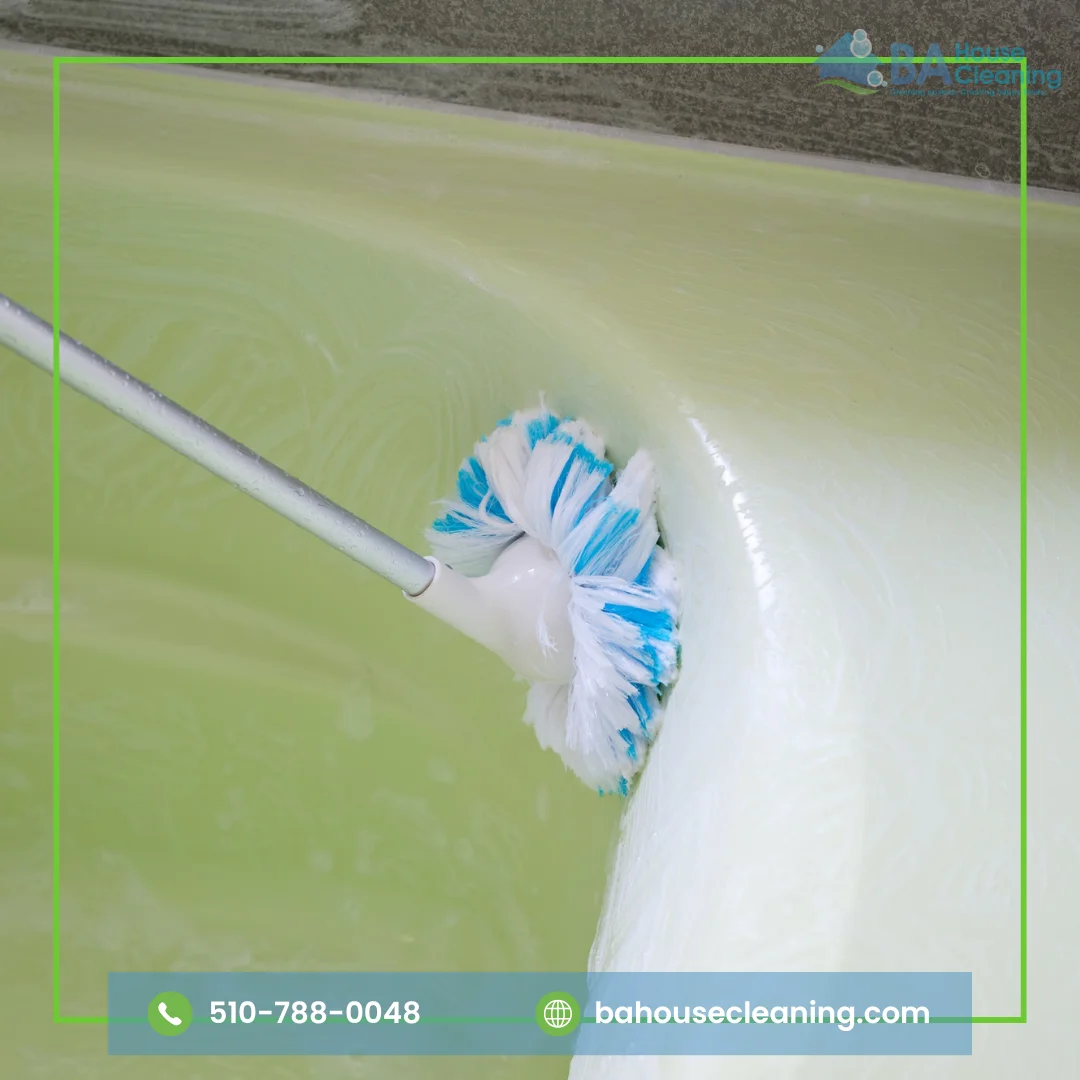
A bathtub can collect more than visible dirt. Soap residue, body oils, hard-water minerals, loose hair, bath products, and moisture may settle across the basin, ledges, drain, fixtures, and areas around the caulk. When these materials remain on the surface, they can create a dull film that becomes harder to remove with every use.
Learning how to clean a bathtub starts with identifying what the tub is made from. Acrylic, fiberglass, porcelain enamel, cast iron, and stone-based materials do not always tolerate the same products or scrubbing tools. A method that removes buildup from one finish may scratch, discolor, or dull another.
At BA House Cleaning, we understand that a clean bathroom depends on more than quickly wiping the center of the tub. The faucet base, overflow plate, drain cover, corners, wall joints, and surrounding floor also contribute to how fresh and comfortable the room feels. This guide explains how to clean common bathtub materials, address soap scum and mineral marks, deal with bathroom moisture, and avoid methods that may damage the finish.
Identify the Bathtub Material Before Cleaning
Before selecting a cleaner, determine whether the bathtub is acrylic, fiberglass, porcelain enamel, enameled cast iron, or another specialty material. Check the manufacturer’s label, purchase information, or care manual when the surface is difficult to identify.
Acrylic and fiberglass tubs often feel warmer and lighter than cast iron. Porcelain-enamel and enameled cast-iron surfaces usually feel harder and colder, but appearance alone does not always provide a reliable answer.
The safest approach is to begin with warm water, mild dish soap, and a soft cloth. Do not apply acidic, abrasive, or heavily alkaline products until you confirm that the manufacturer allows them.
Bathtub manufacturers commonly advise homeowners to use non-abrasive cleaners and soft sponges on acrylic surfaces because rough pads, scrapers, and abrasive powders may scratch or dull the finish.
What to Use to Clean a Bathtub
A basic bathtub-cleaning kit may include:
Rubber or household cleaning gloves
Mild liquid dish soap
Warm water
A soft microfiber cloth
A non-abrasive sponge
A soft nylon brush
A small brush for corners and grout
A bucket or removable shower sprayer
Clean towels for drying
A cleaner approved for the bathtub material
Open a window or operate the bathroom exhaust fan while cleaning. Apply commercial products according to their labels, and never combine cleaners unless their manufacturers specifically state that the combination is safe.
Avoid steel wool, metal scrapers, rough scouring pads, and unidentified cleaning mixtures. Even a durable bathtub may contain a slip-resistant coating, glossy finish, repair layer, or decorative surface that requires special care.
The Safest Basic Method for Bathtub Cleaning
For routine bathtub cleaning, remove bottles, toys, mats, and personal items from the tub. Clear loose hair and debris from the drain area before adding water or cleaner.
Rinse the surface with warm water to loosen fresh residue. Add a small amount of mild dish soap to a damp sponge or dilute it in a bucket of warm water. Begin at the upper ledges and work toward the drain so dirty water moves away from completed areas.
Wipe the basin, walls, corners, faucet base, overflow cover, and drain area using gentle pressure. Allow the soap solution to remain on light buildup for a few minutes, but do not let it dry.
Rinse the bathtub thoroughly and inspect it under good lighting. Repeat the process on any remaining marks rather than immediately switching to an abrasive product. Finish by drying the surface and metal fixtures with a clean microfiber cloth.
How to Clean an Acrylic Bathtub
Acrylic bathtubs require gentle products and non-abrasive tools. Use warm water, mild liquid dish soap, or a cleaner labeled as safe for acrylic.
Apply the cleaner with a soft cloth or sponge and wipe without aggressive scrubbing. Rinse promptly and dry the tub so cleaning residue and water spots do not remain on the glossy finish.
Do not use steel wool, hard brushes, abrasive powders, paint removers, or harsh solvents unless the manufacturer gives specific instructions for a particular problem. Kohler and American Standard both warn against abrasive products on acrylic bath surfaces, while MAAX recommends non-abrasive cleaning products and tools that will not scratch or dull the finish.
For model-specific instructions, use the manufacturer’s official acrylic bathtub cleaning guidance rather than relying on a universal household recipe.
How to Clean a Fiberglass Bathtub
Fiberglass bathtubs may develop a dull appearance when soap film and minerals remain on the surface. Because fiberglass can scratch, begin with mild dish soap, warm water, and a soft sponge.
Work in small areas and rinse frequently. Avoid pressing harder when a stain remains. Give the cleaner additional time to soften the buildup or switch to a product approved for fiberglass.
Do not use stiff wire brushes, powdered abrasives, or cleaning erasers unless the tub manufacturer confirms that they are safe. Sterling’s care instructions for its Vikrell bath material similarly recommend a soft cloth or sponge and advise against abrasive brushes and scouring pads.
Dry the surface after rinsing to reveal any film that still remains. A cloudy appearance may come from leftover cleaner rather than a permanent stain.
How to Clean a Porcelain or Enameled Bathtub
Porcelain-enamel and enameled cast-iron tubs have a hard outer finish, but that coating can chip, scratch, or lose its shine when cleaned incorrectly.
For general cleaning, use warm water, liquid dish detergent, and a soft cloth or non-abrasive sponge. Rinse the cleaner completely and dry the surface afterward.
Avoid metal scrapers, wire brushes, steel wool, highly acidic cleaners, and heavily alkaline products. Kohler’s enameled cast-iron guidance recommends non-abrasive products and cautions that improper cleaners may permanently affect slip-resistant areas.
If the enamel has chipped and exposed the underlying metal, cleaning alone will not repair the damage. Rust may continue to form around the damaged section, so consider an appropriate repair or refinishing assessment.
How to Remove Soap Scum from a Bathtub
Soap scum forms when soap residue combines with minerals, body oils, and other materials on the surface. It often appears as a cloudy or slightly sticky film around the waterline, corners, ledges, and lower walls.
Start with warm water and mild dish soap. Apply the solution generously and allow it to soften the residue for several minutes. Use a soft sponge to move across the surface with light, overlapping strokes.
Rinse and repeat when necessary. Several gentle applications are safer than one aggressive scrubbing session.
A diluted vinegar solution may help with soap scum on some tubs, but only use it when the manufacturer permits acidic cleaners. Do not assume that vinegar is suitable for natural stone, repaired finishes, specialty coatings, or every acrylic product.
How to Remove Hard-Water Stains
Hard-water stains often appear as white, gray, or chalky marks around faucets, drains, and areas where water repeatedly dries.
Begin with the mildest method suitable for the tub. Warm water and dish soap may remove surface film, while a manufacturer-approved mineral-deposit cleaner may be necessary for more established marks.
When the care instructions permit vinegar, apply a diluted solution to a cloth rather than soaking the entire tub. Place the damp cloth over the affected area briefly, then wipe, rinse, and dry.
Do not leave acidic products on metal fixtures, grout, natural stone, or unknown finishes. The best way to clean a bathtub is not to use the strongest available product but to match the cleaner to the material and type of buildup.
How to Address Yellow Bathtub Stains
Yellow discoloration can develop from minerals, product residue, age, rust, or wear within the finish. Different causes require different responses.
Clean the area first with mild soap to determine whether the mark is removable surface residue. If it remains, check the manufacturer’s recommendations for stain removal.
Avoid using salt, turpentine, oven cleaner, chlorine bleach, or other strong chemicals as general-purpose stain treatments. These products may create fumes, affect the finish, or react with residue from another cleaner.
A yellow mark that returns quickly may relate to water quality, corrosion, damaged enamel, or an aging finish rather than incomplete cleaning.
Cleaning Bathtub Fixtures and the Overflow Plate
Bathtub faucets, handles, spouts, drains, and overflow plates often collect water spots and product residue even when the basin looks clean.
Use mild soap and a soft damp cloth. Wipe around fixture bases and narrow joints where moisture remains, then rinse and dry the metal immediately.
Do not leave vinegar or acidic cleaners on chrome, brushed finishes, plated fixtures, or decorative coatings without checking the manufacturer’s instructions. Some finishes require only water and mild soap.
Avoid spraying cleaner directly into openings or behind the overflow plate. Apply the product to the cloth so you can control where the moisture travels.
How to Clean the Bathtub Drain Area
Remove visible hair and loose debris from the drain cover while wearing gloves. Clean the surrounding surface with mild soap and a small soft brush.
Do not push hair or solid material further into the drain. If the water flows slowly, use the drain-cleaning method recommended for the plumbing and bathtub manufacturer.
Avoid pouring random combinations of baking soda, vinegar, bleach, commercial drain opener, or other chemicals into the drain. Products left from a previous treatment may react with the next one.
A recurring blockage, sewage odor, or standing water may require plumbing service rather than additional surface cleaning.
Cleaning Caulk and Grout Around the Bathtub
Caulk seals the joint between the bathtub and surrounding wall. Grout fills gaps between tiles. Both areas may collect soap residue and discoloration, but damaged material cannot always be restored through cleaning.
Use mild detergent, water, and a soft brush for routine care. Avoid scraping caulk with metal tools or scrubbing grout so aggressively that the material begins to erode.
Cracked, separated, or missing caulk allows moisture to travel behind the surface. Replace failed caulk rather than covering the opening with cleaner.
Dark staining that remains inside the caulk may indicate that discoloration has penetrated the material. In that case, removal and replacement may provide a better result than repeated chemical treatment.
How to Deal with Mold and Mildew Around a Bathtub
Bathroom mold often develops where moisture lingers around caulk, grout, ceilings, walls, or fixtures. Cleaning the visible mark without addressing humidity, leaks, or poor ventilation allows the problem to return.
For a small area on a hard surface, the EPA recommends scrubbing with detergent and water and drying the surface completely. Homeowners should also repair leaks and correct the source of moisture. Porous materials may require replacement when mold has grown inside them.
Follow the EPA’s mold cleanup guidance when deciding whether the affected area is appropriate for household cleaning.
Never mix bleach with ammonia, vinegar, or another cleaner. Open windows or doors when using cleaning products, follow label instructions, and consider professional evaluation when mold covers a large area or repeatedly returns.
Can You Use Baking Soda and Vinegar on a Bathtub?
Baking soda and vinegar appear in many household cleaning guides, but they are not suitable for every bathtub.
Baking soda provides mild abrasive action, which may dull glossy acrylic, fiberglass, repaired coatings, or other delicate finishes when applied too aggressively. Vinegar is acidic and may affect stone, grout, metal fixtures, and surfaces whose manufacturers do not approve acidic products.
When the bathtub’s care instructions permit either ingredient, use a small amount, test a hidden section, and rinse thoroughly. Do not assume that combining the two creates a stronger cleaner. Their visible fizzing comes from an acid-base reaction, but the ingredients begin neutralizing each other.
For routine maintenance, mild soap and a soft sponge remain the safer starting point.
Cleaning a Whirlpool or Jetted Bathtub
A jetted bathtub requires care beyond wiping the visible basin. Water remains inside internal lines, jets, and air channels that ordinary surface cleaning cannot reach.
Follow the exact cleaning or flushing procedure in the owner’s manual. Manufacturers may specify water level, cleaner type, cycle duration, and rinsing steps for each model.
Do not pour bleach, dishwashing detergent, oils, or homemade mixtures into the jet system unless the manufacturer permits them. The wrong product may create excessive foam, damage components, or leave residue inside the plumbing.
Stop using the system and seek appropriate service if the jets release dark material repeatedly, leak, fail to operate, or produce an electrical smell.
Common Bathtub Cleaning Mistakes
Avoid these mistakes when deciding what to use to clean a bathtub:
Treating all bathtub materials as though they have the same finish
Using oven cleaner as a general stain remover
Scrubbing acrylic or fiberglass with steel wool
Leaving acidic cleaner on faucets or grout
Mixing bleach with vinegar, ammonia, or other products
Allowing cleaner to dry on the surface
Ignoring the underside of bath mats
Applying excessive force to slip-resistant textures
Pouring chemicals into a slow drain without checking previous treatments
Continuing to clean damaged enamel instead of repairing it
Covering mold without correcting the moisture source
Returning bottles and mats before the tub dries
The right process should remove buildup without creating scratches, chemical residue, damaged caulk, or discoloration.
How Often Should You Clean a Bathtub?
The appropriate schedule depends on how often the tub is used, the number of people in the home, water hardness, ventilation, and the types of bath products used.
Rinse fresh residue after bathing and remove loose hair before it reaches the drain. Wipe the tub lightly during the week when several people use it, and complete a more detailed cleaning when soap film, mineral marks, or discoloration begin to appear.
Drying wet ledges and improving bathroom ventilation can reduce the moisture that supports recurring buildup. Manufacturer guidance for acrylic and other bath materials also commonly recommends wiping the surface with a soft cloth after use and avoiding abrasive tools.
When the Bathroom Needs More Detailed Cleaning
Cleaning the bathtub may improve one major bathroom surface, but dust, product residue, hair, soap film, and moisture often collect in several areas at once.
BA House Cleaning’s Deep Cleaning Services provide additional attention for Oakland and East Bay homes that need a more detailed reset. The service is designed for homes that require more extensive scrubbing and care than routine maintenance.
After a detailed clean, Recurring Cleaning Services can help maintain bathrooms and other frequently used areas through weekly, biweekly, or monthly visits. BA House Cleaning lists tubs, bathroom tiles, shower doors, sinks, and countertops among the areas addressed during its standard recurring service.
Professional house cleaning does not replace repairs, plumbing work, mold remediation, or the manufacturer’s maintenance instructions. It can, however, help prevent routine household buildup from spreading across several bathroom surfaces.
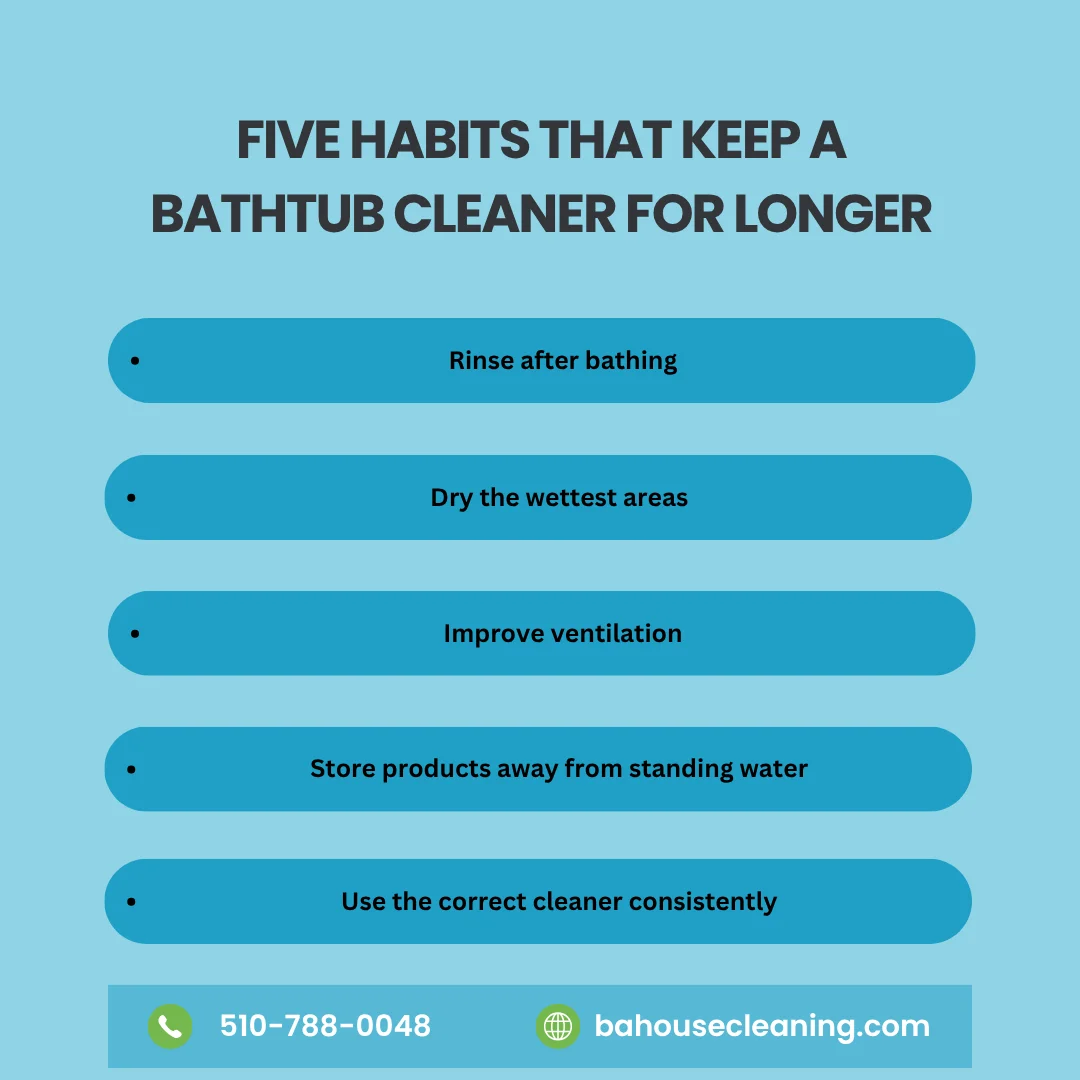
Five Habits That Keep a Bathtub Cleaner for Longer
A practical maintenance routine can reduce soap film, water spots, and difficult stains:
Rinse after bathing: Remove shampoo, soap, bath oil, and loose residue before they dry on the surface.
Dry the wettest areas: Wipe ledges, corners, fixtures, and the area around the drain with a soft cloth.
Improve ventilation: Run the exhaust fan or open an appropriate window to help bathroom moisture escape.
Store products away from standing water: Bottles and containers can trap residue beneath them and leave rings on the tub ledge.
Use the correct cleaner consistently: Keep a manufacturer-approved product available instead of switching between strong household mixtures.
These habits make routine cleaning easier and reduce the need for heavy scrubbing that could affect the bathtub finish.
Give Your Bathroom the Detailed Care It Needs
A clean bathtub can improve the appearance of the entire bathroom, but maintaining the room also requires attention to floors, sinks, fixtures, mirrors, toilets, and surrounding surfaces.
Connect with BA House Cleaning on Facebook to discuss professional home cleaning in Oakland and the East Bay. Choose dependable support for routine bathroom maintenance or a more detailed cleaning when soap residue, dust, and household buildup have become difficult to manage.
Frequently Asked Questions
What is the best way to clean a bathtub?
Identify the bathtub material first. Begin with warm water, mild dish soap, and a soft, non-abrasive sponge. Rinse thoroughly, and use stronger products only when the manufacturer confirms they are safe for the finish.
How do I remove soap scum from a bathtub?
Apply warm water and mild dish soap, allow the solution to soften the film, then wipe gently with a soft sponge. Repeat the process rather than using a harsh scrubber. A manufacturer-approved soap-scum remover may help with heavier buildup.
Can I use vinegar to clean a bathtub?
Some manufacturers permit diluted vinegar on selected bathtub materials, while others recommend different products. Avoid using vinegar on natural stone, unknown coatings, sensitive fixtures, or any surface whose care instructions prohibit acidic cleaners.
Can I use baking soda on an acrylic bathtub?
Baking soda may create fine scratches or dull a glossy surface when used aggressively. Check the acrylic tub manufacturer’s instructions before applying it, use minimal pressure, and test a hidden area first.
How do I clean a fiberglass bathtub without scratching it?
Use warm water, mild liquid soap, and a soft cloth or non-abrasive sponge. Avoid steel wool, stiff brushes, abrasive powders, and cleaning tools that may dull the fiberglass finish.
How can I remove hard-water marks from a bathtub?
Start with mild soap and water. When the manufacturer permits an acidic cleaner, use diluted vinegar or an approved mineral-deposit remover on the affected section. Rinse and dry the surface immediately afterward.
Can bleach damage a bathtub?
Bleach may discolor or damage some acrylic, fiberglass, coated, or decorative surfaces. Do not use it unless the manufacturer approves it for that exact material, and never combine it with vinegar, ammonia, or another cleaner.
How often should I clean my bathtub?
Remove hair and rinse fresh residue after use. Complete a more thorough cleaning weekly or whenever soap film, stains, or mineral deposits begin to appear. Usage, water hardness, and ventilation affect the ideal schedule.
Why do bathtub stains return after cleaning?
Recurring marks may come from hard water, damaged enamel, leaking fixtures, standing moisture, soap residue, mold growth, or products stored on wet ledges. Identify and correct the source instead of repeatedly treating the visible stain.
When should I replace bathtub caulk?
Replace caulk when it cracks, separates from the wall or tub, develops gaps, remains deeply discolored, or no longer forms a watertight seal. Cleaning cannot restore caulk that has physically failed.
A coffee maker may look clean from the outside while coffee oils, water spots, loose grounds, and mineral deposits gradually collect inside its removable parts and internal water system. Over time, this buildup can affect the way the machine operates and may leave coffee tasting bitter, stale, or different from the flavor you normally expect.
Learning how to clean a coffee maker involves more than rinsing the carafe after breakfast. The filter basket, lid, water reservoir, warming plate, reusable filter, exterior controls, and internal brewing system all require different types of care. Some parts need washing after every use, while the internal system may require a separate descaling cycle based on the manufacturer’s instructions.
At BA House Cleaning, we understand that small kitchen routines can make a noticeable difference in how clean and comfortable the complete room feels. Regularly cleaning the coffee station, removing spills, and wiping surrounding countertops can prevent sticky residue and scattered grounds from becoming part of a larger kitchen mess.
This guide explains how to clean a drip coffee maker, wash the carafe and removable components, remove mineral buildup, use vinegar safely, clean without vinegar, care for a single-serve brewer, and avoid common mistakes that may damage the machine.
Why Coffee Makers Need Regular Cleaning
Every brewing cycle brings coffee grounds, natural oils, heat, and water into contact with different parts of the machine. Grounds may collect around the basket, while brewed coffee can drip onto the warming plate or exterior. Water also leaves minerals behind as it moves through the reservoir, tubes, and heating system.
These types of buildup require different cleaning methods. Warm water and dish soap can remove coffee residue from washable components, but they cannot always reach mineral deposits inside the internal water pathway. That is why a complete coffee maker cleaning routine includes both surface cleaning and periodic descaling.
Cuisinart explains that coffee oils, residue, and hard-water deposits can affect flavor, brewing speed, and the machine’s operation. Its guidance separates washing the carafe and filter basket from descaling the internal system.
Cleaning Versus Descaling a Coffee Maker
Cleaning and descaling are related, but they do not solve the same problem.
Routine Cleaning
Routine cleaning removes visible coffee grounds, spills, oils, stains, and residue from accessible components. It normally covers the carafe, lid, brew basket, reusable filter, removable water reservoir, warming plate, and exterior surfaces.
The parts that come into direct contact with coffee should receive the most frequent attention because oils and damp grounds can remain behind after brewing.
Descaling
Descaling targets mineral deposits left by the water used in the machine. These deposits may develop inside the reservoir, tubing, heating system, or other areas that a cloth cannot reach.
A descaling cycle usually involves running a manufacturer-approved solution through the machine without coffee grounds. Depending on the model, the recommended product may be diluted vinegar or a branded descaling solution.
Because coffee makers vary, always check the manual before selecting a solution or starting a cleaning cycle.
What You Need Before Cleaning
Gathering the right supplies helps you clean the machine without using harsh or unsuitable products.
You may need:
Warm water.
Mild, unscented dish soap.
A soft sponge or microfiber cloth.
A small soft-bristled brush.
White distilled vinegar, when approved for the model.
A manufacturer-approved descaling solution.
A clean, dry towel.
A paper coffee filter, when required for the cleaning cycle.
Avoid steel wool, abrasive scouring pads, sharp tools, bleach, and commercial oven cleaners. These products may scratch removable components, damage finishes, or leave unwanted residue.
Unplug the machine and allow it to cool before cleaning the exterior, warming plate, or removable parts. Never immerse the electrical base, power cord, or plug in water.
How to Clean a Coffee Maker After Every Use
A quick cleaning after brewing prevents grounds and coffee oils from remaining inside the machine until the next day.
Once the coffee maker cools, remove the used paper filter and grounds. Empty and rinse the carafe, then wash the brew basket, reusable filter, and lid if the manufacturer identifies them as washable.
Use warm water, mild dish soap, and a soft sponge. Rinse each component thoroughly so no soap remains, then allow the parts to dry before returning them to the machine.
Wipe coffee drips from the warming plate and surrounding exterior with a damp cloth. Apply the water to the cloth rather than pouring or spraying it directly onto electrical components.
How to Clean the Coffee Carafe
The carafe often develops a brown film when coffee remains inside for several hours or when the pot receives only a quick rinse after use.
Start by washing the carafe with warm water, mild dish soap, and a non-abrasive sponge. Pay attention to the pouring lip, underside of the lid, handle connection, and corners where coffee may collect.
For a stubborn stain, add warm water and a small amount of baking soda to the carafe. Allow it to sit briefly, then clean the surface gently with a soft sponge or bottle brush. Rinse several times before using the carafe again.
Avoid sudden temperature changes with a glass pot. Do not pour cold water into a hot carafe because thermal shock may crack the glass.
Cuisinart recommends washing the carafe and filter basket with warm soapy water and identifies a baking soda paste as an option for deeper carafe stains.
How to Clean the Brew Basket and Reusable Filter
The brew basket and reusable filter come into direct contact with wet coffee grounds and oils. When residue remains in the small openings, it may interfere with drainage or carry an old flavor into the next pot.
Remove both parts according to the manual. Empty all loose grounds, rinse the pieces, and wash them with warm water and mild dish soap.
Use a soft brush to reach mesh, corners, or narrow openings without bending or puncturing the filter. Rinse carefully and allow the components to dry completely.
Check whether the manufacturer allows dishwasher cleaning. A removable part may look dishwasher-safe but still require hand washing, so rely on the model instructions rather than appearance.
How to Clean the Water Reservoir
Empty standing water when the coffee maker will not be used for an extended period. A removable reservoir can usually be washed more thoroughly than a fixed one, but the correct method depends on the machine.
When the reservoir is removable and washable, use mild soap, warm water, and a soft cloth. Rinse it well so no detergent remains.
For a fixed reservoir, wipe only the accessible areas with a clean damp cloth. Do not pour dish soap directly into the internal water system unless the manufacturer specifically instructs you to do so.
Avoid using baking soda in a non-removable reservoir because undissolved particles may remain inside the machine. Baking soda is better suited to accessible surfaces such as the carafe.
How to Clean a Drip Coffee Maker with Vinegar
White vinegar can help remove mineral deposits from many traditional drip coffee makers, but the correct water-to-vinegar ratio varies by brand and model.
Before starting:
Empty the carafe.
Remove the coffee grounds.
Wash the basket.
Remove a charcoal water filter when the manual requires it.
Check that the manufacturer permits vinegar.
Fill the reservoir with the recommended vinegar-and-water solution. Place the empty carafe beneath the basket and run the machine without coffee grounds.
Some models complete the process in one cleaning cycle. Others instruct the user to pause halfway, allow the solution to sit, and then finish the cycle.
Afterward, empty and rinse the carafe. Fill the reservoir with clean water and run one or more full brewing cycles until the vinegar smell disappears.
Cuisinart’s official coffee maker cleaning guide recommends checking the individual manual because its models may use different vinegar ratios and cleaning functions. The company also recommends running a fresh-water cycle after descaling.
Can You Use Undiluted Vinegar?
Do not assume that stronger vinegar will provide better results. Undiluted vinegar may leave a powerful odor and may not match the manufacturer’s instructions for the machine.
Some coffee makers use a three-parts-water-to-one-part-vinegar mixture, while others use different amounts. Certain manufacturers prefer a dedicated descaling solution instead.
Follow the instructions for the exact machine rather than applying a universal ratio from a general cleaning article. This is particularly important for machines with filters, sensors, pumps, specialized tubing, or built-in cleaning programs.
How to Clean a Coffee Maker Without Vinegar
Some people dislike the smell of vinegar, while some manufacturers recommend a branded descaling product instead.
To clean a coffee maker without vinegar, use the descaling solution listed in the appliance manual. Measure and dilute the product exactly as directed, run the required cleaning cycle, and complete all recommended rinsing cycles.
Do not replace a commercial descaler with lemon juice, citric acid, bleach, dishwashing liquid, or baking soda unless the manufacturer approves that substitute.
Baking soda can help clean an accessible carafe, but running it through internal tubing may leave particles behind when it does not dissolve completely.
The safest vinegar-free option is the product and method approved for the specific coffee maker.
How to Clean a Single-Serve Coffee Maker
Single-serve brewers include components that differ from a traditional drip machine. These may include a pod holder, entrance needle, exit needle, removable drip tray, water reservoir, and replaceable water filter.
Unplug the brewer and allow it to cool. Remove and wash the drip tray, reservoir, lid, and pod holder when the manufacturer permits it.
Coffee grounds may collect around the pod holder and needles. Follow the manual’s procedure carefully because these needles are sharp and may require a special maintenance tool.
Descale the internal water system according to the brewer’s instructions. Keurig states that descaling removes calcium deposits from parts that come into contact with water and provides model-specific procedures for activating the correct descaling cycle.
Avoid copying the button sequence from a different brewer. Even machines from the same company may use different controls and descaling modes.
How to Clean a Coffee Maker with a Grinder
A grind-and-brew coffee maker requires additional care because coffee oils and fine grounds may remain inside the grinder, chute, and basket.
Unplug the machine before cleaning the grinder area. Remove loose grounds using the brush supplied with the appliance or another manufacturer-approved tool.
Do not introduce water into a grinder unless the manual identifies the component as removable and washable. Moisture inside the grinding mechanism may cause grounds to clump or affect electrical parts.
Wash the removable brew basket and carafe separately, then clean and descale the brewing system according to the model instructions.
How to Remove Coffee Odors
Old coffee smells often come from damp grounds, residue inside the basket, coffee left in the carafe, or spills on the warming plate.
Empty the grounds immediately after brewing and wash all removable coffee-contact components. Clean beneath the filter basket and around the carafe lid, where residue may remain less visible.
A small amount of baking soda can help deodorize a washable carafe, but rinse it thoroughly afterward.
Avoid masking the smell with perfume, essential oils, or heavily scented cleaners. Any product used on coffee-contact surfaces should rinse away completely.
Signs Your Coffee Maker Needs Descaling
A calendar provides a useful reminder, but the way the machine operates may also indicate mineral buildup.
Common signs include:
Brewing takes longer than usual.
The machine produces less coffee than expected.
Water flow appears uneven.
The brewer makes unfamiliar sounds.
A clean or descale indicator appears.
Coffee develops an unusual flavor despite fresh grounds.
White mineral residue appears around accessible water-contact areas.
These signs may have causes other than scale. Stop using the machine and contact the manufacturer when you notice leaking, electrical odors, sparks, damaged wiring, or repeated error messages.
How Often Should You Clean a Coffee Maker?
Clean the carafe, filter basket, lid, and reusable filter after each use or according to the appliance manual. Wipe the warming plate and exterior whenever you notice drips or loose grounds.
Descaling frequency depends on water hardness, brewing frequency, the machine’s design, and whether it uses a water filter. Cuisinart recommends descaling some machines every one to three months depending on water hardness, while Mr. Coffee advises cleaning selected models every 40 to 80 brewing cycles. Keurig commonly recommends descaling supported brewers every three to six months or when the descale indicator appears.
These schedules are general brand guidance, not universal rules. Follow the manual and indicator lights for the specific model.
Common Coffee Maker Cleaning Mistakes
Avoid these mistakes when cleaning or descaling the machine:
Starting before the coffee maker cools.
Immersing the electrical base or power cord in water.
Running dish soap through the internal brewing system.
Using vinegar without checking the manual.
Forgetting to remove the water filter before descaling.
Brewing coffee before completing the rinse cycles.
Scrubbing the carafe with steel wool.
Cleaning grinder components with water when they are not washable.
Returning wet parts to the machine.
Ignoring a persistent leak or electrical smell.
A cleaning method should match both the type of machine and the manufacturer’s recommendations.
Keep the Complete Coffee Station Cleaner
Cleaning the brewer is easier when the surrounding coffee station also receives regular attention. Grounds may spread across countertops and floors, while coffee, milk, sweeteners, and water may leave sticky marks on cabinet fronts, handles, and nearby appliances.
BA House Cleaning’s Recurring Cleaning Services help Oakland and East Bay homeowners maintain kitchens and other frequently used areas through weekly, biweekly, or monthly appointments. The service page states that standard cleaning can include kitchen counters, sinks, appliance exteriors, stovetops, floors, and other routine household surfaces.
Professional house cleaning does not replace the internal maintenance required by the coffee maker’s manufacturer. It can, however, help keep the surrounding kitchen cleaner and reduce the everyday buildup that develops around a busy coffee station.
Five Habits That Make Coffee Maker Cleaning Easier
A consistent routine prevents small spills and loose grounds from turning into stubborn buildup:
Empty grounds after brewing: Remove the used filter and wet coffee grounds instead of leaving them inside the basket for several hours.
Wash coffee-contact parts regularly: Clean the carafe, lid, filter basket, and reusable filter according to the manufacturer’s instructions.
Wipe spills while they are fresh: Allow the warming plate to cool, then remove coffee drips before heat causes them to dry onto the surface.
Follow a descaling schedule: Use the appliance manual, water hardness, brewing frequency, and descale indicator to decide when the internal system needs attention.
Complete every rinse cycle: After using vinegar or descaling solution, run the required fresh-water cycles before brewing coffee again.
These habits create a simpler coffee maker cleaning routine and help keep the brewer, carafe, and surrounding coffee station easier to manage.
Start Every Morning with a Cleaner Kitchen
A clean coffee maker supports a fresher morning routine, but it represents only one small part of the kitchen. Counters, floors, cabinet fronts, sinks, and frequently touched surfaces also require consistent attention throughout the week.
Connect with BA House Cleaning on Facebook to learn more about dependable home cleaning in Oakland and the East Bay. Build a recurring schedule that keeps your kitchen and living spaces cleaner, more comfortable, and ready for everyday use.
Frequently Asked Questions
What is the best way to clean a coffee maker?
Wash the removable coffee-contact parts with warm water and mild dish soap, wipe the exterior, and descale the internal water system according to the manufacturer’s instructions. The correct descaling solution and frequency depend on the model.
Can I clean a coffee maker with vinegar?
Many drip coffee makers allow diluted white vinegar, but not every machine follows the same ratio or procedure. Check the manual before adding vinegar to the reservoir, then complete all required fresh-water rinses.
How do I descale a coffee maker?
Empty the machine, remove filters when instructed, add the approved descaling solution, and run the designated cleaning or brewing cycle. Rinse the reservoir and complete the recommended water-only cycles afterward.
How often should I descale my coffee maker?
The schedule depends on the model, water hardness, and brewing frequency. Some manufacturers recommend every one to three months, while others recommend every three to six months or when a descale light appears. Follow the manual for the specific brewer.
Can I use baking soda to clean a coffee maker?
Baking soda can help clean stains and odors from an accessible carafe. Avoid running it through internal tubing unless the manufacturer specifically approves the method, because undissolved material may remain inside the machine.
How can I clean a coffee maker without vinegar?
Use the branded or manufacturer-approved descaling solution listed in the manual. Follow the dilution, cycle, and rinsing instructions exactly.
Why does my coffee taste bitter after cleaning the machine?
Cleaning solution may remain inside the water system when the machine has not completed enough rinse cycles. Run the manufacturer-recommended fresh-water cycles and wash the carafe and filter basket again before brewing.
Should I wash the coffee carafe after every use?
Regular washing helps remove coffee oils and prevents stains from building up. Use warm water, mild dish soap, and a soft sponge unless the manufacturer provides different instructions.
Can coffee maker parts go in the dishwasher?
Some carafes, lids, reservoirs, and filter baskets are dishwasher-safe, while others require hand washing. Check the manual before placing any removable component in the dishwasher.
Why is my coffee maker brewing slowly?
Mineral buildup may restrict water flow, but slow brewing can also have other causes. Descale the machine according to its instructions. Contact the manufacturer if the problem continues after cleaning.
Hiring a cleaning company means giving a team access to your home, office, belongings, and private spaces. A low price or an open appointment slot should not be the only reason to choose a provider. You also need to know how the company prepares for accidents, property damage, employee injuries, and other unexpected problems. That is why insurance for cleaning service should be part of every customer’s decision before booking.
Many people assume all professional cleaners carry the same protection. However, coverage can vary greatly. One company may carry general liability insurance and protect its employees. Another may operate with limited coverage or no clear process for handling damage. Those differences may not appear during a normal visit. They become important when a cleaner slips, an item breaks, or a claim involves your property.
BA House Cleaning believes customers deserve clear information before inviting a cleaning team into their space. Our published service information confirms that our employees are bonded and that the company carries liability insurance. We also follow organized work orders, screening procedures, and service standards. As a result, Oakland and East Bay clients can choose professional care with greater confidence.
This guide explains what insurance means in the cleaning industry. It also covers the main policies customers should understand, the difference between insurance and bonding, and the questions to ask before hiring cleaning services in Oakland.
Why Insurance for Cleaning Service Matters to Every Client
A professional cleaning visit usually goes smoothly. Still, cleaners work around wet floors, glass, appliances, furniture, electronics, stairs, pets, and valuable belongings. Even a careful technician can face an unexpected situation. Insurance helps the business respond through an established claims process instead of leaving the customer and cleaner to solve the issue alone.
For homeowners, proper coverage shows that the company takes responsibility seriously. It does not mean damage will occur. Rather, it means the business has prepared for risks that come with working inside other people’s properties.
Business clients should pay equal attention. Offices contain computers, documents, fixtures, shared spaces, and equipment. In addition, cleaning teams may work before opening or after employees leave. A responsible provider needs clear access procedures, trained staff, and suitable protection for its operations.
Insurance also supports business stability. A severe loss can disrupt a small company that lacks the right coverage. When the provider prepares for common risks, it has a better chance of continuing service, supporting employees, and resolving eligible claims professionally.
Cleaning Business Insurance: The Main Types of Protection
Cleaning business insurance is not one single policy. It usually describes a group of coverages selected around the company’s size, workforce, vehicles, equipment, and services. The exact package can differ between a solo cleaner and a company with multiple teams.
The U.S. Small Business Administration lists general liability, commercial property, and professional liability among common forms of business coverage. It also advises owners to insure against losses they could not comfortably pay on their own. For a cleaning company, that principle can apply to property claims, worker injuries, damaged equipment, vehicle incidents, and interruptions to normal operations.
Customers do not need to become insurance experts. However, understanding the major categories helps you ask better questions. It also helps you separate a professionally managed company from a provider that gives vague answers.
General Liability Coverage
General liability is one of the most relevant forms of insurance for cleaning service because cleaners work on a client’s property. Depending on the policy and the circumstances, it may respond to claims involving third-party bodily injury or property damage.
Imagine that cleaning solution damages a sensitive surface. Another example could involve a client or visitor slipping near a work area. A claim might also arise if equipment accidentally damages a wall, fixture, or piece of furniture. Coverage always depends on policy terms, exclusions, limits, and the facts of the incident. Still, general liability gives the business a formal way to report and manage eligible claims.
Clients should never assume that “licensed” means “insured.” These terms describe different things. Ask the company directly whether it carries liability coverage and how it handles a reported concern.
Workers’ Compensation Coverage
Cleaning requires physical work. Employees bend, lift supplies, carry vacuums, use stairs, and move through wet areas. Therefore, worker injury protection matters to both the company and the customer.
California requires employers with one or more employees to maintain workers’ compensation coverage. The system can provide medical and wage-related benefits when an employee suffers a work-related injury or illness. Customers are not responsible for managing that policy, but they should prefer companies that follow employment and insurance requirements.
Proper employee protection also reflects the company’s values. When a provider supports its cleaners, teams can focus on safe procedures and consistent service rather than working without a basic safety net.
Commercial Property Coverage
Cleaning companies depend on vacuums, supplies, microfiber systems, office equipment, and other business property. Theft, fire, or another covered event can interrupt operations and create replacement costs.
Commercial property coverage may help protect company-owned items, depending on the policy. This protection benefits the business directly. However, it can also support reliable customer service because the company can recover more effectively after an eligible loss.
Commercial Auto Coverage
Cleaning teams often travel between properties with supplies and equipment. Personal auto coverage may not address every risk created by business driving. For that reason, companies may need commercial auto protection or another suitable arrangement.
Customers do not need to inspect vehicle documents before every booking. Still, a company with multiple teams should understand the difference between personal and business vehicle use. Good risk management extends beyond the moment a cleaner enters your home.
Business Interruption and Cyber Coverage
Some risks do not begin inside a client’s property. A fire, severe weather event, theft, or another covered loss may stop normal operations. Business interruption coverage may help with certain ongoing costs when a covered event forces a temporary shutdown.
Cyber coverage has also become more relevant. Cleaning companies may store customer names, addresses, access notes, appointment details, and payment information through scheduling systems. A well-managed business should use secure tools and limit access to sensitive details. Depending on the policy, cyber insurance may help respond to certain digital incidents.
Cleaning Insurance and Bonding Are Not the Same
People often use cleaning insurance and bonding as if they mean the same thing. They do not. Insurance usually addresses covered risks such as liability, property loss, or employee injury. A bond can provide a different form of financial protection under specific conditions.
For residential clients, an employee dishonesty bond may matter most. It may respond when a covered employee commits theft and the claim meets the bond’s requirements. The customer still needs to report the incident and follow the correct process. A bond does not guarantee payment for every missing item or disagreement.
BA House Cleaning’s published FAQs state that its employees are bonded for customer protection. The same page states that the company carries liability insurance. These two protections work differently, but together they show a more structured approach than a vague promise to “take care of anything.”
When comparing providers, ask two separate questions: “Are you insured?” and “Are your employees bonded?” Clear answers are more useful than a general claim that the company is fully protected.
Cleaning Company Insurance: What Oakland Customers Should Verify
Cleaning company insurance should support trust, but customers still need to ask practical questions. A professional provider should answer without becoming defensive or avoiding details.
First, ask whether the company carries general liability coverage. Next, confirm whether cleaners are employees or independent professionals. That distinction can affect how the business handles supervision, training, workers’ compensation, and claims.
You can also ask whether the company has a written process for reporting damage. The answer should include who to contact and how quickly to report the concern. A cleaner may not have authority to approve a claim or promise reimbursement on the spot. Therefore, contact the office through the official channel.
Finally, ask whether the company screens and trains its team. Insurance does not replace careful hiring. BA House Cleaning’s service information describes background checks, reference checks, interviews, and residential cleaning experience as part of its screening process. Those safeguards help reduce risk before a claim becomes necessary.
How Insurance Protects Your Home and Belongings
Insurance for cleaning service matters because a cleaning visit involves close contact with many surfaces. Technicians work around mirrors, décor, appliances, flooring, bathroom fixtures, kitchen equipment, and furniture. The risk may be small, but it is not zero.
A professional company should combine coverage with prevention. Cleaners need clear product instructions, safe equipment, and notes about delicate surfaces. Customers can also help by identifying unstable items, prior damage, specialty materials, and fragile belongings before work begins.
If something happens, report it quickly. Take photos, preserve the item, and explain when you noticed the issue. Avoid repairing or discarding it before the company reviews the concern, unless immediate action is necessary to prevent more damage.
Coverage does not mean every claim will receive payment. Policies include limits, deductibles, exclusions, and investigation requirements. Even so, working with an insured provider creates a more professional path than relying on an informal promise from someone without documented protection.
How Insurance Supports Safer Cleaning Services
A responsible approach to insurance for cleaning service uses more than an insurance certificate. Strong cleaning services also rely on training, checklists, communication, and safe work limits. Insurance responds after certain problems occur. Risk management tries to prevent those problems in the first place.
For example, cleaners should know which products suit common surfaces. They should avoid unstable ladders, unsafe lifting, and tasks outside the agreed service. Work orders should identify pets, alarm instructions, entry codes, and areas the customer wants excluded.
Customers should share accurate information as well. Mention cracked fixtures, loose shelves, damaged blinds, sensitive flooring, or surfaces that need special care. Clear instructions help the team choose the correct method.
Together, prevention and insurance create a stronger service model. One reduces the chance of an incident. The other provides a process when an eligible incident still occurs.
Cleaning Insurance for Self Employed Professionals
Cleaning insurance for self employed professionals deserves special attention because many solo cleaners offer excellent work. However, their business structure and coverage may differ from those of a larger company.
A self-employed cleaner may purchase general liability coverage, tools coverage, commercial auto protection, or other policies based on the work performed. If that person hires employees later, additional requirements may apply. In California, an employer with one or more employees generally must maintain workers’ compensation coverage.
Customers should not assume a solo cleaner lacks insurance. Likewise, they should not assume independent status removes every risk. Ask for direct answers about liability coverage, bonding, injury protection, and the process for resolving property damage.
Price may differ between an independent cleaner and an established company. The difference can reflect more than labor. A company may invest in insurance, screening, training, scheduling systems, quality checks, backup staff, and customer support. Compare the complete service rather than choosing from price alone.
Commercial Cleaning Insurance for Business Properties
Commercial cleaning insurance becomes important when a provider serves offices, salons, retail spaces, professional suites, or shared buildings. These environments may involve higher foot traffic, multiple stakeholders, expensive equipment, and stricter access procedures.
A business owner should ask whether the provider’s coverage matches the work. Some contracts may request a certificate of insurance. Property managers may also require specific limits or ask to be listed in a certain way on policy documents. The cleaning company should communicate with its agent or broker before promising that it can meet those requirements.
Office managers should also discuss keys, alarm codes, after-hours access, and incident reporting. A cleaner may work when no staff members are present. Therefore, written procedures matter.
BA House Cleaning offers Office Cleaning Services for businesses across Oakland and the East Bay. The service uses customized cleaning plans for different layouts and schedules. When insurance, screening, and documented instructions support that work, business clients receive a more dependable experience.
Why Sanitizing Work Needs Clear Safety Procedures
Sanitizing tasks may involve disinfectants, high-touch surfaces, and areas used by employees, customers, children, or household members. Insurance for cleaning service remains important, but product knowledge and proper use matter just as much.
A responsible provider should follow label directions and use products only on suitable surfaces. Cleaners should never mix chemicals unless the manufacturer specifically allows it. Customers must also tell the company about allergies, sensitivities, pets, specialty finishes, or product restrictions before the visit.
BA House Cleaning provides Sanitizing Cleaning Services for residential and selected business spaces. Customers can discuss priorities such as doorknobs, light switches, counters, appliance handles, and other frequently touched surfaces.
The safest result comes from a clear scope. Cleaning removes soil and buildup. Sanitizing or disinfecting may involve a separate product and contact time. Ask what the booked service includes instead of assuming every visit follows the same process.
Insurance Does Not Replace a Written Service Agreement
A policy cannot explain every detail of your appointment. Customers still need a written service agreement, booking confirmation, or work order that defines the scope.
Review which rooms and tasks are included. Confirm any add-ons, exclusions, access instructions, arrival windows, and payment terms. You should also understand cancellation rules and the company’s satisfaction process.
If you request special work, contact the office before the appointment. Last-minute instructions may require more time, different supplies, or a price adjustment. The cleaning team should follow the documented plan rather than guess what the customer intended.
This written structure protects both sides. It helps the customer understand what they purchased. At the same time, it gives the company a record of the agreed work if a concern arises.
What Insurance May Not Cover
Insurance for cleaning service provides valuable protection, but it does not cover every situation. Customers should understand that a policy may exclude normal wear, pre-existing damage, gradual deterioration, improper maintenance, intentional acts, or tasks outside the agreed scope.
For example, an old blind may break during light contact because its material has become brittle. A loose shelf may fall even when the cleaner uses normal care. A specialty surface may react to a common product if the customer did not disclose its care requirements.
The insurer and company review each claim based on evidence and policy language. Therefore, avoid promising yourself a specific result before that review occurs. Report the issue quickly and provide clear documentation.
Prevention remains the best first step. Point out damage before cleaning begins. Secure valuable and irreplaceable items. Move unstable décor. Also, tell the office when a surface requires a manufacturer-approved product.
Five Questions to Ask Before Hiring an Insured Cleaning Company
Do You Carry General Liability Insurance?
Ask directly and listen for a clear answer. A professional company should understand why customers care about property and bodily injury claims.
Are Your Employees Bonded and Screened?
Bonding and screening address different concerns. One may provide limited financial protection under defined conditions. The other helps the company evaluate who enters customer properties.
How Do You Handle Accidental Damage?
Learn who receives the report, what evidence the company needs, and how quickly you must contact the office. Do not rely on an informal conversation with the cleaner alone.
Do You Protect Your Employees?
California employers with one or more employees must maintain workers’ compensation coverage. A responsible company should also train teams in safe work practices and provide suitable equipment.
Will You Put the Cleaning Scope in Writing?
Insurance cannot solve a disagreement about what the customer purchased. A written scope reduces confusion and gives both sides a clear reference.
Red Flags When Comparing Cleaning Providers
Be cautious when a provider refuses to discuss insurance or answers every question with “don’t worry.” Trust should come from transparent systems, not pressure.
Another red flag appears when the company cannot explain whether cleaners are employees or independent workers. The answer affects supervision, training, and responsibility. It should not remain a mystery.
Watch for unclear damage policies as well. A cleaner who promises cash immediately may be acting outside the company’s process. On the other hand, a business that ignores every concern may lack professional support.
Finally, avoid choosing only by the lowest quote. Reliable House Cleaning Services include time, labor, supplies, training, scheduling, insurance, and customer care. A price that excludes essential protections may cost more if something goes wrong. That is another reason insurance for cleaning service should influence the hiring decision.
Why Oakland Clients Choose BA House Cleaning
Choosing a cleaning company is about more than finding someone who can complete basic household tasks. Oakland clients also need reliability, clear communication, professional safeguards, and services that fit their property. BA House Cleaning brings these elements together through an organized and customer-focused approach.
Bonded and Insured Cleaning Professionals
BA House Cleaning carries liability insurance, and employees are bonded for added customer protection. These safeguards give homeowners and business clients greater confidence when allowing a cleaning team into their property.
Careful Employee Screening
Cleaning professionals are selected through background checks, reference checks, interviews, and experience requirements. This process helps ensure that each team member is prepared to work responsibly inside homes, offices, and other private spaces.
Flexible Cleaning Options
Clients can choose services based on the size, condition, and purpose of their property. Available cleaning services include recurring cleaning, detailed cleaning, move-related cleaning, Office Cleaning Services, Sanitizing Cleaning Services, vacation rental cleaning, and other customized solutions.
Local Oakland Experience
Oakland properties come with different cleaning and access needs. Apartments, historic homes, modern buildings, shared entrances, busy offices, and limited parking can all affect the visit. A local team understands the importance of accurate instructions, dependable scheduling, and proper preparation.
Clear Communication and Documented Service
Customers should always know what to expect before the team arrives. BA House Cleaning uses clear service information and encourages clients to share updates, special requests, access details, and concerns with the office. This communication supports better results and makes the insurance for the cleaning service framework more effective.
Together, these five factors help BA House Cleaning provide a more dependable experience for Oakland and East Bay clients. Customers receive professional cleaning, clearer expectations, and reliable support from the booking stage through the completed service.
Choose Protection, Professionalism, and Clear Service
Hiring a cleaner should reduce stress. It should not create new questions about property damage, worker injuries, access, or accountability. When you understand cleaning company coverage, you can compare providers with more confidence.
Look beyond a general claim that a company is insured. Ask about liability coverage, employee protection, bonding, screening, and the reporting process. Then review the written cleaning scope so everyone starts with the same expectations.
BA House Cleaning gives Oakland and East Bay clients access to professional House Cleaning Services and commercial solutions supported by organized processes. Whether you need home maintenance, a detailed visit, workplace care, or a customized plan, the right service combines quality cleaning with responsible business practices.
Use this guide to make an informed choice. Insurance for cleaning service should work alongside training, communication, and careful procedures. Together, those elements create a safer and more dependable customer experience. For clients, insurance for cleaning service becomes most valuable when it supports a company that already prioritizes prevention and accountability.
Book BA House Cleaning With Greater Confidence
A clean home or office should give you more comfort, more free time, and fewer daily worries. It should also come with clear expectations, responsive communication, and a team that respects your property from the moment you book. BA House Cleaning provides dependable cleaning services through an organized process designed for Oakland and East Bay clients.
Before the appointment, our team takes the time to understand your space, schedule, priorities, and specific concerns. You can share details about pets, security systems, access instructions, delicate surfaces, valuable belongings, or rooms that need extra attention. This information allows us to prepare an accurate cleaning plan and create a smoother experience on service day.
Whether you need House Cleaning Services for your home, Office Cleaning Services for your workplace, or a more detailed cleaning option, we will help you choose a service suited to your property. You will understand what the visit includes, how to prepare, and how to share any updates before the team arrives.
Choosing a provider with clear procedures and proper insurance for cleaning service offers greater peace of mind when allowing cleaners into your property. It reflects a commitment to responsible service, safer working practices, and professional support if an unexpected issue occurs.
Instead of allowing dust, buildup, and unfinished chores to take over your schedule, give your space the consistent attention it deserves. BA House Cleaning can help create a cleaner, fresher environment while you focus on your family, business, or personal priorities.
Ready to reclaim your time and enjoy a professionally cleaned space? Connect with BA House Cleaning on Facebook to tell us about your property, explore the most suitable cleaning options, and request an appointment that fits your schedule. Take the next step toward a cleaner Oakland home or office with a team committed to careful work and reliable service.
Frequently Asked Questions
What does insurance for a cleaning company usually include?
Coverage varies by business. Common policies may include general liability, workers’ compensation, commercial property, commercial auto, or other protection. Customers should ask the provider which coverage it carries rather than assume every company has the same policies.
Why should homeowners hire an insured cleaner?
An insured provider has a formal process for certain eligible claims involving property damage or bodily injury. Coverage does not guarantee payment in every situation, but it offers more structure than working with a provider that has no documented protection.
Is a bonded cleaner the same as an insured cleaner?
No. Insurance and bonding serve different purposes. Liability insurance may address eligible property damage or injury claims. An employee dishonesty bond may address covered theft under specific terms. Ask about both protections separately.
Does general liability cover every broken item?
No. The insurer reviews the incident, policy terms, exclusions, limits, and available evidence. Pre-existing damage, wear, or excluded work may not qualify. Customers should report concerns quickly and provide clear documentation.
Do self-employed cleaners need insurance?
A solo cleaner may choose coverage based on services, property, vehicle use, and risk. Requirements can change if the cleaner hires employees. Customers should ask independent providers about liability coverage and how they handle damage or injury claims.
Does California require workers’ compensation for cleaning employees?
California generally requires employers with one or more employees to maintain workers’ compensation coverage. Business owners should speak with a licensed insurance professional about their specific structure and obligations.
Can I ask a cleaning company for proof of insurance?
Yes. Homeowners may ask whether coverage is active. Business clients and property managers may also request a certificate of insurance. The company may need to contact its insurance agent when a contract requires special wording or limits.
What should I do if a cleaner damages something?
Document the issue, take photos, and contact the cleaning company’s office promptly. Keep the item and avoid making unnecessary changes before review. Follow the company’s reporting process and provide any requested information.
Does insurance replace the company’s satisfaction guarantee?
No. A satisfaction guarantee usually addresses cleaning quality, such as an included area that was missed. Insurance deals with different risks, such as certain damage or injury claims. Review both policies before booking.
How can I confirm BA House Cleaning’s protections?
BA House Cleaning’s published FAQs state that employees are bonded and that the company carries liability insurance. Customers can also contact the office before booking to ask questions about service policies, access, screening, and claim reporting.
Let’s be honest: the term “spring cleaning” often evokes groans and memories of backaches. However, what if your home wasn’t just cleaned seasonally, but maintained as a healthy, year-round sanctuary? Enter the “home clean” philosophy—a concept that goes beyond spotless surfaces and taps into the powerful connection between a tidy space and a healthier, happier you.
Think about it: your home is your sanctuary. It’s a place where you rest and recharge. But when clutter and dust take over, this haven can transform into a source of stress, allergies, and illness. It’s time to take back control and create a healthy space. Let’s explore the key health reasons why making your home clean today is the ultimate act of self-love.
How a Tidy Home Can Keep Germs at Bay
We all know a clean home feels good, but it also plays a crucial role in maintaining your family’s health. By keeping your home clean, you can reduce the presence of harmful germs, thus creating a healthier environment for everyone.
Germs Everywhere!
Every surface and corner in your home is a potential breeding ground for germs. From common cold viruses to foodborne bacteria, germs can thrive on doorknobs, light switches, countertops, and even your favorite throw blanket.
Cleaning to the Rescue
The good news is that cleaning doesn’t have to be overwhelming. By adopting a few simple habits, you can significantly reduce the number of germs in your home:
Declutter regularly: Clutter provides more places for germs to hide. Remove unnecessary items and organize your belongings, making cleaning easier and more effective.
Wipe down high-touch surfaces: Doorknobs, light switches, faucet handles, and remote controls collect germs easily. Clean them daily with a disinfectant wipe or solution.
Don’t forget the floors: Regular sweeping or vacuuming, especially in high-traffic areas, reduces dust and germs. Use a mop with disinfectant for a deeper clean.
Wash linens and bedding: Germs can live in your sheets and pillowcases. Wash them weekly in hot water to remove bacteria and allergens.
Keep the kitchen spotless: Food spills attract not only germs but pests too. Disinfect countertops, appliances, and the inside of your fridge regularly.
Manage moisture: Damp areas promote mold and mildew, which can worsen respiratory conditions. Use fans and exhaust vents to control moisture in bathrooms and kitchens.
Beyond Germ Warfare
A clean home isn’t just about keeping germs at bay. It can also improve your overall well-being:
Reduced stress: Cluttered spaces increase stress. A clean, organized home promotes calm and peace of mind.
Improved sleep: Sleeping in a clean bedroom has been shown to enhance sleep quality. Fewer allergens in the air contribute to better rest.
Boosted productivity: A tidy workspace helps you focus. Keeping work areas clean boosts productivity and efficiency.
The Mental Health Benefits of a Clean Space
It’s no secret that a messy home can be mentally draining. Shoes scattered across the floor, dishes piling up, and clutter in every corner can overwhelm your mind. But did you know that a clean home can significantly improve your mental well-being?
A tidy home isn’t just about looking good—it creates a sanctuary for your mind. Here are some of the ways making your home clean can benefit your mental health:
Reduced Stress and Anxiety
Clutter often reminds us of unfinished tasks. This can lead to feelings of anxiety and overwhelm. A clean, organized space, however, provides a sense of order and calm, helping to reduce stress.
Improved Focus and Productivity
When your environment is cluttered, distractions are everywhere. This makes it hard to focus. A clean space, on the other hand, helps you stay focused on tasks and boosts productivity.
Enhanced Mood and Self-Esteem
Living in a clean and organized environment boosts self-esteem and confidence. A tidy space promotes positive feelings, making you feel accomplished and more at ease in your own home.
Better Sleep
A messy bedroom can make it difficult to sleep. Clutter disrupts relaxation, while a clean bedroom fosters a calming atmosphere that encourages better sleep.
Increased Sense of Control
A cluttered home can make you feel like you’re losing control. By cleaning and organizing, you regain control over your space, which boosts feelings of empowerment and satisfaction.
Create a Calm and Serene Sanctuary in Your Bedroom
The bedroom is your personal haven, a place to rest and unwind. But with clothes, work, and general chaos, it can easily become cluttered. Here’s how you can transform your bedroom into a peaceful retreat:
Step One: Declutter and Cleanse
Start with a deep decluttering session. Sort through your belongings, getting rid of items you no longer need. Once the clutter is gone, give your room a thorough clean—dust surfaces, vacuum, and tackle forgotten corners. A clean bedroom is a peaceful bedroom.
Step Two: Embrace Softness and Serenity
Choose soft, calming colors like pale blues, lavenders, and sage greens for your walls and decor. Add cozy textures with plush blankets and pillows. Let natural light fill the room, and consider adding warm, soft lamps for evening relaxation.
Step Three: Banish Electronics
The blue light from screens disrupts your sleep. Keep electronics out of your bedroom and replace them with relaxing activities such as reading or meditation.
Step Four: Add Nature’s Touch
Bring the outdoors inside with plants. Low-maintenance plants like succulents or snake plants not only add beauty but also improve air quality and mood. Place them near windows, bedside tables, or hang them from the ceiling.
Step Five: Personalize Your Sanctuary
Surround yourself with meaningful items. Display artwork, photos, or elements from your favorite hobbies to make the space uniquely yours. A personalized bedroom is a space that feels both comforting and inspiring.
Breathe with Confidence with BA House Cleaning Experts
Imagine stepping into a sparkling clean home. Surfaces gleam, the air feels fresh, and a wave of calm washes over you. BA House Cleaning Experts are committed to making this a reality.
A clean home is more than just tidy—it’s a healthy home. Our professional cleaning services provide:
Deep Cleaning Expertise: We don’t just dust and mop; we focus on tough-to-reach areas where dirt and allergens hide.
Eco-Friendly Products: We use non-toxic, biodegradable cleaning products, safe for your family and pets.
Customized Cleaning Plans: We understand every home is unique. We tailor our cleaning services to your needs.
Reliable and Trustworthy: Our trained and insured team gives you peace of mind while we work.
The benefits of a truly clean home with BA House Cleaning go far beyond just looking good:
Improved Health: Reduced allergies, asthma triggers, and germs lead to a healthier family.
Enhanced Well-Being: A clean space promotes relaxation and reduces stress.
Increased Productivity: A clean, organized home helps you stay focused and productive.
Higher Property Value: A clean, well-maintained home adds value and appeal.
Let BA House Cleaning Be Your Seasonal Wellness Partner
As the seasons change, so should your approach to home cleaning. Embrace the “home clean” philosophy all year round. It’s not just about aesthetics—it’s about creating a living space that supports your well-being through every season.
Spring Awakening: As the weather warms, open windows and let in fresh air. Don’t forget to deep clean to remove hidden allergens and pollutants.
Summer Sun: Long, relaxing days at home are more enjoyable in a clean space that promotes calm and relaxation.
Autumnal Bounty: A clean home enhances gatherings with loved ones and sets the stage for joyful memories.
Winter Warmth: Cozy up in a clean and clutter-free space, free from the grime and dust of colder months.
BA House Cleaning ensures your home is a sanctuary of cleanliness and comfort through every season.
Making “Home is Clean” a Reality
Ready to transform your home and well-being? Partner with BA House Cleaning to experience the transformative power of a clean home. We offer flexible scheduling, customized cleaning plans, and competitive pricing to fit your needs.