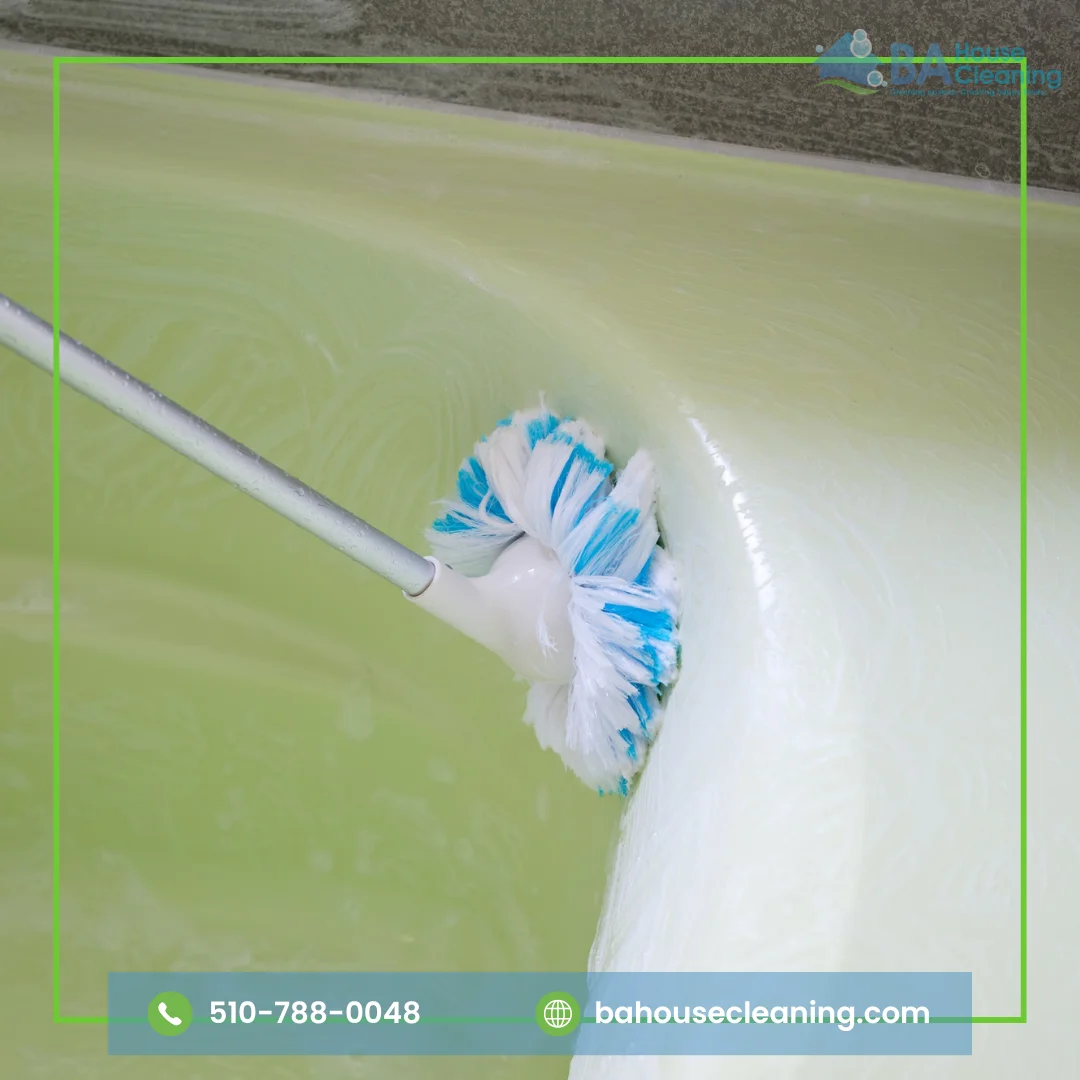
A bathtub can collect more than visible dirt. Soap residue, body oils, hard-water minerals, loose hair, bath products, and moisture may settle across the basin, ledges, drain, fixtures, and areas around the caulk. When these materials remain on the surface, they can create a dull film that becomes harder to remove with every use.
Learning how to clean a bathtub starts with identifying what the tub is made from. Acrylic, fiberglass, porcelain enamel, cast iron, and stone-based materials do not always tolerate the same products or scrubbing tools. A method that removes buildup from one finish may scratch, discolor, or dull another.
At BA House Cleaning, we understand that a clean bathroom depends on more than quickly wiping the center of the tub. The faucet base, overflow plate, drain cover, corners, wall joints, and surrounding floor also contribute to how fresh and comfortable the room feels. This guide explains how to clean common bathtub materials, address soap scum and mineral marks, deal with bathroom moisture, and avoid methods that may damage the finish.
Identify the Bathtub Material Before Cleaning
Before selecting a cleaner, determine whether the bathtub is acrylic, fiberglass, porcelain enamel, enameled cast iron, or another specialty material. Check the manufacturer’s label, purchase information, or care manual when the surface is difficult to identify.
Acrylic and fiberglass tubs often feel warmer and lighter than cast iron. Porcelain-enamel and enameled cast-iron surfaces usually feel harder and colder, but appearance alone does not always provide a reliable answer.
The safest approach is to begin with warm water, mild dish soap, and a soft cloth. Do not apply acidic, abrasive, or heavily alkaline products until you confirm that the manufacturer allows them.
Bathtub manufacturers commonly advise homeowners to use non-abrasive cleaners and soft sponges on acrylic surfaces because rough pads, scrapers, and abrasive powders may scratch or dull the finish.
What to Use to Clean a Bathtub
A basic bathtub-cleaning kit may include:
- Rubber or household cleaning gloves
- Mild liquid dish soap
- Warm water
- A soft microfiber cloth
- A non-abrasive sponge
- A soft nylon brush
- A small brush for corners and grout
- A bucket or removable shower sprayer
- Clean towels for drying
- A cleaner approved for the bathtub material
Open a window or operate the bathroom exhaust fan while cleaning. Apply commercial products according to their labels, and never combine cleaners unless their manufacturers specifically state that the combination is safe.
Avoid steel wool, metal scrapers, rough scouring pads, and unidentified cleaning mixtures. Even a durable bathtub may contain a slip-resistant coating, glossy finish, repair layer, or decorative surface that requires special care.
The Safest Basic Method for Bathtub Cleaning
For routine bathtub cleaning, remove bottles, toys, mats, and personal items from the tub. Clear loose hair and debris from the drain area before adding water or cleaner.
Rinse the surface with warm water to loosen fresh residue. Add a small amount of mild dish soap to a damp sponge or dilute it in a bucket of warm water. Begin at the upper ledges and work toward the drain so dirty water moves away from completed areas.
Wipe the basin, walls, corners, faucet base, overflow cover, and drain area using gentle pressure. Allow the soap solution to remain on light buildup for a few minutes, but do not let it dry.
Rinse the bathtub thoroughly and inspect it under good lighting. Repeat the process on any remaining marks rather than immediately switching to an abrasive product. Finish by drying the surface and metal fixtures with a clean microfiber cloth.
How to Clean an Acrylic Bathtub
Acrylic bathtubs require gentle products and non-abrasive tools. Use warm water, mild liquid dish soap, or a cleaner labeled as safe for acrylic.
Apply the cleaner with a soft cloth or sponge and wipe without aggressive scrubbing. Rinse promptly and dry the tub so cleaning residue and water spots do not remain on the glossy finish.
Do not use steel wool, hard brushes, abrasive powders, paint removers, or harsh solvents unless the manufacturer gives specific instructions for a particular problem. Kohler and American Standard both warn against abrasive products on acrylic bath surfaces, while MAAX recommends non-abrasive cleaning products and tools that will not scratch or dull the finish.
For model-specific instructions, use the manufacturer’s official acrylic bathtub cleaning guidance rather than relying on a universal household recipe.
How to Clean a Fiberglass Bathtub
Fiberglass bathtubs may develop a dull appearance when soap film and minerals remain on the surface. Because fiberglass can scratch, begin with mild dish soap, warm water, and a soft sponge.
Work in small areas and rinse frequently. Avoid pressing harder when a stain remains. Give the cleaner additional time to soften the buildup or switch to a product approved for fiberglass.
Do not use stiff wire brushes, powdered abrasives, or cleaning erasers unless the tub manufacturer confirms that they are safe. Sterling’s care instructions for its Vikrell bath material similarly recommend a soft cloth or sponge and advise against abrasive brushes and scouring pads.
Dry the surface after rinsing to reveal any film that still remains. A cloudy appearance may come from leftover cleaner rather than a permanent stain.
How to Clean a Porcelain or Enameled Bathtub
Porcelain-enamel and enameled cast-iron tubs have a hard outer finish, but that coating can chip, scratch, or lose its shine when cleaned incorrectly.
For general cleaning, use warm water, liquid dish detergent, and a soft cloth or non-abrasive sponge. Rinse the cleaner completely and dry the surface afterward.
Avoid metal scrapers, wire brushes, steel wool, highly acidic cleaners, and heavily alkaline products. Kohler’s enameled cast-iron guidance recommends non-abrasive products and cautions that improper cleaners may permanently affect slip-resistant areas.
If the enamel has chipped and exposed the underlying metal, cleaning alone will not repair the damage. Rust may continue to form around the damaged section, so consider an appropriate repair or refinishing assessment.
How to Remove Soap Scum from a Bathtub
Soap scum forms when soap residue combines with minerals, body oils, and other materials on the surface. It often appears as a cloudy or slightly sticky film around the waterline, corners, ledges, and lower walls.
Start with warm water and mild dish soap. Apply the solution generously and allow it to soften the residue for several minutes. Use a soft sponge to move across the surface with light, overlapping strokes.
Rinse and repeat when necessary. Several gentle applications are safer than one aggressive scrubbing session.
A diluted vinegar solution may help with soap scum on some tubs, but only use it when the manufacturer permits acidic cleaners. Do not assume that vinegar is suitable for natural stone, repaired finishes, specialty coatings, or every acrylic product.
How to Remove Hard-Water Stains
Hard-water stains often appear as white, gray, or chalky marks around faucets, drains, and areas where water repeatedly dries.
Begin with the mildest method suitable for the tub. Warm water and dish soap may remove surface film, while a manufacturer-approved mineral-deposit cleaner may be necessary for more established marks.
When the care instructions permit vinegar, apply a diluted solution to a cloth rather than soaking the entire tub. Place the damp cloth over the affected area briefly, then wipe, rinse, and dry.
Do not leave acidic products on metal fixtures, grout, natural stone, or unknown finishes. The best way to clean a bathtub is not to use the strongest available product but to match the cleaner to the material and type of buildup.
How to Address Yellow Bathtub Stains
Yellow discoloration can develop from minerals, product residue, age, rust, or wear within the finish. Different causes require different responses.
Clean the area first with mild soap to determine whether the mark is removable surface residue. If it remains, check the manufacturer’s recommendations for stain removal.
Avoid using salt, turpentine, oven cleaner, chlorine bleach, or other strong chemicals as general-purpose stain treatments. These products may create fumes, affect the finish, or react with residue from another cleaner.
A yellow mark that returns quickly may relate to water quality, corrosion, damaged enamel, or an aging finish rather than incomplete cleaning.
Cleaning Bathtub Fixtures and the Overflow Plate
Bathtub faucets, handles, spouts, drains, and overflow plates often collect water spots and product residue even when the basin looks clean.
Use mild soap and a soft damp cloth. Wipe around fixture bases and narrow joints where moisture remains, then rinse and dry the metal immediately.
Do not leave vinegar or acidic cleaners on chrome, brushed finishes, plated fixtures, or decorative coatings without checking the manufacturer’s instructions. Some finishes require only water and mild soap.
Avoid spraying cleaner directly into openings or behind the overflow plate. Apply the product to the cloth so you can control where the moisture travels.
How to Clean the Bathtub Drain Area
Remove visible hair and loose debris from the drain cover while wearing gloves. Clean the surrounding surface with mild soap and a small soft brush.
Do not push hair or solid material further into the drain. If the water flows slowly, use the drain-cleaning method recommended for the plumbing and bathtub manufacturer.
Avoid pouring random combinations of baking soda, vinegar, bleach, commercial drain opener, or other chemicals into the drain. Products left from a previous treatment may react with the next one.
A recurring blockage, sewage odor, or standing water may require plumbing service rather than additional surface cleaning.
Cleaning Caulk and Grout Around the Bathtub
Caulk seals the joint between the bathtub and surrounding wall. Grout fills gaps between tiles. Both areas may collect soap residue and discoloration, but damaged material cannot always be restored through cleaning.
Use mild detergent, water, and a soft brush for routine care. Avoid scraping caulk with metal tools or scrubbing grout so aggressively that the material begins to erode.
Cracked, separated, or missing caulk allows moisture to travel behind the surface. Replace failed caulk rather than covering the opening with cleaner.
Dark staining that remains inside the caulk may indicate that discoloration has penetrated the material. In that case, removal and replacement may provide a better result than repeated chemical treatment.
How to Deal with Mold and Mildew Around a Bathtub
Bathroom mold often develops where moisture lingers around caulk, grout, ceilings, walls, or fixtures. Cleaning the visible mark without addressing humidity, leaks, or poor ventilation allows the problem to return.
For a small area on a hard surface, the EPA recommends scrubbing with detergent and water and drying the surface completely. Homeowners should also repair leaks and correct the source of moisture. Porous materials may require replacement when mold has grown inside them.
Follow the EPA’s mold cleanup guidance when deciding whether the affected area is appropriate for household cleaning.
Never mix bleach with ammonia, vinegar, or another cleaner. Open windows or doors when using cleaning products, follow label instructions, and consider professional evaluation when mold covers a large area or repeatedly returns.
Can You Use Baking Soda and Vinegar on a Bathtub?
Baking soda and vinegar appear in many household cleaning guides, but they are not suitable for every bathtub.
Baking soda provides mild abrasive action, which may dull glossy acrylic, fiberglass, repaired coatings, or other delicate finishes when applied too aggressively. Vinegar is acidic and may affect stone, grout, metal fixtures, and surfaces whose manufacturers do not approve acidic products.
When the bathtub’s care instructions permit either ingredient, use a small amount, test a hidden section, and rinse thoroughly. Do not assume that combining the two creates a stronger cleaner. Their visible fizzing comes from an acid-base reaction, but the ingredients begin neutralizing each other.
For routine maintenance, mild soap and a soft sponge remain the safer starting point.
Cleaning a Whirlpool or Jetted Bathtub
A jetted bathtub requires care beyond wiping the visible basin. Water remains inside internal lines, jets, and air channels that ordinary surface cleaning cannot reach.
Follow the exact cleaning or flushing procedure in the owner’s manual. Manufacturers may specify water level, cleaner type, cycle duration, and rinsing steps for each model.
Do not pour bleach, dishwashing detergent, oils, or homemade mixtures into the jet system unless the manufacturer permits them. The wrong product may create excessive foam, damage components, or leave residue inside the plumbing.
Stop using the system and seek appropriate service if the jets release dark material repeatedly, leak, fail to operate, or produce an electrical smell.
Common Bathtub Cleaning Mistakes
Avoid these mistakes when deciding what to use to clean a bathtub:
- Treating all bathtub materials as though they have the same finish
- Using oven cleaner as a general stain remover
- Scrubbing acrylic or fiberglass with steel wool
- Leaving acidic cleaner on faucets or grout
- Mixing bleach with vinegar, ammonia, or other products
- Allowing cleaner to dry on the surface
- Ignoring the underside of bath mats
- Applying excessive force to slip-resistant textures
- Pouring chemicals into a slow drain without checking previous treatments
- Continuing to clean damaged enamel instead of repairing it
- Covering mold without correcting the moisture source
- Returning bottles and mats before the tub dries
The right process should remove buildup without creating scratches, chemical residue, damaged caulk, or discoloration.
How Often Should You Clean a Bathtub?
The appropriate schedule depends on how often the tub is used, the number of people in the home, water hardness, ventilation, and the types of bath products used.
Rinse fresh residue after bathing and remove loose hair before it reaches the drain. Wipe the tub lightly during the week when several people use it, and complete a more detailed cleaning when soap film, mineral marks, or discoloration begin to appear.
Drying wet ledges and improving bathroom ventilation can reduce the moisture that supports recurring buildup. Manufacturer guidance for acrylic and other bath materials also commonly recommends wiping the surface with a soft cloth after use and avoiding abrasive tools.
When the Bathroom Needs More Detailed Cleaning
Cleaning the bathtub may improve one major bathroom surface, but dust, product residue, hair, soap film, and moisture often collect in several areas at once.
BA House Cleaning’s Deep Cleaning Services provide additional attention for Oakland and East Bay homes that need a more detailed reset. The service is designed for homes that require more extensive scrubbing and care than routine maintenance.
After a detailed clean, Recurring Cleaning Services can help maintain bathrooms and other frequently used areas through weekly, biweekly, or monthly visits. BA House Cleaning lists tubs, bathroom tiles, shower doors, sinks, and countertops among the areas addressed during its standard recurring service.
Professional house cleaning does not replace repairs, plumbing work, mold remediation, or the manufacturer’s maintenance instructions. It can, however, help prevent routine household buildup from spreading across several bathroom surfaces.
Five Habits That Keep a Bathtub Cleaner for Longer
A practical maintenance routine can reduce soap film, water spots, and difficult stains:
- Rinse after bathing: Remove shampoo, soap, bath oil, and loose residue before they dry on the surface.
- Dry the wettest areas: Wipe ledges, corners, fixtures, and the area around the drain with a soft cloth.
- Improve ventilation: Run the exhaust fan or open an appropriate window to help bathroom moisture escape.
- Store products away from standing water: Bottles and containers can trap residue beneath them and leave rings on the tub ledge.
- Use the correct cleaner consistently: Keep a manufacturer-approved product available instead of switching between strong household mixtures.
These habits make routine cleaning easier and reduce the need for heavy scrubbing that could affect the bathtub finish.
Give Your Bathroom the Detailed Care It Needs
A clean bathtub can improve the appearance of the entire bathroom, but maintaining the room also requires attention to floors, sinks, fixtures, mirrors, toilets, and surrounding surfaces.
Connect with BA House Cleaning on Facebook to discuss professional home cleaning in Oakland and the East Bay. Choose dependable support for routine bathroom maintenance or a more detailed cleaning when soap residue, dust, and household buildup have become difficult to manage.
Frequently Asked Questions
- What is the best way to clean a bathtub?
Identify the bathtub material first. Begin with warm water, mild dish soap, and a soft, non-abrasive sponge. Rinse thoroughly, and use stronger products only when the manufacturer confirms they are safe for the finish.
- How do I remove soap scum from a bathtub?
Apply warm water and mild dish soap, allow the solution to soften the film, then wipe gently with a soft sponge. Repeat the process rather than using a harsh scrubber. A manufacturer-approved soap-scum remover may help with heavier buildup.
- Can I use vinegar to clean a bathtub?
Some manufacturers permit diluted vinegar on selected bathtub materials, while others recommend different products. Avoid using vinegar on natural stone, unknown coatings, sensitive fixtures, or any surface whose care instructions prohibit acidic cleaners.
- Can I use baking soda on an acrylic bathtub?
Baking soda may create fine scratches or dull a glossy surface when used aggressively. Check the acrylic tub manufacturer’s instructions before applying it, use minimal pressure, and test a hidden area first.
- How do I clean a fiberglass bathtub without scratching it?
Use warm water, mild liquid soap, and a soft cloth or non-abrasive sponge. Avoid steel wool, stiff brushes, abrasive powders, and cleaning tools that may dull the fiberglass finish.
- How can I remove hard-water marks from a bathtub?
Start with mild soap and water. When the manufacturer permits an acidic cleaner, use diluted vinegar or an approved mineral-deposit remover on the affected section. Rinse and dry the surface immediately afterward.
- Can bleach damage a bathtub?
Bleach may discolor or damage some acrylic, fiberglass, coated, or decorative surfaces. Do not use it unless the manufacturer approves it for that exact material, and never combine it with vinegar, ammonia, or another cleaner.
- How often should I clean my bathtub?
Remove hair and rinse fresh residue after use. Complete a more thorough cleaning weekly or whenever soap film, stains, or mineral deposits begin to appear. Usage, water hardness, and ventilation affect the ideal schedule.
- Why do bathtub stains return after cleaning?
Recurring marks may come from hard water, damaged enamel, leaking fixtures, standing moisture, soap residue, mold growth, or products stored on wet ledges. Identify and correct the source instead of repeatedly treating the visible stain.
- When should I replace bathtub caulk?
Replace caulk when it cracks, separates from the wall or tub, develops gaps, remains deeply discolored, or no longer forms a watertight seal. Cleaning cannot restore caulk that has physically failed.