A room can look clean at first glance and still have dust along the upper edges, residue around frequently touched surfaces, or dirt collecting near furniture and baseboards. Getting a more thorough result depends on knowing which tasks to complete first, which products are suitable for each material, and when to move on to the next part of the room.
Learning how to clean your house like a professional means replacing random, repeated cleaning with a clear process. Instead of returning to the same surfaces several times, prepare the space, remove loose debris, clean systematically, and finish with a check for details that are easy to overlook.
This guide explains how to organize whole-house cleaning, choose suitable methods for different surfaces, avoid common mistakes, and use a final inspection to identify unfinished work.
Step 6: Complete Kitchen and Bathroom Surface Cleaning
Kitchens and bathrooms often need more targeted attention than other rooms because they are exposed to food residue, oils, moisture, soap deposits, and frequent use.
Kitchen Surfaces
Clean food-preparation surfaces with products suitable for the material. Remove food residue, wipe accessible counters, and clean the sink and frequently used external appliance surfaces as required.
Use separate or properly cleaned cloths for different areas, especially when moving between food-preparation surfaces and dirtier household areas.
Detailed appliance interiors, specialty countertop materials, and persistent deposits may need a separate method. Do not assume a product suitable for one surface is suitable for every surface in the kitchen.
Bathroom Surfaces
Clean the sink, counter, toilet, and other relevant surfaces using appropriate products. Give additional attention to visible residue around faucets and areas where moisture accumulates.
Follow product instructions when treating soap buildup or mineral deposits. Acidic cleaners, bleach-containing products, and abrasive tools are not interchangeable and may be unsuitable for particular materials.
For room-specific methods, consult the manufacturer’s instructions for the fixtures and surfaces in your bathroom or kitchen. Avoid using a stronger product simply because a mark is difficult to remove.
Step 7: Clean Mirrors and Glass After Nearby Surfaces
Glass and mirrors are easier to finish after nearby dusting and surface cleaning have been completed.
Use a cleaner designed for the particular glass or mirror surface and a clean, lint-free cloth. Follow the manufacturer’s advice for coated glass or specialty finishes.
Check for fingerprints, streaks, and residue under good lighting. If the surface becomes dusty again while you are cleaning nearby furniture, finish it after the surrounding work is complete rather than wiping it repeatedly.
Exterior windows may require different tools and safety precautions depending on their height, design, and accessibility.
Step 8: Vacuum Carpets, Rugs, Upholstery, and Floor Edges
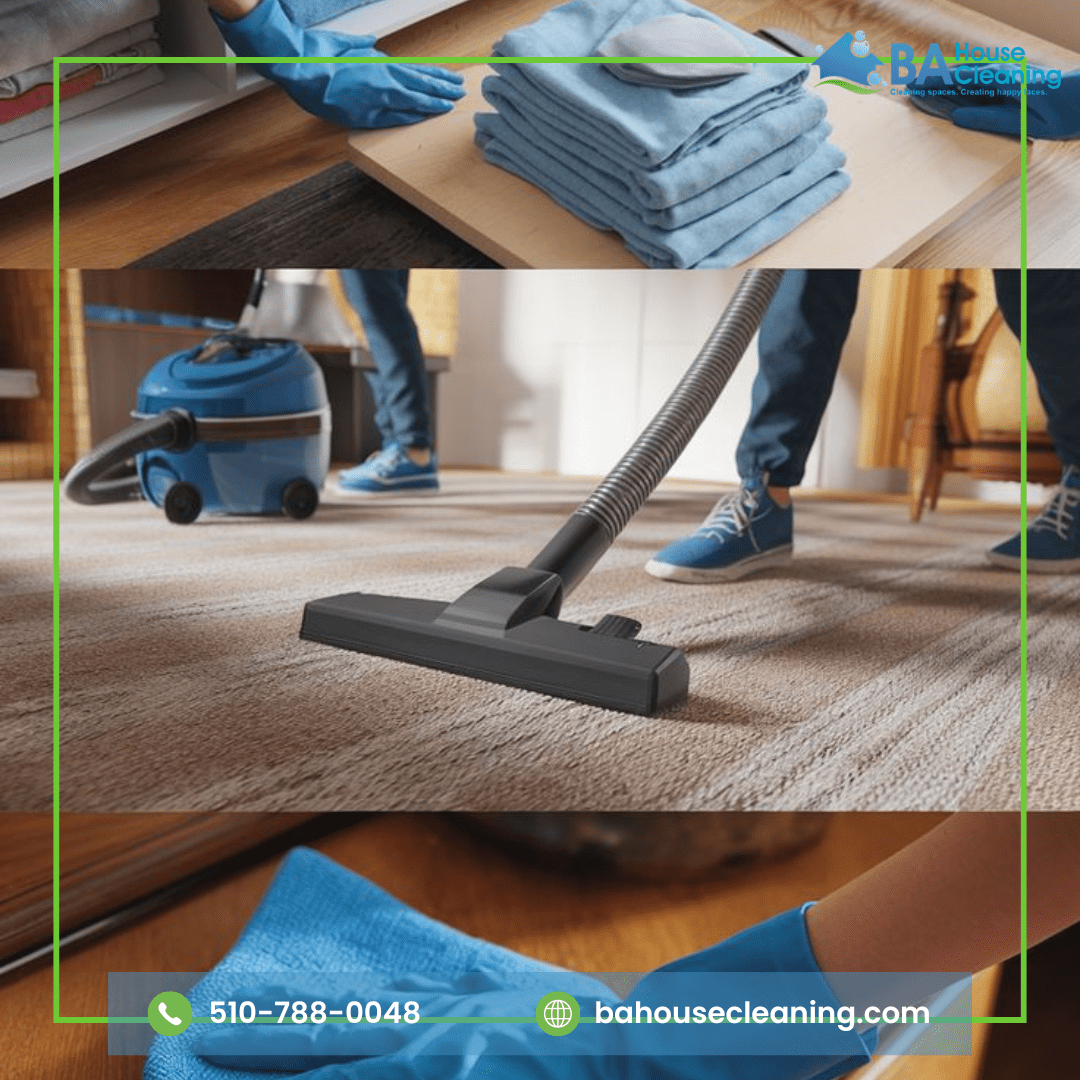
Once above-floor dusting and most surface work are finished, remove loose debris from floors and compatible soft surfaces.
Use a vacuum attachment suited to the material:
A floor head for compatible carpet or hard flooring.
A crevice tool for accessible corners and narrow gaps.
An upholstery attachment for suitable furniture.
Appropriate tools for rugs, following the manufacturer’s care instructions.
Pay attention to floor edges, corners, accessible areas beneath furniture, and spaces where crumbs, pet hair, and dust collect.
Do not use a brush or vacuum attachment aggressively on delicate fabrics. When in doubt, check the material’s care label.
Vacuuming at this stage helps collect much of the debris that fell during earlier cleaning.
Step 9: Mop Suitable Hard Floors Near the End
Mopping is generally best completed after loose dust, hair, crumbs, and other debris have been removed.
Before you begin, confirm which cleaning method is suitable for the floor material. Wood, natural stone, porcelain, vinyl, and other hard flooring types do not necessarily tolerate the same products or amount of moisture.
Use the recommended cleaner and dilution, and avoid leaving excess water on surfaces that are sensitive to moisture.
Change dirty mop water when needed. Follow the manufacturer’s directions for rinsing and drying, particularly when residue could leave streaks or affect the finish.
Work methodically so that you do not walk repeatedly over a freshly cleaned area. Allow the floor to dry safely before replacing movable items or walking across it.
Step 10: Inspect the Room Before Moving On
Before considering a room finished, take a moment to check the result from the doorway or another normal viewing position.
Look for details that may stand out after the main cleaning is complete:
Dust remaining on accessible edges or furniture.
Visible smudges on glass or mirrors.
Residue on frequently touched surfaces.
Debris along floor edges and in corners.
Items left out of place.
Cleaning supplies that have not been put away.
Correct small issues that can be addressed safely and efficiently. If an area needs a different cleaning method or more time, make a note rather than applying increasingly aggressive products.
A final inspection helps confirm that the room is genuinely finished instead of simply looking clean from one angle.
Common House Cleaning Mistakes to Avoid
A structured cleaning process can still produce poor results if unsuitable products or tools are used.
Mopping before removing dust: Loose debris can spread across the floor and create additional work.
Using one product on every surface: Materials have different care requirements, and a multipurpose cleaner may not be appropriate for all of them.
Ignoring product instructions: Dilution, contact time, ventilation, and rinsing requirements can affect both safety and results.
Using excessive force: Scrubbing harder can damage some finishes rather than remove the problem.
Disinfecting everything automatically: Choose cleaning and disinfecting methods according to the household situation and product instructions.
Using the same contaminated cloth across several areas: Change or clean cloths when necessary to avoid spreading soil from one surface to another.
Skipping the final inspection: Small marks and overlooked edges may become more noticeable after the main tasks are complete.
The goal is not to use more chemicals or spend more time on every surface. It is to choose the right method for the job.
A Final Whole-House Cleaning Checklist
Use this short checklist to review the work before finishing.
Supplies were selected for the materials being cleaned.
Accessible areas were cleared before detailed cleaning.
Higher surfaces were addressed before lower ones.
Furniture and frequently touched surfaces were cleaned appropriately.
Kitchen and bathroom products were used according to their labels.
Glass, floors, and other surfaces were checked for visible residue.
Loose debris was removed from floors and suitable soft surfaces.
Cleaning tools and products were put away safely.
The checklist is a final review, not a requirement to detail every surface during every cleaning session. Adjust the work to the condition of the home and the scope of the cleaning task.
When a More Thorough Home Clean Is Needed
A systematic cleaning method can improve routine maintenance, but it may not be enough when dirt and residue have accumulated across several rooms or hard-to-reach areas have been neglected for a long time.
If your home needs more detailed attention than routine cleaning provides, BA House Cleaning offersdeep cleaning services in Oakland and surrounding East Bay communities.
The tasks included depend on the selected service and the home’s condition. Confirm any specialized cleaning requirements when requesting a quote.
For homeowners who prefer ongoing support, ourrecurring cleaning services can help maintain the home between more detailed cleaning sessions.
Frequently Asked Questions About Professional House Cleaning
What is the best order to clean a house?
Prepare supplies and clear access first. Then clean higher surfaces, work through furniture and other accessible surfaces, complete appropriate kitchen and bathroom tasks, clean mirrors and glass, vacuum, and finish suitable hard floors near the end.
Why should you clean from top to bottom?
Dust and debris can fall from higher surfaces onto furniture and floors. Working downward reduces the risk of dirtying areas that have already been cleaned.
Should you vacuum or mop first?
For most whole-house routines, remove loose debris and vacuum suitable floors before mopping hard floors. The exact method depends on the floor material and its care instructions.
Should you disinfect surfaces every time you clean?
Not necessarily. Routine cleaning is sufficient in many ordinary household situations. Disinfection may be appropriate in particular circumstances, such as when someone is sick. Follow public-health guidance and product labels.
How can I avoid damaging surfaces during cleaning?
Identify the material, choose a compatible product, follow the manufacturer’s instructions, and test unfamiliar products in a small area when appropriate. Avoid harsh tools or chemicals unless they are specifically recommended for that surface.
When should I consider professional house cleaning?
Professional cleaning may be useful when several rooms require more detailed work, buildup has become difficult to manage, or you prefer to have regular household maintenance handled by a cleaning team.
Need Help With a More Thorough Home Clean?
A reliable cleaning process helps maintain your home, but some properties need additional attention to accumulated dirt, overlooked surfaces, and areas that require a more detailed clean.
BA House Cleaning provides residential cleaning services in Oakland and surrounding East Bay communities. Review ourdeep cleaning services to understand the available options, orcontact BA House Cleaning to discuss your home’s requirements and request a quote.
You can also use the location information on our contact page to find the business and confirm service details.
The aim of a professional-style cleaning process is simple: complete tasks in a sensible order, use methods that suit the surfaces, and check the result before moving on.
Dinner is finished, tomorrow’s meeting is on your mind, and the kitchen still needs attention. You have enough energy for a few tasks, but an entire evening of housework is unlikely to happen.
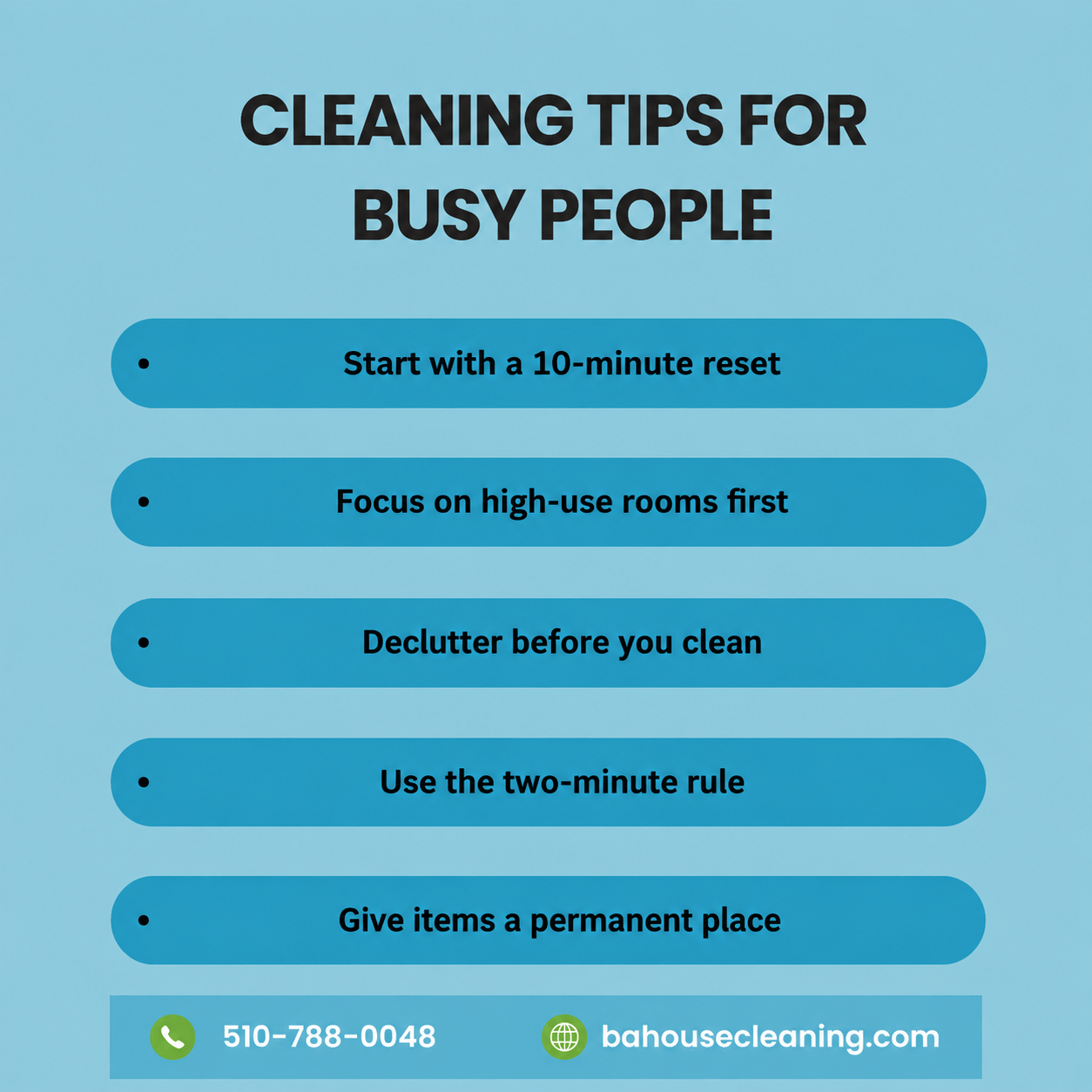
The most useful cleaning tips for busy people start with a small decision: what needs attention before you use this space again? Clear the dishes you will need for breakfast, wipe food spills, and remove obstacles from the areas you use most. Give longer jobs a separate place in your schedule.
Here is a practical way to fit household upkeep around work, family, and the weeks when your plans change.
What Should You Clean First When Time Is Limited?
Start with mess that affects the next meal, bathroom use, or movement through your home. Food spills, dirty dishes, full trash containers, and blocked walkways deserve attention before decorative dusting or closet organization. After those essentials, choose the area creating the most extra work tomorrow.
Ask yourself three questions:
Will leaving this make the next task harder?
Is it preventing someone from using the space?
Can I finish it with the time and supplies I have?
A sticky dining table may need attention before a dusty bookshelf. A clear kitchen counter may matter more tonight than folding every clean towel. Your priorities can change from one day to the next.
A 15-Minute Cleaning Routine for the End of a Workday
Use this routine as a short maintenance session when your home is already reasonably manageable. The times are estimates; a large dish pile or heavily soiled room will need a longer session.
Time
Task
Where to stop
3 minutes
Collect dishes, obvious trash, and items blocking walkways
Leave drawers and storage projects for another time
5 minutes
Load the dishwasher or wash essential dishes, then wipe food spills from the main preparation surface
Skip appliance interiors
3 minutes
Clear and clean the bathroom sink area using a suitable product and a separate cloth
Save shower scrubbing for a longer session
4 minutes
Sweep or vacuum visible crumbs, grit, or pet hair in one busy area
Leave whole-home floor cleaning for a scheduled session
If one task takes longer, use the remaining time there. Completing the kitchen essentials can be a better result than touching every room and leaving the most urgent job unfinished.
This reset does not replace regular bathroom cleaning, dusting, laundry, or thorough floor care. It keeps daily mess from interfering with the next part of your day.
Attach Small Chores to Things You Already Do
A routine is easier to remember when it has an obvious starting point. Instead of adding several alarms, connect one small task to an activity already in your day.
Existing activity
Small cleaning action
Finishing breakfast
Put dishes directly into the dishwasher or wash them
Returning home
Put shoes and bags in their usual places
Finishing dinner
Wipe fresh food spills before leaving the kitchen
Ending the workday at home
Remove cups and rubbish from your desk
Getting ready for bed
Put dirty clothes into the hamper
Start with two habits. Add another only when the first two feel manageable. Trying to change your entire household routine at once can create more tasks than you can keep up with.
Adjust the Plan to Your Household
If You Work Long Hours Away From Home
Prepare the areas you will need when you return. An available kitchen counter, usable sink, and clear entryway can make dinner and the following morning easier.
Keep the evening routine short. Choose a longer cleaning session for a time when you usually have more energy, rather than relying on late-night motivation.
If You Work From Home
Give kitchen and desk cleanup a place at the end of lunch or your workday. Cups, plates, packaging, and papers can otherwise spread through the rooms you use for both work and home life.
Keep larger chores outside focused work time. A five-minute lunch cleanup is easier to contain than starting laundry, reorganizing a cupboard, and cleaning the bathroom between meetings.
If You Have Children
Choose a short shared cleanup after dinner or before bedtime. Give each person a specific task suited to their age and ability: returning toys to a bin, collecting belongings, or clearing appropriate table items.
Use a clear finish point, such as putting away the toys on the living-room floor. Keep cleaning products and tasks requiring chemicals with a responsible adult.
If You Have Pets
Focus quick floor care on feeding areas, entrances, and the places where hair collects most visibly. Keep pet items in designated spots so bowls, toys, and leads do not become part of every cleanup.
Choose products suitable for the surface and follow their directions for use around animals. If you book professional cleaning, discuss pets, access, and product preferences before the visit.
What to Do When You Miss Several Days
Restart with the current essentials. Trying to complete every missed chore in one evening can make the backlog harder to approach.
Use three groups:
Handle now: food spills, essential dishes, full trash, and anything blocking safe access.
Choose one next: the bathroom, a busy floor area, or another space that needs a focused session.
For example, after a demanding week, spend tonight restoring the kitchen and clearing the entryway. Set aside another session for the bathroom. Leave sorting a crowded closet off both lists.
If grease, soap residue, or widespread buildup requires more time than you can provide, consider a more thorough reset. BA House Cleaning’sdeep cleaning services are an option to discuss when short maintenance sessions cannot address the home’s condition.
Give Longer Jobs a Place Without Filling Every Evening
Look at the coming week and choose a realistic opening for essential cleaning beyond the daily reset. You might have one longer session or two shorter ones. Decide what each session will cover before it starts.
Give bathrooms, floors, and dusting attention according to their condition and use. Keep a separate reminder for less frequent tasks so they do not expand every daily cleanup.
When a task repeatedly stays unfinished, reconsider its timing, share it with another household member, or arrange help. A plan that depends on free time you rarely have needs adjustment.
Keeping Your Home Manageable Between Professional Visits
Professional cleaning can take larger maintenance tasks out of your week, while household members continue handling the mess created each day.
Between visits, focus on fresh spills, dishes, trash, belongings, and visible floor debris. Before an appointment, make agreed cleaning areas accessible and communicate anything that has changed.
For busy Oakland and East Bay households, useful details to confirm include:
Which tasks are included and which require an additional request.
Whether someone needs to be home and how access will be arranged.
The arrival window and any scheduling constraints.
Instructions for pets and delicate surfaces.
Rescheduling notice and applicable fees.
If budget affects how much help you can arrange, identify the work you most need support with and what you can maintain yourself. Ask for a quote based on your home’s actual needs.