Learning how to clean a microwave properly does not require aggressive scrubbing or a cabinet full of harsh chemicals. Simple household products such as warm water, mild dish soap, white vinegar, lemon juice, and baking soda can handle many everyday messes when used correctly. Steam helps loosen dried food and soften stubborn residue, allowing a soft cloth or non-abrasive sponge to remove the buildup without scratching the appliance’s interior.
The most effective microwave cleaning hack is also one of the simplest: wipe spills before they dry and use steam to make older stains easier to remove. Regular attention can prevent unpleasant odors, reduce heavy buildup, and make future cleaning faster. At BA House Cleaning, we understand that maintaining a clean kitchen involves more than wiping visible countertops. Small appliances, handles, turntables, cabinet fronts, and surrounding surfaces all contribute to how fresh and comfortable the space feels.
This guide explains the safest and easiest ways to clean the microwave interior, wash the turntable, remove food smells, treat stubborn stains, clean the door and controls, and avoid common methods that may damage the appliance.
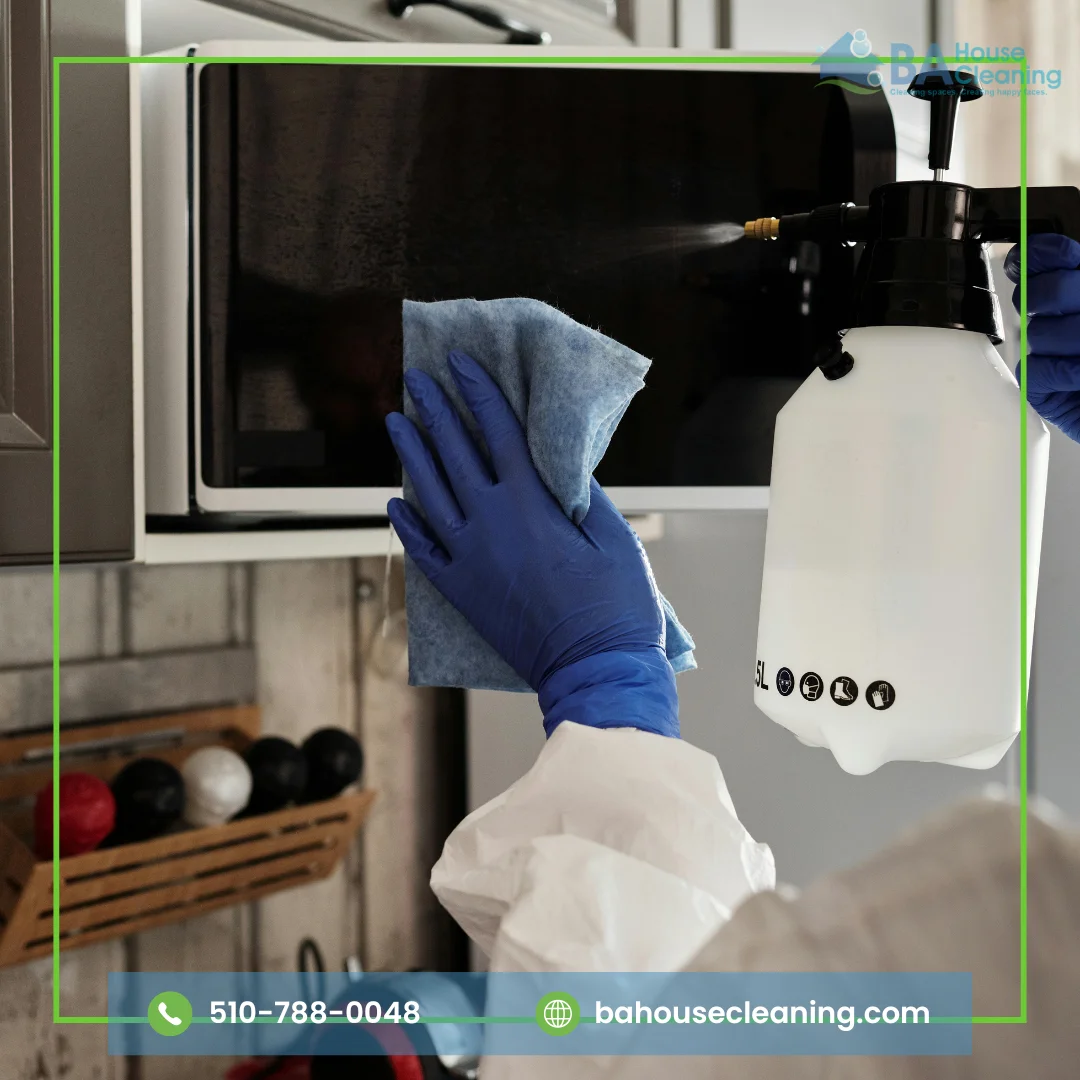
Why Microwave Messes Become Difficult to Remove
Microwave stains often begin as small splashes from sauces, soups, butter, oil, or reheated leftovers. Heat then dries these splashes onto the interior surfaces. When the appliance is used again, the residue may become harder, darker, and more difficult to wipe away.
Strong-smelling foods can also leave odors behind, especially when grease or food particles remain hidden under the turntable or around the door. Cleaning only the center of the appliance may therefore improve its appearance without completely removing the source of the smell.
An easy-clean microwave routine should address the complete appliance rather than only the most visible stains. That includes the ceiling, corners, turntable, roller ring, inside of the door, handle, control panel, and exterior vents.
What to Use to Clean the Inside of a Microwave
Before starting, collect a few simple supplies:
- A microwave-safe bowl or measuring cup.
- Warm water.
- Mild dishwashing liquid.
- A soft sponge or microfiber cloth.
- White vinegar.
- Lemon juice or fresh lemon.
- Baking soda.
- A clean, dry towel.
Check the appliance manual before using any product that is not specifically recommended for the model. Interior coatings and exterior finishes vary, and the correct method for one microwave may not be suitable for another.
Avoid steel wool, sharp tools, abrasive powders, commercial oven cleaners, bleach, and products containing ammonia. Samsung advises against abrasive cleaners, solvents, steel wool, and bleach because they can damage the finish. GE also recommends mild products and warns against abrasive, ammonia-based, bleach-based, and commercial oven cleaners.
The Easy Way to Clean a Microwave with Steam
Steam is often the easiest way to clean a microwave because it softens dried food before wiping begins. It does not eliminate the need to clean the surface, but it can reduce the amount of scrubbing required.
Fill a microwave-safe bowl with approximately one cup of water. Heat it for three to five minutes, or until enough steam has developed to coat the interior. The exact time will depend on the microwave’s power, so watch the bowl carefully and do not allow it to boil dry.
Leave the door closed for several minutes after heating. This gives the steam more time to loosen dried splashes. Carefully remove the bowl using oven mitts if it remains hot, then wipe the interior with a soft cloth and a small amount of mild dish soap.
Whirlpool’s official microwave cleaning instructions also recommend using a microwave-safe container, water, mild soap, and a soft cloth. Its guidance explains that heated water can soften heavy buildup before the interior is wiped, rinsed, and dried.
How to Clean a Microwave with Vinegar
White vinegar can be added to the steam-cleaning method to help loosen residue and reduce lingering food odors.
Combine one cup of water with approximately one tablespoon of white vinegar in a microwave-safe bowl. Heat the mixture for two to five minutes, allow it to stand briefly, and carefully remove the bowl. Wipe the walls, ceiling, floor, and inside of the door with a soft cloth.
When using vinegar for microwave cleaning, more is not necessarily better. A small amount diluted in water is usually enough for routine cleaning. Concentrated vinegar may leave a powerful smell and should not be applied directly to sensitive exterior finishes unless the manufacturer allows it.
After cleaning, wipe the interior again with a cloth dampened with clean water. Dry all surfaces before replacing the turntable and using the appliance.
How to Clean a Microwave with Lemon
Lemon provides another simple method for loosening residue while leaving a fresher scent.
Add one tablespoon of lemon juice to a cup of water, or place several lemon slices in a microwave-safe bowl of water. Heat the mixture until steam develops, leave the door closed for a few minutes, and then wipe the interior.
The citric acid naturally present in lemon juice may help with light grease and odors. However, anyone researching how to clean a microwave with citric acid should avoid using a strong concentrated solution unless the appliance manual confirms that it is suitable.
Fresh lemon juice diluted in water is generally a more practical option for routine cleaning. Whirlpool includes lemon juice among the natural ingredients that can be combined with water for microwave cleaning.
How to Clean a Microwave with Baking Soda
Baking soda can be useful for odors and food residue that remains after steam cleaning. It should be used gently because excessive scrubbing may affect some finishes.
One method is to add several tablespoons of baking soda to a microwave-safe bowl filled with water. Heat the mixture for a few minutes, allow it to cool, and wipe the interior with a soft sponge or cloth.
For an isolated stubborn spot, combine a small amount of baking soda with water to create a soft paste. Apply it to the stain, leave it briefly, and wipe without aggressive scrubbing. Remove all residue with a clean damp cloth afterward.
This cleaning microwave with baking soda method is more appropriate for specific marks than spreading dry powder across the entire interior.
Can You Clean a Microwave with Salt?
Some online tips explain how to clean a microwave with salt, but dry salt is not the best choice for routine interior cleaning. Its grains may act as an abrasive when rubbed against painted, plastic, or coated surfaces.
Salt also does not provide the same steam-softening effect as water mixed with lemon juice or vinegar. If the goal is to loosen food, reduce smells, or remove light grease, diluted vinegar, lemon water, baking soda, mild soap, and a soft cloth are more practical options.
Do not scrub the interior with coarse salt simply because it is available in the kitchen. Manufacturer-approved methods should take priority over a popular cleaning microwave hack, especially when the hack involves abrasive materials.
How to Clean the Microwave Turntable and Roller Ring
The glass turntable collects spills, grease, and crumbs that may not be visible until it is removed. Allow the plate to cool completely before washing it because sudden temperature changes may cause hot glass to crack.
Remove the turntable carefully and check the appliance manual to determine whether it is dishwasher-safe. Otherwise, wash it by hand using warm water, mild dish soap, and a soft sponge.
Clean the roller ring and the surface underneath it before returning both parts to their correct positions. Food trapped beneath the plate may cause odors and interfere with smooth rotation.
Whirlpool recommends allowing the turntable to cool before washing and checking the manual before placing it in a dishwasher. Samsung similarly advises washing the turntable regularly and making sure it is completely dry before returning it to the microwave.
Cleaning the Microwave Door and Seals
Food residue around the door can affect the appliance’s appearance and may prevent the door area from staying properly clean.
Use a soft cloth with mild soap and water to wipe the inside and outside of the door. Pay attention to corners, edges, and the area around the handle. A cotton swab or folded microfiber cloth may help reach narrow spaces, but avoid sharp objects.
The door seals should remain free from grease and hardened food. Do not soak them or apply excessive pressure. Samsung notes that residue around the seals may interfere with proper door closure and recommends cleaning the glass with mild soap, water, and a soft cloth.
If the door is damaged, misaligned, cracked, or unable to close correctly, stop using the microwave and arrange an appropriate appliance inspection.
How to Clean the Microwave Exterior and Control Panel
Turn off or unplug the microwave before cleaning its exterior, particularly around the control panel and vents. Apply cleaning solution to the cloth rather than spraying it directly onto the appliance.
Wipe the control panel with a lightly dampened cloth, then dry it immediately. Avoid excessive water because moisture may enter around buttons or electronic controls.
For stainless steel, check the owner’s manual before applying vinegar or general household products. Some fingerprint-resistant and coated finishes require specific care. Always wipe in the direction of the grain when the manufacturer recommends it.
Do not spray cleaner into vents, openings, seams, or beneath the control panel. GE’s official recommendations advise using a soft damp cloth on the controls and warn against spraying cleaning solution directly onto them.
How to Deodorize a Microwave
Understanding how to deodorize a microwave begins with removing the source of the smell. Fragrance alone will not solve the problem if burned food, grease, or liquid remains inside the appliance.
Remove the turntable and check underneath it. Wipe the ceiling, walls, corners, door, seals, and roller ring. Once visible residue has been removed, heat a microwave-safe bowl containing one cup of water and one tablespoon of vinegar or lemon juice for two to five minutes.
Leave the bowl inside briefly before removing it carefully. Wipe the interior and dry it with a clean microfiber cloth. Whirlpool recommends cleaning food debris first and then using diluted lemon juice or vinegar to help remove remaining odors.
For persistent smells, leave an open container of dry baking soda inside the cool, unused microwave overnight. Remove it before operating the appliance again.
How to Get Burnt Food Smell Out of a Microwave
Burned popcorn, overheated sauces, and forgotten leftovers may leave a smell that lasts longer than ordinary food odors.
Start by allowing the microwave to cool and removing all burned food or loose debris. Wash the turntable and clean every interior surface with mild soap and water. Follow with the vinegar or lemon steam method, then wipe and dry the appliance thoroughly.
Leave the microwave door open for a short period after cleaning to allow trapped odors and moisture to escape. When the microwave is not in use, a dry bowl of baking soda may help absorb remaining smells.
If the smell resembles burning plastic, wiring, or an electrical fault rather than burned food, stop using the appliance. Persistent smoke, sparks, damaged interior coating, or an unusual electrical odor should be assessed by a qualified appliance professional.
How to Sanitize a Microwave Safely
Cleaning and sanitizing are not always the same process. Steam from water can loosen grease and food, but it should not automatically be treated as a guaranteed disinfecting method.
Begin by removing crumbs, spills, grease, and other visible material. Cleaning products work more effectively when surfaces are free from soil.
Only use a sanitizing or disinfecting product if the microwave manufacturer confirms that it is suitable for the interior surface. Follow the product label, required contact time, rinsing instructions, and appliance manual.
Do not mix vinegar with bleach or other cleaners. Avoid leaving chemical residue on surfaces that may come close to food, and rinse whenever the instructions require it.
Common Microwave Cleaning Mistakes
A useful microwave cleaning trick should make the process safer and easier, not create additional damage. Avoid these common mistakes:
- Heating water for too long or allowing the container to boil dry.
- Removing a hot bowl without hand protection.
- Using metal containers during steam cleaning.
- Spraying liquid directly into vents or controls.
- Scrubbing with steel wool, sharp tools, or coarse abrasives.
- Using commercial oven cleaner inside the microwave.
- Mixing household cleaning chemicals.
- Returning the turntable before it dries completely.
- Using the appliance despite damage to the door or interior.
Always stop and check the owner’s manual when you are uncertain about a surface, cleaning mode, removable part, or recommended product.
How Often Should You Clean Your Microwave?
The ideal cleaning schedule depends on how often you use the appliance and the types of food you prepare. Wipe fresh spills as soon as the microwave cools to prevent grease and food residue from hardening. For appliances used regularly, a weekly wipe is a practical starting point, while a more detailed cleaning may be necessary whenever odors, stains, or dried food begin to build up.
Whirlpool recommends cleaning the microwave about once a week and dealing with large spills promptly, while Samsung advises using a soft cloth regularly and removing fresh stains before they become difficult to clean. Covering food with a microwave-safe lid can also reduce splashes, limit buildup, and make routine cleaning faster and easier.
Keeping the Rest of the Kitchen Under Control
Cleaning one appliance helps, but kitchens usually require a broader routine. Grease and crumbs may also collect on countertops, cabinet fronts, stovetops, floors, handles, and surrounding appliances.
BA House Cleaning offers Recurring Cleaning Services for homeowners who want ongoing support with commonly used areas of the home. Weekly, biweekly, or monthly cleaning can help prevent everyday mess from developing into heavier buildup across the kitchen and other living spaces.
Professional recurring cleaning does not replace the appliance manufacturer’s care instructions. It can, however, help maintain the surrounding surfaces and make the complete kitchen easier to manage.
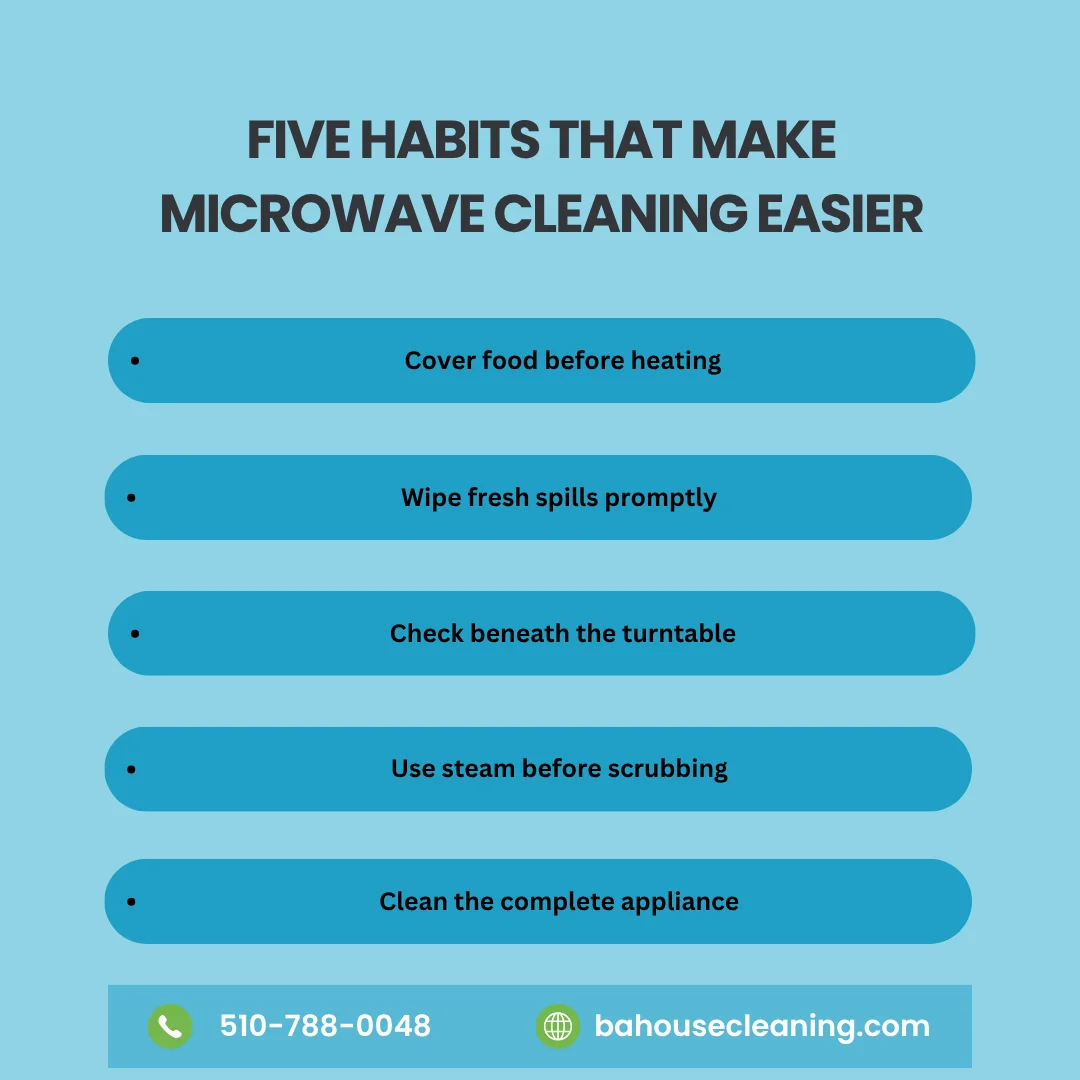
Five Habits That Make Microwave Cleaning Easier
The best way to clean a microwave is to prevent food and grease from remaining long enough to harden. A simple routine can reduce odors, limit scrubbing, and keep the appliance more presentable:
- Cover food before heating: Use a vented, microwave-safe cover to reduce splashes while allowing steam to escape safely.
- Wipe fresh spills promptly: Wait until the appliance is cool, then remove splashes before they dry onto the interior.
- Check beneath the turntable: Crumbs and liquid often collect under the glass plate and may become a source of odor.
- Use steam before scrubbing: Warm water can soften dried food, reducing the need for abrasive tools or excessive pressure.
- Clean the complete appliance: Include the door, handle, seals, controls, turntable, roller ring, exterior, and surrounding counter area.
Following these habits creates an easier microwave-cleaning routine and helps prevent small spills from becoming stubborn stains.
Give Your Kitchen a Cleaner, Fresher Routine
A clean microwave is easier to maintain when the rest of the kitchen receives consistent attention. Instead of waiting for grease, crumbs, and everyday mess to spread across several surfaces, create a regular cleaning routine that fits your home and schedule.
Connect with BA House Cleaning on Facebook to learn more about dependable home cleaning in Oakland and the East Bay. Let an experienced team help keep your kitchen and living spaces fresh, comfortable, and easier to manage.
Frequently Asked Questions
- What is the easiest way to clean a microwave?
Heat water in a microwave-safe bowl for several minutes to create steam, then allow it to stand briefly before wiping the interior with a soft cloth. Mild dish soap can be used after the steam loosens the food residue.
- Can I clean a microwave with normal vinegar?
Plain white distilled vinegar is commonly diluted with water for microwave cleaning. Use a small amount, avoid applying concentrated vinegar directly to sensitive finishes, and check the appliance manual before cleaning coated exterior surfaces.
- How do I clean the inside of a microwave?
Remove the turntable, loosen dried residue with steam, and wipe the ceiling, walls, floor, corners, and inside of the door with mild soap and a soft cloth. Rinse away product residue and dry the interior before replacing the clean turntable.
- How do I clean a microwave with baking soda?
Add several tablespoons of baking soda to a microwave-safe bowl of water and heat it for a few minutes. Once the bowl has cooled enough to handle safely, remove it and wipe the loosened residue with a soft cloth.
- Can salt be used to clean a microwave?
Salt is not the preferred option because dry grains may scratch some interior finishes. Water, mild soap, diluted vinegar, lemon juice, or baking soda are generally more useful for loosening food and addressing odors.
- How do I remove a bad smell from a microwave?
Remove all food residue first, including crumbs under the turntable. Use a bowl of water with diluted vinegar or lemon juice to create steam, wipe the interior, and dry it thoroughly. A bowl of dry baking soda may be left inside the cool, unused microwave overnight.
- How often should a microwave be cleaned?
Clean large spills as soon as the appliance has cooled. A weekly wipe is a practical starting point for a frequently used microwave, but the exact schedule depends on usage and the amount of grease or food splatter.
- Is it safe to spray cleaner inside a microwave?
It is better to apply cleaner to a soft cloth instead of spraying it directly into the appliance. This reduces the risk of liquid entering vents, seams, controls, or other openings.
- Can I use bleach or oven cleaner inside a microwave?
Manufacturer guidance commonly warns against bleach, commercial oven cleaners, ammonia-based products, and abrasive cleaners. Use mild soap and manufacturer-approved methods unless the model’s manual states otherwise.
- Why does my microwave still smell after cleaning?
Food residue may remain beneath the turntable, around the door seals, on the ceiling, or inside corners. Clean all removable parts and interior surfaces before using vinegar, lemon, or baking soda to address the remaining odor.