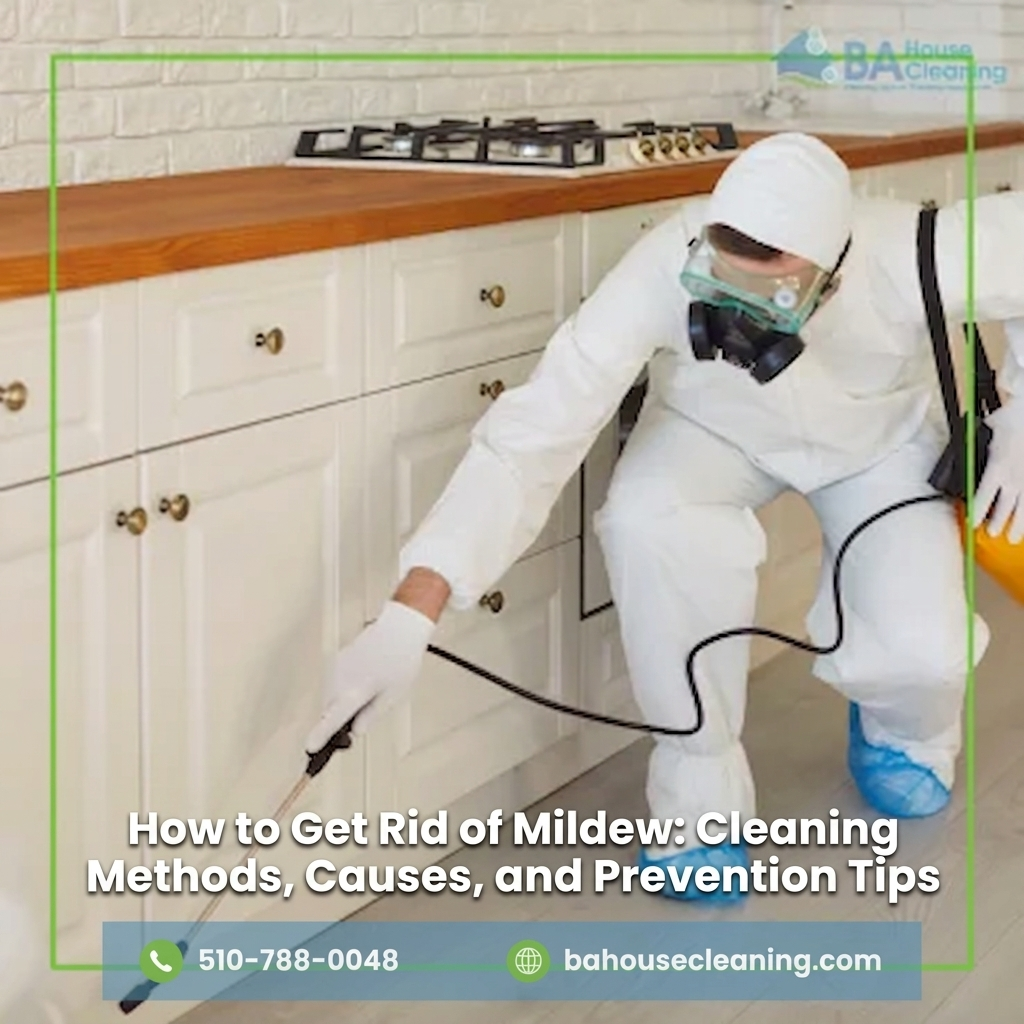
Mildew often begins as a small patch near a shower, window, sink, or another damp surface. At first, it may look like a minor cleaning problem. However, wiping away the visible mark does not always solve the underlying cause. If moisture remains, the same patch can return within days or weeks.
Learning how to get rid of mildew requires two important steps. First, you need to clean the affected surface safely. Second, you must reduce the moisture that allowed the growth to develop. Skipping either step can lead to recurring odors, stubborn stains, and new surface growth.
Oakland homes can develop mildew for several reasons. Bathrooms may stay damp after showers, condensation can collect around windows, and slow plumbing leaks may keep cabinets or walls moist. Wet towels, laundry, poor airflow, and high indoor humidity can also create suitable conditions for mildew.
BA House Cleaning helps Oakland and East Bay homeowners maintain cleaner, fresher, and more comfortable living spaces. While routine cleaning can help manage small surface-level buildup, the source of moisture must also be addressed to prevent mildew from returning.
This guide explains how to identify common mildew, clean small affected areas, protect different materials, and reduce the chance of regrowth. It also explains when professional cleaning services may help and when the situation requires a qualified mold remediation specialist instead.
What Is Mildew?
Mildew is a common name for certain types of surface-level fungal growth. People often use the word to describe flat, powdery, or patchy growth found in damp household areas. It may appear white, gray, brown, green, or dark in color.
In everyday home care, the difference between mildew and mold is less important than the moisture source. Both depend on damp conditions. Both can spread when the surface stays wet. In addition, appearance alone cannot confirm the exact species.
The National Institute of Environmental Health Sciences explains that mold is a type of fungus that thrives in wet places. Leaks, flooding, humidity, and poor ventilation can all support indoor growth. Therefore, the most effective response begins with moisture control rather than surface cleaning alone.
Mildew may grow on shower grout, window frames, painted walls, fabrics, wood, rubber seals, and other materials. Some surfaces can be cleaned successfully. However, porous materials may hold growth below the visible surface and may need replacement when the contamination is extensive.
Mildew vs. Mold: Is There a Real Difference?
Homeowners often describe a flat patch as mildew and a thicker or fuzzy patch as mold. This can be a useful visual description, but it is not a reliable diagnostic test.
Mildew usually appears to sit on the surface. It may look powdery and spread in a relatively flat pattern. Mold may appear raised, fuzzy, slimy, or irregular. Still, color and texture vary widely. Dark growth is not automatically a specific type of “toxic mold,” and light-colored growth is not automatically harmless.
For practical cleaning decisions, focus on three questions:
How large is the affected area?
What material is affected?
Is there an ongoing leak, flooding issue, or hidden moisture source?
A small patch on a hard bathroom surface may be suitable for careful household cleaning. Growth across drywall, insulation, ceiling materials, carpet padding, or HVAC components requires a different level of caution. If the moisture source is hidden, cleaning the visible area may only delay the problem.
Why Mildew Keeps Returning
The main reason mildew returns is simple: the surface remains damp. Professional cleaning services can remove visible residue and surface buildup, but the growth may return when humidity, condensation, leaks, or poor ventilation continues.
The EPA identifies moisture control as the key to managing mold. Its guidance recommends fixing leaks, cleaning hard surfaces with detergent and water, and drying everything completely. It also notes that moldy porous materials may be difficult or impossible to clean fully.
Common causes include:
Bathrooms that stay humid after showers
Kitchen steam without effective ventilation
Leaking faucets, pipes, toilets, or roofs
Condensation around windows and exterior walls
Damp laundry left in baskets or washing machines
Furniture placed tightly against a cold wall
Wet carpet, padding, or fabric that dries slowly
Indoor humidity that remains too high
The CDC recommends keeping indoor humidity no higher than 50% when possible. Air conditioning, dehumidifiers, exhaust fans, and better airflow can help maintain a drier indoor environment.
Therefore, learning how to get rid of mildew is not only about cleaning. It also requires better ventilation, property maintenance, and complete drying.
Signs You May Have a Mildew Problem
Visible spotting is the most obvious sign. However, mildew may also appear as a recurring stain or dull film that returns after normal wiping.
A persistent musty odor can also indicate damp materials or hidden growth. The smell may be stronger after the room has remained closed. In bathrooms, it may come from grout, caulk, shower curtains, bath mats, or areas behind stored products.
Other warning signs include:
Discoloration near windows or ceiling corners
Peeling paint or bubbling wall finishes
Soft or swollen drywall
Repeated condensation
Damp cabinet interiors
Staining beneath a sink
Musty towels or clothing after washing
Dark residue on appliance seals
Do not ignore water stains, even when no growth is visible. They may indicate a plumbing, roof, or condensation problem. Fixing the source early can prevent a much larger cleanup later.
Safety Steps Before You Start Cleaning
Before deciding how to get rid of mildew, assess the area honestly. Small surface patches are different from widespread growth following a leak or flood.
Protect your skin and eyes from both the growth and the cleaning product. Wear gloves and use eye protection when splashing is possible. Increase ventilation by opening a window or running an exhaust fan that vents outdoors.
Read the product label before use. Never mix bleach with ammonia or any other cleaner. The CDC specifically warns that mixing bleach with ammonia or other cleaning products can create dangerous fumes.
Keep children and pets away from the work area until the surface is clean, rinsed when required, and completely dry. Also, avoid aggressive dry brushing. It can disturb particles and spread them into the surrounding area.
People with asthma, severe allergies, chronic lung conditions, weakened immune systems, or other health concerns should avoid direct exposure and seek appropriate medical or professional guidance.
How to Get Rid of Mildew on Hard, Washable Surfaces
For a small patch on tile, glass, sealed counters, or another hard washable surface, begin with detergent and water. The goal is to remove the growth physically, clean the residue, and dry the surface thoroughly.
Follow these steps:
Improve ventilation in the room.
Put on gloves and eye protection.
Remove nearby personal items.
Apply a suitable detergent solution according to its label.
Gently scrub the affected hard surface.
Rinse if the product instructions require it.
Dry the area completely.
Correct the moisture source.
The EPA recommends scrubbing mold from hard surfaces with detergent and water, then drying the surface completely.
Avoid soaking seams, unsealed wood, drywall edges, or cracked grout. Excess liquid can move deeper into the material and create another moisture problem.
After cleaning, check the area again over the next several days. If the spotting or odor quickly returns, the visible patch may not be the full problem.
How to Get Rid of Mildew in a Bathroom
Bathrooms provide moisture, warmth, and repeated condensation. As a result, showers, grout lines, caulk, ceilings, and window frames are common problem areas.
Start by running the exhaust fan during the shower and for a reasonable period afterward. Leave the shower door or curtain open so wet surfaces can dry. Remove bottles and bath products that trap moisture against tile or tub edges.
For small patches on tile or sealed surfaces, use a product approved for that material. Scrub gently and dry the area afterward. Do not combine different cleaning agents in an attempt to create a stronger solution.
Caulk deserves special attention. Surface staining may clean up, but growth can penetrate old or damaged caulk. When discoloration remains below the surface, replacing the caulk may provide a better result than repeated scrubbing.
Check the ceiling, especially above the shower. Recurring spots can indicate poor ventilation, roof issues, or condensation on a cold surface. Cleaning alone will not correct those causes.
How to Get Rid of Mildew on Grout and Caulk
Grout is more porous than smooth tile. Therefore, it can hold moisture and discolor more easily. Start with the gentlest method suitable for the grout type and sealer.
Use a soft brush rather than a metal tool that may damage the joint. Apply the cleaner for the label’s recommended contact time, then scrub and rinse as directed. Dry the surface carefully.
When grout remains dark after cleaning, the issue may be deep staining, deteriorated sealer, or growth below the surface. Regrouting or resealing may be necessary.
Caulk can be even harder to restore. If it has separated, cracked, softened, or developed staining beneath its surface, remove and replace it after the area is fully cleaned and dried. Fresh caulk should not be applied over damp or contaminated material.
Preventive care matters. Squeegee shower walls, spread towels to dry, and avoid leaving wet bath mats against the floor.
How to Get Rid of Mildew on Painted Walls and Ceilings
Painted surfaces require caution because aggressive scrubbing can remove the finish. Before cleaning, determine whether the wall is simply spotted or whether the material feels soft, swollen, or damaged.
A small surface patch on sound, washable paint may respond to gentle detergent cleaning. Test the method in an inconspicuous area first. Use as little moisture as possible, and dry the wall promptly.
Do not paint over active mildew. New paint may temporarily hide the mark, but the problem can return through the coating. First, identify the moisture source. Then clean and dry the surface according to the material’s requirements.
If drywall has softened, crumbled, or developed widespread staining, replacement may be safer than repeated surface treatment. Porous materials can hold growth inside spaces that a cloth cannot reach.
Ceiling spots require extra investigation. Check for roof leaks, plumbing above the room, poor bathroom ventilation, or condensation. When the cause is unclear, contact an appropriate property professional.
Cleaning Mildew Around Windows
Windows often develop condensation when warm indoor air meets cold glass or frames. Water can collect along tracks, sills, seals, and nearby walls.
Begin by wiping away condensation when you notice it. Clean tracks and frames with a product suitable for their material. Then dry each groove carefully. Avoid allowing dirty water to drain into wall cavities.
Check the condition of window seals and exterior caulking. Damaged seals may allow moisture to enter. Curtains, blinds, and furniture can also limit airflow around the glass.
To reduce recurrence, improve room ventilation and monitor humidity. A small hygrometer can help you track conditions. If condensation occurs every day, the issue may require more than cleaning.
When staining extends into drywall or wood framing, ask a qualified professional to assess the moisture source.
How to Handle Mildew on Fabric, Towels, and Clothing
Fabric can develop a musty smell or spotting when it remains damp. Act quickly because growth can spread through fibers.
Take washable items outdoors or to a well-ventilated area when practical. Follow the care label and use the warmest water allowed for the fabric. Add an appropriate laundry product according to its instructions. Dry the item completely before storing it.
Do not place a still-damp item back into a closet or hamper. Clean the storage area as well, especially if it smells musty.
Some staining may remain even after the growth is removed. Delicate, valuable, or dry-clean-only items may need professional textile care. Heavily affected porous materials may not be worth saving.
Prevent future problems by moving laundry promptly from the washer to the dryer or drying rack. Allow towels to spread out instead of remaining folded while wet.
How to Clean Mildew From Wood
Wood varies greatly. Sealed wood may tolerate gentle surface cleaning, while unfinished wood can absorb moisture and growth.
First, identify the finish. Use a cleaner approved for that surface and test a small hidden area. Avoid soaking the wood. Wipe with minimal moisture and dry it immediately.
If the wood is warped, soft, deeply stained, or affected across a large area, stop treating it as a routine cleaning job. A carpenter, restoration professional, or mold specialist may need to inspect it.
Furniture placed against exterior walls may trap humid air. Leave a small gap to improve circulation. Also, avoid storing damp items in wooden cabinets or closets.
Should You Use Bleach for Mildew?
Bleach is not the automatic answer for every mildew problem. It may damage finishes, discolor materials, create irritating fumes, or fail to reach growth inside porous surfaces.
The CDC states that bleach or dish detergent may be used in some home cleanup situations. It also advises using no more than one cup of household bleach in one gallon of water and never mixing bleach with ammonia or other cleaners.
However, the product label and surface manufacturer’s guidance still matter. Never use bleach on a surface that the manufacturer warns against. Increase ventilation and wear appropriate protection.
For many small patches on hard surfaces, detergent and water, followed by complete drying, may be sufficient. The moisture source remains the most important part of the solution.
When DIY Cleaning Is Not Enough
Knowing how to get rid of mildew also means knowing when to stop. A routine house cleaning company is not the same as a licensed mold remediation or water-damage restoration specialist.
Seek specialist help when:
Growth covers a large area
The problem followed flooding or sewage
Drywall, insulation, carpet padding, or ceilings are affected
The odor persists without a visible source
HVAC systems may be involved
The material is structurally damaged
The growth returns quickly after cleaning
A resident has significant health concerns
The moisture source cannot be identified
The CDC’s disaster cleanup guidance recommends protective equipment and stresses that drying the home and removing water-damaged materials are essential after major water events.
BA House Cleaning can support routine household cleaning and maintenance. However, extensive mold, contaminated building materials, flooding, and hidden moisture require the appropriate remediation, plumbing, roofing, or restoration professional.
How Deep Cleaning Services Support Mildew Prevention
Deep Cleaning Services can help address the dirt, soap residue, dust, and buildup that collect in moisture-prone areas. A detailed visit may include closer attention to bathroom surfaces, kitchen areas, baseboards, reachable fixtures, and other locations included in the selected checklist.
However, deep cleaning does not replace leak repair, moisture testing, structural drying, or mold remediation. The service works best after the underlying moisture problem has been corrected and when the affected area is within the safe scope of routine residential cleaning.
For example, a detailed cleaning can help refresh shower surfaces, window sills, sink areas, and other reachable hard surfaces. It can also help homeowners establish a cleaner baseline for ongoing maintenance.
Discuss visible staining, odors, leaks, and damaged materials before booking. Accurate information allows the cleaning company to determine whether the request fits its service or requires a specialist.
Where Sanitizing Cleaning Services Fit Into the Process
Sanitizing Cleaning Services focuses on selected surfaces and high-touch areas according to the booked service. They should not be confused with mold remediation.
Cleaning removes dirt and organic residue. Sanitizing reduces certain microorganisms on suitable surfaces when the correct product and contact time are used. Mildew control still requires physical removal, complete drying, and correction of the moisture source.
If you request Sanitizing Cleaning Services, tell the company about delicate finishes, pets, allergies, ventilation concerns, and product preferences. The team can then explain what the service includes.
For a recurring mildew problem, start with the moisture source. Sanitizing a damp surface without correcting humidity or leaks will not prevent future growth.
Choosing Cleaning Services in Oakland for Moisture-Prone Homes
When comparing cleaning services in Oakland, choose a provider that sets realistic boundaries. A trustworthy company should not promise to solve extensive mold problems through ordinary house cleaning.
Ask what the service includes and whether the team can work safely on the affected material. Also, explain the size of the area, the location, the surface, and whether a leak has been repaired.
Professional cleaning services can help maintain kitchens, bathrooms, bedrooms, common areas, and other parts of the home. Regular care can reduce the buildup that makes damp spaces feel dirty or musty. Still, maintenance works best when ventilation and repairs keep the property dry.
Oakland homes include older properties, apartments, modern buildings, and spaces with different airflow challenges. A local provider should record access instructions, cleaning priorities, pets, and material concerns before the visit.
How to Prevent Mildew From Returning
After learning how to get rid of mildew, prevention becomes the next priority. A clean surface will not stay clean if moisture continues.
Keep Humidity Under Control
Use a dehumidifier or air conditioner when indoor humidity remains high. The CDC recommends keeping humidity no higher than 50% when possible.
Improve Ventilation
Run bathroom and kitchen exhaust fans that vent outdoors. Open windows when weather and security allow. Keep interior doors open when better airflow is needed.
Fix Leaks Promptly
Repair dripping faucets, pipe leaks, roof problems, and damaged seals. After repairs, dry the affected material completely.
Dry Wet Items Quickly
Spread towels, bath mats, and cleaning cloths so they can dry. Move laundry out of the washer promptly. Do not store damp items inside closets or cabinets.
Reduce Condensation
Wipe window condensation and improve airflow around exterior walls. Avoid placing large furniture tightly against cold surfaces.
Maintain a Regular Cleaning Routine
Routine cleaning removes soap film, dust, and organic residue from moisture-prone surfaces. It also makes new discoloration easier to notice.
Inspect Hidden Areas
Check under sinks, behind appliances, inside cabinets, and around toilets. Early detection can prevent a small leak from becoming a larger problem.
Why Oakland Homeowners Choose BA House Cleaning
BA House Cleaning helps local homeowners maintain cleaner, more comfortable living spaces through organized residential cleaning options.
Cleaning Plans Based on Your Home
Customers can share priorities, surface concerns, pets, entry instructions, and rooms that need extra attention before the visit.
Detailed Service Options
Homeowners can choose ongoing cleaning, Deep Cleaning Services, Sanitizing Cleaning Services, move-related care, and other available solutions based on their needs.
Local Oakland Experience
A local team understands the scheduling, parking, access, and layout differences found across Oakland and the East Bay.
Clear Service Boundaries
Responsible cleaning services should explain what routine cleaning can handle and when water damage, structural issues, or extensive mold require a specialist.
Support Beyond the Cleaning Visit
Customers can contact the company about scheduling, service questions, updates, or concerns rather than depending only on one cleaner.
BA House Cleaning is a practical choice when you want help maintaining moisture-prone rooms after leaks and ventilation problems have been addressed. The team can provide regular cleaning within the agreed scope while you focus on keeping the home dry.
Create a Cleaner, Drier Home With BA House Cleaning
Mildew is easier to manage when you respond early. Clean small surface areas safely, dry them completely, and correct the source of moisture. If the affected material is porous, damaged, widespread, or connected to flooding, contact a qualified specialist rather than relying on household cleaning alone.
Once the property is dry and the problem falls within routine cleaning, BA House Cleaning can help you maintain kitchens, bathrooms, bedrooms, and shared areas. Choose the service level that matches the condition of your home and share any problem areas before the appointment.
Send BA House Cleaning a message on Facebook to describe your cleaning priorities and explore a suitable service for your Oakland home. Build a routine that keeps moisture-prone spaces cleaner, easier to inspect, and more comfortable throughout the year.
Frequently Asked Questions
What Is the Fastest Way to Remove Mildew?
For a small patch on a hard, washable surface, use a suitable detergent, scrub gently, and dry the area completely. Also, fix the moisture source. Fast surface cleaning will not prevent regrowth when the area stays damp.
Can I Permanently Remove Mildew?
You can remove many small surface patches, but lasting control depends on moisture. Repair leaks, improve ventilation, reduce humidity, and dry wet materials quickly.
Is Mildew the Same as Mold?
Mildew is a common term for certain surface-level fungal growth and is generally treated as a type of mold. Appearance alone cannot reliably identify the exact species.
Can Vinegar Remove Mildew?
Some homeowners use vinegar, but official guidance commonly emphasizes detergent and water for hard surfaces. Always follow surface and product instructions, and never mix cleaning chemicals.
Does Bleach Kill Mildew?
Bleach may be suitable in some situations, but it is not appropriate for every material. Never mix it with ammonia or other cleaners. Follow the label and use proper ventilation.
Why Does Mildew Keep Returning in My Bathroom?
The bathroom may remain humid after showers, have weak ventilation, or contain damp grout and caulk. Run the exhaust fan, dry surfaces, and check for leaks or condensation.
Can I Paint Over Mildew?
No. Painting may hide the spot temporarily, but it does not solve active growth or moisture. Clean and dry the area first, then correct the cause before repainting.
When Should I Throw Away a Moldy Item?
Porous materials may be difficult to clean when growth penetrates deeply. Heavily affected carpet padding, ceiling tiles, insulation, or damaged drywall may require removal. Seek specialist advice for extensive contamination.
Can Professional Cleaning Services Remove All Mildew?
Routine cleaning services may clean small reachable surface areas within their scope. They do not replace mold remediation, structural drying, plumbing repair, or water-damage restoration.
How Can I Stop Mildew in Closets?
Keep clothing dry, improve airflow, avoid overpacking, and monitor humidity. Do not place damp shoes, towels, or laundry inside. Check nearby walls and floors for hidden leaks or condensation.
Hiring a cleaning company means giving a team access to your home, office, belongings, and private spaces. A low price or an open appointment slot should not be the only reason to choose a provider. You also need to know how the company prepares for accidents, property damage, employee injuries, and other unexpected problems. That is why insurance for cleaning service should be part of every customer’s decision before booking.
Many people assume all professional cleaners carry the same protection. However, coverage can vary greatly. One company may carry general liability insurance and protect its employees. Another may operate with limited coverage or no clear process for handling damage. Those differences may not appear during a normal visit. They become important when a cleaner slips, an item breaks, or a claim involves your property.
BA House Cleaning believes customers deserve clear information before inviting a cleaning team into their space. Our published service information confirms that our employees are bonded and that the company carries liability insurance. We also follow organized work orders, screening procedures, and service standards. As a result, Oakland and East Bay clients can choose professional care with greater confidence.
This guide explains what insurance means in the cleaning industry. It also covers the main policies customers should understand, the difference between insurance and bonding, and the questions to ask before hiring cleaning services in Oakland.
Why Insurance for Cleaning Service Matters to Every Client
A professional cleaning visit usually goes smoothly. Still, cleaners work around wet floors, glass, appliances, furniture, electronics, stairs, pets, and valuable belongings. Even a careful technician can face an unexpected situation. Insurance helps the business respond through an established claims process instead of leaving the customer and cleaner to solve the issue alone.
For homeowners, proper coverage shows that the company takes responsibility seriously. It does not mean damage will occur. Rather, it means the business has prepared for risks that come with working inside other people’s properties.
Business clients should pay equal attention. Offices contain computers, documents, fixtures, shared spaces, and equipment. In addition, cleaning teams may work before opening or after employees leave. A responsible provider needs clear access procedures, trained staff, and suitable protection for its operations.
Insurance also supports business stability. A severe loss can disrupt a small company that lacks the right coverage. When the provider prepares for common risks, it has a better chance of continuing service, supporting employees, and resolving eligible claims professionally.
Cleaning Business Insurance: The Main Types of Protection
Cleaning business insurance is not one single policy. It usually describes a group of coverages selected around the company’s size, workforce, vehicles, equipment, and services. The exact package can differ between a solo cleaner and a company with multiple teams.
The U.S. Small Business Administration lists general liability, commercial property, and professional liability among common forms of business coverage. It also advises owners to insure against losses they could not comfortably pay on their own. For a cleaning company, that principle can apply to property claims, worker injuries, damaged equipment, vehicle incidents, and interruptions to normal operations.
Customers do not need to become insurance experts. However, understanding the major categories helps you ask better questions. It also helps you separate a professionally managed company from a provider that gives vague answers.
General Liability Coverage
General liability is one of the most relevant forms of insurance for cleaning service because cleaners work on a client’s property. Depending on the policy and the circumstances, it may respond to claims involving third-party bodily injury or property damage.
Imagine that cleaning solution damages a sensitive surface. Another example could involve a client or visitor slipping near a work area. A claim might also arise if equipment accidentally damages a wall, fixture, or piece of furniture. Coverage always depends on policy terms, exclusions, limits, and the facts of the incident. Still, general liability gives the business a formal way to report and manage eligible claims.
Clients should never assume that “licensed” means “insured.” These terms describe different things. Ask the company directly whether it carries liability coverage and how it handles a reported concern.
Workers’ Compensation Coverage
Cleaning requires physical work. Employees bend, lift supplies, carry vacuums, use stairs, and move through wet areas. Therefore, worker injury protection matters to both the company and the customer.
California requires employers with one or more employees to maintain workers’ compensation coverage. The system can provide medical and wage-related benefits when an employee suffers a work-related injury or illness. Customers are not responsible for managing that policy, but they should prefer companies that follow employment and insurance requirements.
Proper employee protection also reflects the company’s values. When a provider supports its cleaners, teams can focus on safe procedures and consistent service rather than working without a basic safety net.
Commercial Property Coverage
Cleaning companies depend on vacuums, supplies, microfiber systems, office equipment, and other business property. Theft, fire, or another covered event can interrupt operations and create replacement costs.
Commercial property coverage may help protect company-owned items, depending on the policy. This protection benefits the business directly. However, it can also support reliable customer service because the company can recover more effectively after an eligible loss.
Commercial Auto Coverage
Cleaning teams often travel between properties with supplies and equipment. Personal auto coverage may not address every risk created by business driving. For that reason, companies may need commercial auto protection or another suitable arrangement.
Customers do not need to inspect vehicle documents before every booking. Still, a company with multiple teams should understand the difference between personal and business vehicle use. Good risk management extends beyond the moment a cleaner enters your home.
Business Interruption and Cyber Coverage
Some risks do not begin inside a client’s property. A fire, severe weather event, theft, or another covered loss may stop normal operations. Business interruption coverage may help with certain ongoing costs when a covered event forces a temporary shutdown.
Cyber coverage has also become more relevant. Cleaning companies may store customer names, addresses, access notes, appointment details, and payment information through scheduling systems. A well-managed business should use secure tools and limit access to sensitive details. Depending on the policy, cyber insurance may help respond to certain digital incidents.
Cleaning Insurance and Bonding Are Not the Same
People often use cleaning insurance and bonding as if they mean the same thing. They do not. Insurance usually addresses covered risks such as liability, property loss, or employee injury. A bond can provide a different form of financial protection under specific conditions.
For residential clients, an employee dishonesty bond may matter most. It may respond when a covered employee commits theft and the claim meets the bond’s requirements. The customer still needs to report the incident and follow the correct process. A bond does not guarantee payment for every missing item or disagreement.
BA House Cleaning’s published FAQs state that its employees are bonded for customer protection. The same page states that the company carries liability insurance. These two protections work differently, but together they show a more structured approach than a vague promise to “take care of anything.”
When comparing providers, ask two separate questions: “Are you insured?” and “Are your employees bonded?” Clear answers are more useful than a general claim that the company is fully protected.
Cleaning Company Insurance: What Oakland Customers Should Verify
Cleaning company insurance should support trust, but customers still need to ask practical questions. A professional provider should answer without becoming defensive or avoiding details.
First, ask whether the company carries general liability coverage. Next, confirm whether cleaners are employees or independent professionals. That distinction can affect how the business handles supervision, training, workers’ compensation, and claims.
You can also ask whether the company has a written process for reporting damage. The answer should include who to contact and how quickly to report the concern. A cleaner may not have authority to approve a claim or promise reimbursement on the spot. Therefore, contact the office through the official channel.
Finally, ask whether the company screens and trains its team. Insurance does not replace careful hiring. BA House Cleaning’s service information describes background checks, reference checks, interviews, and residential cleaning experience as part of its screening process. Those safeguards help reduce risk before a claim becomes necessary.
How Insurance Protects Your Home and Belongings
Insurance for cleaning service matters because a cleaning visit involves close contact with many surfaces. Technicians work around mirrors, décor, appliances, flooring, bathroom fixtures, kitchen equipment, and furniture. The risk may be small, but it is not zero.
A professional company should combine coverage with prevention. Cleaners need clear product instructions, safe equipment, and notes about delicate surfaces. Customers can also help by identifying unstable items, prior damage, specialty materials, and fragile belongings before work begins.
If something happens, report it quickly. Take photos, preserve the item, and explain when you noticed the issue. Avoid repairing or discarding it before the company reviews the concern, unless immediate action is necessary to prevent more damage.
Coverage does not mean every claim will receive payment. Policies include limits, deductibles, exclusions, and investigation requirements. Even so, working with an insured provider creates a more professional path than relying on an informal promise from someone without documented protection.
How Insurance Supports Safer Cleaning Services
A responsible approach to insurance for cleaning service uses more than an insurance certificate. Strong cleaning services also rely on training, checklists, communication, and safe work limits. Insurance responds after certain problems occur. Risk management tries to prevent those problems in the first place.
For example, cleaners should know which products suit common surfaces. They should avoid unstable ladders, unsafe lifting, and tasks outside the agreed service. Work orders should identify pets, alarm instructions, entry codes, and areas the customer wants excluded.
Customers should share accurate information as well. Mention cracked fixtures, loose shelves, damaged blinds, sensitive flooring, or surfaces that need special care. Clear instructions help the team choose the correct method.
Together, prevention and insurance create a stronger service model. One reduces the chance of an incident. The other provides a process when an eligible incident still occurs.
Cleaning Insurance for Self Employed Professionals
Cleaning insurance for self employed professionals deserves special attention because many solo cleaners offer excellent work. However, their business structure and coverage may differ from those of a larger company.
A self-employed cleaner may purchase general liability coverage, tools coverage, commercial auto protection, or other policies based on the work performed. If that person hires employees later, additional requirements may apply. In California, an employer with one or more employees generally must maintain workers’ compensation coverage.
Customers should not assume a solo cleaner lacks insurance. Likewise, they should not assume independent status removes every risk. Ask for direct answers about liability coverage, bonding, injury protection, and the process for resolving property damage.
Price may differ between an independent cleaner and an established company. The difference can reflect more than labor. A company may invest in insurance, screening, training, scheduling systems, quality checks, backup staff, and customer support. Compare the complete service rather than choosing from price alone.
Commercial Cleaning Insurance for Business Properties
Commercial cleaning insurance becomes important when a provider serves offices, salons, retail spaces, professional suites, or shared buildings. These environments may involve higher foot traffic, multiple stakeholders, expensive equipment, and stricter access procedures.
A business owner should ask whether the provider’s coverage matches the work. Some contracts may request a certificate of insurance. Property managers may also require specific limits or ask to be listed in a certain way on policy documents. The cleaning company should communicate with its agent or broker before promising that it can meet those requirements.
Office managers should also discuss keys, alarm codes, after-hours access, and incident reporting. A cleaner may work when no staff members are present. Therefore, written procedures matter.
BA House Cleaning offers Office Cleaning Services for businesses across Oakland and the East Bay. The service uses customized cleaning plans for different layouts and schedules. When insurance, screening, and documented instructions support that work, business clients receive a more dependable experience.
Why Sanitizing Work Needs Clear Safety Procedures
Sanitizing tasks may involve disinfectants, high-touch surfaces, and areas used by employees, customers, children, or household members. Insurance for cleaning service remains important, but product knowledge and proper use matter just as much.
A responsible provider should follow label directions and use products only on suitable surfaces. Cleaners should never mix chemicals unless the manufacturer specifically allows it. Customers must also tell the company about allergies, sensitivities, pets, specialty finishes, or product restrictions before the visit.
BA House Cleaning provides Sanitizing Cleaning Services for residential and selected business spaces. Customers can discuss priorities such as doorknobs, light switches, counters, appliance handles, and other frequently touched surfaces.
The safest result comes from a clear scope. Cleaning removes soil and buildup. Sanitizing or disinfecting may involve a separate product and contact time. Ask what the booked service includes instead of assuming every visit follows the same process.
Insurance Does Not Replace a Written Service Agreement
A policy cannot explain every detail of your appointment. Customers still need a written service agreement, booking confirmation, or work order that defines the scope.
Review which rooms and tasks are included. Confirm any add-ons, exclusions, access instructions, arrival windows, and payment terms. You should also understand cancellation rules and the company’s satisfaction process.
If you request special work, contact the office before the appointment. Last-minute instructions may require more time, different supplies, or a price adjustment. The cleaning team should follow the documented plan rather than guess what the customer intended.
This written structure protects both sides. It helps the customer understand what they purchased. At the same time, it gives the company a record of the agreed work if a concern arises.
What Insurance May Not Cover
Insurance for cleaning service provides valuable protection, but it does not cover every situation. Customers should understand that a policy may exclude normal wear, pre-existing damage, gradual deterioration, improper maintenance, intentional acts, or tasks outside the agreed scope.
For example, an old blind may break during light contact because its material has become brittle. A loose shelf may fall even when the cleaner uses normal care. A specialty surface may react to a common product if the customer did not disclose its care requirements.
The insurer and company review each claim based on evidence and policy language. Therefore, avoid promising yourself a specific result before that review occurs. Report the issue quickly and provide clear documentation.
Prevention remains the best first step. Point out damage before cleaning begins. Secure valuable and irreplaceable items. Move unstable décor. Also, tell the office when a surface requires a manufacturer-approved product.
Five Questions to Ask Before Hiring an Insured Cleaning Company
Do You Carry General Liability Insurance?
Ask directly and listen for a clear answer. A professional company should understand why customers care about property and bodily injury claims.
Are Your Employees Bonded and Screened?
Bonding and screening address different concerns. One may provide limited financial protection under defined conditions. The other helps the company evaluate who enters customer properties.
How Do You Handle Accidental Damage?
Learn who receives the report, what evidence the company needs, and how quickly you must contact the office. Do not rely on an informal conversation with the cleaner alone.
Do You Protect Your Employees?
California employers with one or more employees must maintain workers’ compensation coverage. A responsible company should also train teams in safe work practices and provide suitable equipment.
Will You Put the Cleaning Scope in Writing?
Insurance cannot solve a disagreement about what the customer purchased. A written scope reduces confusion and gives both sides a clear reference.
Red Flags When Comparing Cleaning Providers
Be cautious when a provider refuses to discuss insurance or answers every question with “don’t worry.” Trust should come from transparent systems, not pressure.
Another red flag appears when the company cannot explain whether cleaners are employees or independent workers. The answer affects supervision, training, and responsibility. It should not remain a mystery.
Watch for unclear damage policies as well. A cleaner who promises cash immediately may be acting outside the company’s process. On the other hand, a business that ignores every concern may lack professional support.
Finally, avoid choosing only by the lowest quote. Reliable House Cleaning Services include time, labor, supplies, training, scheduling, insurance, and customer care. A price that excludes essential protections may cost more if something goes wrong. That is another reason insurance for cleaning service should influence the hiring decision.
Why Oakland Clients Choose BA House Cleaning
Choosing a cleaning company is about more than finding someone who can complete basic household tasks. Oakland clients also need reliability, clear communication, professional safeguards, and services that fit their property. BA House Cleaning brings these elements together through an organized and customer-focused approach.
Bonded and Insured Cleaning Professionals
BA House Cleaning carries liability insurance, and employees are bonded for added customer protection. These safeguards give homeowners and business clients greater confidence when allowing a cleaning team into their property.
Careful Employee Screening
Cleaning professionals are selected through background checks, reference checks, interviews, and experience requirements. This process helps ensure that each team member is prepared to work responsibly inside homes, offices, and other private spaces.
Flexible Cleaning Options
Clients can choose services based on the size, condition, and purpose of their property. Available cleaning services include recurring cleaning, detailed cleaning, move-related cleaning, Office Cleaning Services, Sanitizing Cleaning Services, vacation rental cleaning, and other customized solutions.
Local Oakland Experience
Oakland properties come with different cleaning and access needs. Apartments, historic homes, modern buildings, shared entrances, busy offices, and limited parking can all affect the visit. A local team understands the importance of accurate instructions, dependable scheduling, and proper preparation.
Clear Communication and Documented Service
Customers should always know what to expect before the team arrives. BA House Cleaning uses clear service information and encourages clients to share updates, special requests, access details, and concerns with the office. This communication supports better results and makes the insurance for the cleaning service framework more effective.
Together, these five factors help BA House Cleaning provide a more dependable experience for Oakland and East Bay clients. Customers receive professional cleaning, clearer expectations, and reliable support from the booking stage through the completed service.
Choose Protection, Professionalism, and Clear Service
Hiring a cleaner should reduce stress. It should not create new questions about property damage, worker injuries, access, or accountability. When you understand cleaning company coverage, you can compare providers with more confidence.
Look beyond a general claim that a company is insured. Ask about liability coverage, employee protection, bonding, screening, and the reporting process. Then review the written cleaning scope so everyone starts with the same expectations.
BA House Cleaning gives Oakland and East Bay clients access to professional House Cleaning Services and commercial solutions supported by organized processes. Whether you need home maintenance, a detailed visit, workplace care, or a customized plan, the right service combines quality cleaning with responsible business practices.
Use this guide to make an informed choice. Insurance for cleaning service should work alongside training, communication, and careful procedures. Together, those elements create a safer and more dependable customer experience. For clients, insurance for cleaning service becomes most valuable when it supports a company that already prioritizes prevention and accountability.
Book BA House Cleaning With Greater Confidence
A clean home or office should give you more comfort, more free time, and fewer daily worries. It should also come with clear expectations, responsive communication, and a team that respects your property from the moment you book. BA House Cleaning provides dependable cleaning services through an organized process designed for Oakland and East Bay clients.
Before the appointment, our team takes the time to understand your space, schedule, priorities, and specific concerns. You can share details about pets, security systems, access instructions, delicate surfaces, valuable belongings, or rooms that need extra attention. This information allows us to prepare an accurate cleaning plan and create a smoother experience on service day.
Whether you need House Cleaning Services for your home, Office Cleaning Services for your workplace, or a more detailed cleaning option, we will help you choose a service suited to your property. You will understand what the visit includes, how to prepare, and how to share any updates before the team arrives.
Choosing a provider with clear procedures and proper insurance for cleaning service offers greater peace of mind when allowing cleaners into your property. It reflects a commitment to responsible service, safer working practices, and professional support if an unexpected issue occurs.
Instead of allowing dust, buildup, and unfinished chores to take over your schedule, give your space the consistent attention it deserves. BA House Cleaning can help create a cleaner, fresher environment while you focus on your family, business, or personal priorities.
Ready to reclaim your time and enjoy a professionally cleaned space? Connect with BA House Cleaning on Facebook to tell us about your property, explore the most suitable cleaning options, and request an appointment that fits your schedule. Take the next step toward a cleaner Oakland home or office with a team committed to careful work and reliable service.
Frequently Asked Questions
What does insurance for a cleaning company usually include?
Coverage varies by business. Common policies may include general liability, workers’ compensation, commercial property, commercial auto, or other protection. Customers should ask the provider which coverage it carries rather than assume every company has the same policies.
Why should homeowners hire an insured cleaner?
An insured provider has a formal process for certain eligible claims involving property damage or bodily injury. Coverage does not guarantee payment in every situation, but it offers more structure than working with a provider that has no documented protection.
Is a bonded cleaner the same as an insured cleaner?
No. Insurance and bonding serve different purposes. Liability insurance may address eligible property damage or injury claims. An employee dishonesty bond may address covered theft under specific terms. Ask about both protections separately.
Does general liability cover every broken item?
No. The insurer reviews the incident, policy terms, exclusions, limits, and available evidence. Pre-existing damage, wear, or excluded work may not qualify. Customers should report concerns quickly and provide clear documentation.
Do self-employed cleaners need insurance?
A solo cleaner may choose coverage based on services, property, vehicle use, and risk. Requirements can change if the cleaner hires employees. Customers should ask independent providers about liability coverage and how they handle damage or injury claims.
Does California require workers’ compensation for cleaning employees?
California generally requires employers with one or more employees to maintain workers’ compensation coverage. Business owners should speak with a licensed insurance professional about their specific structure and obligations.
Can I ask a cleaning company for proof of insurance?
Yes. Homeowners may ask whether coverage is active. Business clients and property managers may also request a certificate of insurance. The company may need to contact its insurance agent when a contract requires special wording or limits.
What should I do if a cleaner damages something?
Document the issue, take photos, and contact the cleaning company’s office promptly. Keep the item and avoid making unnecessary changes before review. Follow the company’s reporting process and provide any requested information.
Does insurance replace the company’s satisfaction guarantee?
No. A satisfaction guarantee usually addresses cleaning quality, such as an included area that was missed. Insurance deals with different risks, such as certain damage or injury claims. Review both policies before booking.
How can I confirm BA House Cleaning’s protections?
BA House Cleaning’s published FAQs state that employees are bonded and that the company carries liability insurance. Customers can also contact the office before booking to ask questions about service policies, access, screening, and claim reporting.