A clean home affects far more than appearance. It shapes how comfortable you feel, how easily you move through daily routines, and how much time you can give to work, family, or rest. Yet keeping every room consistently clean can become difficult when schedules fill quickly. For many households, hiring professional cleaners offers a practical way to protect comfort without losing valuable personal time.
Oakland homes come in many sizes, layouts, and lifestyles. Some families need weekly support, while others need help before guests arrive. Busy professionals may want reliable recurring care, and renters may need a detailed reset before moving. In each case, professional cleaners can create a cleaner, calmer space through organized methods, suitable products, and focused attention.
This guide explains what professional home cleaning includes, when it becomes useful, and how to choose the right service. It also covers routine care, deep cleaning, preparation tips, expected results, and the value of working with BA House Cleaning in Oakland.
Why Professional Cleaners Make a Noticeable Difference
Professional cleaning is not simply a faster version of everyday tidying. A trained team follows a clear process, works through each area in a logical order, and pays attention to surfaces that people often overlook. That structure helps produce consistent results throughout the home.
Experienced professional cleaners also understand that every room needs a different approach. Kitchens collect grease, food particles, and residue. Bathrooms need careful attention to moisture-prone surfaces. Bedrooms benefit from detailed dusting, while living areas require organized care around furniture, electronics, and frequently touched items.
A professional visit can also reduce the pressure of unfinished tasks. Instead of carrying a growing cleaning list from one week to the next, homeowners receive dependable support. As a result, the home becomes easier to maintain between visits.
What Do Professional Cleaning Services Usually Include?
The exact service can vary based on the home, its condition, and the selected package. However, most Professional Cleaning Services cover the main areas that affect comfort and hygiene.
A standard visit may include:
Dusting accessible furniture, shelves, and surfaces
Vacuuming rugs, carpets, and floor edges
Sweeping and mopping hard floors
Cleaning sinks, counters, and backsplashes
Wiping appliance exteriors
Cleaning toilets, showers, tubs, and mirrors
Emptying small trash containers
Tidying visible surfaces when requested
Wiping high-touch areas such as handles and switches
These tasks create a dependable foundation. However, some homes need more detailed attention. In that case, clients may choose Deep Cleaning Services, which often include extra work on buildup, corners, baseboards, fixtures, and neglected surfaces.
How Professional Cleaners Approach Each Visit
A strong cleaning process starts with priorities. Before work begins, the team should understand the size of the home, important problem areas, and any special instructions. Clear communication helps prevent missed expectations and allows the cleaners to work efficiently.
Next, professional cleaners usually move through the home in a planned sequence. They may begin with dry tasks, such as dusting, before cleaning wet surfaces and floors. This order prevents dust from falling onto newly cleaned areas. It also helps the team avoid repeating work.
The final stage involves checking completed rooms. This review matters because small details can affect the overall result. A missed mirror edge, dusty corner, or unclean handle may stand out after the main surfaces look fresh. Quality checks help create a more complete finish.
Routine Cleaning Versus Deep Professional Cleaning
Routine cleaning supports the regular condition of a home. It removes common dust, surface marks, bathroom residue, and everyday kitchen mess. Many clients schedule it weekly, every two weeks, or monthly. The best frequency depends on household size, pets, habits, and available time.
By contrast, deep professional cleaning targets areas that need extra effort. It may include heavier buildup, detailed baseboard care, deeper bathroom scrubbing, cabinet exterior cleaning, and closer attention to corners. This service suits homes that have not received professional care recently.
A deep visit can also create a fresh starting point before recurring cleaning begins. Once the detailed work is complete, regular visits help maintain that improved condition. Therefore, many clients choose a deep service first, followed by routine appointments.
When Does a Home Need Deep Cleaning Services?
Not every home needs the same level of service. However, several signs suggest that a detailed cleaning may be more suitable than a standard appointment.
The home has not been thoroughly cleaned for months
Guests or relatives will arrive soon
A busy period has interrupted normal routines
Seasonal changes have increased dust or allergens
You want a complete reset before recurring care
Deep cleaning is especially useful when several small problems have developed at once. The goal is not perfection for its own sake. Instead, the service restores a manageable condition and makes future upkeep easier.
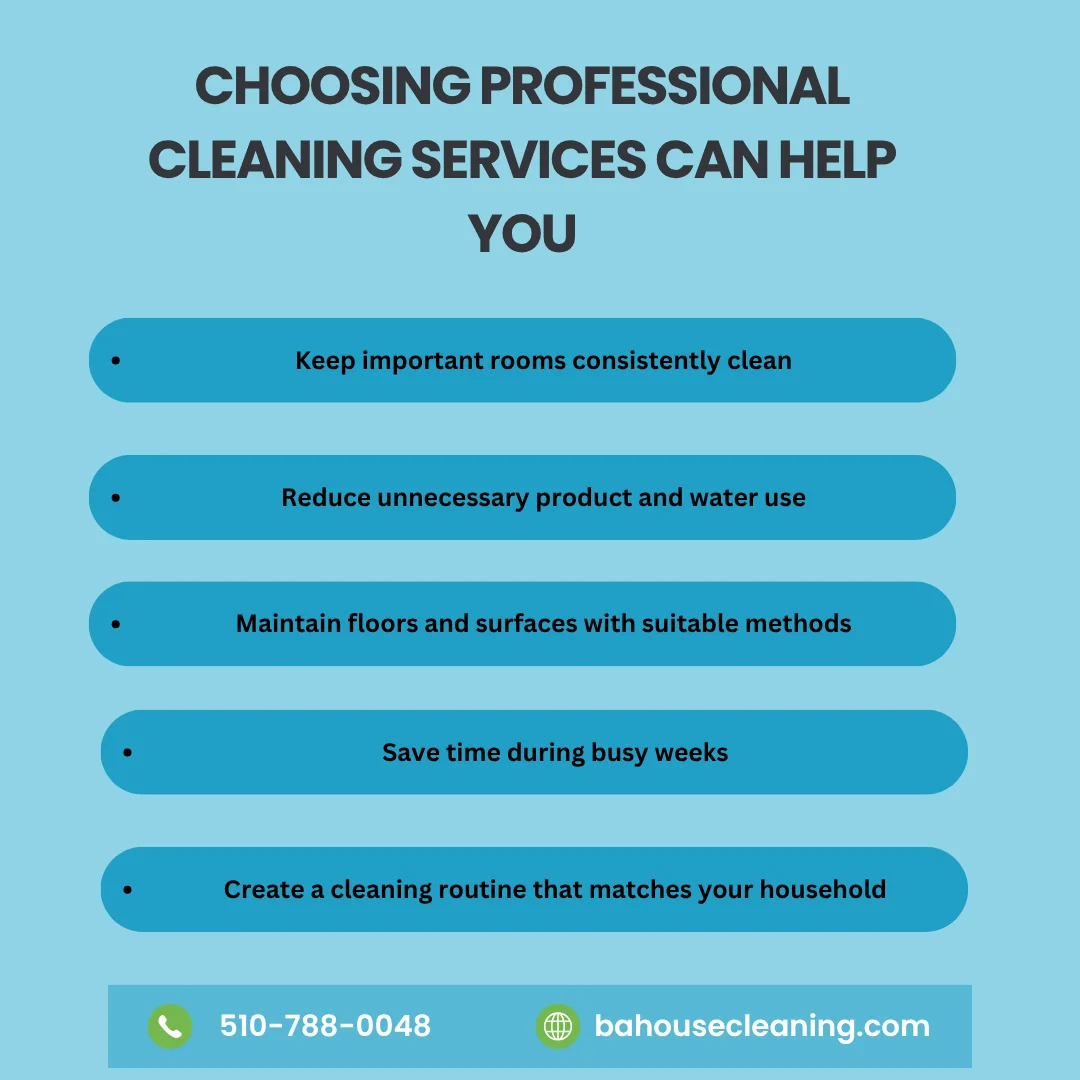
The Main Benefits of Hiring Professional Cleaners
A clean home can improve daily life in several practical ways. The most obvious benefit is saved time. Cleaning several rooms properly may require hours, especially when tasks have accumulated. Professional support allows clients to use that time elsewhere.
Another advantage is consistency. People often clean the most visible areas first, then postpone less noticeable tasks. A structured service provides more even attention across the home. Over time, that consistency helps prevent heavy buildup.
Professional cleaners may also reduce physical strain. Repeated bending, reaching, scrubbing, and lifting can become tiring. Older adults, people with limited mobility, and clients recovering from demanding periods may especially value this support.
Finally, reliable cleaning can improve peace of mind. Returning to an orderly home often feels easier than facing unfinished chores. The space becomes more welcoming, and daily routines may feel less stressful.
Saving Time Without Lowering Your Standards
Many people delay hiring help because they believe they should manage everything themselves. However, outsourcing cleaning does not mean lowering personal standards. It means deciding where your time creates the most value.
A typical week may include work, commuting, errands, appointments, meals, childcare, and personal responsibilities. Adding several hours of detailed cleaning can make rest feel impossible. Professional support creates room for recovery and allows clients to focus on priorities.
Reliable professional cleaners also help prevent the “all-day cleaning” cycle. Instead of sacrificing a weekend to restore the entire home, clients can maintain order through scheduled care. Small daily habits then become enough to support the results.
Supporting a Healthier Indoor Environment
Dust, pet hair, crumbs, moisture, and residue can collect quickly. Although routine tidying helps, some particles remain on floor edges, shelves, fabric surfaces, and frequently touched areas. Regular cleaning reduces this accumulation and supports a fresher indoor environment.
Bathrooms and kitchens deserve particular attention. Moisture, food residue, soap film, and oils can build up on surfaces. Timely cleaning helps keep these areas more pleasant and easier to use.
A cleaner environment may also help people who feel uncomfortable around visible dust or clutter. However, cleaning services do not replace medical advice or specialized treatment. Their role is practical: removing common household debris and helping maintain cleaner surfaces.
Making Everyday Routines Easier
A clean home can simplify ordinary tasks. Preparing breakfast feels easier when the counters are clear. Getting ready for work becomes smoother when the bathroom is fresh. Relaxing at night feels more comfortable when the living area looks orderly.
These improvements may seem small, yet they affect daily life repeatedly. When rooms stay manageable, people spend less time moving clutter, searching for supplies, or cleaning before using a surface.
Professional support also helps households create a predictable rhythm. Clients know when cleaning will occur and can plan around it. Therefore, they do not need to decide each day which overdue task deserves attention first.
Professional Cleaners for Busy Oakland Households
Oakland residents often balance demanding schedules, family responsibilities, social plans, and travel across the Bay Area. That pace can leave little time for detailed home care. A reliable service offers a practical solution.
Professional cleaners can support apartments, condos, townhomes, and larger houses. The service should match the actual needs of the property rather than follow an inflexible formula. For example, a small apartment may require focused bathroom and kitchen care. A family home may need extra attention to common areas and floors.
Local support also makes scheduling easier. A company familiar with Oakland can plan routes efficiently and understand the needs of different households. Clear communication, dependable arrival windows, and flexible service options all improve the experience.
Choosing the Right Cleaning Frequency
The ideal schedule depends on how quickly the home becomes untidy. A household with children or pets may need weekly service. A smaller household with lighter use may prefer visits every two weeks. Monthly cleaning may suit clients who handle routine tasks but want regular, detailed support.
Weekly service often works well when:
Several people share the home
Pets shed regularly
Floors need frequent attention
Kitchens and bathrooms receive heavy daily use
The household has limited time for upkeep
Biweekly service offers a balance between cost and consistency. It helps prevent major buildup while allowing clients to manage light tasks between visits.
Monthly service may support homes that stay relatively orderly. However, the team may need more time during each appointment because dust and residue have more time to collect.
How to Prepare Before a Cleaning Appointment
Preparation does not mean cleaning the home before the cleaners arrive. Instead, a few simple steps can help the team focus on actual cleaning.
First, remove important documents, personal valuables, and fragile items from open surfaces. Next, place loose clothing, toys, and small belongings where they belong. This step allows the team to reach floors and furniture more easily.
Clients should also communicate special requests before the appointment. Mention areas that need extra care, surfaces that require specific products, and rooms that should remain untouched. If pets will stay home, explain where they will be during the visit.
A short preparation routine can include:
Clearing crowded counters
Securing valuables
Picking up loose floor items
Identifying priority rooms
Providing entry instructions
Sharing parking details when necessary
Explaining pet arrangements
Noting sensitive materials or surfaces
These steps help create a smoother and more productive visit.
What to Expect During the First Appointment
The first visit often requires more time than future appointments. The team must learn the layout, understand priorities, and address the buildup that developed before service began. Therefore, clients should not assume every future visit will follow the same timing.
At the start, the cleaners may review requested areas and confirm the service level. They should know whether the appointment is standard, deep, move-related, or customized. This clarification keeps expectations aligned.
During the visit, clients may remain home or leave, depending on their comfort and access arrangements. Either option can work. The key is providing clear instructions and a reliable way to communicate if questions arise.
Afterward, review the main areas and share useful feedback. Specific comments help the company understand preferences. Good communication can improve consistency during future visits.
Cleaning Services for Apartments and Condos
Apartments and condos need careful, efficient cleaning. Smaller spaces may collect visible clutter and dust quickly because every surface is close to daily activity. Kitchens and bathrooms also tend to receive concentrated use.
Professional service can focus on:
High-traffic flooring
Compact kitchens
Bathroom surfaces
Dust around furniture
Balcony door tracks, when included
Mirrors and glass surfaces
Entry areas and frequently touched fixtures
Access instructions matter in multi-unit buildings. Clients should explain call boxes, parking restrictions, elevators, and building rules. Clear information reduces delays and protects the scheduled cleaning time.
Cleaning Services for Family Homes
Family homes often need flexible priorities. The kitchen may require stronger attention after frequent meals, while living spaces collect toys, crumbs, and pet hair. Bathrooms may also need more regular care.
Professional cleaners can help maintain these high-use areas without disrupting household routines. Recurring service makes it easier to stay ahead of buildup, especially during busy school or work periods.
Families should explain which spaces matter most. Some may prioritize kitchens and bathrooms. Others may want bedrooms rotated or play areas cleaned carefully. A customized plan helps direct time toward the areas that improve comfort the most.
Cleaning Support for Home Offices
Remote and hybrid work have made home offices more important. A dusty, cluttered workspace can feel distracting, especially when clients spend several hours there each day.
Cleaning may include desk surfaces, floors, shelves, and accessible furniture. However, clients should secure papers, devices, and sensitive materials before the appointment. Cleaners should not reorganize business documents without clear instructions.
A fresh office supports a more comfortable workday. It can also help separate work from household chores. Instead of noticing overdue cleaning during meetings, clients can focus on their responsibilities.
Common Areas That People Often Forget
Even people who clean regularly may overlook certain areas. These surfaces do not always look dirty from a distance, yet they collect dust and fingerprints over time.
Frequently missed areas include:
Door frames and handles
Light switches
Baseboards
Floor edges
Window sills
Cabinet fronts
Appliance exteriors
Chair legs
Table bases
Bathroom fixture edges
Shelves above eye level
Areas beneath movable items
A professional checklist helps include these details when the selected service covers them. However, clients should confirm what is included before booking. Clear service descriptions prevent misunderstandings.
Products, Tools, and Surface Safety
Different surfaces require different methods. A product that works well on one material may damage another. For example, natural stone, wood, stainless steel, and delicate finishes need suitable care.
A reliable company should use products and tools responsibly. Teams should avoid overly abrasive materials on sensitive surfaces. They should also follow client instructions regarding preferred products when possible.
Clients can support surface safety by sharing relevant details. Mention specialty countertops, fragile fixtures, recently refinished floors, or areas with manufacturer requirements. Clear information helps the team choose a safer approach.
Why Consistency Matters More Than Occasional Intensity
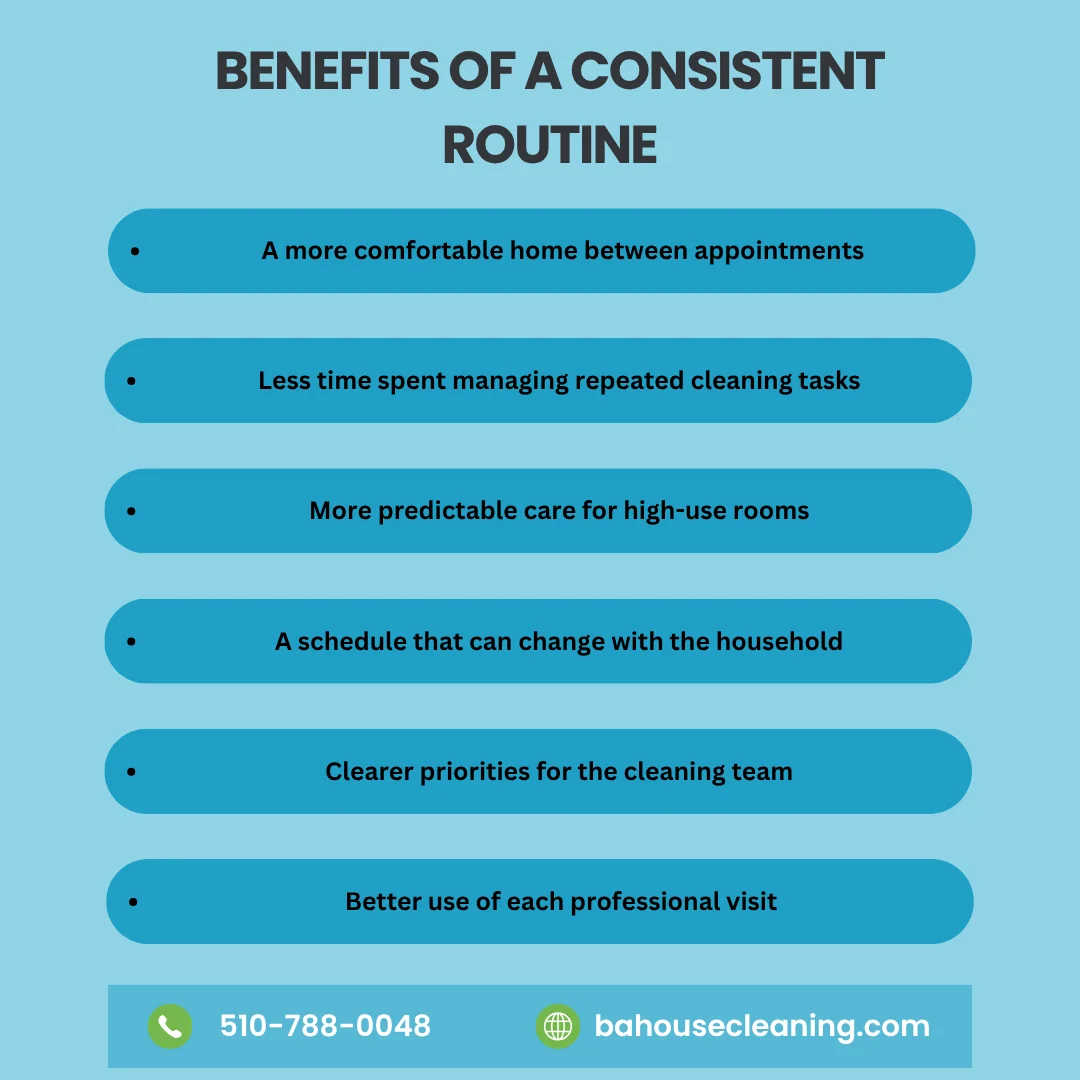
A single long cleaning session can improve the home quickly. However, regular care usually creates better long-term results. Dust, residue, and floor debris become easier to manage when removed before heavy buildup forms.
Consistency also makes each appointment more efficient. The cleaners spend less time restoring neglected surfaces and more time maintaining a strong standard across the home.
Professional cleaners can become part of a realistic maintenance routine. Between visits, clients may only need to handle spills, dishes, laundry, and quick tidying. This shared approach prevents cleaning from taking over personal time.
How Professional Cleaning Supports Special Occasions
Hosting guests often creates extra pressure. People may need to prepare food, arrange rooms, shop, and manage schedules. Cleaning the entire home can become one task too many.
A pre-event appointment helps prepare the most visible and frequently used areas. Clients can request attention to the kitchen, bathrooms, living spaces, and guest rooms. After the event, another visit may help restore order.
Cleaning support can also help before holidays, family visits, birthdays, or small gatherings. Booking early is wise because popular dates may fill quickly.
Move-In and Move-Out Cleaning Needs
Moving creates a different type of cleaning challenge. Empty rooms reveal dust, marks, cabinet debris, and floor edges that furniture once covered. At the same time, clients must manage packing, transportation, utilities, and deadlines.
A move-related cleaning service can focus on empty surfaces and accessible storage areas. However, the exact scope should be confirmed in advance. Some companies offer cabinet interiors, appliance interiors, and detailed floor work as add-ons.
For move-in cleaning, the goal is to prepare a fresher space before belongings arrive. Move-out cleaning helps leave the property in better condition. Neither service guarantees deposit returns, since property managers use their own standards.
Understanding Pricing and Service Value
Cleaning prices depend on several factors. Home size matters, but it is not the only consideration. The condition of the space, service type, number of rooms, access, and requested details can also affect the cost.
Deep cleaning usually costs more than standard cleaning because it requires more time and effort. Likewise, first-time appointments may take longer than recurring visits. Add-ons can also change the final price.
When comparing providers, clients should look beyond the lowest quote. Consider reliability, communication, service clarity, and the ability to meet your needs. A slightly cheaper service may offer less time or fewer tasks. Transparent expectations make comparison easier.
Questions to Ask Before Booking Professional Cleaners
The right questions can help clients avoid confusion. Before booking, ask what the service includes, how estimates work, and whether supplies are provided. It is also useful to understand cancellation policies and access procedures.
Important questions include:
Is this a standard or deep cleaning appointment?
Which tasks are included?
Are any services considered add-ons?
Will the team bring products and equipment?
How should I prepare the home?
How long might the first visit take?
Can I request recurring service?
How are special instructions recorded?
What happens if I need to reschedule?
How can I share feedback after the visit?
A professional company should answer these questions clearly. Straightforward communication builds trust before anyone enters the home.
Red Flags to Avoid When Selecting a Cleaning Company
Not every provider offers the same level of professionalism. Certain warning signs should encourage clients to ask more questions.
Be cautious when a company cannot explain what the service includes. Vague pricing without any discussion of home condition may also cause problems later. Poor communication, missed messages, and unclear arrival expectations can signal future frustration.
Another concern is unrealistic promises. No honest company can guarantee that every old stain, mark, or damaged surface will disappear. Cleaning improves many surfaces, but it cannot reverse wear or permanent damage.
Choose a provider that explains limitations, confirms details, and respects your home. Trust grows through clear actions rather than exaggerated claims.
How to Maintain Results Between Visits
Professional service works best when paired with simple daily habits. Clients do not need to complete a full cleaning routine. Instead, small actions can protect the results.
Useful habits include wiping spills quickly, placing items back after use, managing dishes daily, and keeping floors clear. Bathroom ventilation can also reduce lingering moisture. A small trash routine prevents bins from becoming unpleasant.
Try this simple maintenance plan:
Spend five minutes clearing the kitchen each evening
Return loose items to their usual places
Wipe bathroom counters after heavy use
Vacuum high-traffic spots when needed
Keep entryways free from shoes and bags
Address spills before they dry
Prepare rooms before the next appointment
These habits make the home easier to enjoy and allow the cleaning team to focus on deeper tasks.
Why Local Cleaning Services in Oakland Matter
Choosing cleaning services in Oakland can offer practical advantages. A local company understands travel patterns, neighborhood access, parking challenges, and the needs of Bay Area households. This familiarity may support more reliable scheduling.
Local service also makes ongoing communication easier. Clients can build a relationship with a nearby team rather than repeatedly explaining their preferences to distant providers.
Moreover, supporting a local company keeps service connected to the community. Clients benefit from accountability, while the business builds its reputation through dependable results and customer relationships.
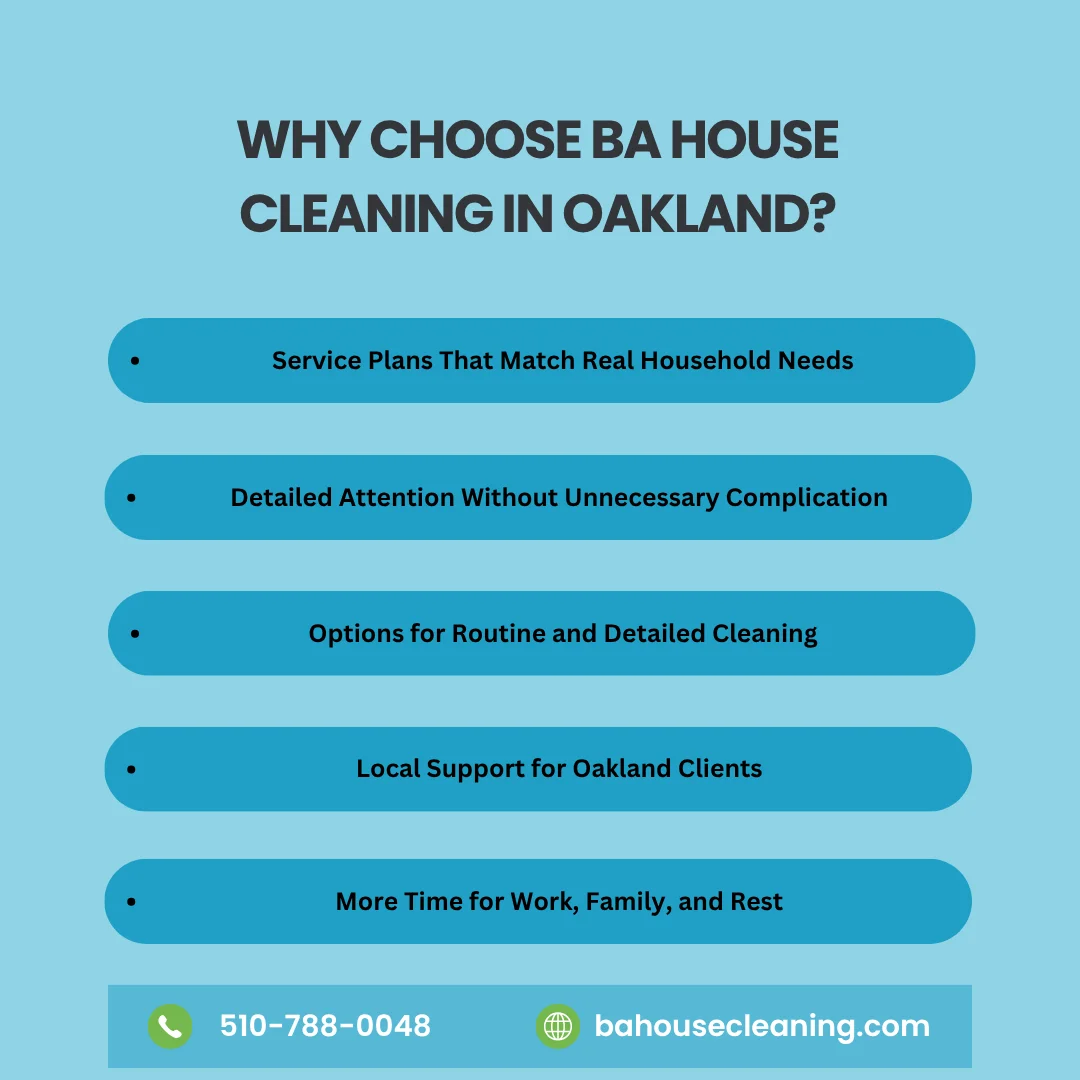
Why Choose BA House Cleaning in Oakland?
Choosing a cleaning company requires trust. Clients invite a team into personal spaces and expect consistent care. BA House Cleaning provides cleaning services designed to support busy Oakland households with clear communication and practical attention.
The company can help clients who need routine care, a detailed reset, or dependable support during demanding periods. Working with professional cleaners also creates a clear path from an overwhelming cleaning list to a manageable home routine.
1. Service Plans That Match Real Household Needs
Every home has different priorities. BA House Cleaning can focus on the rooms and tasks that matter most within the selected service. Clear planning helps direct time toward kitchens, bathrooms, floors, and other high-use areas.
This flexible approach is more useful than treating every property exactly the same. Clients can explain their concerns and receive a plan that reflects the home’s condition.
2. Detailed Attention Without Unnecessary Complication
A good cleaning experience should feel straightforward. BA House Cleaning emphasizes practical service and organized care. The team works through agreed areas with attention to visible surfaces and important details.
Reliable professional cleaners should make life easier, not add confusion. Clear expectations, preparation guidance, and responsive communication all support a smoother appointment.
3. Options for Routine and Detailed Cleaning
Some clients need regular maintenance, while others need deep professional cleaning. BA House Cleaning can support different stages of home care through suitable service options.
A detailed first visit may restore neglected areas. Recurring appointments can then maintain the progress. This combination gives clients a realistic way to protect cleanliness over time.
4. Local Support for Oakland Clients
BA House Cleaning serves Oakland and understands the importance of dependable local service. Clients can seek cleaning services in Oakland from a company connected to the area.
Local knowledge can help with scheduling, access planning, and communication. It also allows the company to build lasting relationships with households that need ongoing care.
5. More Time for Work, Family, and Rest
The strongest advantage may be the time clients regain. Instead of spending a free day on floors, bathrooms, dusting, and kitchen cleanup, they can focus on responsibilities or recovery.
BA House Cleaning helps reduce the weight of recurring chores. That support can make the home feel more comfortable while giving clients greater control over their schedules.
Choosing BA House Cleaning is not only about a cleaner appearance. It is about creating a practical system for home care. With suitable service, clear priorities, and regular support, clients can enjoy a fresher home without allowing cleaning to dominate their week.
Create a Cleaner and More Comfortable Oakland Home
A clean home supports comfort, routine, and peace of mind. However, maintaining that condition requires time and consistent effort. Professional cleaners provide organized support for people who want reliable results without sacrificing every free hour.
Whether you need routine care, Deep Cleaning Services, or a complete home reset, BA House Cleaning can help. The team offers Professional Cleaning Services for Oakland clients who value clear communication and dependable attention.
Contact BA House Cleaning today to discuss your home, priorities, and preferred schedule. You can also connect through the company’s Facebook page and take the next step toward a cleaner, more manageable home.
Frequently Asked Questions
How often should I hire professional cleaners?
The right frequency depends on household size, lifestyle, pets, and available time. Weekly appointments suit busy homes with heavy use. Biweekly service offers strong maintenance for many households. Monthly cleaning may work for smaller homes that receive regular care between visits.
What is included in standard cleaning services?
Standard cleaning services often include dusting, vacuuming, mopping, bathroom cleaning, kitchen surface care, and trash removal. Exact tasks vary by company and package. Always confirm the checklist before booking, especially when you need specific areas cleaned.
What is the difference between standard and deep cleaning?
Standard cleaning maintains a generally cared-for home. Deep cleaning addresses heavier buildup and often includes more detailed attention to baseboards, corners, fixtures, and neglected surfaces. Deep Cleaning Services usually take longer because the team handles more intensive tasks.
Do I need to be home during the appointment?
You may stay home or leave, depending on your comfort and access arrangements. Provide clear entry instructions and a reliable contact method. Also, explain pet arrangements and any rooms that should remain closed.
Should I clean before the cleaning team arrives?
You do not need to clean first. However, picking up loose items helps the team reach surfaces and floors. Clear counters when possible, secure valuables, and share special instructions before the appointment.
Can professional cleaners remove every stain?
No cleaning company can promise the removal of every stain. Results depend on the material, stain type, age, previous treatments, and surface condition. Cleaning can improve many marks, but permanent damage or wear may remain.
Are recurring cleaning services worth it?
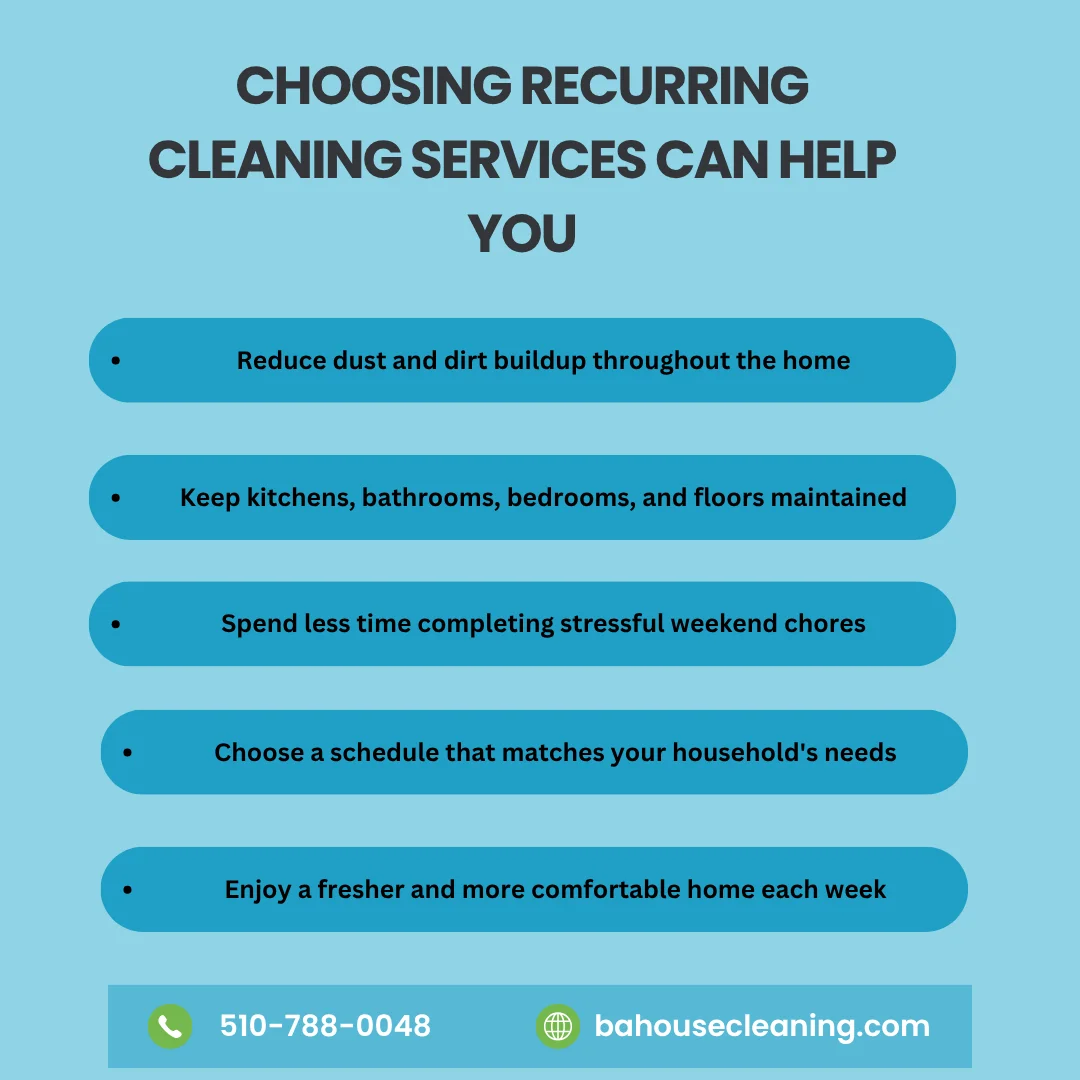
Recurring cleaning services can save time and prevent heavy buildup. It also creates a predictable routine and may make each visit more efficient. Many clients choose weekly or biweekly appointments after an initial deep cleaning.
How can I book cleaning services in Oakland with BA House Cleaning?
Contact BA House Cleaning and share your home size, desired service, main priorities, and preferred timing. The company can explain available options and help you choose a suitable cleaning plan for your Oakland home.
Stress can make ordinary responsibilities feel much harder. When work, family duties, appointments, and personal concerns compete for attention, even a small household task may feel overwhelming. At the same time, an untidy home can add another layer of pressure because visible clutter often reminds you of unfinished work.
The Benefits of cleaning in Stress are not limited to having clean floors or organized countertops. Cleaning can also create structure, improve comfort, and make the home feel easier to manage. A cleaner environment may reduce distractions and help you regain a sense of control during demanding periods.
However, cleaning should not become another source of pressure. You do not need to create a perfect home or finish every room in one day. Instead, the goal is to build a cleaner and more supportive space through realistic steps.
Professional cleaning services can also help when your schedule, energy, or responsibilities make household cleaning difficult. BA House Cleaning supports homeowners, renters, families, and busy professionals who want a cleaner home without adding more work to an already demanding week.
This guide explores the emotional and practical relationship between cleaning and stress. It also explains how regular cleaning, professional support, and Deep Cleaning Services can help create a more comfortable home.
Understanding the Connection Between Stress and the Home
Your home is more than a physical space. It is where you rest, eat, prepare for the day, spend time with family, and recover from outside responsibilities. Therefore, the condition of the home can influence how easy or difficult these daily activities feel.
A cluttered room contains many visual reminders. Laundry may remind you of unfinished chores. Dirty dishes may create pressure around meal preparation. Piles of mail may bring financial or administrative concerns back into your attention.
These reminders do not always create stress on their own. However, they can increase the feeling that too many tasks remain unfinished. As a result, the mind may struggle to fully relax.
The Benefits of Cleaning in Stress become clearer when cleaning removes these visual reminders. A cleared table can make meals easier. An organized entryway can reduce morning delays. A clean bedroom can create a more peaceful place to rest.
Cleaning does not remove the original causes of stress. It cannot change work deadlines, financial concerns, or personal problems. Still, it can improve the environment in which you manage those challenges.
How Visual Clutter Can Increase Mental Pressure
Visual clutter competes for attention. When many objects remain on countertops, floors, desks, and furniture, the eyes continue to notice them. The mind may then treat each object as information that requires attention.
For example, a dining table covered with paperwork, shopping bags, and household items no longer serves one clear purpose. Before using it for dinner, you must first sort, move, or ignore everything on the surface. That extra decision can feel small, but repeated decisions create mental fatigue.
The Benefits of cleaning in Stress often begin with reducing unnecessary visual noise. You do not need to remove every decorative item or create an empty home. Instead, focus on making frequently used spaces easier to understand and use.
A clear kitchen counter creates room for food preparation. An organized desk supports work or study. A tidy bathroom makes the morning routine more direct.
When each space has a clear purpose, daily activities often require fewer decisions. Consequently, you may feel less rushed and more prepared.
Cleaning Can Restore a Sense of Control
Stress often grows when people feel that they cannot control important parts of their lives. Some problems require time, cooperation, or outside decisions. Household cleaning, however, gives you a task with a visible beginning and ending.
You can choose one surface, complete it, and immediately see the result. This clear progress may create a small sense of accomplishment. Although the task does not solve every concern, it gives the day a useful and manageable success.
The Benefits of cleaning in Stress include this feeling of progress. Washing dishes, making the bed, or clearing a countertop produces a result that you can see. That result may encourage you to complete another small task.
However, the task should remain realistic. Trying to clean the entire home while already exhausted can increase frustration. Instead, select one area that will make the greatest difference to your day.
For example, cleaning the kitchen may make meals easier. Organizing the bedroom may improve evening comfort. Clearing the entryway may support a smoother morning.
Why Small Cleaning Tasks Can Feel Rewarding
Large projects often delay satisfaction because the final result takes time. Small cleaning tasks provide faster feedback. You can wipe a sink, remove trash, or fold a load of laundry within a limited period.
This immediate feedback can motivate you to continue. More importantly, it helps separate the idea of cleaning from the idea of spending an entire day working.
One of the practical Benefits of cleaning in Stress is the ability to divide work into manageable sections. A ten-minute task may not transform the entire home. Nevertheless, it can improve one part of your environment.
Useful short tasks include:
Clearing one countertop
Loading or unloading the dishwasher
Removing trash from one room
Wiping the bathroom sink
Folding one load of laundry
Organizing the entryway
Vacuuming one high-traffic area
These tasks work best when you select only one or two. A long list can quickly become another source of pressure.
Cleaning Creates Helpful Daily Structure
Stress can interrupt routines. You may sleep later, delay meals, ignore laundry, or postpone basic household tasks. Once routines break, daily life often becomes more difficult.
Cleaning can provide a simple structure. For example, making the bed can signal the start of the day. Washing dishes after dinner can close the kitchen for the evening. A brief nightly reset can make the next morning easier.
The Benefits of cleaning in Stress include the creation of predictable routines. Predictability can reduce the number of decisions you make during busy periods.
A routine should match your real schedule. A parent with young children may need a different system than someone who lives alone. Similarly, a person working long shifts may prefer weekly support rather than daily cleaning.
The purpose is not perfection. Instead, the routine should prevent household tasks from becoming too large or disruptive.
Physical Movement Can Support a Mental Reset
Cleaning involves movement. Vacuuming, sweeping, putting items away, and wiping surfaces encourage the body to become active. During a stressful day, this movement can interrupt long periods of sitting or overthinking.
The Benefits of cleaning in Stress may partly come from this change in activity. A simple physical task can give the mind a temporary focus outside the stressful situation.
Music, a podcast, or a short timer may make the activity more enjoyable. However, avoid turning the session into an exhausting workout. The goal is to create progress without draining the energy you need for other responsibilities.
Choose light tasks when your energy feels limited. Save heavier tasks for another day or schedule professional cleaning services when the workload becomes too demanding.
A Cleaner Bedroom May Support Better Rest
The bedroom should feel like a place for rest, yet clutter can make it seem active, crowded, and unfinished. Clothes on the floor, overloaded nightstands, and piles of laundry keep household responsibilities visible when you are trying to relax. For this reason, the Benefits of Cleaning in Stress can become especially noticeable in the bedroom. A cleaner and more organized space may create a calmer visual environment and make the room feel more comfortable before sleep.
Start with the areas closest to the bed because they have the strongest effect on what you see at night and in the morning. Clear the nightstand, remove cups or dishes, place clothing in its proper location, and replace used bedding when needed. After that, reduce unnecessary items from the floor to create a clear walking path and improve the room’s overall appearance. You do not need to reorganize every drawer or complete a major storage project. Instead, focus on the surfaces and areas that remain visible when you enter the room or lie down to rest.
Cleaning Can Improve Focus During Work or Study
Working from home has made household distractions more noticeable for many people. A desk surrounded by laundry, dishes, and clutter can make concentration more difficult.
Even when you try to ignore the mess, part of your attention may remain connected to it. You may think about cleaning instead of completing the task in front of you.
The Benefits of cleaning in Stress include creating a clearer work area. A clean desk does not guarantee productivity, but it removes some avoidable distractions.
Start by clearing enough space for the items you actually need. Keep chargers, notebooks, and frequently used tools nearby. Move unrelated household items to another location.
Also, clean the surrounding floor and remove visible trash. These simple changes can make the work area feel more intentional.
When work ends, spend a few minutes resetting the space. This routine helps separate professional time from personal time, especially when both happen in the same room.
A Clean Kitchen Can Make Daily Meals Easier
The kitchen supports several daily routines because it stores food, provides space for meal preparation, and often serves as a gathering area. Therefore, clutter in this room can affect much more than appearance. When the sink is full, the counters are crowded, and clean cookware is unavailable, preparing a simple meal requires extra time and effort. You may need to clean several surfaces before you can even begin cooking, which can make an already busy day feel more demanding.
The Benefits of Cleaning in Stress are especially practical in the kitchen because a clean and functional space reduces the number of steps required to prepare meals and manage cleanup. Start with the sink and the main preparation surface, since these areas usually provide the greatest immediate improvement. Afterward, remove expired food, return frequently used items to accessible locations, and clear products that do not belong on the counters. These simple actions can make the kitchen easier to use without requiring a complete reorganization.
A short evening reset can also prevent small tasks from becoming a large cleaning project. Washing the dishes, wiping the counters, and taking out the trash can make the following morning feel more organized. However, routine care may not remove heavy grease, cabinet buildup, or residue in neglected areas. In these situations, professional Deep Cleaning Services can provide the detailed attention needed to restore the kitchen and make regular maintenance easier.
Cleaner Bathrooms Can Improve Comfort and Routine
Bathrooms are small spaces, but they contain many frequently used surfaces. Toothpaste residue, soap buildup, hair, moisture, and clutter can accumulate quickly.
A dirty bathroom may make the morning routine feel less comfortable. It can also add another unfinished task to the day.
The Benefits of Cleaning in Stress include making essential routines easier. A clean sink, clear counter, fresh mirror, and organized shower area create a more comfortable space.
Start with basic tasks. Remove empty containers, wipe the sink, clean the mirror, and organize daily products. Then, address the toilet, shower, and floor.
If the bathroom needs heavy scrubbing, divide the work across several sessions. You may also choose professional cleaning services in Oaklandwhen the buildup becomes difficult to manage.
Cleaning May Support a More Comfortable Family Environment
Household stress can affect communication. When people feel tired or overwhelmed, small problems may create larger disagreements. Cleaning responsibilities can become one of those problems.
A clear household system can reduce confusion. Family members should understand which tasks they manage and when they should complete them.
The Benefits of cleaning in Stress may extend to the entire household when responsibilities feel fair and realistic. One person should not carry every task if others can contribute.
Children can complete age-appropriate responsibilities. They may put away toys, place laundry in a basket, or help clear the table. Adults can divide larger tasks based on schedules and ability.
Avoid using cleaning as punishment. Instead, present it as part of maintaining a shared home.
When the workload remains too large, professional support can protect family time. Hiring a BA House Cleaning may allow household members to spend their limited free time together rather than using the entire weekend for cleaning.
How Cleaning Can Help Before Guests Arrive
Unexpected visitors can create stress, especially when the home feels untidy. People may rush from room to room and attempt to clean everything at once.
The Benefits of cleaning in Stress include creating a home that is easier to prepare. Regular maintenance reduces the amount of emergency cleaning required before guests arrive.
Focus on the rooms visitors will use. These usually include the entryway, living room, kitchen, and bathroom. Close the doors to private rooms if they do not require immediate attention.
Avoid beginning large organizing projects shortly before the visit. Instead, remove visible clutter, clean high-touch surfaces, and improve the main floor areas.
A professional cleaning appointment can also help before celebrations, family gatherings, or overnight guests. BA House Cleaning can provide support based on the home’s condition and the available preparation time.
When Cleaning Itself Starts to Feel Stressful
Cleaning can reduce pressure, but it may also become overwhelming when the workload feels endless. A long checklist can create guilt when you cannot complete every task, especially during busy or emotionally demanding periods. Perfectionism often makes this feeling worse because you may believe that every room must look flawless before you can rest. As a result, cleaning stops feeling helpful and begins to feel like another responsibility that never truly ends.
Understanding the Benefits of Cleaning in Stress also means recognizing the importance of realistic limits. A clean home should support your daily life, but your life should not revolve around maintaining a perfect space. Set a reasonable stopping point before you begin. For example, you might clean for twenty minutes, complete one important area, and then take a break. Focus on the spaces that affect daily comfort, such as the kitchen, bathroom, or bedroom, instead of spending limited energy on minor details.
Some days will allow more progress than others. Work demands, family responsibilities, illness, travel, or low energy can all change what you can realistically complete. Therefore, it is important to adjust your expectations without treating unfinished cleaning as a personal failure. When the household workload becomes too difficult to manage, professional cleaning services can help reset the home while allowing you to protect your time, energy, and needed rest.
Avoid the All-or-Nothing Cleaning Mindset
The all-or-nothing mindset suggests that a task has no value unless you complete everything. This idea can make people avoid cleaning entirely because the project feels too large.
However, partial progress still matters. Clearing half the kitchen counter creates usable space. Washing one load of laundry provides clean clothes. Cleaning one bathroom improves an essential room.
The Benefits of cleaning in Stress depend on practical improvement, not perfection. A home can feel better even when some tasks remain unfinished.
Create three categories:
Tasks that affect health and daily function
Tasks that improve comfort and appearance
Tasks that can wait
Complete the first category before addressing less important details. This approach prevents decorative tasks from taking time away from essential cleaning.
Different Types of Cleaning Services and Their Uses
Not every household needs the same level of cleaning. Understanding the Different Types of Cleaning Services helps you select the right support for your situation.
Routine house cleaning focuses on ongoing maintenance. It may include dusting, bathroom cleaning, kitchen surfaces, vacuuming, and mopping. This option works well for homes that receive regular attention but need consistent support.
Deep cleaning addresses more detailed buildup. Deep Cleaning Services may focus on baseboards, detailed bathroom areas, heavier kitchen residue, and other commonly missed surfaces. This service can help when routine cleaning no longer feels sufficient.
Move-in and move-out cleaning services for properties during relocation. These services often focus on empty rooms, cabinets, closets, floors, and selected appliances.
Recurring cleaning creates a regular schedule. Weekly, biweekly, or monthly visits can prevent cleaning tasks from becoming overwhelming.
The Benefits of cleaning in Stress increase when the service matches the actual need. Booking routine cleaning for a heavily neglected home may not provide enough time. In contrast, booking a deep clean for a well-maintained home may provide more detail than necessary.
BA House Cleaning can help clients compare service options based on property size, condition, and priorities.
The Role of Routine Cleaning Services
Routine cleaning prevents dirt and clutter from building up over time. It also reduces the amount of effort required during each cleaning session.
A regular visit may include kitchens, bathrooms, bedrooms, living areas, floors, and accessible surfaces. The exact checklist depends on the selected service.
The Benefits of cleaning in Stress become easier to maintain when the home follows a consistent schedule. Instead of facing a major cleaning project every few months, you can manage smaller amounts of work.
Routine support may suit:
Busy professionals
Families with children
Older adults
People with demanding schedules
Households that host frequent guests
Clients who prefer consistent home maintenance
Reliable cleaning services in Oakland can help residents protect their time while maintaining a more comfortable environment.
When Deep Cleaning Services Become Helpful
Routine cleaning focuses on maintenance, but some homes need a more detailed reset. Grease, dust, soap residue, and buildup can remain in areas that receive less frequent attention.
Deep Cleaning Services can help after a busy season, before a special event, or when the home has not received detailed cleaning for a long period.
The Benefits of Cleaning in Stress may feel stronger after a deep clean because several neglected areas improve at the same time. The home can feel fresher and easier to maintain afterward.
Deep cleaning may include additional attention to:
Baseboards and trim
Detailed bathroom surfaces
Kitchen buildup
Doors and frames
Cabinet exteriors
Reachable fixtures
High-touch areas
Floor edges and corners
Clients should review the service checklist before booking. Some detailed tasks may require separate selection.
Building a Low-Stress Cleaning Plan
A cleaning plan should reduce pressure rather than create more. Begin by identifying the areas that cause the most frustration.
Do you struggle to prepare meals because the kitchen is crowded? Does the bedroom feel difficult to relax in? Are bathroom tasks building up?
The Benefits of cleaning in Stress become more noticeable when you address the most important problem first.
Create a weekly plan with a limited number of tasks. For example, assign kitchen care to one day, bathrooms to another, and laundry to a third. Leave at least one day without major cleaning.
Avoid writing a list that includes every possible household task. Long lists often create disappointment, even when you complete meaningful work.
A practical plan should also include help. Family members, roommates, or professional cleaners can share the workload.
Use the One-Room Method
Moving between rooms can reduce efficiency. You may begin cleaning the kitchen, notice an item that belongs in the bedroom, and then start another task before finishing the first one.
The one-room method keeps your attention in one area. Gather the supplies you need, remove trash, clear surfaces, clean, and reset the room before moving on.
This method supports the Benefits of Cleaning in Stress because it creates a complete result. Finishing one room often feels more rewarding than partially cleaning several rooms.
Choose a smaller room when motivation feels low. A bathroom or entryway may provide a faster result than a large living area.
Once the room is complete, stop if necessary. You can continue another day without losing the progress you already made.
Create Short Daily Resets
A daily reset is a brief routine that prevents small problems from becoming large ones. It should take only a few minutes.
You might use the reset to clear dishes, remove trash, put away shoes, and return items to their correct rooms. The exact tasks should match your household.
The Benefits of cleaning in Stress often come from consistency rather than long cleaning sessions. Five or ten minutes each evening can protect the work completed during the week.
Keep the reset simple. If it regularly takes longer than fifteen minutes, reduce the number of tasks or move some responsibilities to another day.
A timer can help you stop at the planned time. This protects the routine from becoming another exhausting project.
Reduce Clutter Before You Clean
Cleaning around excessive belongings takes more time. You must move items before wiping surfaces, vacuuming floors, or organizing shelves.
Decluttering does not mean throwing away everything. It means removing items that no longer support the way you use the space.
The Benefits of Cleaning in Stress improve when frequently used areas remain clear. Start with one drawer, shelf, or countertop.
Create simple categories for items you want to keep, donate, relocate, or discard. Finish one small area before starting another.
Avoid removing everything from a large closet unless you have enough time to complete the project. An unfinished decluttering session can create more disorder than it removes.
Use Cleaning Supplies That Simplify the Process
Too many products can make cleaning confusing. A basic set of effective supplies often handles most routine tasks.
Keep frequently used items together in a portable container. This reduces the time spent searching for products and tools.
Your basic kit may include:
Microfiber cloths
An appropriate surface cleaner
Bathroom cleaner
Sponges or scrub brushes
Vacuum cleaner
Mop and bucket
Gloves
Trash bags
Read product instructions and avoid mixing cleaning chemicals. Ventilate the space when required.
Professional cleaners bring experience, tools, and a structured process. Therefore, hiring cleaning services may be a practical option when product selection or cleaning techniques feel difficult.
When Professional Cleaning Services Can Reduce Pressure
Some weeks do not leave enough time for detailed housework. Work deadlines, childcare, travel, health needs, or family responsibilities may take priority.
The Benefits of cleaning in Stress do not require you to complete every task personally. Delegating cleaning can be a responsible use of time.
Professional support may help when:
The home needs a detailed reset
Your schedule remains consistently full
You are preparing for guests
You are moving into or out of a property
Routine cleaning has become difficult to maintain
You want more time for rest or family
A large event has increased the cleaning workload
BA House Cleaning provides professional cleaning services in Oakland for different household needs. Clients can choose support based on the home’s size, condition, and priorities.
Why Cleaning Services in Oakland Can Support Busy Households
Oakland households often balance demanding work schedules, commuting, childcare, social responsibilities, and home maintenance. As a result, weekends can quickly become filled with unfinished chores.
Professional cleaning services in Oakland can return some of that time to the household. Instead of spending the entire day cleaning, clients can focus on family, rest, errands, or personal responsibilities.
The Benefits of cleaning in Stress may become more consistent when cleaning follows a dependable schedule. Regular support can prevent buildup and make the home easier to maintain between appointments.
However, clients should provide clear information when booking. Property size, pets, current condition, requested tasks, and access details all help the cleaning company plan correctly.
Why Clients Choose BA House Cleaning
BA House Cleaning helps clients create cleaner, more manageable homes without turning cleaning into another demanding responsibility. Our team understands that every household has different schedules, priorities, and service needs.
The Benefits of cleaning in Stress become more practical when reliable professionals handle time-consuming household tasks. Clients can choose routine support, detailed cleaning, or other appropriate services based on the condition of the property.
Clients choose BA House Cleaning because they receive:
More time for important responsibilities: Professional support allows clients to focus on family, work, rest, and personal priorities.
A structured cleaning process: Our team follows an organized approach across kitchens, bathrooms, bedrooms, living areas, and floors.
Flexible service options: Clients can select from different service levels, including routine cleaning and Deep Cleaning Services.
Reliable local support: We provide professional cleaning services in Oakland and help clients plan appointments around their household needs.
A more comfortable home environment: Detailed cleaning can reduce visible clutter, surface buildup, and the feeling of unfinished household work.
Every home has a different layout and condition. Therefore, accurate information helps BA House Cleaning recommend the most suitable service and schedule enough time for the appointment.
Create a Cleaner Home Without Adding More Stress
The Benefits of cleaning in Stress include greater comfort, clearer routines, reduced visual distraction, and a stronger sense of control. Even a small cleaning task can improve how a room functions.
However, you do not need to complete everything at once. Focus on the spaces that affect daily life, use realistic routines, and allow some tasks to wait.
Professional support can also protect your time and energy. BA House Cleaning provides dependable cleaning services for Oakland residents who want a cleaner home without sacrificing every free hour.
Whether your home needs routine care or Deep Cleaning Services, our team can help you select an appropriate option. A cleaner home can make daily life feel more organized, comfortable, and manageable.
Ready to experience the Benefits of cleaning in Stress without handling every task yourself? Connect with BA House Cleaning on Facebook to discuss your home, explore available services, and schedule professional cleaning in Oakland.
Frequently Asked Questions
1. What are the main Benefits of cleaning in Stress?
The main benefits include reducing visible clutter, improving household routines, and making important spaces easier to use. Cleaning can also provide a clear task with a visible result, which may create a useful sense of progress.
However, cleaning does not remove every source of stress. It should support a more comfortable environment rather than replace professional care for serious or ongoing emotional concerns.
2. Can a messy home make stress feel worse?
A messy home may increase the feeling of unfinished work. Clutter can also make everyday activities take longer because people must move, sort, or search for items.
The effect differs from person to person. Some people feel strongly affected by clutter, while others experience less discomfort. The goal should be to create a space that supports your own comfort and routine.
3. How much cleaning should I do when I already feel overwhelmed?
Start with one small task that improves daily function. You might wash the dishes, clear the bathroom sink, or remove trash from one room.
Set a short timer and stop when the planned period ends. Completing one meaningful task is better than creating a large list that increases pressure.
4. Which room should I clean first to reduce stress?
Choose the room that affects your day most. Clean the kitchen first when meal preparation feels difficult. Start with the bedroom when rest is your main concern.
Bathrooms and entryways can also provide quick, visible results. The best starting point depends on your routine and the condition of the home.
5. How often should I schedule professional cleaning services?
The ideal schedule depends on household size, lifestyle, pets, children, and personal preferences. Some clients choose weekly or biweekly cleaning, while others prefer monthly appointments.
A home with heavy activity may need more frequent support. BA House Cleaning can help clients consider the property’s condition and select a realistic schedule.
6. What is the difference between regular cleaning and Deep Cleaning Services?
Regular cleaning maintains frequently used surfaces and rooms. It usually includes dusting, kitchen surfaces, bathrooms, vacuuming, and mopping.
Deep Cleaning Services provide more detailed attention to buildup and commonly overlooked areas. The exact checklist varies, so clients should confirm which tasks the service includes.
7. Are Different Types of Cleaning Services suitable for different stress levels?
Different services address different household needs. Routine cleaning can prevent chores from building up, while deep cleaning may help reset a neglected home.
Move cleaning supports relocation, and recurring cleaning creates a consistent maintenance schedule. Selecting the right service can reduce the amount of work the household must manage.
8. Why should I choose BA House Cleaning for cleaning services in Oakland?
BA House Cleaning provides professional support based on each property’s size, condition, and cleaning priorities. Our team helps clients manage kitchens, bathrooms, bedrooms, living spaces, and floors through an organized process.
Clients can use our services to save time, maintain the home, prepare for guests, or complete a more detailed reset. Contact BA House Cleaning to discuss the property and select the appropriate cleaning service.
A clean home does not always require an intensive top-to-bottom service. In many cases, Standard Cleaning is the most practical way to manage everyday dust, floor dirt, kitchen marks, bathroom buildup, and general household mess before they become harder to handle.
Routine care helps homeowners protect their time while keeping important rooms comfortable and presentable. Instead of waiting until the entire property feels overwhelming, families can follow a regular schedule that keeps common cleaning tasks under control. This approach can work well for apartments, condos, family homes, shared residences, and properties with busy daily routines.
However, not every cleaning visit follows the same plan. A household with pets may need more floor care, while a home with children may require extra attention around dining and play areas. People who work from home may also need quiet scheduling and careful cleaning around desks, computers, and documents.
Standard Cleaning should reflect the way the household uses the property. A clear checklist, realistic frequency, and good communication can turn routine cleaning into a reliable system rather than a last-minute response to a visible mess.
This guide explains what routine service includes, how it differs from detailed cleaning, how often to schedule visits, and how BA House Cleaning can support homeowners looking for dependable cleaning services in Oakland.
What Is Standard Cleaning?
Standard Cleaning is a routine service designed to maintain the main rooms and commonly used surfaces of a home. It usually focuses on visible dust, floor debris, bathroom surfaces, kitchen counters, sinks, mirrors, and general tidiness within the agreed service scope.
The purpose is maintenance rather than restoration. Cleaners address the tasks that help the property remain comfortable from week to week, but they may not spend extended time removing heavy buildup or cleaning areas that have been neglected for months.
This type of service often suits homes that already receive some level of regular care. It can also follow an initial deep visit, helping preserve the improvement without repeating intensive work every time.
Professional cleaning services should explain what routine care covers before the first appointment. Clear expectations help homeowners understand which tasks fit within the visit and which requests may require more time.
Routine Cleaning Is About Prevention
Small cleaning problems become more difficult when they remain untreated. Kitchen splashes can turn into sticky residue, bathroom marks can build up around fixtures, and dust can spread across furniture and floors.
A regular service helps interrupt this cycle. Cleaners return before every day’s mess becomes heavy enough to require a more intensive appointment. As a result, the home can remain closer to the preferred condition throughout the month.
Prevention also makes the service more efficient. The team can focus on maintaining several rooms instead of spending most of the visit correcting one neglected area. This balance helps homeowners receive more consistent support.
For clients comparing cleaning services in Oakland, routine maintenance can be a practical long-term choice. It provides structure without requiring the scope of a deep visit every week.
What Does Standard Cleaning Include?
Standard Cleaning generally includes routine attention to kitchens, bathrooms, bedrooms, living areas, and floors. However, the exact checklist can vary based on property size, household priorities, service duration, and the provider’s policies.
Common tasks may include dusting reachable surfaces, wiping counters, cleaning sinks, caring for exterior appliance surfaces, vacuuming carpets, and mopping hard floors. Bathroom care may include mirrors, toilets, tubs, showers, sinks, and fixtures within the agreed scope.
Bedrooms and living spaces often receive general dusting, floor care, mirror cleaning, and wastebasket emptying. Bed making or linen changes may also be available when arranged before the appointment.
Homeowners should not assume that every company includes identical tasks. It is always better to review the service description and ask about any priority areas before booking.
What Routine Cleaning Usually Does Not Include
Routine cleaning does not always include the inside of ovens, refrigerators, cabinets, or drawers. These tasks often require extra time because cleaners may need to remove items, address residue, and work in smaller, detailed areas.
Interior window cleaning, wall washing, heavy grout work, extensive organization, and the removal of major buildup may also fall outside a basic visit. Some companies offer these tasks separately, while others include them in detailed packages.
Laundry and dishwashing policies can vary as well. A cleaner may load a dishwasher or change linens when requested, but clients should confirm these details before the appointment.
Clear boundaries are not a sign of weak service. Instead, they help the company schedule enough time and prevent the team from rushing through the main checklist.
Standard Cleaning Checklist: What Should Be Included in Every Visit?
A useful Standard Cleaning Checklist should cover the main areas that affect the daily appearance and comfort of the home. It should provide enough structure for consistent results while allowing reasonable adjustments for the household.
A basic checklist may include:
Dusting reachable furniture and surfaces.
Cleaning mirrors and accessible glass.
Wiping kitchen counters and sinks.
Cleaning exterior appliance surfaces.
Cleaning bathroom sinks, toilets, tubs, and showers.
Emptying approved wastebaskets.
Vacuuming carpets and rugs.
Mopping suitable hard floors.
General attention to bedrooms and shared living areas.
Wiping selected high-use surfaces within the service scope.
The checklist should also identify tasks that require advance approval or extra time. When the company and client understand the plan, the cleaners can work more efficiently and the homeowner can evaluate the visit fairly.
A Standard Cleaning Checklist should remain practical rather than excessively long. Adding too many detailed tasks to a routine appointment may reduce the time available for the rooms that matter most.
Why Every Home Needs a Flexible Checklist
A checklist gives the cleaning team direction, but it should not ignore the way the property is used. A household with several pets may need more attention around floors, furniture edges, feeding areas, and entryways.
Families with children may prioritize kitchens, dining rooms, bathrooms, and play spaces. Meanwhile, a person living alone may need lighter care in some rooms and more attention in a home office or main living area.
Seasonal changes can also affect priorities. Rain may increase floor dirt near entrances, while warmer weather may lead to more open windows and visible dust.
The best cleaning services use a clear foundation and then adjust selected priorities. This balance provides consistency without treating every home as identical.
What Does a Standard Cleaning Service Include? Room-by-Room Guide
Standard Cleaning becomes easier to understand when the service is divided by room. Each area has different surfaces, levels of use, and common cleaning problems, so a room-by-room plan can create more balanced results.
The kitchen may need attention to residue and food-related mess. Bathrooms require care around moisture, fixtures, and frequently used surfaces. Bedrooms often need dusting and floor care, while living areas may collect hair, crumbs, and outdoor dirt.
A strong room-by-room guide should explain normal tasks without making unrealistic promises. Some marks, stains, or buildup may require additional time or a different service.
The kitchen is one of the most active rooms in the home. Food preparation, drinks, cooking, and frequent hand contact can create crumbs, splashes, grease marks, and residue across several surfaces.
Routine kitchen care may include wiping counters, cleaning the sink and faucet, addressing the stovetop surface, and wiping suitable exterior appliance surfaces. Tables and other approved surfaces may also receive attention.
After surface work, the cleaner can remove loose floor debris and mop the area using a method suited to the flooring material. This order helps prevent dust or crumbs from falling onto a freshly cleaned floor.
Homeowners should mention interior appliance cleaning before the visit. The inside of a refrigerator or oven normally requires more time than exterior surface care.
Bathroom Cleaning for a Fresher Home
Bathrooms can quickly collect hair, water marks, soap residue, and visible buildup. Regular care helps keep these problems manageable before they spread across fixtures, floors, and shower areas.
A routine bathroom visit may include cleaning mirrors, sinks, faucets, toilets, tubs, showers, and suitable surrounding surfaces. Floors should also receive vacuuming or sweeping before mopping.
The cleaning team should follow an organized process and avoid using bathroom tools in kitchen or living areas. This separation supports a cleaner and more professional workflow.
Heavy mineral deposits, stained grout, or long-term buildup may require more than normal maintenance. In those cases, the company may recommend Deep Cleaning Services or another detailed option.
Bedroom Cleaning for Comfort and Order
Bedrooms often collect dust on furniture, lamps, mirrors, and reachable surfaces. Hair and debris can also gather under visible furniture edges or across the flooring.
Routine service may include dusting approved areas, cleaning mirrors, emptying small wastebaskets, and vacuuming or mopping the floor. Bed making may be included when the service agreement allows it.
Clients should remove private documents, medication, jewelry, and other valuables before the visit. This protects personal items and gives the cleaner clearer access to approved surfaces.
Simple preparation can improve the result. When clothing and personal belongings remain off the floor, cleaners can spend more time on actual cleaning tasks.
Living Rooms and Shared Spaces
Living rooms receive regular traffic from household members, pets, and guests. Dust can settle on tables and shelves, while crumbs and outdoor debris may collect around seating and walkways.
A routine visit may include dusting reachable furniture, wiping approved surfaces, cleaning mirrors, and caring for carpets or hard floors. The cleaner may also straighten light items when this forms part of the service.
Fragile decorations should be identified before cleaning begins. Clients can move delicate objects or explain which items should remain untouched.
These shared areas often shape the overall impression of the home. Consistent care can help the property feel more organized even when the household remains busy.
Entryways and High-Traffic Floors
Entryways collect dirt from shoes, pets, packages, and outdoor conditions. Because the area connects the home to the outside, visible floor debris can spread quickly into nearby rooms.
Routine cleaning may include removing loose dirt, vacuuming mats, and caring for suitable hard floors. The cleaner should follow product and equipment methods that match the flooring material.
High-traffic walkways may need more attention than rooms that receive limited use. Homeowners should identify these areas when discussing service priorities.
A useful weekly cleaning checklist often gives entrances and busy floor areas a higher priority. This approach helps reduce the spread of debris throughout the property.
High-Use Surfaces Around the Home
Certain surfaces receive repeated contact throughout the day. These may include selected handles, switches, counters, tables, and other commonly used points.
The service scope should explain which of these areas receive routine attention. It may not be possible to wipe every object and fixture during a limited visit, so the provider should set realistic expectations.
Clients can identify the surfaces that matter most to their household. For example, a family may prioritize dining tables, kitchen counters, and bathroom fixtures.
Good communication allows cleaning services to focus effort where it creates the greatest practical benefit.
How Often Should You Schedule Standard Cleaning?
The ideal schedule depends on household size, daily activity, pets, children, personal upkeep, and how quickly the property begins to feel untidy. Standard Cleaning may be scheduled weekly, biweekly, monthly, or at another agreed frequency.
A heavily used home often benefits from shorter gaps between visits. Kitchens, bathrooms, floors, and shared areas receive attention before visible buildup becomes difficult to manage.
Lower-use properties may not need weekly appointments. However, waiting too long can make a routine visit feel more like a detailed cleaning project.
The best schedule is the one that keeps the home manageable. Homeowners should review the condition of key rooms between appointments and adjust the frequency when necessary.
Weekly Service for Busy Households
Weekly appointments can work well for families, pet owners, shared homes, and properties that receive frequent visitors. Shorter gaps help limit floor debris, bathroom buildup, dust, and kitchen residue.
A weekly cleaning checklist can focus on the areas that experience the greatest use. Kitchens, bathrooms, entrances, and shared floors often remain the main priorities.
Weekly care may also reduce the amount of personal cleaning required between professional visits. Homeowners may only need light tidying or quick attention to small spills.
This schedule can provide consistency for clients who want the property to remain close to a maintained condition throughout the month.
Biweekly Service for Balanced Maintenance
Biweekly appointments are a common choice for households that need regular support but do not require weekly service. This schedule can balance cost, convenience, and general upkeep.
The client may complete basic tasks between visits, while the professional team handles dusting, bathrooms, kitchens, floors, and other agreed-upon areas.
A biweekly plan works best when the property remains manageable for around two weeks. If bathrooms or floors become noticeably difficult after only several days, a weekly schedule may be more suitable.
The cleaning plan should follow real household conditions rather than a fixed assumption about what most homes need.
Monthly Service for Lower-Use Homes
Monthly cleaning may suit small households, lightly used properties, or people who already complete routine care themselves. The professional visit can provide additional support for important rooms.
However, four weeks allow more dust, residue, and floor dirt to develop. The appointment may require more time than a weekly or biweekly visit.
Clients should not expect a monthly service to deliver the same maintenance pattern as frequent care. Some homes may also need a detailed first visit before moving to a monthly routine.
A clear discussion with BA House Cleaning can help homeowners decide whether monthly care matches the property’s actual condition.
Signs Your Cleaning Schedule Needs to Change
A schedule may need adjustment when the home begins to look untidy long before the next appointment. Repeated bathroom buildup, dusty furniture, visible floor debris, or kitchen residue can suggest that visits are too far apart.
Changes in household activity can also affect cleaning needs. A new pet, a child, a home-based job, visiting relatives, or a busier social schedule may increase daily mess.
On the other hand, a client may discover that some rooms remain lightly used and do not require frequent attention. The provider can then adjust priorities rather than automatically increase the entire service.
Regular communication helps keep the plan practical. Cleaning should respond to the way the home works now, not the way it operated several months ago.
Standard Cleaning vs Deep Cleaning
Standard Cleaning vs Deep Cleaning is an important comparison because the two services solve different problems. Routine care maintains a home that is already in a manageable condition, while detailed cleaning focuses on buildup, neglected areas, and tasks that require additional time.
A routine visit may address visible surfaces, bathrooms, kitchens, bedrooms, and floors. A deep visit may include more detailed attention around edges, baseboards, fixtures, buildup, and selected areas that fall outside the normal checklist.
The right choice depends on the starting condition of the property. A homeowner should not select a routine service when several rooms need intensive attention, because the team may not have enough time to achieve the expected result.
Likewise, a home that already receives regular care may not need Deep Cleaning Services every week. A routine plan can usually maintain the property after the detailed work has been completed.
When Deep Cleaning Services Make More Sense
Deep Cleaning Services may be the better starting point when a property has not received professional care for a long period. Heavy bathroom buildup, detailed kitchen residue, dusty edges, and neglected areas can require extended attention.
A deep visit may also help before beginning recurring cleaning services. Once the property reaches a more manageable condition, routine visits can focus on maintenance.
Seasonal cleaning, preparing for guests, or addressing a property after a busy period may also call for a detailed service. The client should describe the condition honestly so the company can recommend enough time.
Choosing the correct service from the beginning helps prevent rushed work and unrealistic expectations.
Why Routine and Deep Cleaning Work Better Together
Routine and detailed cleaning should not compete with each other. They can form two parts of the same long-term plan.
A detailed visit can address older buildup and areas that need extra work. Regular cleaning can then maintain the improvement through a stable schedule.
Some homeowners may also add occasional detailed tasks to a recurring plan. For example, they may schedule interior appliance cleaning, baseboard attention, or another priority at selected times.
This combination can be more practical than waiting for the entire home to require intensive care again.
Creating a Weekly Cleaning Checklist Between Visits
Professional appointments do not need to handle every small task that happens during the week. Light household upkeep can help preserve the results and keep important rooms manageable.
A simple weekly cleaning checklist may include:
Wiping fresh kitchen spills.
Loading or unloading the dishwasher.
Removing visible floor debris.
Putting personal items in their proper places.
Cleaning small bathroom marks before they build up.
Emptying full wastebaskets.
Keeping entrances reasonably clear.
Managing pet hair in high-use areas.
The list should remain realistic. A household is more likely to follow a short routine than a demanding plan that feels like a full professional cleaning session.
Combining a weekly cleaning checklist with recurring appointments can also help cleaners reach more surfaces. Less clutter allows the team to focus on the tasks included in the service.
Useful Home Cleaning Tips for Better Results
Many home cleaning tips focus only on products or tools, but preparation and consistency often make a bigger difference. A few practical habits can help the household maintain results between visits.
Clean fresh spills before they dry, especially in kitchens and dining areas. Keep personal belongings off the main floor whenever possible, and avoid allowing laundry or paperwork to block surfaces that need cleaning.
Use products that match the material rather than choosing one cleaner for every surface. Wood, stone, glass, metal, and painted finishes may require different care.
Another useful approach is to clean from higher surfaces toward the floor. Dust and debris can fall during cleaning, so floor care usually works better near the end of the process.
More Home Cleaning Tips for Busy Families
Busy families may struggle to complete large cleaning sessions. Breaking tasks into small routines can make home care more manageable.
One person can clear the kitchen after dinner while another collects misplaced items from shared rooms. A short evening reset may prevent clutter from becoming a larger weekend project.
Families can also assign simple age-appropriate tasks. Children may return toys to storage areas, while adults manage surfaces, dishes, and more detailed work.
These home cleaning tips do not replace professional care. Instead, they help the household protect the results and make each appointment more productive.
How to Prepare for a Professional Cleaning Visit
Clients do not need to clean the entire home before the team arrives. However, light preparation can improve access and help the cleaners focus on the agreed checklist.
Place clothing, toys, paperwork, and personal belongings in suitable locations. Secure valuables, medication, important documents, and delicate objects.
Homeowners should also confirm parking, gate instructions, entry codes, and pet arrangements. Clear access prevents avoidable delays at the beginning of the appointment.
Any special priority should be communicated before the visit. The company can then confirm whether the request fits within the scheduled service or requires additional time.
Managing Pets During the Appointment
Pets can affect both the cleaning plan and the team’s access. Some animals may feel nervous around equipment, unfamiliar people, or open doors.
Clients should explain whether pets will remain in the home and where they will stay during the appointment. A secure room, crate, or another safe arrangement may help the cleaners work without interruption.
Pet hair may also require extra attention in certain rooms. Floors, furniture edges, feeding areas, and entryways can become higher priorities.
Discussing pets in advance helps BA House Cleaning prepare a more suitable routine and reduces surprises during the visit.
Why Communication Improves Cleaning Quality
Even a detailed checklist cannot cover every household preference. One client may care most about floors, while another may place greater importance on bathrooms or the kitchen.
Homeowners should explain their priorities clearly and report concerns with specific details. Saying that the bathroom mirror was missed is more useful than stating that the entire visit was disappointing.
The company should record important instructions when possible. Clients should not need to repeat the same basic request during every appointment.
Strong communication helps cleaning services become more consistent over time. It also allows the plan to change when the household’s needs change.
How BA House Cleaning Supports Oakland Homes
BA House Cleaning can discuss the property type, size, current condition, preferred frequency, and main priorities before the first appointment. This conversation helps identify whether routine care or Deep Cleaning Services provide the better starting point.
Clients can also explain pets, access details, parking, delicate surfaces, and special instructions. Clear information helps the team prepare and reduces confusion on the day of service.
For homeowners comparing cleaning services in Oakland, local communication can make the booking process easier. The service can be shaped around the household rather than based on a generic checklist alone.
BA House Cleaning can also help clients review the schedule over time. Weekly, biweekly, and monthly plans can be adjusted when household activity or cleaning needs change.
Benefits of a Consistent Routine
A consistent cleaning routine can reduce the pressure of trying to complete every task at once. Instead of spending an entire day catching up, homeowners can follow a plan that keeps important rooms under control.
Regular care also helps protect the progress created by a detailed visit. Kitchens, bathrooms, floors, and shared spaces receive attention before everyday buildup becomes difficult.
Other practical benefits include:
A more comfortable home between appointments.
Less time spent managing repeated cleaning tasks.
More predictable care for high-use rooms.
A schedule that can change with the household.
Clearer priorities for the cleaning team.
Better use of each professional visit.
Routine service is most effective when the checklist and frequency match the property. A plan that works for one household may not suit another.
Choose Standard Cleaning That Fits Your Oakland Home
The right routine should make daily home care easier, not more complicated. It should focus on the rooms you use most, follow a realistic schedule, and provide clear expectations before each appointment.
BA House Cleaning can help you compare weekly, biweekly, and monthly options based on your household, property condition, and cleaning priorities. Whether you need ongoing maintenance or a detailed first visit, the service should begin with an honest discussion about what your home requires.
Message BA House Cleaning on Facebook to request a quote and describe your home, preferred schedule, pets, access details, and priority rooms. Choose cleaning services that support your routine and help your Oakland home remain comfortable, organized, and easier to maintain.
Frequently Asked Questions
Is routine cleaning suitable for every home?
Routine care works best for homes that remain in a manageable condition or have already received a detailed cleaning. Properties with heavy buildup or long-neglected areas may need Deep Cleaning Services before beginning a recurring schedule.
What should be included in a Standard Cleaning Checklist?
A Standard Cleaning Checklist commonly includes dusting reachable surfaces, cleaning kitchen counters and sinks, caring for bathroom fixtures, emptying approved wastebaskets, vacuuming carpets, and mopping suitable hard floors. The exact list should be confirmed before booking.
How does Standard Cleaning vs Deep Cleaning affect the price?
Detailed cleaning normally requires more time and attention because it addresses buildup, edges, fixtures, and tasks outside a routine visit. Price may also depend on property size, condition, room count, and optional requests.
Can I use a weekly cleaning checklist between professional visits?
Yes. A simple weekly cleaning checklist can help maintain the results by addressing fresh spills, visible floor debris, clutter, dishes, and small bathroom marks. The list should remain short enough for the household to follow consistently.
Why choose BA House Cleaning for cleaning services in Oakland?
BA House Cleaning allows homeowners to discuss property condition, schedule, access, pets, and priority rooms before booking. This information helps create a practical service plan instead of applying one fixed checklist to every home.
Choosing a cleaning provider can look simple until you begin comparing different companies. Many businesses offer similar checklists, yet the quality of planning, communication, scheduling, and follow-up can vary widely. A reliable provider should understand the property, explain the service clearly, and deliver results that remain consistent beyond the first appointment.
The Best Cleaning Company is not always the one with the longest list of tasks or the lowest initial quote. Instead, the right provider offers a service that fits the way the property is used. A family home, an executive office, a luxury residence, and a short-term rental each require a different level of care. Therefore, a professional company should adjust its plan rather than apply the same checklist everywhere.
People searching for cleaning services in Oakland also need to consider convenience and trust. Clients may provide access to private rooms, business spaces, valuables, and personal belongings. Clear communication, careful work, and dependable scheduling become essential from the beginning.
This guide explains how to compare cleaning companies, understand service options, and recognize the standards that support a better experience. It also shows how BA House Cleaning can help Oakland clients choose practical cleaning care for different property types.
What Makes the Best Cleaning Company Stand Out?
A strong cleaning company creates value before the team begins cleaning. It asks useful questions, learns about the property, and explains which service matches the client’s goals. This preparation helps prevent misunderstandings and gives the cleaners a clearer direction when they arrive.
The Best Cleaning Company should also make the booking process easy to understand. Clients need clear information about the schedule, including tasks, access instructions, and any optional services. When a provider communicates these details early, the client can make an informed decision rather than rely on assumptions.
Quality also depends on consistency. A property should not receive excellent attention during one visit and noticeably weaker care during the next. An organized company uses clear service notes, defined priorities, and client feedback to help maintain standards over time.
Start With the Property, Not a Generic Checklist
Every property has a different layout, level of use, and cleaning history. A two-bedroom apartment with one resident will not require the same plan as a large family home with children and pets. Likewise, an office with daily visitors has different priorities from a quiet administrative workspace. For that reason, the Best Cleaning Company begins by understanding the property rather than offering the same fixed package to every client.
A professional provider should begin by learning the basic details. Property size, number of rooms, flooring materials, pets, business hours, and current condition can all affect the service. The client should also explain which spaces matter most and whether certain areas need special attention.
This process allows the company to recommend a realistic plan. Instead of promising everything within a limited appointment, it can organize the work around the client’s actual needs. That level of planning is one of the clearest signs of a dependable provider.
Why Service Scope Matters Before Booking
Cleaning companies do not always include the same tasks in a standard appointment. One provider may include bed making, while another treats it as an extra request. Some companies wipe the outside of appliances but do not clean inside them without advance notice.
Clients should ask for a clear service description before choosing a company. The checklist should explain which rooms receive attention and what the cleaners normally do in each area. It should also identify tasks that need more time, preparation, or a separate service.
A clear scope protects both the client and the cleaning team. The homeowner or office manager knows what to expect, while the cleaners can arrive with the right tools and enough time. This structure reduces disappointment and creates a more professional relationship.
Matching the Service to the Current Condition
A well-maintained property may need routine cleaning, while a neglected space may require a more detailed first visit. Choosing the wrong service can lead to incomplete results, rushed work, or unexpected changes during the appointment. The Best Cleaning Company recommends a level of care that reflects the property’s current condition and the result the client wants to achieve.
Clients should describe the property honestly when requesting a quote. Heavy kitchen residue, bathroom buildup, large amounts of dust, or several areas that have not been cleaned for a long time may require extra attention. Photos or a detailed conversation can help the provider understand the situation.
The best companies do not judge the client or make unrealistic promises. Instead, they recommend a suitable starting point and explain how future visits can maintain the improvement. This practical advice creates better value than simply accepting every booking without enough information.
House Cleaning Services for Everyday Home Care
Home cleaning should support the household rather than force the family into an inconvenient routine. Professional House Cleaning Services can focus on kitchens, bathrooms, bedrooms, shared spaces, and floors according to the client’s priorities.
A thoughtful plan also considers the way the home functions. Families may need extra attention around dining areas and play spaces. Pet owners may prioritize floors, furniture edges, and entryways. Meanwhile, people who work from home may want offices or work areas cleaned at specific times.
The company should explain how clients can prepare for the visit. Basic tidying often helps cleaners reach more surfaces, but homeowners should not feel that they need to complete the cleaning beforehand. The goal is to create a smoother appointment, not add pressure.
House Cleaning Services in Oakland for Different Lifestyles
Oakland households include apartments, condos, family homes, shared residences, and properties with busy schedules. Therefore, House Cleaning Services in Oakland should provide enough flexibility to suit different living arrangements. The Best Cleaning Company can also adjust visit frequency when household routines, occupancy, or cleaning priorities change.
Some clients need help every week because the property receives heavy daily use. Others may want biweekly care to maintain bathrooms, kitchens, and floors. A smaller household may prefer monthly professional support alongside personal upkeep.
Access and parking can also affect the appointment. Clients should share building instructions, gate details, elevator rules, or other important information before the team arrives. Clear planning helps the service begin on time and reduces avoidable delays.
Cleaning Kitchens Without Rushing the Details
The kitchen often needs more attention than other rooms because it combines food preparation, frequent hand contact, spills, crumbs, and grease. A rushed cleaning may improve the appearance for a short time while leaving marks and residue around commonly used areas.
Professional cleaners can follow a clear order. They may begin by removing loose debris, then address counters, sinks, faucets, tables, and suitable appliance surfaces. After that, they can vacuum and mop the floor using the correct method for the material.
Clients should understand the difference between routine surface care and detailed appliance cleaning. The inside of an oven, refrigerator, or cabinet may require extra time. Mentioning these tasks before the appointment allows the company to include them correctly.
Bathroom Cleaning Should Follow a Complete Routine
Bathrooms can quickly develop water marks, soap residue, hair, and visible buildup. A complete routine should address sinks, mirrors, toilets, fixtures, tubs, showers, and floors according to the service agreement.
The team should use an organized process and separate bathroom tools from those used in kitchen or living areas. This practice helps prevent cross-use and supports a cleaner workflow. Adequate ventilation may also improve drying and reduce lingering moisture.
A company that regularly skips edges, fixtures, or floor areas may not be following a strong quality process. Clients should be able to communicate specific concerns and receive a clear response. Consistent attention is more valuable than a good result that only happens occasionally.
Living Areas Need More Than Quick Vacuuming
Living rooms and shared spaces shape the overall feeling of the home. Dust may collect on tables, shelves, lamps, and reachable furniture. Hair, crumbs, and outdoor dirt can also gather around seating and along floor edges.
A professional routine may include dusting, wiping approved surfaces, cleaning mirrors, vacuuming rugs, and caring for hard floors. The exact tasks depend on the furniture, layout, and service scope.
Cleaners should not move valuable or delicate items without clear permission. Clients can support the appointment by identifying fragile decorations and leaving accessible surfaces reasonably clear. This cooperation helps the team work carefully without losing time.
Bedrooms Should Feel Calm and Maintained
A bedroom does not need to contain heavy dirt to feel untidy. Dust, clothing, personal items, and neglected floors can make the room feel less comfortable.
Routine bedroom care may include dusting reachable furniture, cleaning mirrors, emptying small wastebaskets, and vacuuming or mopping floors. Bed making or linen changes may also be available when arranged in advance.
The client should place private documents, medication, valuables, and personal belongings in a secure location. This protects privacy and allows the cleaner to focus on approved areas. A professional company should respect these boundaries during every visit.
Luxury House Cleaning in Oakland Requires Greater Detail
Clients seeking Luxury house cleaning in oakland often expect a service that goes beyond a basic checklist. High-end properties may contain delicate finishes, custom surfaces, premium fixtures, artwork, and rooms with specific care requirements. For luxury clients, the Best Cleaning Company combines detailed care with discretion, careful planning, and clear surface instructions.
The cleaning company should learn about these materials before using products or equipment. Natural stone, wood, specialty glass, and high-quality fabrics may require different methods. Guessing can lead to marks, residue, or damage.
Discretion also matters in luxury homes. Clients may expect careful access procedures, privacy, consistent scheduling, and strong communication. A professional provider should respect the property and avoid exaggerated claims about tasks it cannot complete safely.
What Personalized Cleaning Actually Means
Personalized service does not mean changing every task during each visit. Instead, it means creating a stable routine that reflects the property and the client’s priorities.
One household may care most about bathrooms and floors. Another may want extra attention around pet areas or the kitchen. A luxury property may need careful handling of specific materials, while an older home may have surfaces that require gentler methods.
The company should record these preferences and share them with the cleaning team. Clients should not need to explain the same essential instructions during every appointment. Good service notes help maintain continuity.
Office Cleaning Services for a More Professional Workplace
A clean workplace supports employees, visitors, meetings, and daily operations. Professional Office Cleaning Services can maintain entrances, reception areas, meeting rooms, restrooms, break rooms, work areas, and floors based on the company’s schedule.
Office cleaning also requires careful timing. The team may work before opening, after closing, or during quieter business hours. Access codes, alarms, restricted rooms, and parking instructions should be confirmed before service begins.
Cleaners should also respect documents, computers, and personal work areas. They need clear boundaries regarding what can be moved or wiped. Professional conduct is especially important when the team works without the office manager present.
Office Cleaning Services in Oakland for Local Businesses
Businesses searching for Office Cleaning Services in Oakland may include small offices, agencies, clinics, studios, and growing companies. Each workplace has a different level of traffic and a different schedule. The Best Cleaning Company builds office cleaning plans around business hours, visitor traffic, shared spaces, and workplace priorities.
A busy reception area may require frequent floor care, while a private office may need lighter maintenance. Restrooms and break rooms often need more attention because several people use them throughout the day. Meeting rooms may also require extra care after client visits or company events.
The provider should help the business identify these differences. A room-by-room plan often works better than treating the whole office as one identical space.
Why Office Cleaning Should Support Productivity
Employees should not need to interrupt their work to manage routine cleaning tasks. Emptying wastebaskets, wiping shared areas, and handling floor care can take time away from core responsibilities.
A professional service helps assign these tasks to a trained team with a clear schedule. Employees can then focus on their roles, while the office manager has a defined contact for cleaning concerns.
The service should also avoid creating disruption. Equipment, wet floors, and supply carts should not block important paths during busy hours. Careful planning allows the cleaning team to support productivity instead of interfering with it.
Airbnb Cleaning Services in Oakland Require Fast Turnovers
Short-term rentals create different cleaning demands from private homes. The property may need to move from one guest’s stay to the next within a limited period. Therefore, Airbnb cleaning services in oakland require organization, attention to presentation, and dependable timing. For short-term rental hosts, the Best Cleaning Company follows clear turnover standards to prepare the property consistently for every new arrival.
The cleaner may need to address bedrooms, bathrooms, kitchens, living areas, floors, and visible guest-use surfaces within one turnover. The property should feel ready for the next arrival, not simply cleaned in a general sense.
Hosts should provide clear checkout and check-in times, access instructions, linen expectations, and restocking details. Without this information, even an experienced cleaner may not be able to complete the turnover correctly.
Presentation Matters in Short-Term Rentals
Guests notice more than visible dirt. They may also notice unmade beds, misplaced items, empty supplies, hair, marks on mirrors, or clutter in shared areas.
A professional turnover routine should include an agreed presentation standard. Items should return to their correct places, beds should follow the host’s instructions, and the main rooms should feel prepared.
Hosts can support consistency by creating simple property notes or reference photos. These tools help the cleaner understand how the rental should look after each visit. Clear standards reduce variation between turnovers.
Recurring Cleaning Service In Oakland for Long-Term Consistency
A Recurring Cleaning Service In Oakland helps clients avoid booking each appointment separately. The household or business follows an agreed schedule, which may include weekly, biweekly, or another suitable frequency. The Best Cleaning Company also reviews recurring plans over time so the service continues to match the property’s changing needs.
Recurring care also helps the cleaning team learn the property. Over time, cleaners become familiar with priority rooms, floor types, access details, and areas that collect dirt quickly.
This familiarity can improve efficiency, but it should not lead to careless work. The company still needs quality checks, updated instructions, and a clear process for feedback. Familiarity should support better service, not lower standards.
Weekly Cleaning for Busy Properties
Weekly visits work well when a property receives heavy use. Families with children, pet owners, busy offices, and frequently occupied spaces may benefit from shorter gaps between appointments.
Dust, floor dirt, bathroom buildup, and kitchen marks have less time to develop. As a result, each visit can focus on maintenance rather than correcting several weeks of buildup.
Weekly service can also provide a more predictable appearance. The property remains closer to the desired standard throughout the month, which may reduce stress before guests, meetings, or events.
Biweekly Cleaning as a Balanced Option
Biweekly cleaning offers regular support without a weekly appointment. Many homes and small offices choose this frequency because it balances convenience and cost.
The client may complete light upkeep between visits, while the professional team handles bathrooms, floors, dusting, and other agreed tasks. This structure works best when the property remains manageable for around two weeks.
If high-use areas begin to look untidy after only a few days, weekly service may provide better value. The schedule should reflect real conditions rather than follow a popular option automatically.
Monthly Cleaning for Lower-Use Spaces
Monthly visits may suit smaller households, lightly used offices, or clients who complete basic cleaning themselves. However, more dust and residue can collect between appointments.
The cleaning company may need more time during each visit because several weeks have passed. Bathrooms, kitchens, and floors may require greater attention than they would under a weekly plan.
Monthly service works best when the client understands this difference. It should provide professional support, not replace every form of maintenance throughout the month.
Communication Before the First Appointment
The first conversation sets the direction for the entire service. Clients should provide accurate details about the property, room count, current condition, and preferred frequency.
They should also mention pets, parking, access, delicate materials, restricted areas, and any special priorities. Offices should explain working hours and security procedures. Short-term rental hosts should share turnover deadlines and presentation requirements.
The company should use this information to confirm the service scope. When communication remains vague, the chance of misunderstanding increases. A strong booking process protects the client’s time and the cleaning team’s schedule.
Clear Pricing Builds Client Confidence
Clients should understand what affects the price before accepting a service. Property size, condition, room count, frequency, and optional tasks can all influence the quote. The Best Cleaning Company explains how the quote relates to the service scope, visit frequency, and any additional requests before booking.
A very low price may not include enough time for the requested work. Meanwhile, a higher price does not automatically guarantee better quality. The client should compare the complete service rather than focus only on one number.
A professional company explains the quote and identifies any tasks that may change the cost. This transparency helps clients choose a service they can maintain over time.
Avoiding Hidden Expectations
Many cleaning problems begin with expectations that were never discussed. A client may assume that interior appliance cleaning, laundry, detailed organization, or window work forms part of the standard appointment.
The company should explain what the cleaners will and will not do. Clients should also ask questions when something remains unclear.
This conversation may feel detailed, but it saves time later. Both sides can begin the service with a shared understanding instead of correcting assumptions after the first visit.
Scheduling Should Fit the Client’s Routine
A cleaning appointment should support the property’s routine. Homeowners may prefer service while they are at work. Offices may need after-hours cleaning, while short-term rentals depend on guest turnover times.
The company should confirm arrival windows, access instructions, and cancellation or rescheduling policies. Clients should know how much notice they need to provide when plans change.
Reliable scheduling does not mean that changes never happen. It means the provider communicates clearly and handles adjustments in an organized way.
The Importance of Access Planning
Access problems can waste part of the appointment before cleaning begins. Missing keys, incorrect codes, locked rooms, or unclear gate instructions may prevent the team from entering the property.
Clients should test codes and confirm instructions before the visit. They should also explain how cleaners should secure the property after leaving.
For offices and rental properties, access may involve several steps. Writing the process clearly helps reduce mistakes and protects both the client and the cleaning team.
Professional Behavior Inside the Property
A cleaning team works inside personal or business spaces, so professional behavior is essential. Cleaners should respect privacy, follow access rules, and avoid moving items without permission.
They should also handle supplies carefully and keep work areas organized. Equipment should not block important paths, damage surfaces, or create unnecessary disruption.
Clients should feel comfortable reporting concerns. A professional company listens, investigates the issue, and explains how it will respond.
Quality Control Beyond the First Visit
Many companies put extra effort into the first appointment. The real question is whether they maintain the same level of care after several weeks or months.
Quality control may include supervisor reviews, service notes, client feedback, or another structured system. The exact method can vary, but the company should have a way to identify repeated issues.
Clients also play a role by sharing specific feedback. Clear comments about a missed room or surface help the company correct the problem more effectively than general dissatisfaction.
How to Compare Cleaning Companies Fairly
Comparing providers requires more than reading a short service list. Clients should evaluate communication, scheduling, scope, flexibility, and quality procedures.
Useful questions include:
Does the company explain what the service includes?
Can it handle the property type and schedule?
How does it manage feedback or missed tasks?
Will it record important preferences?
Are extra services explained before booking?
The Best Cleaning Company should answer these questions clearly. A provider that avoids details may create more uncertainty after service begins.
Warning Signs Before You Book
Poor communication during the booking process can become a warning sign. If the company takes a long time to answer basic questions or provides conflicting information, future scheduling may also become difficult.
Another warning sign is a vague quote with no service scope. The client may later discover that important tasks cost extra or were never included.
Unrealistic promises should also create concern. No cleaning company can guarantee that every stain, buildup problem, or damaged surface will look new. Honest expectations build more trust than exaggerated claims.
Why the Cheapest Option May Cost More Over Time
A low quote can appear attractive, especially for recurring service. However, a rushed appointment may leave important areas incomplete.
The client may then spend personal time correcting the work or book another service sooner than expected. Office managers and rental hosts may also face complaints when standards remain inconsistent.
Value comes from the combination of price, reliability, service scope, and results. The lowest number does not always provide the lowest long-term cost.
Flexibility Without Losing Structure
A good cleaning plan should provide consistency while allowing reasonable adjustments. A client may need extra attention in one room, a temporary schedule change, or support before an event.
The company should explain how it handles these requests. Some changes may fit within the appointment, while others require extra time.
Flexibility works best when both sides communicate early. Last-minute additions can affect the rest of the checklist, so the cleaner needs enough time to plan.
Choosing BA House Cleaning for Different Property Needs
BA House Cleaning can work with clients to understand the property, schedule, and main cleaning priorities before the first visit. The discussion may cover residential care, office needs, short-term rentals, or recurring appointments.
This planning helps the team focus on the correct areas and avoid applying a generic approach. Clients can also explain access requirements, product preferences, and special surface instructions in advance.
For people comparing cleaning services in Oakland, BA House Cleaning provides a local option for several types of properties. Clear communication helps create a more practical service from the beginning.
One Company, Different Cleaning Priorities
A home, office, luxury residence, and Airbnb rental may all need professional cleaning, but their priorities remain different. Homes often focus on comfort and routine maintenance. Offices require timing, security, and professional presentation.
Luxury properties may need careful surface handling and greater attention to detail. Short-term rentals depend on fast turnovers and a consistent guest-ready appearance.
The provider should recognize these differences before service begins. The Best Cleaning Company does not simply offer several service names. It creates a plan that reflects what each property actually requires.
The Practical Benefits of Choosing the Right Cleaning Company
A strong provider does more than complete a list of chores. It helps the client create a routine that protects time, maintains the property, and reduces repeated cleaning concerns.
Choosing the right company can provide:
More reliable results: Clear service standards help the property receive consistent attention across appointments.
A plan suited to the property: Homes, offices, luxury spaces, and rentals receive care based on their use and priorities.
Less time spent managing cleaning: Clients can focus on work, family, guests, or business operations instead of repeated tasks.
Better communication: The client has a clear way to discuss access, schedule changes, priorities, and feedback.
Greater long-term convenience: Recurring care keeps important tasks moving forward without repeated last-minute bookings.
These benefits help turn professional cleaning into an organized service rather than another task the client must constantly manage.
Choose the Best Cleaning Company for Your Oakland Property
The right cleaning service should feel practical from the first conversation. It should reflect how the property is used, which rooms need the most attention, and how often professional cleaning is required.
BA House Cleaning can discuss your property type, preferred schedule, access details, and priority areas before booking. Whether you need residential cleaning, office support, Airbnb turnover cleaning, or recurring appointments, your service should begin with a clear plan designed around your needs.
Message BA House Cleaning on Facebook to describe your cleaning needs and request a quote. Share the details of your home, office, or rental property, and choose a schedule that works with your routine.
Frequently Asked Questions
What should I look for when choosing the Best Cleaning Company?
Look for clear communication, reliable scheduling, a detailed service scope, and a process for handling feedback. The company should ask about your property and priorities before recommending a service. It should also explain optional tasks and pricing clearly.
Can one company provide both House Cleaning Services and Office Cleaning Services?
Some companies serve both residential and business properties. However, the cleaning plan should change based on the property type. Homes focus more on comfort and household routines, while offices require attention to business hours, security, shared spaces, and professional presentation.
How often should I schedule a Recurring Cleaning Service In Oakland?
The right frequency depends on property size, daily use, pets, staff numbers, and personal upkeep. Weekly service suits busy spaces, while biweekly visits work well for many average households and small offices. Monthly care may suit lower-use properties.
What is different about Airbnb cleaning services in oakland?
Airbnb turnover cleaning works around guest checkout and arrival times. It focuses on cleaning, presentation, and readiness for the next booking. Hosts should provide access instructions, linen requirements, restocking details, and clear property standards.
Why choose BA House Cleaning for cleaning services in Oakland?
BA House Cleaning allows clients to explain their property type, schedule, access needs, and cleaning priorities before booking. This information helps create a service that fits the property instead of relying on one generic checklist.
A clean office influences how employees feel, how visitors view the company, and how smoothly the workday begins. However, not every cleaning provider delivers the same level of care. Some companies complete basic tasks and leave. Others follow a clear process, communicate well, and pay attention to the details that shape the workplace.
The Best Cleaners in the Business understand that office cleaning is not only about emptying wastebaskets or wiping visible surfaces. A professional team must work around employees, equipment, schedules, and different types of workspaces. It must also deliver consistent results without disrupting daily operations.
Companies comparing cleaning services in Oakland should look beyond a low price or a short checklist. Reliability, planning, quality control, and communication often matter more over time. This guide explains the standards that separate dependable office cleaners from average providers. It also shows how BA House Cleaning can support Oakland businesses that want a cleaner, more organized workplace.
What Does Best Cleaners in the Business Really Mean?
The phrase Best Cleaners in the Business should describe more than a company with good advertising. A strong cleaning provider earns trust through dependable attendance, consistent work, clear communication, and a practical understanding of the client’s workplace.
Professional cleaners should know what needs daily attention and what can follow a weekly or monthly schedule. They should also understand that different office areas require different methods. A reception area creates the first impression, while a break room needs careful attention because employees use it throughout the day.
The best companies do not rely on guesswork. Instead, they create an agreed cleaning plan and follow it during each visit. When needs change, they update the plan rather than allowing standards to become unclear.
Why Office Cleaning Requires a Professional System
Office cleaning can look simple from the outside. However, a commercial workplace contains several zones with different levels of use. Desks, meeting rooms, kitchens, restrooms, entrances, and shared equipment all require specific attention.
A professional system helps cleaners complete these areas in a logical order. It also prevents tasks from being forgotten. Without a clear process, one cleaner may focus heavily on floors while another spends too much time in low-priority areas.
Effective Office Cleaning Services combine a reliable checklist with enough flexibility for the workplace. For example, a conference room may need extra attention after a large meeting. Meanwhile, an unused office may require only light maintenance. The service should adjust without losing consistency.
A Clean Office Creates a Stronger First Impression
Clients, applicants, suppliers, and business partners often form an opinion before a meeting begins. They notice the entrance, reception desk, floors, seating, and overall condition of the workplace. A clean environment can make the company appear more organized and prepared.
Dirty floors, overflowing wastebaskets, and dusty surfaces can send the opposite message. Even when employees understand that the office had a busy day, visitors may not have that context. They only see the condition of the space.
Professional cleaning services help businesses maintain a better standard throughout the week. Regular care keeps visible areas ready for daily visitors rather than forcing staff to complete rushed cleaning before an appointment.
Consistency Separates Great Cleaners From Average Cleaners
Almost any cleaning company can produce a good result once. The real test is whether it can maintain the same standard from week to week. Consistent service requires trained cleaners, clear instructions, and regular quality checks.
Clients should not need to report the same missed task after every visit. Instead, the provider should record feedback and correct the issue. A dependable team learns the workplace and understands which areas require the most attention.
The Best Cleaners in the Business also prepare for staff changes. If another cleaner visits the property, the service should not become completely different. Written instructions and organized systems help protect quality, even when the regular team changes.
Reliability Matters in a Working Environment
An office may depend on the cleaning team arriving after employees leave. If cleaners arrive late or miss the visit, the workplace may open the next morning with full wastebaskets, untidy restrooms, and unclean floors.
Reliable scheduling helps prevent these problems. The company should confirm the agreed service days and explain how it handles holidays, emergencies, or schedule changes. Clients should also know whom to contact when they need an adjustment.
Businesses looking for office cleaning services oakland ca should ask how the provider manages attendance and backup coverage. A professional response should include a clear process, not a vague promise.
Communication Should Be Simple and Responsive
Strong communication can prevent many common cleaning problems. Before service begins, the cleaning company should learn about office hours, access, security, priority rooms, and sensitive areas. It should also explain what the standard service includes.
After cleaning starts, the client needs an easy way to share feedback. Some concerns may involve quality, while others may involve scheduling or access. The provider should respond promptly and explain what action it will take.
BA House Cleaning values clear communication because office needs can change. A growing company may add workstations, change operating hours, or begin using a meeting room more often. Updating the cleaning plan helps the service remain relevant.
Understanding the Office Before the First Visit
A professional company should learn about the workplace before creating the final schedule. Property size matters, but it does not tell the whole story. Two offices of the same size may have completely different cleaning needs.
One business may receive many daily visitors. Another may have a small team that works quietly at individual desks. The number of restrooms, employee break areas, entrances, and shared rooms can also affect the workload.
Before providing ongoing Office Cleaning Services in Oakland, the company should discuss these details with the client. A clear understanding creates a more accurate plan and reduces unexpected changes after service begins.
Reception and Waiting Areas Need Extra Attention
The reception area often carries more visual importance than other parts of the office. It may include seating, tables, glass surfaces, floors, and a front desk that visitors see immediately.
Cleaners should remove dust, wipe suitable surfaces, address fingerprints, and care for the floor. They should also check wastebaskets and straighten the space when the service includes light organization.
Because people enter from outside, the reception floor may collect dirt faster than interior areas. A cleaning plan should reflect this pattern. During wet weather or busy periods, the entrance may need more frequent attention than the rest of the workplace.
Workstations and Desk Areas Require Clear Boundaries
Desks often contain computers, documents, personal items, and work equipment. Cleaners need clear instructions about what they can move and which surfaces they should avoid.
Employees can help by leaving accessible areas clear on cleaning days. When paperwork and personal items cover the desk, the cleaner may not be able to wipe the surface properly. However, the team should never rearrange important materials without permission.
Professional cleaners respect these boundaries. They focus on agreed surfaces, visible dust, wastebaskets, and floor areas. This approach protects the workspace while still improving the overall condition of the office.
Meeting Rooms Should Stay Ready for Use
Meeting rooms can move from unused to heavily occupied within a few hours. Chairs shift, tables collect marks, and waste can remain after long discussions or client presentations.
A regular cleaning routine helps return the room to a professional standard. The service may include wiping suitable table surfaces, cleaning floors, emptying wastebaskets, and addressing visible marks on glass or other approved areas.
Companies should tell the cleaning team when certain meeting rooms receive heavier use. The team can then prioritize those spaces. This prevents cleaners from treating every room exactly the same when their actual use differs.
Break Rooms Need a Practical Cleaning Routine
Office kitchens and break rooms can become untidy quickly. Employees prepare drinks, heat food, leave crumbs, and use counters throughout the day. Therefore, these spaces often need more than occasional attention.
A standard routine may include wiping counters, cleaning the sink, addressing the outside of appliances, emptying waste, and cleaning the floor. However, cleaning inside refrigerators, cabinets, or other appliances may require a separate arrangement.
Clear employee habits also support the service. When staff remove old food and put personal items away, cleaners can focus on actual cleaning. The result becomes more consistent and easier to maintain.
Restroom Cleaning Reflects the Overall Standard
Restrooms are among the most important areas in any office cleaning plan. Employees and visitors use them throughout the day, so missed tasks become noticeable quickly.
Professional cleaners should follow a clear routine for sinks, mirrors, toilets, fixtures, wastebaskets, and floors. They should also use separate tools from those used in kitchens or desk areas. This separation supports a more organized process.
The required frequency depends on the number of users. A small office restroom may stay manageable with fewer visits. In contrast, a busy workplace may need more frequent care. The service plan should match real use rather than rely on one standard schedule.
Floor Care Should Match the Workplace
Office floors face different types of wear. Entry areas collect outdoor dirt, hallways receive regular foot traffic, and desk areas may gather dust or debris. Carpet, tile, vinyl, and other surfaces also require different care.
Cleaners should begin by removing loose dirt before using wet methods. This improves the result and prevents debris from spreading. They should also follow the correct method for the floor material.
Using too much product can leave marks or residue. Meanwhile, poor vacuuming may leave edges and corners looking unfinished. Experienced cleaners understand that proper floor care depends on technique, not only equipment.
High-Touch Areas Need Consistent Attention
Door handles, light switches, shared counters, and other frequently touched surfaces can collect visible marks quickly. They may also affect how clean the office feels to employees.
A professional plan should identify these areas rather than depend on the cleaner noticing them by chance. However, the service scope must remain clear. Some offices may request regular wiping, while others may need a more specific process.
The company should also choose products that suit the surface. Using the wrong method can damage finishes or leave residue. Careful product selection supports both appearance and long-term surface care.
Office Cleaning Should Not Interrupt Productivity
Cleaning should support the workplace, not create unnecessary disruption. For that reason, many businesses schedule service before opening, after closing, or during quieter hours.
The company should understand building access, alarm systems, parking, and any restrictions on equipment use. It should also know which rooms may still contain employees during the appointment.
When cleaners work during business hours, they should move carefully and avoid blocking busy areas. Clear scheduling helps both the team and the client. As a result, the office receives professional care without slowing normal operations.
Security and Confidentiality Matter
Cleaners may work near documents, computers, private offices, and other sensitive areas. Therefore, trust forms an important part of commercial cleaning.
Clients should provide clear instructions about restricted rooms and surfaces. The cleaning company should also explain how it manages keys, access codes, and building entry. Only authorized team members should receive sensitive access information.
A reliable provider respects client privacy and avoids unnecessary interaction with documents or equipment. This professional behavior matters just as much as the cleaning itself.
A Clear Checklist Prevents Confusion
A detailed service checklist gives both sides a shared understanding. It explains what the cleaners will handle during each visit and which tasks require another arrangement.
Without a checklist, clients may assume that certain tasks come with the standard service. Cleaners may also focus on different priorities during each appointment. This inconsistency can create frustration.
The checklist should remain practical rather than overly complicated. It can divide tasks by room, frequency, or importance. When the office changes, the company can update it to reflect the new needs.
Quality Control Should Continue After Service Begins
The first cleaning visit does not show how the service will perform over several months. Ongoing quality control helps maintain standards after the initial attention fades.
A professional company may use supervisor checks, client feedback, team notes, or another organized system. The exact method can vary, but the provider should have a way to identify repeated problems.
Clients should also report concerns clearly and promptly. General comments such as “the office does not look right” may be difficult to act on. Specific feedback allows the cleaning company to correct the issue more effectively.
Flexibility Helps the Service Grow With the Business
Office needs can change because of staffing, busy seasons, events, or company growth. A cleaning plan that worked six months ago may no longer provide enough support.
For example, a business may begin hosting more client meetings or add another break area. It may also change its working hours. The provider should be able to review the schedule and suggest practical adjustments.
Flexible cleaning services in Oakland can help businesses avoid starting the entire search process again whenever their needs change. However, flexibility should still include clear pricing and updated expectations.
What Businesses Should Expect From Office Cleaning Services
Professional Office Cleaning Services should provide more than basic labor. Clients should expect organization, communication, and a clear understanding of the workplace.
A strong service generally includes:
An agreed schedule and room-by-room checklist.
Clear instructions for access and restricted areas.
Suitable tools and products for the workplace.
A process for reporting changes or concerns.
Consistent attention to priority areas.
Professional behavior around staff and visitors.
The exact tasks may differ between offices. However, the service process should remain clear from the beginning.
Warning Signs of an Unreliable Cleaning Provider
Some problems appear before the first service begins. A company that avoids questions, provides unclear answers, or refuses to explain the checklist may create confusion later.
Frequent schedule changes can also become a warning sign. So can poor communication about access, pricing, or additional tasks. A very low quote may seem attractive, but it can create problems if the company has not considered the actual workload.
Businesses should also be cautious when a provider makes unrealistic promises. The Best Cleaners in the Business set honest expectations and explain what they can deliver within the scheduled time.
How Often Does an Office Need Professional Cleaning?
The right frequency depends on office size, staff numbers, visitor traffic, and room use. A busy workplace may need several visits per week. A smaller office with limited traffic may need less frequent service.
Restrooms and break rooms often need more attention than private offices. Entrances may also require frequent floor care because they collect outdoor dirt. Therefore, the company should not base the schedule only on square footage.
A professional provider can review the workplace and discuss priorities. The client can then choose a schedule that balances appearance, workload, and budget.
Daily, Weekly, and Periodic Tasks
Not every office task needs attention during every visit. A practical plan separates tasks by frequency.
Frequently used areas may need regular waste removal, floor care, restroom cleaning, and surface wiping. Weekly tasks may include more detailed dusting or attention to lower-use rooms. Other tasks may follow a monthly or agreed schedule.
This structure prevents cleaners from spending too much time on low-priority work. It also makes the service easier to review. Clients can see whether the company completed the correct tasks at the right time.
Preparing the Office for the Cleaning Team
A small amount of preparation can improve the cleaning result. Employees should secure sensitive documents, clear personal belongings from shared surfaces, and remove items that should not be moved.
The office manager should also provide accurate access information. If an alarm, gate, elevator, or parking rule affects entry, the cleaning company needs those details before the visit.
Clear preparation does not mean employees should clean the office themselves. Instead, it allows the team to use the appointment for the agreed work. The cleaners can reach floors, counters, and other surfaces without unnecessary delays.
Why Local Knowledge Can Improve the Service
A local cleaning provider may understand common access, parking, and scheduling challenges within the service area. This familiarity can help the company plan appointments more effectively.
Businesses searching for Office Cleaning Services in Oakland should still compare quality, communication, and reliability. Being local does not replace professional standards. However, it can support faster communication and a better understanding of the area.
BA House Cleaning offers local service for Oakland businesses that want a more dependable office cleaning routine. Clients can discuss the workplace, schedule, and priorities before the first appointment.
Choosing BA House Cleaning for Your Office
BA House Cleaning works with clients to understand how their office operates. The team can review the size of the workplace, number of rooms, preferred service times, and priority areas.
This preparation helps create a plan that fits the business instead of forcing every client into the same checklist. It also gives the office manager a clear way to explain changes or concerns.
For companies comparing cleaning services in Oakland, BA House Cleaning provides a professional local option. The goal is to keep the workplace presentable, comfortable, and easier to manage throughout the week.
A Better Office Cleaning Plan Starts With Clear Standards
The Best Cleaners in the Business do not depend on rushed work or vague promises. They use a clear process, communicate with the client, and understand the purpose of each office area.
A strong cleaning plan should reflect the way employees and visitors use the workplace. Reception areas, restrooms, break rooms, meeting spaces, and floors may all require different levels of attention. When the plan matches real use, the service becomes more efficient.
Businesses should also review the arrangement over time. As the company changes, the cleaning plan may need to change as well. Regular communication helps protect the quality of the service.
The Business Benefits of Professional Office Cleaning
A professionally maintained office does more than improve appearance. It supports daily operations, strengthens the image of the company, and creates a more comfortable setting for employees and visitors. Working with the Best Cleaners in the Business can also reduce the time managers spend handling repeated cleaning concerns.
Key benefits include:
A stronger first impression: Clean entrances, reception areas, floors, and meeting rooms help the business appear organized and ready to welcome clients.
A more comfortable workplace: Regular attention to shared spaces, restrooms, kitchens, and work areas creates a cleaner environment for employees throughout the day.
More consistent standards: A structured cleaning schedule prevents important tasks from being delayed and helps the office maintain a professional appearance every week.
Less pressure on employees: Staff members can focus on their responsibilities instead of emptying wastebaskets, wiping shared areas, or managing routine cleaning tasks.
A service shaped around the office: Professional cleaners can adjust the frequency, checklist, and priority areas based on workplace size, visitor traffic, and operating hours.
These benefits make Office Cleaning Services a practical investment rather than a simple expense. With the right provider, businesses can protect their professional image while creating a workplace that feels cleaner, more organized, and easier to manage.
Bring a More Professional Standard to Your Oakland Office
Your office should feel prepared for employees, visitors, meetings, and daily business. BA House Cleaning can create a cleaning routine based on your working hours, property layout, shared spaces, and priority areas. From reception floors and meeting rooms to restrooms and break rooms, each part of the workplace can receive the attention it needs.
Instead of settling for a generic service, choose a team that takes time to understand how your office operates. Message BA House Cleaning on Facebook to discuss your preferred service times and cleaning requirements. Take the next step toward a cleaner, more organized workplace that reflects the professional standards of your business.
Frequently Asked Questions
What do Office Cleaning Services usually include?
Office Cleaning Services may include waste removal, dusting, floor care, restroom cleaning, break-room cleaning, and attention to shared areas. The exact scope depends on the provider and workplace. Always review the checklist before service begins so both sides understand what the appointment includes.
How often should an Oakland office schedule professional cleaning?
The ideal frequency depends on staff size, visitor traffic, office layout, and room use. Busy offices may need several visits each week, while smaller workplaces may need weekly service. Restrooms, kitchens, entrances, and shared rooms may require more frequent attention than private offices.
Can cleaners work outside normal office hours?
Many businesses schedule cleaning before opening or after employees leave. The office manager should provide access, alarm, parking, and security instructions in advance. Clear arrangements help the team complete the service without disrupting employees or normal operations.
What should I ask before hiring office cleaning services oakland ca?
Ask about the service checklist, visit frequency, products, scheduling, access procedures, and quality control. You should also ask how the provider handles missed tasks or schedule changes. Clear answers make it easier to compare companies and avoid confusion after service begins.
Why choose BA House Cleaning for Office Cleaning Services in Oakland?
BA House Cleaning allows businesses to discuss their schedule, property layout, priority rooms, and service expectations before booking. This approach helps create a more suitable plan for the workplace. Oakland companies can also communicate changes and feedback directly as their cleaning needs develop.
A clean home should feel fresh, comfortable, and easy to enjoy. However, the way a home gets cleaned also matters. Many households now want effective results without relying on strong scents, excessive product use, or wasteful cleaning habits. That growing interest has made Eco-Friendly Cleaning an important choice for people who want a more thoughtful approach to home care.
This method does not mean ignoring dirt or accepting weaker results. Instead, it focuses on using suitable products, efficient tools, and careful techniques. It also aims to reduce waste while giving important areas the attention they need. With the right plan, a home can stay clean without using more water, packaging, or product than necessary.
For households comparing cleaning services in Oakland, an environmentally aware service can offer both convenience and greater confidence. Clients can ask what products the team uses, how cleaners prevent unnecessary waste, and whether the service can meet specific household preferences. These details help create a cleaning routine that feels suitable for the home.
This guide explains what Eco-Friendly Cleaning involves, how it works in different rooms, and how professional cleaners can apply it. It also covers common misunderstandings, practical home habits, and important questions to ask before booking a service.
What Does Eco-Friendly Cleaning Mean?
Eco-Friendly Cleaning is an approach that considers both cleaning performance and environmental impact. It usually involves choosing products carefully, using only the amount needed, and avoiding unnecessary waste. Cleaners may also rely on reusable tools and methods that reduce repeated product use.
The term does not refer to one fixed checklist. Different homes have different surfaces, priorities, and cleaning needs. Therefore, the right approach may vary from one household to another. A tiled bathroom, for example, may need a different method from a room with natural wood surfaces.
A responsible service should never make broad claims without explaining its process. Instead, it should provide clear information about the products and tools used. Clients should also understand which tasks form part of the appointment and whether special requests need extra planning.
Why More Households Are Choosing Eco-Friendly Cleaning
Many people want a cleaner home without filling each room with heavy fragrances. Others want to reduce disposable waste or limit the number of different products stored in the house. These concerns have encouraged more households to explore Eco-Friendly Cleaning.
This approach can also make cleaning routines simpler. A well-chosen product may work on several suitable surfaces, which reduces clutter in the cleaning cabinet. Reusable cloths and efficient tools can also support consistent results without creating unnecessary waste after every task.
In addition, clients often value transparency. They want to know what enters their home and how cleaners use it. A professional company should welcome these questions and explain its choices in clear language.
The Core Principles of Environmentally Aware Home Cleaning
A strong eco-conscious routine depends on more than buying a product with green packaging. Effective home care combines good product choices with smart working methods. It also avoids using more water, time, or cleaning solution than the task requires.
The main principles often include:
Selecting products that match the surface and cleaning task.
Following label directions instead of using excessive amounts.
Using reusable cloths, mops, and durable tools when practical.
Preventing cross-contamination between kitchens and bathrooms.
Reducing wasted water during routine cleaning.
Planning tasks in an efficient order.
Replace disposable items only when hygiene requires it.
These steps create a more balanced process. They also show that Eco-Friendly Cleaning depends on technique as much as product choice.
Product Labels Matter More Than Marketing Claims
Cleaning products often use words that sound environmentally responsible. However, the front label may not provide enough information to judge the product properly. That is why clients and cleaners should look beyond design, color, or general marketing language.
A suitable product should include clear directions and surface guidance. The label should explain how much to use, whether dilution is required, and which materials to avoid. Following these instructions protects both the surface and the quality of the result.
Using extra product does not always improve cleaning. In fact, too much solution can leave residue behind. It may also require more rinsing, more water, and additional work. Careful measurement supports a cleaner finish while reducing waste.
The Importance of Using the Right Amount
Some people assume that a stronger smell or a larger amount of product means better cleaning. However, effective cleaning depends on correct use rather than excess. A trained cleaner knows when a small amount is enough and when a task requires another method.
Overusing products can make floors feel sticky and leave visible marks on counters. It can also create buildup on fixtures or furniture. Therefore, careful product control improves both efficiency and appearance.
Professional cleaners should follow a consistent process. They should also adjust their approach for the surface, level of dirt, and product instructions. This attention to detail separates a thoughtful service from rushed cleaning.
Reusable Tools and Smarter Cleaning Methods
Reusable tools play an important role in Eco-Friendly Cleaning. Microfiber cloths, washable mop pads, and durable brushes can complete many routine tasks without creating large amounts of disposable waste. When cleaned and stored correctly, these tools support repeated professional use.
Still, reusable items need proper care. Cleaners should separate cloths by area and wash them after use. A cloth used around a toilet should never move into a kitchen area. Clear color coding or another organized system can help prevent mistakes.
Technique also matters. Dusting from higher surfaces to lower ones prevents cleaners from repeating work. Vacuuming before mopping removes loose dirt and improves the final result. These simple methods save time and help the team use fewer resources.
Eco-Friendly Cleaning in the Kitchen
The kitchen needs regular attention because cooking creates crumbs, splashes, grease, and food residue. An environmentally aware routine starts with removing loose debris before applying any cleaning solution. This step prevents unnecessary product use and makes wiping more effective.
Cleaners can focus on counters, sinks, faucets, tables, and the outside of appliances. They should choose products that suit each surface and use clean cloths throughout the process. In addition, they should allow enough contact time when the product instructions require it.
Grease may need a targeted method instead of repeated spraying. Warm water, a suitable cleaning solution, and controlled scrubbing can often address the problem efficiently. As a result, the kitchen becomes clean without turning the appointment into a wasteful process.
Responsible Bathroom Cleaning
Bathrooms can develop water marks, soap residue, hair, and visible buildup. Therefore, cleaners need an organized method that addresses each area without spreading dirt between surfaces.
A good routine may begin with removing loose items and dry debris. The cleaner can then work on mirrors, counters, sinks, tubs, showers, and toilets. Using different cloths for different zones supports better hygiene and prevents cross-use.
Ventilation also helps during bathroom cleaning. When possible, opening a window or using the room’s ventilation system can reduce lingering moisture and odors. After cleaning, drying key surfaces can help maintain a fresher appearance.
Bedrooms and Shared Living Areas
Bedrooms and shared spaces often need dusting, floor care, and light surface cleaning. These rooms may not require many products. In many cases, careful dust removal and vacuuming make the largest difference.
Cleaners should begin with reachable high surfaces, then move toward furniture and floors. This order prevents settled dust from falling onto areas that have already received attention. It also reduces repeated work.
In living rooms, the team may dust tables, shelves, lamps, and other accessible surfaces. Vacuuming around furniture and along visible edges helps complete the room. Meanwhile, a lightly damp cloth may handle marks that dry dusting cannot remove.
Floor Care Without Unnecessary Product Buildup
Floors cover a large part of the home, so they can influence the overall result. However, every floor type needs suitable care. Wood, laminate, tile, and stone may react differently to water and cleaning products.
The process should begin with removing dust, hair, and loose dirt. Cleaners can then use the correct amount of moisture for the surface. Excess water may damage some materials, while too much solution can leave a dull or sticky finish.
A careful team will ask about special floor instructions before service begins. If the homeowner uses a specific approved product, the company should discuss whether it can follow that preference. Good communication helps protect the floor and produce consistent results.
Fabric, Upholstery, and Soft Surfaces
Soft surfaces can collect dust, crumbs, hair, and everyday debris. Routine vacuuming can help maintain rugs, upholstered furniture, and fabric-covered areas. However, stain treatment may require a separate method and should not begin without checking the material.
Eco-conscious cleaning does not mean applying homemade mixtures to every stain. Some fabrics can react poorly to moisture or certain ingredients. Therefore, cleaners should avoid experimenting on delicate materials.
When a task falls outside the standard service, the company should explain that clearly. This honesty protects the item and helps the client choose a suitable solution.
Improving the Feeling of Indoor Spaces
Strong scents can make a room seem clean, but fragrance alone does not remove dirt. A truly fresh home depends on dust removal, clean floors, wiped surfaces, and good airflow.
Eco-Friendly Cleaning often focuses on reducing unnecessary fragrance rather than covering odors. Cleaners can address the source of a smell and improve ventilation when possible. Emptying wastebaskets, cleaning kitchen surfaces, and removing bathroom residue may produce a more natural sense of freshness.
Clients with fragrance preferences should mention them before the appointment. Some people prefer lightly scented products, while others want fragrance-free options. A clear discussion helps the company choose an appropriate approach.
Reducing Water Waste During Cleaning
Water supports many cleaning tasks, but using more does not always create better results. An efficient cleaner prepares the right amount for the appointment and replaces it when necessary.
Leaving taps running during routine tasks creates avoidable waste. Likewise, over-wetting floors can slow drying and increase the risk of marks. Controlled use supports both efficiency and surface care.
The team should still use enough water to clean tools properly and prevent cross-contamination. The goal is not to reduce water at the expense of hygiene. Instead, it is to avoid waste while maintaining professional standards.
Reducing Disposable Waste
Disposable items may have a place in certain cleaning situations. However, using them for every task can create unnecessary waste. Washable cloths and mop pads can provide a practical alternative for many routine areas.
A professional service should maintain reusable tools carefully. The team must clean, dry, and store them correctly between appointments. Damaged or heavily worn tools should also be replaced when they stop performing well.
Product packaging matters too. Concentrated solutions may reduce the number of containers needed over time. Still, cleaners must dilute them correctly and follow the instructions.
Eco-Friendly Cleaning for Homes With Children
Homes with children often experience frequent spills, fingerprints, crumbs, and floor messes. Therefore, they need an approach that combines regular care with sensible product use.
Parents may want to know which products cleaners will use in play areas, bedrooms, and shared spaces. They may also prefer to keep toys and personal items away from cleaning products. Discussing these details before the visit supports a smoother appointment.
Cleaners should never leave products where children can reach them. They should also return supplies to secure storage after completing each task. Careful working habits remain essential in every home.
Eco-Friendly Cleaning for Homes With Pets
Pets can add hair, tracked dirt, and odors to the cleaning routine. They can also react to unfamiliar people, equipment, or scents. Therefore, pet owners should share important details before the appointment.
A professional team may focus on vacuuming hair, cleaning floors, and wiping commonly used areas. However, clients should explain whether pets will remain in the home during service. A secure room or an agreed plan can help everyone work safely.
Product preferences also matter in pet households. The client should discuss any specific concerns or veterinary advice with the cleaning company. The team can then explain whether it can meet those requirements.
Eco-Friendly Cleaning Versus Standard Cleaning
The main difference often lies in product selection, waste reduction, and working methods. Standard cleaning may focus mainly on the final appearance. Meanwhile, Eco-Friendly Cleaning also considers how the team reaches that result.
Both approaches should still provide reliable cleaning. Counters need attention, bathrooms need care, and floors need a complete finish. An environmentally aware service should not use the label as an excuse for incomplete work.
Clients should ask detailed questions rather than rely only on the service name. A trustworthy company can explain its products, tools, and processes. That information helps the client decide whether the service matches their expectations.
Can Eco-Friendly Cleaning Deliver Strong Results?
Yes, it can provide strong results when cleaners use the right products and techniques. However, no single method works for every type of dirt or surface. The team may need to adjust the process based on the buildup and material.
Time also matters. A product may need several minutes to work effectively. Rushing the process can lead to repeated cleaning and wasted product. Therefore, professional cleaners follow an organized order and allow suitable time for each task.
Regular maintenance improves results as well. When a home receives consistent care, dirt has less time to develop into difficult buildup. This makes future visits more efficient.
When Deep Cleaning Services May Be Necessary
Some homes need more than a standard maintenance appointment. Heavy kitchen residue, detailed bathroom buildup, neglected edges, and dust across many surfaces may require extra time.
In these cases, Deep Cleaning Services can create a better starting point. The team can focus on areas that need greater attention before moving the home into a routine. Afterward, recurring visits can help protect the improvement.
Clients should describe the condition of the property honestly. This information allows the company to recommend the right level of service. It also prevents unrealistic expectations during a limited appointment.
Combining Deep Cleaning Services With Eco-Conscious Methods
Detailed cleaning can still follow an environmentally aware approach. The team can select suitable products, measure them carefully, and use efficient tools. However, difficult buildup may require stronger or more targeted methods.
A responsible company should explain these situations clearly. It should not promise that one mild product can solve every cleaning problem. Instead, the team should match the method to the task while avoiding unnecessary use.
This balanced approach protects the quality of the service. It also gives clients a more accurate understanding of how Deep Cleaning Services work.
The Role of Professional Cleaning Services
Professional Cleaning Services bring structure, equipment, and experience to home care. Trained cleaners know how to organize tasks, protect surfaces, and move through the property efficiently.
Professional support can also reduce product waste. Instead of testing several items without a clear plan, the team can select the method that fits the task. It can also follow consistent measurements and cleaning steps.
Clients should still review the service details before booking. A professional company should explain its checklist, appointment length, and product policy. Clear expectations support better results.
What to Ask Before Booking Professional Cleaning Services
Before booking Professional Cleaning Services, ask how the company defines its environmentally responsible approach. Does it use reusable tools? Can it provide information about products? Will it follow client preferences for specific surfaces?
You should also ask whether the company brings its own supplies. If you want the cleaners to use products that you provide, explain that before the appointment. The team may need to review the labels and confirm that the products suit the planned tasks.
Other useful questions include:
What does the standard service include?
Do certain tasks require extra time?
How does the team prevent cross-contamination?
Can clients request fragrance-free options?
How should pets be managed during the visit?
Clear answers can help you compare providers with greater confidence.
Avoiding Greenwashing When Choosing Cleaning Services
Greenwashing happens when a company uses environmental language without giving useful details. A service may call itself green or natural while providing little information about products or methods.
Clients can avoid confusion by asking direct questions. Request examples of the products and tools the company uses. Ask how the cleaners reduce waste and whether they follow dilution instructions.
A trustworthy company does not need to make exaggerated claims. Instead, it explains what it does and where limitations may apply. Honest communication is more valuable than vague promises.
Common Myths About Eco-Friendly Cleaning
One common myth is that every product labeled natural is suitable for every surface. In reality, even common household ingredients can damage certain materials. Surface guidance still matters.
Another myth is that more product creates better results. Excess solution can leave residue and increase rinsing. Correct use usually works more efficiently.
Some people also believe that eco-conscious cleaning cannot handle difficult dirt. However, strong results depend on the right combination of product, tool, method, and time. A professional cleaner can adjust each part of the process.
Finally, fragrance does not prove cleanliness. A room can smell strongly scented while still containing dust or residue. Effective cleaning should address the dirt itself.
Preparing Your Home for an Eco-Friendly Cleaning Appointment
Preparation helps the cleaning team use its time effectively. Put away clothing, toys, papers, and personal items before the appointment. Clear kitchen and bathroom counters when possible.
Share access instructions, parking details, and pet information in advance. In addition, tell the company about delicate materials or special product preferences. These details allow the team to arrive prepared.
Clients do not need to clean before the cleaners arrive. However, basic organization allows the team to reach more surfaces. It also reduces the need to move personal belongings.
Simple Habits That Support Eco-Friendly Cleaning
Professional help works best when the household follows a few practical habits between visits. Quick action can prevent spills and marks from becoming harder to remove. Regular tidying also gives dust and dirt fewer places to collect.
Helpful habits include wiping spills when they happen, using entry mats, and putting items back after use. Households can also avoid buying several products for the same task. A smaller collection of suitable items often makes cleaning easier.
Washing reusable cloths and allowing them to dry fully also matters. Damp cloths should not be stored in closed spaces. Proper care helps them stay ready for future use.
Choosing Cleaning Services in Oakland
People comparing cleaning services in Oakland should look beyond a simple price. Service scope, communication, scheduling, and product practices all affect the experience.
A local provider should understand the needs of different homes, including apartments, condos, and family properties. It should also ask about access, parking, pets, floor types, and special priorities.
Clients should choose a company that explains its process clearly. Strong communication before the first visit often leads to more consistent results later.
How BA House Cleaning Supports a More Thoughtful Routine
BA House Cleaning helps clients choose a service based on their home, schedule, and main priorities. Before booking, households can share details about property size, floor types, pets, and product preferences.
The team can then create a clear plan for the appointment. This approach helps cleaners focus on the right rooms and avoid unnecessary product use. It also gives the client a better understanding of what the visit includes.
For homeowners seeking cleaning services in Oakland, BA House Cleaning offers a practical way to maintain a cleaner home. Clear communication and a suitable schedule can make the routine easier to manage.
A Cleaner Home Can Also Be a More Thoughtful Home
Eco-Friendly Cleaning combines effective home care with responsible choices. It focuses on using suitable products, efficient tools, and organized methods. As a result, the home can stay fresh without unnecessary waste.
The strongest approach does not depend on marketing words. Instead, it depends on careful product use, correct surface care, and clear communication. Reusable tools, measured solutions, and efficient cleaning steps can all support better results.
Households can also improve the process through simple habits. Clearing surfaces, managing spills quickly, and sharing special requirements help the cleaning team work more effectively.
Choose a Smarter Way to Care for Your Home
A cleaner home should not require you to spend every free hour scrubbing, dusting, and mopping. Professional support can give you a reliable routine while helping you make more thoughtful choices about products and waste.
BA House Cleaning can create a service plan based on your property size, priorities, and preferred frequency. Whether your home needs routine care or Deep Cleaning Services, clear planning helps the team choose the right approach.
Choosing Professional Cleaning Services can help you:
Keep important rooms consistently clean.
Reduce unnecessary product and water use.
Maintain floors and surfaces with suitable methods.
Save time during busy weeks.
Create a cleaning routine that matches your household.
Ready to enjoy a fresher home with a more responsible approach? Message BA House Cleaning on Facebook today to discuss your cleaning needs and request a quote. Share your priorities with our team and take the next step toward dependable home care that fits your lifestyle.
Frequently Asked Questions
What is Eco-Friendly Cleaning?
Eco-Friendly Cleaning is an approach that aims to clean effectively while reducing unnecessary product use, water waste, and disposable materials. It may involve reusable tools, carefully selected products, and efficient techniques. The exact process can vary based on the home, surface types, and service provider.
Is Eco-Friendly Cleaning as effective as standard cleaning?
Yes, it can provide strong results when the cleaner uses suitable products and techniques. Performance depends on the type of dirt, the surface, and the time allowed. A professional team should select the right method rather than use one product for every task.
Does Eco-Friendly Cleaning mean that no strong products are ever used?
Not always. Some difficult buildup may require a more targeted product or method. A responsible company should use only what the task requires and explain the choice when necessary. The goal is to avoid unnecessary use without reducing cleaning quality.
Can I request fragrance-free cleaning products?
Many companies can discuss fragrance-free or lower-fragrance options. However, clients should request the appointment. This gives the company time to confirm availability and check whether the products suit the surfaces in the home.
Is Eco-Friendly Cleaning suitable for homes with pets?
It can work well in pet-friendly households. Owners should explain where pets will stay during the visit and mention any specific product concerns. The company can then discuss the most suitable plan for floors, pet hair, and commonly used areas.
Can Eco-Friendly Cleaning help with heavy buildup?
Routine eco-conscious methods can manage normal household dirt. However, heavy buildup may require Deep Cleaning Services, extra time, or a targeted product. The company should assess the condition of the home before recommending the correct service.
What should I ask a cleaning company about its products?
Ask which products the team normally brings, how cleaners measure them, and whether they follow surface instructions. You can also ask about reusable tools, fragrance options, and product requests. Clear answers help you understand the company’s actual process.
How can I prepare for an eco-friendly cleaning appointment?
Clear personal items from counters and floors, share access details, and mention pets or delicate materials. You should also explain any product preferences before the visit. Good preparation helps the cleaners focus on the cleaning tasks.
Why hire Professional Cleaning Services instead of cleaning alone?
Professional Cleaning Services can save time and provide a more organized routine. Trained cleaners use structured methods and suitable tools. They can also help reduce repeated product use by choosing the correct approach from the start.
Why choose BA House Cleaning for cleaning services in Oakland?
BA House Cleaning works with clients to understand their property, schedule, and cleaning priorities. For people comparing cleaning services in Oakland, the company offers professional home care with clear communication. Clients can discuss product preferences and service needs before booking.
Keeping a home clean takes more than a quick tidy at the end of the day. Dust returns, floors collect dirt, bathrooms need attention, and kitchens become messy after every meal. When work, family, errands, and personal plans fill your schedule, routine cleaning can quickly become difficult to manage. That is why many households choose Regular Domestic Cleaning as a practical way to protect their time and enjoy a consistently comfortable home.
A regular service does not wait for dirt and clutter to become overwhelming. Instead, it follows an agreed schedule and focuses on the areas that need ongoing care. The goal is simple: keep the home at a manageable level of cleanliness from one visit to the next. As a result, you spend less time catching up and more time enjoying your space.
This guide explains how regular home cleaning works, what it may include, and how often to book it. It also covers the benefits of professional support, the main factors that affect a cleaning plan, and what to consider before hiring a cleaning service. For homeowners and renters looking for dependable cleaning services in Oakland, it provides a clear starting point for choosing the right routine.
What Is Regular Domestic Cleaning?
Regular Domestic Cleaning is a scheduled service designed to maintain the day-to-day cleanliness of a house, apartment, or condo. Most clients choose weekly, biweekly, or monthly visits. During each appointment, the cleaning team handles agreed tasks in the main living areas, bedrooms, bathrooms, kitchen, and floors.
The exact checklist can vary based on the size of the property and the household’s priorities. For example, one home may need extra attention in the kitchen because the family cooks every day. Another may need more vacuuming because of pets. A professional plan should reflect these differences rather than use the same approach for every property.
Unlike a one-time visit, regular cleaning creates continuity. The cleaner becomes familiar with the home, the preferred priorities, and the areas that collect dirt fastest. Therefore, the service becomes easier to manage over time. It also helps prevent common tasks from building into larger, more tiring jobs.
Why Routine Cleaning Matters More Than Occasional Tidying
Occasional tidying can improve how a room looks for a short time. However, it may not address dust on surfaces, buildup in bathrooms, grease in the kitchen, or dirt along floors. These problems often grow slowly, so homeowners may not notice them until they require much more effort.
A steady routine keeps household cleaning under control. It creates a cycle in which essential areas receive attention before they become heavily soiled. In addition, it makes daily maintenance easier. When the main surfaces, floors, and fixtures stay clean, simple habits such as putting items away can make a bigger difference.
Regular care also supports a calmer home. A neat bedroom feels more restful. A fresh bathroom makes the morning routine easier. Likewise, a clean kitchen feels more inviting when it is time to prepare food. These small improvements affect how the whole home feels each day.
What Does Regular Domestic Cleaning Usually Include?
A Regular Domestic Cleaning visit normally focuses on repeatable tasks that help maintain the home. The service may include dusting reachable surfaces, wiping counters, cleaning bathroom fixtures, vacuuming carpets, and mopping hard floors. Cleaners may also empty wastebaskets, make beds, and tidy visible areas when those tasks form part of the agreed checklist.
Still, every company has its own scope. Some tasks may require extra time, special products, or an added service. Therefore, clients should review the checklist before the first visit. Clear expectations help the team plan enough time and reduce confusion.
A good cleaning plan also sets priorities. If the full home cannot receive the same level of attention during every appointment, the client can identify the most important rooms. Kitchens and bathrooms often come first because they need frequent care. After that, the cleaner can focus on bedrooms, living spaces, and floors.
Kitchen Cleaning for a Fresher Daily Routine
The kitchen works hard every day. Food preparation, cooking, spills, crumbs, and frequent hand contact can make surfaces look dirty quickly. For that reason, most regular cleaning plans give the kitchen consistent attention.
Typical tasks may include wiping countertops, cleaning the sink, polishing faucets, and cleaning the outside of appliances. The cleaner may also wipe the stovetop, clean the outside of cabinets in visible areas, empty the trash, vacuum, and mop the floor. In addition, tables and other reachable surfaces may receive a full wipe.
Regular care does not always include detailed cleaning inside appliances or cabinets. Those jobs often require more time. Yet routine service helps control surface buildup between more detailed appointments. As a result, the kitchen remains easier to use and easier to maintain throughout the week.
Bathroom Cleaning That Supports Comfort and Hygiene
Bathrooms need frequent attention because moisture, soap, toothpaste, hair, and daily use can create visible buildup. A regular service helps keep these areas fresh and presentable before stains become harder to remove.
The standard checklist may cover sinks, faucets, mirrors, countertops, toilets, tubs, and showers. Cleaners can also wipe reachable surfaces, empty wastebaskets, vacuum loose dirt, and mop the floor. Depending on the plan, they may address light soap residue and water marks during each visit.
Consistent cleaning matters because bathrooms can lose their fresh appearance quickly. However, a predictable schedule reduces the amount of buildup between visits. It also makes small daily habits more effective. For example, hanging towels properly and keeping counters clear can help the room stay neat after the professional visit.
Living Room and Common-Area Cleaning
Living rooms and shared spaces often collect dust, pet hair, crumbs, and everyday clutter. Since family members and guests use these rooms often, their condition can shape the overall impression of the home.
A regular visit may include dusting furniture, shelves, lamps, and other reachable surfaces. The cleaner can vacuum carpets and rugs, mop hard floors, and wipe tables. In addition, the team may straighten cushions or lightly organize visible items when the service agreement includes basic tidying.
Because common areas have different layouts, the cleaning plan should match the room. A large open space may need more floor care. Meanwhile, a room with many decorative items may require more dusting time. Sharing priorities with the cleaning company helps the team use the appointment well.
Bedroom Cleaning for a More Restful Space
Bedrooms should feel calm, but dust and untidy surfaces can make them feel less relaxing. Regular care helps maintain a cleaner setting without turning every weekend into a long housekeeping session.
Typical bedroom tasks include dusting reachable furniture, wiping mirrors, emptying small trash bins, and cleaning floors. The service may also include making the bed or changing linens when the client leaves fresh sheets and requests this task in advance.
A clear room allows the cleaner to work more effectively. Therefore, putting away clothing, personal items, and important papers before the visit can improve the result. The team can then spend more time cleaning rather than deciding where belongings should go.
Floor Care Throughout the Home
Floors collect much of the dirt that enters a home. Shoes, pets, open windows, and daily movement all contribute. Even when the rest of the room looks tidy, dusty or marked floors can make the whole space feel less clean.
Routine floor care may include vacuuming carpets, rugs, edges, and accessible areas. Hard floors may receive vacuuming or sweeping before mopping. However, the correct method depends on the floor material. Wood, tile, laminate, and stone can require different products and moisture levels.
Professional cleaners should use a sensible method for each surface. Clients should also mention any special care instructions before service begins. This communication helps protect the finish and supports more consistent results.
The Main Benefits of Regular Domestic Cleaning
The most obvious benefit of Regular Domestic Cleaning is a consistently cleaner and more comfortable home. However, the value of the service goes far beyond appearance. A planned cleaning routine can save time, reduce stress, support better daily habits, and prevent household chores from becoming overwhelming.
Instead of waiting until several rooms need attention at the same time, regular visits keep essential tasks under control. Kitchens, bathrooms, bedrooms, shared spaces, and floors receive care at suitable intervals. As a result, dust, dirt, and everyday buildup have less time to develop.
Regular Domestic Cleaning can provide several important benefits:
A more consistent level of cleanliness: Scheduled visits help maintain the home throughout the month. You do not need to wait until the property feels untidy before arranging help.
Less stress and mental pressure: Repeated cleaning tasks can create a constant feeling of unfinished work. Professional support removes several chores from your schedule and makes home care feel more manageable.
More time for important activities: Cleaning can take several hours each week. By using a regular service, you can spend that time on family, work, rest, exercise, or personal plans.
Easier daily maintenance: A professionally maintained home is simpler to manage between visits. Quick tasks, such as wiping spills or putting items away, become more effective when the main cleaning work already follows a regular schedule.
Better control of dust and dirt: Frequent dusting, vacuuming, and floor care help prevent buildup in commonly used areas. Bathrooms and kitchen surfaces also remain easier to clean when they receive regular attention.
Consistency is one of the strongest advantages of a recurring cleaning plan. Important areas receive attention before they become difficult to manage. In addition, the cleaning team can learn which rooms need the most care and which tasks matter most to the household.
Professional cleaning also gives homeowners greater peace of mind. You know that key areas will receive attention on an agreed schedule. Therefore, you do not need to spend every weekend catching up on repeated chores.
Ultimately, the value of Regular Domestic Cleaning is not limited to a completed checklist. It also comes from the time, energy, and comfort that the service gives back to the household. With a reliable routine, the home stays cleaner while daily life becomes easier to manage.
A Consistently Presentable Home
Unexpected guests can create stress when the home has not received attention for weeks. In contrast, a recurring schedule keeps the main rooms closer to a guest-ready condition. The property may not look perfect every minute, but it remains easier to prepare with a quick tidy.
Consistency also helps during busy periods. A demanding workweek, school activities, travel, or family commitments can disrupt normal routines. However, a scheduled cleaner keeps essential housekeeping tasks moving forward.
This benefit matters for people who value a clean environment but cannot devote several hours to it every week. With reliable cleaning services, the household gains a steady foundation. Daily tidying then becomes a smaller and more manageable task.
More Free Time and Less Weekend Cleaning
Many people postpone cleaning until the weekend because weekdays already feel too busy. Unfortunately, this approach can turn valuable free time into a long list of tiring household chores. Vacuuming, bathroom cleaning, dusting, mopping, and wiping kitchen surfaces may take several hours, especially after a demanding week.
A regular cleaning service changes that pattern by handling the main recurring tasks on an agreed day. Instead of spending Saturday or Sunday catching up on cleaning, clients can use their time for rest, family activities, hobbies, personal plans, or important errands.
Scheduled cleaning also prevents several jobs from building up at the same time. Floors receive regular care, bathrooms stay easier to manage, and dust has less time to collect on furniture and other surfaces. As a result, the home remains more comfortable throughout the week, not only after a long cleaning session.
In addition, the service can reduce decision fatigue. You no longer need to keep asking which room should be cleaned first or when you will find time to finish every task. Instead, the schedule creates a clear and dependable routine.
That predictable support often feels as valuable as the cleaning itself. It gives the household greater peace of mind and helps protect weekends from becoming another extension of the workweek.
Easier Daily Maintenance Between Visits
Professional cleaning does not remove the need for every daily task. Dishes, laundry, spills, and clutter still need attention. However, a clean baseline makes these small jobs easier.
For instance, a freshly cleaned floor needs only quick spot care after a spill. A clean bathroom counter stays neat when personal items return to their places. Likewise, a maintained kitchen becomes easier to reset after dinner.
Because the deeper routine tasks happen on schedule, the household can focus on simple habits. This balance prevents minor messes from growing into an exhausting project. Over time, the home feels easier to manage even during demanding weeks.
Who Can Benefit From Regular Domestic Cleaning?
Almost any household can benefit from structured cleaning support. However, the service is especially useful for busy professionals, families with children, pet owners, older adults, and people with demanding schedules.
Parents often face constant cleaning needs alongside school, meals, work, and family activities. A regular service removes several major chores from the weekly list. Pet owners may also benefit because hair and tracked dirt return quickly. Meanwhile, professionals who work long hours can enjoy a clean home without using limited evening time for housekeeping.
People preparing for guests on a regular basis can also gain value. The same applies to anyone who simply prefers a well-maintained home. Ultimately, the best reason to book Regular Domestic Cleaning is that it supports the way you want to live.
How Often Should You Schedule Regular Domestic Cleaning?
The right frequency depends on the home, the number of residents, and the amount of daily activity. Weekly service works well for busy households, families with children, pet owners, and homes that need frequent attention. It offers the highest level of consistency because less time passes between visits.
Biweekly cleaning is another popular choice. It provides regular support while allowing clients to handle light maintenance during the week between appointments. For many households, this option creates a useful balance between cost and convenience.
Monthly service may suit smaller homes, quieter households, or clients who already complete basic cleaning themselves. However, more buildup can appear between monthly visits. Therefore, the cleaner may need to spend more time on certain areas. A professional company can help you compare these options and choose a realistic schedule.
Weekly Cleaning for Busy Homes
Weekly cleaning keeps the home close to a steady standard. Since the cleaner returns every seven days, dust, bathroom residue, kitchen marks, and floor dirt have less time to build up. This schedule often produces the most predictable result.
A weekly plan may suit homes with children, pets, frequent guests, or several residents. It can also help clients who cook often or work from home. In these situations, rooms receive more daily use and may need attention sooner.
Although weekly service has a higher monthly cost than less frequent options, it can provide stronger maintenance. Each visit may also feel more efficient because the home has not gone long without professional care.
Biweekly Cleaning as a Flexible Middle Option
Biweekly cleaning takes place about every two weeks. Many clients choose it because it offers reliable help without a weekly appointment. The cleaner handles major routine tasks, while the household manages quick tidying and spot cleaning between visits.
This frequency often suits couples, small families, and people who keep up with dishes, laundry, and clutter. It also works well when the home does not experience heavy daily traffic.
Still, clients should consider how quickly their bathrooms, floors, and kitchen become dirty. If those areas need attention after only a few days, weekly service may provide better value. On the other hand, if the home stays fairly neat for two weeks, a biweekly plan may be ideal.
Monthly Cleaning for Lighter Maintenance Needs
Monthly cleaning can support clients who want professional help but do not need frequent visits. It may suit a small apartment, a single resident, or a household that completes routine cleaning during the month.
Because several weeks pass between appointments, the home may require more work when the cleaner arrives. Dust, kitchen residue, and bathroom buildup can become more noticeable. For that reason, the service may take longer than a weekly or biweekly visit.
Monthly service should not become a substitute for all basic upkeep. Instead, it works best as added support. The client can maintain the home between visits, while the cleaner completes a broader reset on a regular date.
Recurring Cleaning Services and the Value of a Set Schedule
Recurring Cleaning Services create a predictable routine for both the client and the cleaning team. Instead of booking each visit separately, the household follows an agreed frequency. This approach reduces last-minute planning and helps maintain continuity.
A set schedule also makes it easier to remember the appointment. Clients can plan around the cleaning day, prepare the home, and communicate special priorities in advance. Meanwhile, the team can become familiar with the property and its regular needs.
Over time, this familiarity can improve efficiency. The cleaner knows which bathroom needs extra care, where pet hair collects, and which surfaces require special handling. As a result, the service can feel more personal and organized.
How Regular Cleaning Differs From a One-Time Deep Clean
Regular cleaning focuses on maintenance. It addresses the tasks that keep the home clean from week to week. A deep clean usually targets more detailed buildup and areas that do not receive attention during every routine visit.
For example, a deep cleaning appointment may require more time for detailed scrubbing, heavy residue, baseboards, or other areas outside a standard checklist. The exact scope depends on the company and the condition of the property.
Some homes benefit from a detailed first visit before starting Regular Domestic Cleaning. This approach creates a cleaner baseline. Afterward, recurring appointments help maintain the result. However, the cleaning company should inspect the needs or ask detailed questions before recommending the right starting service.
Different Types of Cleaning Services
Understanding the Different Types of Cleaning Services helps clients choose the right option. Regular home cleaning supports ongoing upkeep. Deep cleaning focuses on greater detail or heavier buildup. Move cleaning helps prepare an empty or nearly empty property during a change of residence.
Each service solves a different problem. Therefore, clients should not choose only by price or appointment length. A routine visit may not provide enough time for a home that needs major attention. Likewise, a detailed service may be unnecessary when the property already receives steady care.
The best choice depends on the current condition of the home and the desired result. A clear conversation with the provider can prevent mismatched expectations. It can also help the company recommend a practical checklist and time estimate.
When a First-Time Detailed Cleaning May Help
A home that has not received professional cleaning for a long time may need more than a routine appointment. Heavy dust, bathroom buildup, kitchen grease, and neglected edges can slow the team down. In that case, a detailed first service may provide a better starting point.
Once the home reaches a manageable level, regular visits can protect the improvement. This two-step approach often works better than asking a routine cleaner to complete many extra tasks within a limited appointment.
Clients should describe the home honestly when requesting a quote. Photos or a detailed conversation may help the company understand the condition. Accurate information supports better planning and reduces the risk of surprise charges or incomplete priorities.
Cleaning Services in Oakland for Modern Households
People searching for cleaning services in Oakland often need more than a basic checklist. They want dependable scheduling, clear communication, and a service that fits the pace of daily life. Oakland households include apartments, condos, family homes, shared spaces, and properties with pets. Therefore, cleaning needs can vary widely.
A local cleaning plan should account for the size of the property, floor types, number of bathrooms, and level of use. Access instructions and parking may also affect how smoothly the appointment begins. Clear details allow the team to arrive prepared.
BA House Cleaning serves clients who want a cleaner home without losing valuable personal time. By choosing a routine that matches the household, clients can keep important rooms under control throughout the month.
What to Consider Before Hiring a Cleaning Service
Before hiring a cleaning service, define what you want the service to achieve. Do you need weekly maintenance, help every two weeks, or a monthly reset? Which rooms matter most? Are there pets, delicate materials, or access instructions that the company should know?
Next, ask for a clear description of the standard checklist. Do not assume that every company includes the same tasks. Confirm whether the team brings products and equipment. Also, ask how the company handles special requests, schedule changes, and quality concerns.
Trust matters as well. Learn how the company selects and trains cleaners. Ask whether it carries appropriate coverage and how it protects client information and property access. A professional provider should answer these questions directly and helpfully.
Questions to Ask a Cleaning Company
The right questions can reveal whether a service fits your home. Start with the basics: What does the regular checklist include? How does the company estimate time? Can the plan focus on priority rooms? What happens when a visit falls on a holiday or the client needs to reschedule?
Clients should also ask about supplies. Some companies bring everything, while others may use client-provided products for special surfaces. In addition, ask whether the same cleaner or team will return regularly. Consistency can help, although staffing needs may sometimes require changes.
Finally, ask how the company handles feedback. Even a strong provider may need direction about a preference. A clear process for sharing feedback shows that the company takes service quality seriously.
What Affects the Price of Regular Domestic Cleaning?
Several factors influence the price of Regular Domestic Cleaning. Property size is important because larger homes usually require more time. The number of bedrooms and bathrooms also matters. Bathrooms and kitchens often need more detailed work than lightly used rooms.
The condition of the home can affect the first visit. A property with heavy buildup may require a different service before routine cleaning begins. Frequency matters too. Weekly homes often have less buildup per appointment, while monthly visits may require more work.
Other factors may include pets, stairs, floor types, access, and optional tasks. Since each home is different, an accurate quote should reflect the actual needs. Clients should provide complete information rather than request a price based only on square footage.
How to Get a Cleaning Quote That Matches Your Home
To get a cleaning quote, share accurate details about the property. Include the number of bedrooms and bathrooms, approximate size, preferred frequency, and current condition. Mention pets, stairs, parking, access, and special surfaces when relevant.
Next, explain your priorities. For example, you may care most about bathrooms, kitchen surfaces, floors, or pet hair. Clear priorities help the company recommend enough time and the right service type.
Also, ask what the quote includes. Confirm the checklist, products, equipment, and any optional tasks. A detailed quote makes comparison easier and supports a smoother first visit. BA House Cleaning can use this information to help clients choose a plan that fits their home and schedule.
Preparing Your Home Before the Cleaning Team Arrives
A little preparation helps the cleaner spend more time on actual cleaning. Start by putting away personal items, clothing, toys, paperwork, and valuables. Clear counters when possible, especially in the kitchen and bathrooms.
Make sure the team can enter the property. Provide access instructions early and confirm how pets should be handled. If an alarm, gate, or parking rule applies, share the details before the appointment.
Clients do not need to clean before the cleaner arrives. However, basic tidying removes obstacles and improves efficiency. The team can then reach surfaces and floors without spending the appointment moving personal belongings.
Simple Habits That Extend the Results of Cleaning Services
A few daily habits can help the home stay cleaner between visits. Put items back after use, wipe spills quickly, and keep bathroom counters clear. In addition, use entry mats and remove shoes when that fits the household.
Run small resets instead of waiting for a large mess. A ten-minute evening tidy can control toys, papers, dishes, and clothing. Meanwhile, regular laundry and dish routines prevent clutter from spreading into other rooms.
These habits do not replace professional cleaning services. Instead, they protect the results. The cleaner handles the larger routine, while the household manages quick daily tasks.
Common Mistakes to Avoid When Booking Regular Cleaning
One common mistake is choosing a routine service for a home that needs a major first reset. Another is assuming that every task comes with the standard checklist. Clients may also forget to mention pets, parking, access, or delicate surfaces.
Unclear priorities can create disappointment. If the client expects detailed attention in one area, the company needs to know before the visit. Likewise, adding several tasks when the team arrives may not be practical.
Finally, some clients select a schedule that does not match the household. Monthly visits may feel insufficient in a busy home. Weekly cleaning may offer more support than a low-use property needs. A thoughtful frequency creates better value.
Why Consistency Is Better Than Waiting for a Mess
Waiting until the home feels very dirty creates more work and more stress. By that point, several rooms may need attention at once. The cleaning session can also take longer because the buildup has had more time to develop.
Consistency prevents that cycle. A regular plan spreads cleaning across the month and keeps the workload manageable. Even when life becomes busy, the home receives basic care.
This approach also makes results easier to maintain. Instead of moving between very clean and very messy conditions, the home stays within a more comfortable range. That stability is one of the strongest reasons to choose recurring support.
A Stronger Home Routine Starts With Regular Domestic Cleaning
Regular Domestic Cleaning helps you maintain a fresh, comfortable home without spending every free hour on repeated household chores. A scheduled cleaning plan keeps kitchens, bathrooms, bedrooms, shared spaces, and floors under control before dust and dirt become harder to manage.
Regular visits also make daily upkeep easier. When professional cleaners handle the main recurring tasks, you only need to focus on simple habits, such as putting items away, cleaning spills, and washing dishes. As a result, your home stays organized without making cleaning feel like a constant responsibility.
The right schedule depends on your household and lifestyle. Weekly cleaning works well for busy families, pet owners, and homes with frequent visitors. Biweekly service offers reliable support with more flexibility. Meanwhile, monthly visits may suit smaller or quieter households.
For the best results, share your main priorities and any special surface requirements with the cleaning team. Clear communication helps create a service that matches your home, schedule, and personal expectations.
Choosing BA House Cleaning for Regular Home Care
BA House Cleaning helps households create a practical routine for a cleaner home. Clients can discuss the size of the property, preferred frequency, main priorities, and any special details before booking.
The right plan should feel clear and manageable. It should explain what the team will clean, how often visits will occur, and how clients can communicate changes. This structure helps build confidence from the first appointment.
For people comparing cleaning services in Oakland, BA House Cleaning offers a local option focused on regular home care and customer support. A reliable schedule can reduce weekly pressure and help the home feel ready for everyday life.
Take Back Your Time and Come Home to a Cleaner Space
You should not have to spend every weekend trying to catch up on cleaning. A scheduled service gives your household consistent support while protecting your time for work, family, rest, and personal activities.
BA House Cleaning can create a dependable routine based on your property size, preferred frequency, and main cleaning priorities. Whether you need weekly, biweekly, or monthly visits, the goal is to make home care simpler and more manageable.
Professional cleaning also gives you greater peace of mind. You know that essential areas will receive attention on a regular schedule. Therefore, you do not have to wait until the home feels overwhelming before taking action.
Choosing Recurring Cleaning Services can help you:
Reduce dust and dirt buildup throughout the home.
Keep kitchens, bathrooms, bedrooms, and floors maintained.
Spend less time completing stressful weekend chores.
Choose a schedule that matches your household’s needs.
Enjoy a fresher and more comfortable home each week.
Ready to make home care easier? Contact BA House Cleaning today to get a cleaning quote. Share your property details, preferred schedule, and cleaning priorities. Then, take the first step toward a cleaner home, a more reliable routine, and more time for yourself.
Frequently Asked Questions
What is included in Regular Domestic Cleaning?
Regular Domestic Cleaning usually includes routine dusting, kitchen surface cleaning, bathroom cleaning, vacuuming, and mopping. It may also include emptying small wastebaskets, making beds, and light tidying when agreed in advance. Since checklists vary, ask the company to explain the exact scope before booking.
How often should I book a regular cleaning service?
The best frequency depends on household size, pets, daily activity, and how much cleaning you complete yourself. Weekly service suits busy or high-use homes. Biweekly visits work well for many average households. Monthly service may suit smaller or quieter properties with regular upkeep between appointments.
Is regular cleaning the same as deep cleaning?
No. Regular cleaning maintains the main rooms and common surfaces on a repeating schedule. Deep cleaning usually targets heavier buildup or more detailed areas. A home may need a detailed first visit before regular service begins, especially when it has not received professional care for a long time.
Do I need to be home during the cleaning appointment?
Not always. Many clients provide secure access instructions and return after the service. However, the company needs clear entry details before the visit. If you prefer to stay home, make sure the team can move safely through the rooms and complete the checklist without interruption.
Should I clean before the cleaners arrive?
You do not need to complete the cleaning work. Still, basic tidying can help. Put away clothing, toys, papers, and personal items. Clear important surfaces when possible. This preparation allows the team to spend more time dusting, wiping, vacuuming, and mopping.
Can I request extra attention for certain rooms?
Yes, most companies allow clients to share priorities. Tell the office before the appointment so the team can plan the visit. Keep requests realistic within the booked time. If the task falls outside the normal checklist, the company may recommend extra time or a different service.
Are cleaning products and equipment provided?
Many professional providers bring standard products and equipment, but policies vary. Ask before booking. Also, mention delicate surfaces, scent preferences, or product concerns. If you want a specific item used, confirm whether the company can provide it or whether you should leave it at the property.
What information do I need to get a cleaning quote?
To get a cleaning quote, provide the property size, number of bedrooms and bathrooms, current condition, and preferred frequency. Mention pets, stairs, access, parking, floor types, and special priorities. Accurate details help the company recommend the right service and estimate the work more fairly.
What should I look for when hiring a cleaning service?
When hiring a cleaning service, review the checklist, communication process, scheduling policy, and approach to quality concerns. Ask how the company selects and trains cleaners. You should also confirm how it handles access, products, pets, and special requests. Choose a provider that answers clearly and sets realistic expectations.
Why choose BA House Cleaning for cleaning services in Oakland?
BA House Cleaning focuses on helping local households maintain cleaner, more comfortable homes through planned service. Clients can discuss their frequency, priorities, and property details before booking. For anyone comparing cleaning services in Oakland, a clear routine and responsive communication can make ongoing home care much easier.
What are the most important Cleaning Essentials every home should have? The answer is simple: you need the right tools, safe products, smart habits, and a clear cleaning plan. When these four parts work together, your home becomes easier to clean and more comfortable to enjoy.
Many people think cleaning is only about effort. However, the right setup makes a huge difference. If your supplies are missing, old, or stored in the wrong place, every task takes longer. On the other hand, a simple cleaning kit can help you move faster and get better results.
This guide from BA House Cleaning explains how to build a practical home cleaning system. It covers products, tools, room-by-room needs, cleaning schedules, storage tips, and when to call professional help. It also helps you understand how Cleaning Essentials can support a fresher home, whether you live in a small apartment, a family house, or a busy shared space.
Why Cleaning Essentials Matter in Every Home
A clean home starts with preparation. You cannot clean well if you do not have the right supplies nearby. Also, you may waste time switching between rooms, looking for clothes, sprays, gloves, or trash bags.
The right Cleaning Essentials help you clean with less stress. They also protect your home from dust, odors, stains, germs, and buildup. More importantly, they make cleaning feel easier to repeat.
For example, a microfiber cloth can remove dust faster than a rough towel. A good vacuum can make floors look fresh in less time. A proper bathroom cleaner can reduce scrubbing. Small choices like these can improve your whole routine.
In Oakland, homes can collect dust, outdoor dirt, pet hair, and everyday mess quickly. So, having a reliable cleaning setup is not only helpful. It is necessary to keep your home comfortable.
Start With a Basic Cleaning Kit
Every home needs a simple cleaning kit. You do not need too many products. In fact, too many bottles can create confusion and clutter.
Start with the basics. Keep an all-purpose cleaner, glass cleaner, bathroom cleaner, disinfecting product, microfiber cloths, sponges, gloves, trash bags, a scrub brush, a broom, a mop, and a vacuum. These items can cover most regular cleaning tasks.
Next, place your tools in a carry caddy or small storage bin. This helps you move from room to room without stopping. It also keeps your supplies organized.
However, do not forget safety. Read product labels before use. Keep cleaning items away from children and pets. Also, avoid mixing products because some combinations can create harmful fumes.
A strong cleaning kit saves time. It also helps you clean more often because everything is ready when you need it.
Choose Products That Match Your Home
Not every cleaner works for every surface. Some products are too strong for natural stone. Others can leave streaks on glass or damage wood. Therefore, product choice matters.
Look at the surfaces in your home. You may have tile, wood, laminate, stainless steel, glass, fabric, carpet, or painted cabinets. Each surface needs the right care.
Use a cleaner that matches the material on your counters. Mirrors need a streak-free glass cleaner for a clearer finish. In bathrooms, choose a product that removes soap buildup and water marks. Your floors also need a cleaner made for their specific surface type.
If you feel unsure, test a small hidden area first. This simple step can prevent damage. Also, follow the instructions on each label.
Cleaning services in Oakland often use different products for different rooms. BA House Cleaning understands that every home needs careful product choices for safer and better results.
Microfiber Cloths Are a Must-Have
Microfiber cloths are one of the most useful Cleaning Essentials. They work well because they trap dust instead of pushing it around. They also help reduce streaks on glass, mirrors, and shiny surfaces.
Use different clothes for different areas. For example, keep one set for kitchens, another for bathrooms, and another for dusting. This keeps your routine cleaner and more organized.
Wash microfiber cloths often. Avoid using too much fabric softener because it can reduce their cleaning power. Let them dry fully before storing them.
These cloths can clean counters, tables, shelves, faucets, appliances, and electronics. They also work well for quick daily resets. Because they are reusable, they can reduce waste and save money over time.
A small stack of microfiber cloths can make your cleaning routine faster and more effective.
Kitchen Cleaning Essentials
The kitchen needs special attention because food, grease, crumbs, and moisture build up every day. A strong kitchen kit can help you stay ahead of the mess.
Keep dish soap, sponges, microfiber cloths, an all-purpose cleaner, a degreasing product, trash bags, and a small scrub brush nearby. Also, keep a clean towel for drying counters and hands.
Start with dishes and sink care. A clean sink makes the whole kitchen feel better. After that, wipe counters, stove surfaces, cabinet handles, and appliance fronts. These areas collect fingerprints and food residue.
Do not forget the refrigerator handle, microwave buttons, and trash area. These spots receive constant use. As a result, they need regular wiping.
Cleaning Essentials in the kitchen should focus on hygiene, odor control, and easy access. When your tools stay close, you can clean spills and crumbs before they become harder to remove.
Bathroom Cleaning Essentials
Bathrooms need products that handle moisture, soap, toothpaste, hair, and water stains. Without regular care, buildup can appear quickly.
Your bathroom kit should include toilet cleaner, bathroom surface cleaner, glass cleaner, gloves, a toilet brush, microfiber cloths, a scrub brush, and paper towels or washable cloths. You may also need a product for shower doors, tile, or grout.
Start with the sink and counter. Then clean the mirror, toilet, shower, and floor. This order helps you move through the room without repeating work.
Ventilation is important too. Open a window or use a fan when possible. This helps reduce moisture and odors.
Cleaning the bathroom often does not need to take long. A quick wipe during the week can prevent a heavy weekend scrub. Also, fresh towels and dry mats can make the room feel cleaner right away.
Floor Cleaning Essentials
Floors affect the look of the whole home. Even if counters are clean, dirty floors can make a room feel messy. Because of that, floor care deserves a place in your weekly plan.
Start with the right tools. You need a broom, dustpan, vacuum, mop, bucket or spray mop, and floor cleaner. If you have carpet, a strong vacuum matters. If you have hard floors, choose a mop that does not leave too much water behind.
Sweep or vacuum before mopping. This removes dust, crumbs, and hair. Then mop using a product that matches your floor type.
Entryways need more attention because shoes bring dirt inside. Kitchens also need frequent care because crumbs and spills happen often.
Carpet Cleaning can help when regular vacuuming is not enough. This is useful for homes with pets, children, stains, or high foot traffic.
Dusting Essentials for a Fresher Home
Dust can settle on almost every surface. Shelves, blinds, lamps, baseboards, vents, and electronics can collect dust fast. If you ignore it, the home can feel dull and less fresh.
Use microfiber cloths, a duster with an extendable handle, and a vacuum attachment. Start with the higher areas first. Then move downward. This prevents dust from falling onto already-cleaned surfaces.
Dust lampshades, picture frames, window sills, baseboards, and TV stands. Also, wipe electronics gently with the right cloth. Avoid spraying liquid directly on screens or devices.
Regular dusting can improve the look of your home. It can also make the air feel better, especially for people who deal with allergies.
Cleaning Essentials for dusting should be simple, soft, and easy to grab. When dusting tools are nearby, you will use them more often.
Essentials for Pet-Friendly Homes
Pets make a house feel warmer, but they also add hair, odors, paw prints, and scattered toys. A pet-friendly cleaning setup keeps your home fresh without making the routine too hard.
Keep a lint roller, pet-safe cleaner, washable blankets, a vacuum with good suction, and odor-control supplies. Also, wash pet bedding often. Food and water areas need daily wiping because crumbs and spills can build up.
Vacuum pet zones more often than other areas. Sofas, rugs, corners, and entryways usually need extra care. If your pet sheds heavily, brush them often to reduce loose hair around the home.
Always choose cleaning products carefully around pets. Let surfaces dry before pets walk or rest on them.
Laundry can quickly affect the whole home. Clothes, towels, bedding, and cleaning cloths all need regular care. A simple laundry setup keeps piles from spreading into bedrooms and living rooms.
Keep detergent, stain remover, laundry baskets, dryer sheets or wool balls, and mesh bags for delicate items. Also, keep a small trash bin for lint and empty product packaging.
Sort laundry by type. Towels, bedding, clothes, and delicate items may need different wash settings. Also, treat stains before washing. This improves your chance of removing them.
Do not leave clean laundry sitting for days. Fold it soon after drying, then put it away. This simple habit keeps rooms neater.
Laundry care supports the rest of your cleaning routine. Clean towels, sheets, and cloths help the whole home feel fresh.
Storage Essentials for Cleaning Supplies
Good storage helps your cleaning routine stay easy. If supplies are hidden, messy, or hard to reach, you may delay simple tasks.
Choose one main storage area for extra products. Then keep smaller kits near the rooms that need them. For example, store bathroom supplies under the bathroom sink. Keep kitchen sprays and cloths near the kitchen.
Use labels if needed. Also, separate products by type. Keep floor products together, bathroom products together, and dusting tools together.
Avoid overbuying. Too many supplies can expire, leak, or take up space. Buy what you need and replace items when they run low.
A clean supply area makes cleaning faster. It also helps you notice when tools need washing or replacing.
High-Touch Surface Essentials
High-touch surfaces need regular care because hands touch them all day. These areas may look clean, but they can hold dirt and germs.
Focus on door handles, light switches, remote controls, cabinet pulls, faucet handles, appliance handles, phones, keyboards, and stair rails. Use a safe cleaner and a clean cloth.
You do not need to spend a long time on this task. A few minutes can make the home feel fresher. Also, this habit helps during busy seasons, after guests visit, or when someone in the home feels unwell.
Keep a small cloth and a safe spray in an easy location. This makes quick wiping more likely.
Cleaning Essentials for high-touch areas should be safe, simple, and ready for regular use.
Deep Cleaning Essentials for Bigger Resets
Regular cleaning keeps your home stable. However, some areas need deeper care from time to time. Deep cleaning focuses on buildup, hidden dust, and missed spaces.
Useful tools include scrub brushes, detail brushes, microfiber cloths, gloves, a strong vacuum, a mop, and surface-safe cleaners. You may also need products for grout, grease, mineral spots, or tough stains.
Deep cleaning can include baseboards, vents, window tracks, cabinet fronts, appliance sides, under furniture, and bathroom buildup. These jobs take more time, but they change how the home feels.
Deep Cleaning Services can help when the job feels too large. BA House Cleaning can handle detailed cleaning tasks so you do not spend your free time scrubbing.
Many people search for deep cleaning near me when they need fast help with a home reset. Professional support can make the process easier and more complete.
Recurring Cleaning Essentials
A home stays cleaner when the routine repeats. That is why recurring care can be so helpful. It prevents dust, clutter, and buildup from taking over.
For your own routine, create a simple weekly list. Include bathrooms, floors, kitchen surfaces, dusting, trash, and laundry. Then add monthly tasks like baseboards, vents, windows, and cabinet fronts.
Recurring Cleaning Services are also useful for busy households. They help maintain the home on a regular schedule. As a result, cleaning does not become an overwhelming project.
A recurring plan works well for families, busy professionals, pet owners, and people who need extra support managing a full schedule. It also keeps your home ready for guests with less last-minute stress.
Good routines create a clean home that feels easier to manage every day.
Office Cleaning Essentials
Workspaces need a different cleaning plan. Desks, chairs, keyboards, meeting rooms, break areas, and shared surfaces can collect dust and germs quickly.
Office Cleaning Services help businesses keep work areas neat, healthy, and welcoming. A clean office can support better focus and a more professional image. It also helps employees and visitors feel more comfortable.
For daily office care, keep disinfecting wipes, trash bags, microfiber cloths, glass cleaner, and vacuum tools ready. Also, clean shared handles, phones, and breakroom counters often.
Paper clutter can make an office look messy. Use folders, trays, and labeled storage to keep documents under control.
BA House Cleaning can support cleaning needs for homes and workspaces. A clean environment matters whether you are relaxing at home or working through a busy day.
Professional Support Essentials
Sometimes, your home needs more than basic tools. Life gets busy. Mess builds up. Special areas need more attention. In these moments, Professional Cleaning Services can save time and improve results.
A trained cleaning team brings process, experience, and attention to detail. They know how to move through rooms in the right order. They also understand how to handle common problem areas, such as bathrooms, kitchens, floors, and dust-heavy spaces.
Professional help can be useful before events, after travel, during seasonal resets, or when your schedule becomes too full. It also helps when you want your home to feel fresh without spending hours cleaning.
BA House Cleaning offers support for people who want reliable care and cleaner spaces. With the right team, your home can feel easier to maintain.
What to Avoid in Your Cleaning Routine
Some habits can make cleaning harder. One common mistake is using too much product. Extra cleaner can leave sticky residue. That residue may attract more dirt.
Another mistake is cleaning in the wrong order. Dust first, wipe surfaces next, and clean floors last. This order prevents you from repeating work.
Do not use dirty tools either. Old sponges, full vacuum filters, and dirty mop heads can spread grime. Wash or replace them often.
Avoid harsh scrubbing on delicate surfaces. You may damage finishes or leave marks. Instead, choose the right product and let it sit for the recommended time.
A better routine is not always about working harder. Often, it is about working smarter.
Cleaning Essentials for Small Homes and Apartments
Small homes need smart cleaning systems. Because space is limited, clutter can appear faster. Also, supplies need to stay organized so they do not take over cabinets.
Choose compact tools when possible. A small vacuum, foldable mop, and a simple caddy can work well. Keep only the products you use often. Store extra supplies in one neat area.
Clean small spaces more frequently but for less time. For example, wipe kitchen counters daily, vacuum high-traffic areas often, and clear tables before bed.
A small home can feel fresh when every item has a place. Baskets, hooks, shelves, and drawer organizers can help.
Cleaning Essentials for smaller spaces should focus on speed, storage, and daily control.
Cleaning Essentials for Larger Homes
Larger homes need a different approach. More rooms mean more surfaces, floors, bathrooms, and storage areas. Without a plan, cleaning can feel endless.
Divide the home into zones. Clean one area at a time instead of jumping around. For example, focus on bedrooms one day, bathrooms another day, and floors later in the week.
Keep supplies on different floors if possible. This saves time and reduces the need to carry products around the house.
A larger home may also benefit from regular professional help. Cleaning services can support the heavier tasks while you maintain daily basics.
With a clear system, even a large home can feel manageable.
How to Build a Weekly Cleaning Checklist
A weekly checklist helps you stay organized. It also removes guesswork from your routine.
Start with the most important tasks. Clean bathrooms, vacuum floors, mop hard surfaces, wipe kitchen appliances, dust main rooms, and take out trash. Then add laundry, bedding, and mirrors.
Keep the list realistic. If it feels too long, split it across several days. For example, clean bathrooms on Monday, dust on Wednesday, and handle floors on Friday.
Use a phone note, printed checklist, or calendar reminder. Choose the method you will actually use.
A checklist turns cleaning into a routine. It also helps you notice what needs professional support.
How to Know When Supplies Need Replacing
Cleaning tools do not last forever. Old tools can reduce results and spread dirt.
Replace sponges when they smell or look worn. Wash microfiber cloths often. Change vacuum filters based on the machine’s instructions. Replace mop heads when they look dirty after washing.
Check product expiration dates too. Some cleaners lose strength over time. Also, throw away products with damaged bottles or unclear labels.
A fresh set of tools can improve your cleaning routine quickly. It can also make the process feel more pleasant.
Set a reminder every few months to review your supplies. This small step keeps your cleaning kit ready.
Hiring and Cleaning Industry Awareness
Some people search for Cleaning Services Jobs because they want to work in the cleaning industry. This field requires reliability, attention to detail, time management, and respect for each client’s space.
Quality cleaning work is more than wiping surfaces. A good cleaner understands order, safety, products, privacy, and customer care. They also know how to follow instructions and finish tasks with consistency.
For customers, this matters because skill affects results. A trained team can clean faster and better than someone without experience.
BA House Cleaning helps homeowners and businesses create cleaner, fresher, and more comfortable spaces without the stress of doing everything alone. Whether you need regular upkeep, detailed cleaning, or a full home refresh, our team gives you dependable support that fits your schedule and cleaning needs.
With BA House Cleaning, you can enjoy:
A cleaner home with less effort Our team handles the time-consuming cleaning tasks so you can focus on your work, family, and daily life.
Detailed care for every important area We help refresh kitchens, bathrooms, floors, bedrooms, living spaces, surfaces, and high-touch areas.
Flexible cleaning support Some homes need weekly care. Others need a one-time deep reset. We help you choose the service that matches your space.
Better results than basic daily cleaning Regular habits are helpful, but professional cleaning gives your home a deeper, fresher finish.
A more comfortable and welcoming space After a professional visit, your home feels cleaner, calmer, and easier to maintain.
If your Cleaning Essentials, schedule, or energy are not enough, BA House Cleaning is ready to help. Contact our team today and enjoy a cleaner space with trusted local support.
Build a Better Cleaning System for a Fresher Home
A clean home does not depend on luck. It depends on the right tools, safe products, smart storage, and a routine you can follow. When your supplies are ready and your plan is clear, cleaning becomes easier and less stressful.
Cleaning Essentials help you care for every part of your home. They support kitchens, bathrooms, floors, carpets, furniture, laundry, offices, and high-touch areas. They also help you prevent buildup before it becomes a bigger problem.
However, you do not have to handle everything alone. BA House Cleaning is ready to help when your home needs extra care, a deeper reset, or reliable ongoing support.
Ready to enjoy a cleaner home without the stress of doing everything yourself? Contact BA House Cleaning today and book a service that fits your home, schedule, and cleaning needs. Whether you need regular care, detailed cleaning, or trusted help from local cleaning services, our team is here to make your space feel fresh, healthy, and ready to enjoy.
Frequently Asked Questions
What are the most important Cleaning Essentials for a home?
The most important items include microfiber cloths, an all-purpose cleaner, bathroom cleaner, glass cleaner, gloves, a vacuum, mop, broom, trash bags, and scrub brushes. These basics can handle most regular cleaning tasks.
How often should I replace cleaning tools?
Replace sponges when they smell or wear out. Wash microfiber cloths often. Change mop heads and vacuum filters when they stop working well. Clean tools help you get better results.
Do I need different products for every room?
You do not need too many products. However, kitchens, bathrooms, glass, and floors often need different cleaners. Matching the product to the surface helps protect your home.
When should I book professional cleaning?
Book professional cleaning when your schedule is full, your home needs a deep reset, or regular cleaning feels hard to manage. Professional help can save time and improve results.
Can BA House Cleaning help with recurring service?
Yes. BA House Cleaning can help with regular cleaning support based on your home and schedule. Recurring service keeps your space cleaner and easier to maintain.
Why are microfiber cloths useful?
Microfiber cloths trap dust well and reduce streaks. They work on counters, glass, shelves, faucets, and many other surfaces. They are also reusable.
Are carpets part of a regular cleaning routine?
Yes. Carpets collect dust, hair, crumbs, and odors. Vacuuming helps, but deeper carpet care may be needed when stains or smells remain.
What should I keep in a bathroom cleaning kit?
A bathroom kit should include toilet cleaner, bathroom cleaner, glass cleaner, gloves, microfiber cloths, a toilet brush, and a scrub brush. These items make bathroom care easier.
How can I keep cleaning supplies organized?
Use a caddy, bin, or labeled storage area. Keep daily supplies close to where you use them. Also, avoid buying too many products that you do not need.
Why choose BA House Cleaning?
BA House Cleaning offers dependable cleaning support for homes and workspaces. The team helps customers enjoy cleaner, fresher, and more comfortable spaces with less stress.
Have you ever walked into your home after a trip and felt tired before you even unpacked? That feeling is common. Travel can leave your home dusty, closed up, and full of bags, laundry, receipts, snacks, and small messes. The good news is simple. With the right Post-Travel Cleaning plan, you can reset your home quickly and feel comfortable again.
Coming home should feel peaceful. However, many people return from a vacation, business trip, or family visit and find a long list of tasks waiting for them. Suitcases need emptying. Clothes need washing. Floors may need attention. The kitchen may smell stale. Bathrooms may need a refresh. As a result, your home can feel stressful at the exact moment you need rest.
BA House Cleaning helps homeowners and renters return to a cleaner, calmer space. Whether you need light help, detailed cleaning, or trusted cleaning services in Oakland, the right support can make life easier after travel. This guide will show you how to handle each area of your home after a trip. It will also explain when professional help makes sense.
Why Your Home Feels Different After a Trip
A home can change while you are away. Even when no one uses it, dust still settles. Air can feel closed. Trash can create odors. Laundry may sit in baskets. Also, small items left before the trip can feel bigger when you return tired.
Travel adds another layer of mess. Bags come inside. Shoes carry dirt. Toiletry bottles may leak. Travel clothes often need washing. In addition, snacks, papers, and souvenirs can spread across tables and counters.
That is why Post-Travel Cleaning matters. It helps you move from travel mode back into home mode. Instead of letting the mess sit for days, you can reset the space in a smart order.
A clear plan also saves energy. You do not need to clean everything at once. Instead, you start with the areas that affect comfort first. Then you move through the home step by step.
Start With Fresh Air and Light
The first step after travel should be simple. Open the windows if the weather allows. Let fresh air move through your home for a short time. This helps remove stale smells and makes the space feel more alive.
Next, open curtains and blinds. Natural light helps you see what needs attention. It also changes the mood of the room. After a long trip, this small action can make your home feel welcoming again.
Check each room as you walk through. Look for odors, dust, trash, or anything that seems out of place. Do not start deep cleaning yet. First, get a clear picture of what needs work.
This quick walk-through helps you choose priorities. For example, you may need to handle the kitchen first. Or you may need to start with laundry and bathrooms. A calm review keeps the process organized.
Handle Luggage Before It Takes Over
Suitcases can make a clean home look messy fast. Bags often land in hallways, bedrooms, or living rooms. Then they stay there for days. To avoid this, create one unpacking zone.
Place luggage in one area, such as the bedroom or laundry space. Then remove everything by category. Put dirty clothes in a hamper. Place clean clothes back in drawers. Move toiletries to the bathroom. Store chargers, documents, and travel items in their normal places.
Do not leave open bags around the home. They collect dust and block walking paths. Also, check pockets for receipts, coins, wrappers, and small items. These tiny things often create clutter after travel.
Post-Travel Cleaning becomes easier when luggage disappears early. Once the bags are empty, you can see the home more clearly and move faster.
Sort Travel Laundry the Smart Way
Laundry is often the biggest task after a trip. Clothes may smell like planes, cars, hotels, sunscreen, food, or outdoor activities. Therefore, sorting laundry should happen early.
Start with three groups. One group is for clothes that need washing. Another is for delicate items. The last group is for items that can return to the closet. This prevents clean clothing from mixing with dirty clothing.
Wash travel clothes as soon as possible. If you cannot do all the loads in one day, start with the items that smell strongest. Towels, workout clothes, socks, and travel outfits should come first.
Also, check pockets before washing. Travel clothes often hide tickets, paper, lip balm, coins, or keys. This step prevents machine problems and protects your clothes.
A strong laundry routine is a key part of Post-Travel Cleaning because it removes odors and helps bedrooms feel organized again.
Refresh the Entryway First
The entryway receives the first wave of travel mess. Shoes, bags, jackets, umbrellas, and delivery boxes can pile up quickly. Since this area affects your first impression, give it attention early.
Start by clearing the floor. Place shoes on a rack or in a closet. Hang jackets and bags. Throw away junk mail and packaging. Then shake out or vacuum the entry mat.
Wipe the door handle, light switch, and any nearby table. These spots collect germs and fingerprints from travel days. Also, check for dirt trails from suitcase wheels or shoes.
A clean entryway helps your whole home feel more controlled. It also prevents outdoor dirt from spreading into bedrooms and living spaces.
Reset the Kitchen After Being Away
The kitchen needs special attention after travel. Even if you cleaned before leaving, the room may still feel stale. Food, trash, drains, and closed air can create odors.
Start with the trash. Empty bins right away if anything was left inside. Then check the refrigerator. Remove expired food, old leftovers, and anything that smells off. Wipe small spills before they dry further.
Next, clean the sink. Run water through the drain. Wash any dishes that were left behind. Then wipe counters, cabinet handles, and the stovetop. These areas can hold dust even when you are away.
If you brought home food, snacks, or groceries, organize them before they create clutter. Put pantry items away. Clean out travel containers. Also, wash reusable bottles and lunch bags.
Post-Travel Cleaning in the kitchen protects your home from odors and pests. It also helps you return to normal meals faster.
Check the Bathroom for Moisture and Dust
Bathrooms can feel dull after a trip. Towels may smell stale. Sinks may have dust or water spots. Toilets and showers may need a quick refresh before regular use.
Start with towels. Replace any damp or used towels with clean ones. Then wipe the sink, faucet, mirror, and counter. Dust can settle on surfaces, especially if the bathroom stays closed.
Next, clean the toilet and check the shower area. If you left shampoo bottles or personal items out, put them back neatly. Also, rinse the tub or shower floor before your next use.
Do not ignore the bathroom trash bin. Empty it if needed. A small amount of waste can create odor when the room has little airflow.
A fresh bathroom makes the first night home feel much better. It also helps you feel clean and relaxed after a long journey.
Clean the Bedroom for Better Rest
After travel, sleep matters. A clean bedroom helps you rest faster and feel more settled. That is why the bedroom should be part of your early reset.
Start by clearing luggage and clothing from the bed. Then change the sheets if needed. Fresh bedding can make a major difference after flights, road trips, or long days away.
Dust nightstands, lamps, and dressers. Also, check the floor near the bed. Travel items often land there during unpacking. Put chargers, books, and accessories back in place.
If the room feels stuffy, open a window for a short time. You can also vacuum the floor to remove dust that settled while you were gone.
Post-Travel Cleaning in the bedroom should focus on comfort. Once this room feels peaceful, the whole home feels easier to manage.
Give Floors a Careful Reset
Floors often show the impact of travel. Suitcase wheels, shoes, pet care visits, dust, and outdoor debris can all leave marks. A careful floor reset helps the home feel clean again.
Start with dry cleaning. Sweep or vacuum before mopping. This removes dust, hair, crumbs, and grit. Pay extra attention to entryways, hallways, kitchen floors, and areas near luggage.
After that, mop hard floors with the right cleaner. Avoid using too much water. A damp mop works better for many floor types. For rugs and carpets, vacuum slowly and use multiple passes in high-traffic spots.
If carpet odors remain after travel, consider professional support. Some homes may benefit from deeper cleaning services when normal vacuuming does not feel like enough.
Clean floors change the whole home. They also stop dirt from moving into other rooms.
Wipe High-Touch Travel Areas
After a trip, your hands touch many things. Door handles, suitcase handles, phones, keys, light switches, and counters all collect germs and dirt. So, high-touch areas need attention.
Use a safe cleaner and a clean cloth. Wipe door handles, cabinet pulls, faucet handles, remote controls, appliance handles, and switches. Also, clean the table or counter where you placed travel items.
Do not forget phone chargers, laptop bags, and travel organizers. These items move through airports, hotels, cars, and public spaces. A quick wipe can help keep your home cleaner.
This task does not take long. However, it adds a strong feeling of freshness after travel.
Deal With Mail, Packages, and Papers
Mail can pile up while you are away. Packages, flyers, bills, and travel papers may cover tables or counters. If you leave them too long, they become clutter.
Create three groups. Keep, recycle, and action. Place bills or important papers in one folder. Recycle junk mail right away. Put travel receipts in a separate envelope if you need them later.
Packages need attention, too. Break down boxes and remove packaging from the floor. If you ordered items before leaving, put them away instead of letting them sit.
This simple paper reset clears visual stress. It also keeps your counters ready for real cleaning.
Clean Travel Gear Before Storage
Travel gear often carries dirt. Suitcases, backpacks, toiletry bags, shoes, and travel pillows should not go straight into storage without a quick check.
Wipe suitcase handles and wheels. Empty crumbs from backpacks. Clean toiletry bags if bottles leaked. Also, air out shoes before placing them in closets.
If you used beach items, hiking gear, or sports bags, clean them before storing. Sand, dirt, and moisture can create odors. They can also affect closets or storage bins.
Store travel gear only after it is dry and clean. This keeps your closets fresh and makes your next trip easier.
Refresh the Living Room
The living room often becomes a landing zone after travel. Bags, snacks, jackets, electronics, and souvenirs may cover chairs and tables. A simple reset can bring the room back to normal.
Start by removing anything that belongs elsewhere. Take the dishes to the kitchen. Move clothes to the laundry area. Place travel items in your unpacking zone.
Next, dust tables, shelves, and electronics. Then vacuum rugs or floors. If blankets or pillows were used before the trip, shake them out or wash them if needed.
A clean living room helps you relax after unpacking. It also gives the family a comfortable place to reconnect after travel.
When Travel Creates Bigger Cleaning Needs
Some trips create more cleaning work than others. A weekend away may need only light care. However, longer trips can require more detail.
If you were away for several weeks, dust may cover more surfaces. Food may expire. Bathrooms may smell stale. Floors may need deep attention. Also, pet sitters, guests, or house check-ins may leave extra mess.
In these cases, professional cleaning services can save time. BA House Cleaning can help reset the home so you do not spend your first days back cleaning.
This is especially helpful after family vacations, work travel, long holidays, or stressful trips. A clean home makes the return easier.
Post-Travel Cleaning for Families
Families often return with more bags, more laundry, and more clutter. Kids may bring toys, snacks, souvenirs, and dirty clothes into every room. Without a plan, the home can feel messy fast.
Create a family unpacking rule. Each person should empty one bag before relaxing. Dirty clothes go to the laundry. Clean items return to drawers. Trash goes out. Souvenirs get one place until you decide where they belong.
Give children simple tasks. They can put shoes away, collect snack wrappers, or place toys in bins. This teaches responsibility and reduces your workload.
A family Post-Travel Cleaning routine should be simple. The goal is not perfection. The goal is to stop the mess from spreading.
Post-Travel Cleaning for Pet Owners
Pet owners may face extra cleaning after a trip. Even if a sitter helped, the home may need attention. Pet hair, litter, food crumbs, and odors can build up.
Start with pet areas. Clean food and water bowls. Wash pet bedding. Vacuum favorite resting spots. Also, check floors near litter boxes, crates, or feeding stations.
If your pet stayed elsewhere, clean travel carriers before storage. Wipe the inside and let them dry. Also, wash the blankets used during the trip.
Pet odors can linger after travel. Therefore, open windows, wash fabrics, and vacuum slowly. If the smell remains, professional cleaning services in Oakland can help refresh the space.
Special Care After Beach, Hiking, or Outdoor Trips
Outdoor trips bring special mess. Sand, mud, grass, sunscreen, and sweat can travel home with you. These items can affect floors, bathrooms, laundry, and furniture.
Before entering the main living areas, shake out bags and shoes outside if possible. Place dirty shoes near the door. Then move outdoor clothes straight to the laundry.
Clean bathroom floors after rinsing off. Sand and mud can scratch surfaces or clog small areas if ignored. Also, wipe down coolers, bottles, and outdoor gear before storage.
If sunscreen or body oil touches furniture, clean it quickly. Oils can stain fabric and leave marks.
Outdoor travel is fun, but it needs a stronger reset when you get home.
Special Care After Business Travel
Business travel creates a different type of clutter. Suits, work shoes, papers, receipts, laptops, chargers, and bags often need sorting.
Start by placing work items in your office area. File receipts right away. Charge electronics. Then clean your travel bag and remove any old snacks, papers, or hotel items.
Clothing may need special care. Hang suits or delicate items. Start dry cleaning or laundry tasks early. This prevents wrinkles and odors.
A clean home office also helps you return to work with less stress. Wipe your desk, clear old papers, and reset your workspace before your first workday back.
Vacation Rental Cleaning Needs
If you manage a short-term rental, travel cleanup has a different meaning. Guests leave, and the space must become ready for the next stay. In this case, speed and detail matter.
Good vacation rental cleaning should focus on the guest experience. Fresh linens, clean bathrooms, spotless kitchens, and tidy floors are essential. Guests notice smells, stains, dust, and small missed details.
Check under beds, inside drawers, behind doors, and near trash bins. Also, restock basic supplies if that is part of your process. A clean rental can support better reviews and fewer complaints.
BA House Cleaning can help with cleaning needs for local properties. Professional support can make turnovers smoother and more reliable.
Moving After Travel or Returning to a New Home
Sometimes travel connects with moving. You may return from a trip and prepare to move. Or you may travel before settling into a new place. In those moments, cleaning becomes more important.
Move Cleaning Services can help when your home needs a stronger reset during a busy transition. Moving already includes packing, paperwork, and scheduling. Cleaning can add pressure if you handle it alone.
If you are leaving a property, move-out cleaning services can help prepare the space before handing over keys. A detailed cleaning can improve the way the home looks after furniture leaves.
People searching for move out cleaning oakland often need fast, reliable support. BA House Cleaning can help reduce stress during these important timelines.
Preparing a New Space After Travel
A new home should feel fresh from the start. However, moving in after a trip can feel overwhelming. Boxes arrive, bags need unpacking, and rooms may need cleaning before use.
A move in cleaning service can help prepare kitchens, bathrooms, floors, shelves, and living areas before you fully settle in. This creates a cleaner base for your furniture and personal items.
If you handle the work yourself, clean before unpacking too much. Wipe cabinets, drawers, counters, and bathroom surfaces. Then vacuum and mop floors.
Starting with a clean space helps you feel more comfortable. It also keeps your belongings from going into dusty areas.
How Professional Help Makes the Return Easier
Professional help can turn a stressful return into a smoother one. Instead of spending your first free hours cleaning, you can rest, unpack, and return to your routine.
BA House Cleaning can handle many post-trip needs. The team can clean kitchens, bathrooms, floors, bedrooms, living areas, and general surfaces. This gives you more time to focus on family, work, and recovery after travel.
Professional cleaning services also help when the home needs more than a quick reset. If dust, odors, stains, or clutter feel hard to manage, support can make the process easier.
The best part is that you can match the service to your needs. Some homes need a light refresh. Others need deep cleaning after a long time away.
Make a Post-Trip Cleaning Checklist
A checklist keeps you focused. It also helps you avoid jumping from task to task without finishing anything.
Start with the basics. Open windows. Empty trash. Sort laundry. Unpack bags. Wipe the kitchen. Refresh bathrooms. Vacuum floors. Clean high-touch areas. Then handle mail and travel gear.
You can save this checklist on your phone. Use it each time you return from a trip. Over time, the routine will feel easier and faster.
Post-Travel Cleaning works best when it follows a clear order. A checklist gives you that order when your brain feels tired from travel.
What to Clean on the First Day Back
You do not need to finish the whole home on your first day back. Focus on comfort and hygiene first.
Clean the kitchen enough to prepare food. Refresh the bathroom you will use. Start one load of laundry. Clear the bed so you can sleep well. Empty trash and open windows.
If you still have energy, vacuum the entryway and living room. If not, leave deeper tasks for the next day.
This approach reduces pressure. It also helps you return to normal without feeling trapped by chores.
What to Clean During the First Week Back
After the first day, you do not need to clean everything at once. A simple weekly plan helps you reset your home without feeling overwhelmed. Instead of rushing, spread the main tasks across a few days and focus on steady progress.
Here are five important tasks to handle during the first week back:
Finish all travel laundry Wash clothes, towels, and travel outfits first. Then fold and put everything away so laundry does not take over the bedroom or living room.
Store luggage and travel items Empty suitcases, wipe handles and wheels, and place bags back in storage. This helps your home feel open and organized again.
Clean floors more deeply Vacuum rugs, sweep entryways, and mop hard floors. Travel often brings dust, dirt, and suitcase marks into the home.
Dust bedrooms and living areas Wipe nightstands, shelves, tables, lamps, and high-touch surfaces. This helps remove the dust that settled while you were away.
Restock and organize household supplies Check paper towels, soap, laundry products, trash bags, and basic cleaning items. Also, organize travel papers, receipts, and small items before they become clutter.
If your trip was long or your home feels too hard to reset, BA House Cleaning can help. Professional Post-Travel Cleaning gives your home a stronger refresh and saves you several hours during your first week back.
Avoid Common Post-Trip Cleaning Mistakes
Many people make the same mistakes after traveling. The first mistake is leaving suitcases open for too long. This spreads clutter and makes bedrooms harder to use.
Another mistake is ignoring food. Old leftovers, trash, and expired items can create odors fast. So, check the kitchen early.
Some people also start with small details before handling the main mess. That can waste energy. Instead, focus on trash, laundry, dishes, floors, and bathrooms first.
Finally, do not try to do everything while exhausted. Travel can drain your body. Work in short sessions or call BA House Cleaning for support.
Keep Your Home Ready Before the Next Trip
The best post-trip cleanup begins before you leave. A little preparation can make your return much easier.
Before your next trip, take out the trash. Wash dishes. Clear the refrigerator of food that may expire. Make the bed. Put laundry in one place. Also, wipe kitchen counters and bathroom sinks.
Set your home up for a better return. When you come back, you will have fewer problems to handle.
You can also schedule cleaning services before or after your trip. This is helpful for long vacations, busy work travel, or family events.
A clean return starts with smart planning.
Why BA House Cleaning Is a Smart Choice After Travel
After a long trip, the last thing you want is to walk into a home that feels dusty, messy, or uncomfortable. Travel already takes energy, and your first hours back should feel calm. That is where BA House Cleaning can make a real difference. Our service helps turn your home from “I need to clean everything” into “I can finally relax.”
Instead of spending your return day washing floors, wiping counters, and catching up on chores, you can enjoy a cleaner space that feels ready for you again.
What BA House Cleaning Helps You Fix After Travel
After-Travel Problem
How BA House Cleaning Helps
Luggage clutter and dusty floors
We refresh key areas so your home feels clean and open again.
Stale kitchen smells
We help clean kitchen surfaces, counters, sinks, and high-touch spots.
Bathrooms that need attention
We refresh sinks, toilets, mirrors, floors, and bathroom surfaces.
Tired bedrooms after unpacking
We help make the bedroom feel cleaner, calmer, and more comfortable.
No time or energy after travel
We handle the cleaning so you can rest and return to your routine.
A Better Way to Reset Your Home
Post-Travel Cleaning is not just about removing dust. It is about helping your home feel normal again after days or weeks away. Clean floors, fresh bathrooms, neat surfaces, and an organized space can change the way you feel when you return.
BA House Cleaning gives you reliable support when your home needs a fresh start. Whether you need a light refresh after a short trip or a more detailed clean after a long vacation, our team helps you come back to a space that feels easier to enjoy.
When your home feels clean, your return feels smoother. Let BA House Cleaning take care of the mess, so you can focus on resting, unpacking, and getting back to life with less stress.
Let Your Home Feel Ready for You After Travel
Coming home after a trip should feel calm, not stressful. Yet travel often brings laundry, luggage, dust, odors, and clutter into your space. With a simple Post-Travel Cleaning plan, you can reset your home in a smart and manageable way.
Start with fresh air, trash, laundry, and luggage. Then move to the kitchen, bathrooms, floors, bedrooms, and high-touch areas. After that, clean travel gear, organize papers, and restore your normal routine. This order saves energy and helps your home feel comfortable again.
If the work feels too much, BA House Cleaning can help. Professional support gives your home the care it needs while you focus on rest, family, and getting back to daily life.
Ready to come home to a cleaner, fresher space after your next trip? Contact BA House Cleaning today and book a service that fits your schedule and home needs. Whether you need a light refresh, detailed cleaning, or reliable support after travel, our team is here to help you enjoy a healthier and more comfortable home in Oakland.
Frequently Asked Questions
What is Post-Travel Cleaning?
Post-Travel Cleaning is the process of refreshing your home after a trip. It usually includes unpacking, laundry, trash removal, kitchen cleaning, bathroom care, floor cleaning, and wiping high-touch areas.
Why does my home feel dusty after travel?
Dust continues to settle even when you are away. Closed windows, still air, and unused rooms can make the home feel stale. A quick reset can restore freshness.
What should I clean first after returning home?
Start with trash, laundry, luggage, and the kitchen. These areas affect comfort the fastest. After that, move to bathrooms, floors, bedrooms, and travel gear.
Can BA House Cleaning help after vacations?
Yes. BA House Cleaning can help refresh your home after vacations, business trips, family travel, or long periods away. Professional service can save time and reduce stress.
Do I need deep cleaning after every trip?
Not always. Short trips may only need a light reset. Longer trips may need deeper cleaning, especially if dust, odors, or clutter have built up.
How can I keep my home fresh before leaving?
Take out trash, wash dishes, clear old food, wipe counters, and put laundry in one place before your trip. These steps make your return much easier.
Is professional cleaning useful after business travel?
Yes. Business travel can leave clothing, papers, bags, and work items scattered around the home. Professional cleaning helps restore order quickly.
Can vacation rentals benefit from professional cleaning?
Yes. A rental property needs careful cleaning between guests. Professional vacation rental cleaning can help keep the space fresh, guest-ready, and more consistent.
What if I am moving after travel?
If you are moving after a trip, professional help can reduce pressure. Services like move-out cleaning services or a move-in cleaning service can make the process smoother.
How do I book cleaning help in Oakland?
You can contact BA House Cleaning to discuss your needs, schedule, and home size. The team can recommend a cleaning plan that fits your situation.
A clean home feels better the moment you walk in. The air feels lighter, the rooms look calmer, and daily tasks become easier. However, many people in Oakland struggle to keep their homes neat because life moves fast. Work, family, pets, errands, and social plans can make cleaning feel like one more heavy task. That is why strong Cleaning Habits matter.
The good news is simple. You do not need to clean your whole home every day. Instead, you need a smart routine that fits your lifestyle. Small actions can protect your space from dust, odors, stains, and clutter. Over time, these actions create a cleaner home without making your schedule harder.
At BA House Cleaning, we understand how busy Oakland homes can become. Some people need help once in a while. Others prefer regular support from cleaning services in Oakland. Still, every clean home begins with better daily choices. When you combine good habits with the right professional support, your home can stay fresh for longer.
This guide explains practical Cleaning Habits for kitchens, bathrooms, bedrooms, living rooms, floors, furniture, carpets, pets, and high-touch areas. It also shows you when to handle tasks yourself and when to book help from BA House Cleaning.
Why Cleaning Habits Matter More Than Big Cleaning Days
Many people wait until their home looks messy before they start cleaning. This approach often creates stress. The work feels bigger, and the mess takes longer to fix. In contrast, small daily actions keep the home under control.
A strong routine stops dirt before it spreads. For example, wiping a counter after cooking takes less than one minute. Waiting several days can turn light grease into a sticky layer. The same idea applies to bathroom sinks, floors, trash bins, and laundry.
Better home routines also save energy. You do not need to spend a full weekend cleaning every room. Instead, you can spend a few minutes each day and enjoy a more peaceful space.
In Oakland, dust, street traffic, pets, and busy living areas can affect the home fast. Therefore, consistent Cleaning Habits help your home stay cleaner between professional visits.
Start With a Simple Morning Reset
A clean morning can shape the rest of your day. You do not need a long routine. In fact, five to ten minutes can make a real difference.
Start by making the bed. This one task makes the bedroom look more organized. Then open a window for a short time when the weather allows. Fresh air can reduce stale odors and improve the room’s feel.
Next, move cups, plates, or snack wrappers to the kitchen. Put clothing in the hamper. Also, return small items to their place before you leave the room. These quick actions prevent clutter from spreading.
A morning reset works well because it creates momentum. When your home starts the day in order, you feel less stressed when you return. More importantly, you avoid the feeling of walking into yesterday’s mess.
Create an Evening Closing Routine
The evening is the best time to prepare your home for the next day. A short closing routine can help you wake up to a cleaner space.
Start in the kitchen. Wash the dishes or load the dishwasher. Then wipe the counter and stove area. After that, sweep crumbs from the floor if needed. This keeps food smells and pests away.
Move to the living room next. Fold blankets, place remotes in one spot, and clear cups from tables. If you work from home, stack papers or close your laptop area. This helps the room feel relaxed again.
Finally, check the bathroom. Wipe the sink if it has toothpaste marks or water spots. Place towels where they can dry. Small steps like these support stronger Cleaning Habits without taking much time.
Keep the Kitchen Under Control Every Day
The kitchen is often the hardest room to keep clean. Cooking, snacks, dishes, coffee, and daily use create constant mess. However, a few simple rules can make kitchen care easier.
Clean as you cook. While the food heats, wipe the counter. While the oven works, rinse utensils. This saves time because you do not face a large mess after eating.
After meals, deal with dishes right away. Even if you cannot wash everything, rinse plates and stack them neatly. This prevents odors and dried food.
Also, wipe handles often. Refrigerator handles, cabinet pulls, faucet handles, and microwave buttons collect fingerprints and food residue. A quick wipe helps the whole kitchen look cleaner.
If your kitchen needs a stronger reset, BA House Cleaning can help with professional cleaning services that focus on surfaces, floors, and detailed kitchen care.
Use the One-Minute Rule
The one-minute rule is simple. If a task takes less than one minute, do it now. This habit can change your whole home.
For example, hang your jacket instead of dropping it on a chair. Put shoes near the door. Throw junk mail away. Wipe a small spill. Place a cup in the sink. These tasks seem small, but they add up quickly.
When you delay these tiny jobs, they become clutter. Later, you may need thirty minutes to fix what could have taken five. Therefore, the one-minute rule keeps your home from reaching that point.
This method is one of the easiest Cleaning Habits for busy people because it does not need planning. You only need to act before the small mess becomes part of the room.
Give Every Item a Home
Clutter often happens when items have no clear place. Keys, chargers, bags, mail, shoes, and cleaning supplies can land anywhere. As a result, surfaces start to look messy.
Choose a place for daily items. Use a small tray for keys. Keep chargers in one drawer. Place shoes on a rack. Add a basket near the door for bags or reusable shopping totes.
In the kitchen, group similar items together. Keep coffee supplies near the coffee maker. Place spices near the cooking area. Store snacks in one cabinet. This makes the kitchen easier to use and easier to clean.
A home with clear storage points stays neat longer. Also, cleaning becomes faster because you spend less time moving random items before wiping surfaces.
Clean High-Touch Areas Often
Some areas collect germs and dirt more than others. These spots need regular attention, even when the home looks clean.
Focus on door handles, light switches, remote controls, faucet handles, cabinet pulls, appliance handles, phones, keyboards, and stair rails. These surfaces receive daily contact. Because of that, they can look dull and feel sticky over time.
Keep a soft cloth and safe cleaner nearby. Then wipe these areas several times a week. This task takes only a few minutes, but it supports a cleaner home.
Families, pet owners, and people who host guests may need to clean high-touch areas more often. Regular attention also helps during cold and allergy seasons.
Make Bathroom Care Faster
Bathrooms can become unpleasant quickly if you ignore them. Moisture, soap, toothpaste, hair, and product buildup can change the room fast. However, short routines can keep the space fresh.
After brushing your teeth, rinse the sink. Then wipe water spots from the faucet. After showers, pull the curtain closed so it can dry. If you have glass doors, use a small squeegee to reduce water marks.
Once or twice a week, clean the toilet, mirror, counter, and shower area. You can also wash bath mats often to prevent damp odors.
Good bathroom Cleaning Habits focus on prevention. When you remove moisture and buildup early, you avoid hard scrubbing later.
Control Laundry Before It Takes Over
Laundry can make even a clean home feel messy. Piles on chairs, beds, or floors create visual stress. They can also hold odors.
Use separate baskets if possible. One basket can hold dark clothes. Another can hold light clothes or towels. This makes laundry day easier because sorting takes less time.
Try not to let clean laundry sit in a pile. Fold it soon after drying. Then put it away before starting another load. This habit keeps your bedroom and living room clear.
If laundry feels endless, set two fixed laundry days each week. A schedule removes the guesswork. It also keeps clothing from spreading across the home.
Use Small Cleaning Zones
Cleaning the whole home can feel overwhelming. Cleaning one small zone feels easier. This method works well for people with full schedules.
Choose one zone each day. For example, clean the bathroom sink on Monday. Dust the bedroom on Tuesday. Vacuum the living room on Wednesday. Wipe kitchen cabinets on Thursday. Mop floors on Friday.
Small zones help you make progress without using all your energy. They also stop dirt from building up for too long.
Recurring Cleaning Services can support this system. You can handle light daily zones while BA House Cleaning takes care of deeper weekly or biweekly tasks.
Keep Floors Cleaner With Entry Habits
Floors collect dirt from shoes, pets, bags, and open windows. In Oakland, dust and outdoor debris can enter the home quickly. A few entry habits can protect your floors.
Place a strong mat outside or inside the door. Wipe your shoes before entering. Better yet, use a no-shoes routine indoors if it works for your home.
Keep a small shoe rack near the entrance. This prevents shoes from spreading through the living room or hallway. Also, shake out mats once a week.
Vacuum or sweep entry areas more often than other rooms. These spots handle the most dirt. When you keep them clean, the rest of the home stays cleaner too.
Protect Carpets From Daily Dirt
Carpets make rooms feel warm and comfortable. Still, they can trap dust, crumbs, hair, and odors. Because of that, carpet care should be part of your weekly plan.
Vacuum slowly. Fast vacuuming only removes surface debris. Slower passes lift more dust from the carpet fibers. Focus on areas near doors, sofas, beds, and dining spaces.
Clean spills right away. Blot the spill with a clean cloth. Avoid rubbing because rubbing can push the stain deeper. For stubborn spots, use a safe product made for your carpet type.
Professional Carpet Cleaning can also help when carpets look dull or hold odors. This service works well for homes with pets, children, or heavy foot traffic.
Refresh Furniture Before It Looks Worn
Furniture holds dust, hair, crumbs, and body oils. Sofas and chairs often need more care than people expect.
Vacuum cushions weekly. Remove crumbs from corners and under cushions. Also, rotate cushions when possible. This helps the furniture wear more evenly.
Use washable throws on high-use areas. They protect fabric and make cleanup easier. If you have pets, choose covers that you can wash often.
Some residents search for furniture cleaning oakland when sofas or chairs need deeper attention. That can be helpful when fabric looks tired, smells stale, or has old stains.
Simple furniture care supports a cleaner living room. It also helps your home feel more inviting.
Dust Before It Becomes Visible
Dust can hide on shelves, blinds, baseboards, lamps, electronics, and picture frames. By the time you see it clearly, it has already spread.
Use a microfiber cloth for dusting. It holds dust better than dry paper towels. Start high, then move lower. For example, dust shelves before tables. Then clean floors last.
Do not forget ceiling fan blades and air vents. These areas can push dust back into the room. Also, clean lampshades because they collect fine particles.
Weekly dusting can improve how your home looks and feels. It may also help reduce allergy triggers.
Make Cleaning Easier With Fewer Products
A crowded supply cabinet can make cleaning feel confusing. You do not need dozens of products. A simple kit works better.
Keep an all-purpose cleaner, glass cleaner, bathroom cleaner, microfiber cloths, gloves, a sponge, a scrub brush, a vacuum, and a mop. Add a floor cleaner that matches your floor type.
Store supplies near the rooms where you use them. For example, keep bathroom tools under the bathroom sink. Place kitchen cloths near the counter. This saves time and removes excuses.
Simple tools encourage better Cleaning Habits because they make the next step easy.
Plan Weekly Deep Touches
Daily cleaning keeps the home stable. Weekly deep touches make it feel polished. These tasks do not need to take a full day.
Choose two or three deeper tasks each week. You might clean baseboards, wipe cabinet fronts, wash bedding, clean mirrors, vacuum under furniture, or mop hard floors.
Rotate tasks so you do not repeat the same work every week. This keeps the whole home balanced over time.
Deep Cleaning Services can help when these tasks become too much. BA House Cleaning can refresh areas that need extra care and help your home return to a better condition.
Keep Bedrooms Calm and Clean
Bedrooms should feel restful. Yet they often collect laundry, cups, papers, and dust. A short bedroom routine can protect your sleep space.
Make the bed each morning. Then clear nightstands before the day ends. Keep only the items you use often, such as a lamp, book, charger, or water cup.
Wash sheets weekly. Also, vacuum under the bed when possible. Dust around headboards, lamps, window sills, and dressers.
A clean bedroom can make evenings feel calmer. It also helps the home feel more organized, even when other rooms get busy.
Clean as You Move Through the Home
One smart habit is to clean while moving from one room to another. This does not mean you clean all day. Instead, you carry items back to their place as you walk.
When you leave the living room, take cups to the kitchen. As you pass the bathroom, hang the towel properly. Before walking away from the entryway, place your shoes on the rack.
These small movements reduce clutter without adding a formal cleaning session. They also help your home stay balanced throughout the day.
This style of cleaning works well for families and shared homes. Everyone can help with small actions.
Use a Reset Basket
A reset basket can help when items spread through the house. Place one basket in a central area. During the day, put random items inside it.
At night, spend five minutes returning those items to their rooms. This method keeps surfaces cleaner without forcing you to organize every moment.
A reset basket works especially well for toys, books, mail, chargers, and clothing. It also helps when guests arrive on short notice.
This habit creates a cleaner look quickly. Plus, it makes full cleaning sessions easier.
Make Pet Care Part of the Routine
Pets add love to a home, but they also add hair, paw prints, odors, and scattered toys. A pet-friendly routine helps your home stay fresh.
Brush pets often if they shed. Wash pet bedding weekly or every two weeks. Wipe food and water areas daily. Also, keep pet toys in one basket.
Vacuum favorite pet spots more often. Sofas, rugs, corners, and beds may need extra attention. If your pet goes outside, wipe paws during wet or dusty days.
An oakland maid service can support pet owners who need help with hair, dust, and general upkeep. Professional cleaning can make the home feel fresher between your own pet care tasks.
Keep the Refrigerator Fresh
A clean refrigerator helps the whole kitchen smell better. It also makes meal planning easier.
Check leftovers twice a week. Remove expired food before odors spread. Wipe spills right away because sticky spots become harder to clean later.
Group similar items together. Keep drinks in one area, produce in another, and condiments in the door if suitable. This makes it easier to find food and avoid waste.
Every month, remove items from one shelf and wipe it clean. You do not need to empty the entire refrigerator each time. A shelf-by-shelf system feels easier and still works well.
Create a Cleaning Calendar
A cleaning calendar helps you stay consistent. It also reduces decision fatigue. You do not need to wonder what to clean next.
Write down daily, weekly, and monthly tasks. Keep the list short. For example, daily tasks can include dishes, counters, and a quick floor check. Weekly tasks can include bathrooms, dusting, and vacuuming. Monthly tasks can include windows, vents, and baseboards.
Place the calendar on your phone or fridge. Then check it quickly each day. A visible plan can help the whole household stay involved.
Cleaning Habits become easier when you attach them to a schedule.
Divide Tasks by Time
Some people avoid cleaning because they think every task takes too long. However, many jobs fit into short time blocks.
Clear a table in five minutes. In ten minutes, clean a bathroom sink and mirror. With fifteen minutes, vacuum one room. If you have twenty minutes, organize a drawer or shelf.
Time blocks make cleaning feel possible. They also help you stop before you feel tired.
Set a timer if needed. When the timer ends, you can stop or keep going. Either way, you made progress.
Know When Your Home Needs Professional Help
Sometimes, good habits are not enough. Your schedule may become too full. You may prepare for guests. You may move into a new home. Or your home may need more detailed work than you can manage.
Professional support gives you a clean starting point. After that, daily care becomes much easier.
BA House Cleaning offers options for people who need cleaning services in Oakland and want dependable help. The team can support routine upkeep, deeper room cleaning, and detailed home refreshes.
Hiring help is not a sign that you failed. It is a practical way to protect your time and comfort.
Match Service Type to Your Needs
Different homes need different levels of care. A busy apartment may need regular upkeep. A larger home may need deeper attention. An office or shared space may need a different plan.
Recurring Cleaning Services work well for people who want steady support. They help prevent buildup and keep the home ready for daily life.
Deep Cleaning Services fit homes that need extra detail. This may include heavy dust, bathroom buildup, kitchen grease, or neglected corners.
For offices, shops, or shared facilities, Janitorial Service Oakland may be a better fit. That type of service focuses on professional spaces and regular maintenance needs.
Choosing the right service helps you get better results and better value.
Keep Closets From Becoming Storage Problems
Closets can hide clutter for months. However, crowded closets make cleaning and organizing harder.
Start with one shelf or one clothing section. Remove items you no longer use. Fold or hang what you keep. Then group similar items.
Use clear bins for seasonal items. Add labels if needed. Avoid stuffing the closet until it barely closes. Space helps you find things faster.
A clean closet also helps bedrooms feel calmer. You will spend less time searching and more time enjoying your home.
Improve Air Quality With Better Routines
A cleaner home often feels fresher because dust and odors stay under control. Simple steps can help improve indoor comfort.
Open windows when outdoor conditions allow. Wash bedding often. Vacuum rugs and carpets. Dust vents and fans. Also, remove trash before it creates odors.
Avoid letting damp towels sit in piles. Moist fabric can create stale smells. Instead, hang towels so they dry fully.
These habits support a healthier home environment. They also make professional cleaning results last longer.
Make Cleaning a Shared Responsibility
If more than one person lives in the home, cleaning should not fall on one person. Shared routines work better when tasks feel clear.
Assign simple jobs. One person can handle the dishes. Another can take out the trash. Someone else can vacuum or wipe bathroom counters.
Keep expectations realistic. A short checklist works better than a long list that no one follows. Also, adjust tasks when schedules change.
Families can teach children small tasks, too. For example, children can put toys away, place laundry in baskets, or wipe small spills with guidance.
Shared Cleaning Habits help the whole home stay more balanced.
Avoid Common Cleaning Mistakes
Some mistakes make cleaning harder. The first mistake is using too much product. Extra cleaner can leave residue. That residue may attract more dirt.
Another mistake is cleaning in the wrong order. Dust first. Wipe surfaces next. Then clean floors last. This order prevents you from redoing work.
A third mistake is ignoring tools. Dirty cloths, old sponges, and full vacuum filters reduce results. Wash or replace tools often.
Also, avoid waiting too long between tasks. Small messes are easier to fix. Old messes take more time and effort.
Use Professional Visits as a Reset
Professional cleaning works best when you use it as a reset point. After the visit, your home feels fresh and easier to maintain.
Take note of how the home looks after the service. Then try to keep surfaces clear, floors protected, and laundry controlled. This helps the clean feeling last longer.
BA House Cleaning can help create a routine that matches your needs. You may choose weekly, biweekly, monthly, or one-time service based on your home and schedule.
Professional cleaning and daily care work well together. One supports the other.
Why Local Experience Matters
Oakland homes have different needs. Some homes sit near busy roads. Others have pets, shared entrances, or compact layouts. Local experience helps a cleaning company understand these details.
A local team knows how fast dust can build up. They also understand that many residents need flexible cleaning plans. Some people need apartment care. Others need home cleaning, office cleaning, or detailed service before events.
BA House Cleaning provides local support with a focus on comfort, cleanliness, and reliable service. This helps customers choose the right plan instead of guessing.
Local care can make the process smoother from the first visit.
How to Keep Motivation High
Cleaning motivation can fade, especially when your schedule is busy. That is normal. The best way to stay consistent is to make cleaning feel simple, quick, and easy to restart. You do not need to clean the whole home at once. Little progress still makes your space feel better.
Use these simple ideas to stay motivated:
Start with one small area Choose one counter, one drawer, one table, or one corner. A small win can give you the energy to keep going.
Set a short timer Clean for 10 or 15 minutes only. This makes the task feel easier and helps you avoid feeling overwhelmed.
Play music or a podcast Add something enjoyable while you clean. It can make the routine feel lighter and less boring.
Keep supplies easy to reach Store your tools in a visible but tidy place. When supplies are easy to grab, you are more likely to start.
Reward your progress After finishing a task, take a short break, enjoy a drink, or relax in the clean space you just improved.
Remember, Cleaning Habits should support your life, not control it. Even ten minutes of cleaning can make your home feel fresher, calmer, and easier to manage.
A Cleaner Home Supports a Better Day
A clean home can affect your mood. It can help you focus, rest, and enjoy your space. It also makes daily routines easier because you spend less time searching, moving clutter, or avoiding mess.
A clean kitchen makes meals feel easier. A fresh bathroom improves your mornings. Neat floors also help the whole home feel lighter and more comfortable.
Good routines do not need to be complicated. They only need to be consistent. With the right plan, any home can feel more organized and welcoming.
That is the real value of Cleaning Habits.
Build Better Cleaning Habits for a Home That Feels Fresh Every Day
A cleaner home begins with small choices. You do not need to spend every weekend cleaning. Instead, you can use simple routines that protect your space every day. Make the bed, wipe counters, manage laundry, care for floors, and clean high-touch areas often.
Over time, these Cleaning Habits create a home that feels fresher, calmer, and easier to manage. They also help professional cleaning results last longer. Whether you live alone, with family, or with pets, a steady routine can improve your daily comfort.
BA House Cleaning is here to help when your home needs extra care. From regular upkeep to detailed cleaning, our team can support your space with dependable service and local experience.
Ready to enjoy a cleaner home without carrying all the work yourself? Contact BA House Cleaning today and book a service that fits your schedule, your space, and your cleaning goals. Let our team help you maintain a fresh, healthy, and comfortable home in Oakland with professional care you can trust.
Frequently Asked Questions
What are the best Cleaning Habits for a busy home?
The best habits are simple and repeatable. Make the bed, wash dishes daily, wipe kitchen counters, manage laundry, and clean high-touch areas often. These tasks do not take long, but they stop mess from spreading.
How often should I clean my kitchen?
You should wipe counters and handle dishes every day. Also, clean the stove, sink, and floor several times a week. A deeper kitchen clean can happen weekly or monthly, based on how often you cook.
When should I book professional cleaning?
Book professional cleaning when your schedule feels full, your home has built up, or you want a fresh reset. You can also book help before guests, after travel, or when regular cleaning becomes hard to manage.
What is the difference between regular cleaning and deep cleaning?
Regular cleaning focuses on basic upkeep, such as dusting, vacuuming, mopping, and bathroom care. Deep cleaning goes further. It targets buildup, hidden dust, detailed surfaces, and areas that need extra attention.
Can BA House Cleaning help with recurring service?
Yes. Carpets trap dust, crumbs, hair, and odors. Vacuuming often helps, but professional carpet care can refresh the room when carpets look dull or smell stale.
How can I keep furniture cleaner?
Vacuum cushions, remove crumbs, rotate pillows, and use washable covers in high-use areas. Also, clean spills quickly to reduce stains and odors.
What should I clean every day?
Focus on dishes, kitchen counters, trash, laundry piles, and quick clutter. These areas affect the whole home. Daily attention keeps your space from feeling messy.
Why should I choose BA House Cleaning?
BA House Cleaning offers local cleaning support for Oakland homes. The team helps with routine cleaning, deeper care, and home refreshes that match your needs and schedule.
How do Cleaning Habits help between professional visits?
Cleaning Habits keep your home stable between visits. They reduce clutter, dust, odors, and buildup. As a result, each professional cleaning can deliver better and longer-lasting results.