Baking soda is one of the simplest household ingredients you can use for everyday cleaning. It can help remove light residue, freshen surfaces, and reduce certain odors without relying on strong fragrances.
But cleaning with baking soda is not as simple as sprinkling it on everything. Because baking soda is mildly abrasive, it can help with some surfaces while being unsuitable for others. The right method depends on the material, the type of dirt, and how much buildup you need to remove.
This guide explains where baking soda can help, how to use it safely, what surfaces to avoid, and when a professional cleaning service may be a better option.
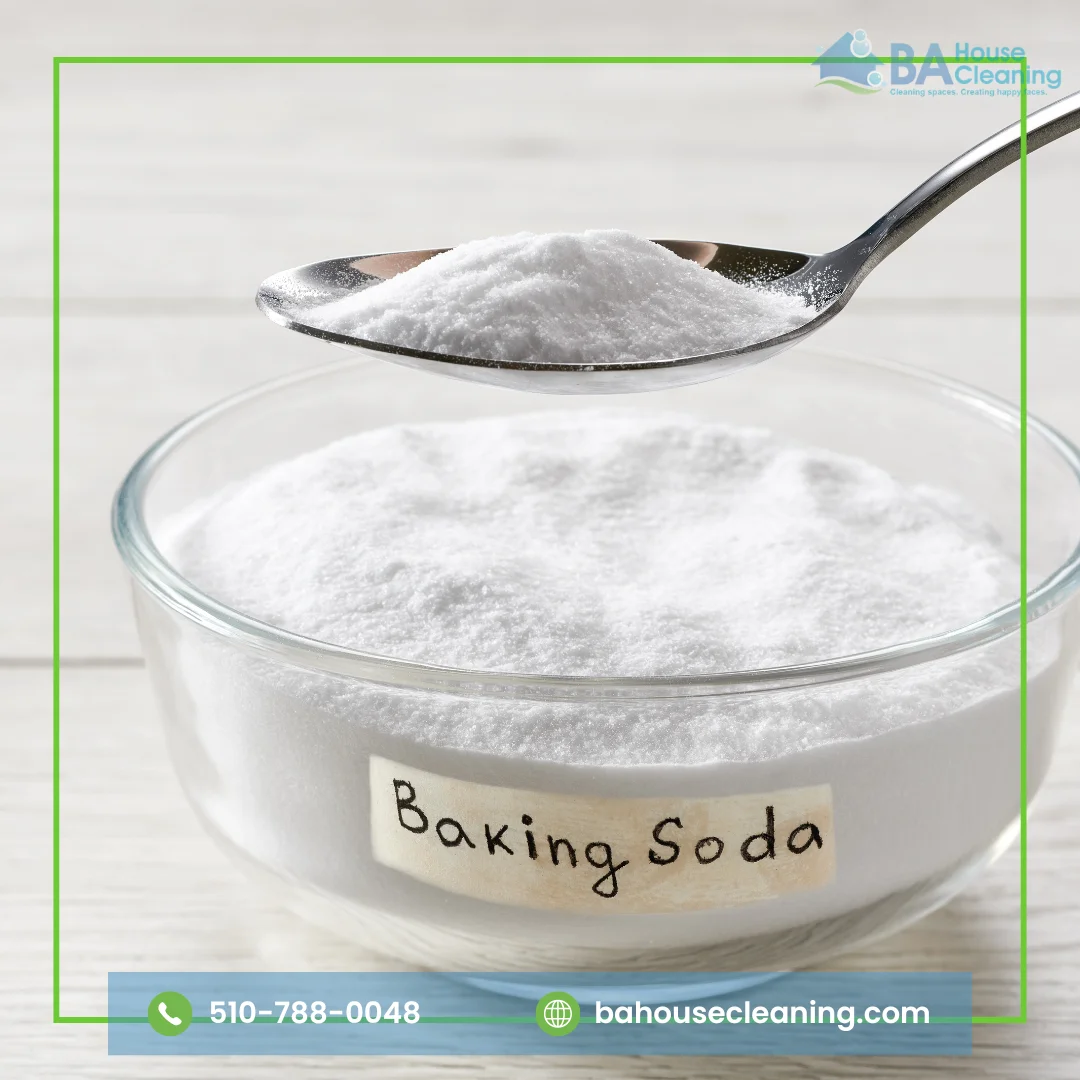
Quick Answer: What Can You Clean with Baking Soda?
Cleaning with baking soda can be useful for many everyday household tasks, including:
- Kitchen sinks
- Refrigerator odors
- Light cookware residue
- Trash can odors
- Some bathroom surfaces
- Selected appliance surfaces
- Light carpet odors
Baking soda can help with light residue and some odors, but it is not a disinfectant and should not replace an appropriate disinfecting product when sanitization is required. For more information, see the EPA’s guidance on cleaning, sanitizing, and disinfecting surfaces.
Baking Soda Cleaning at a Glance
| Cleaning Area | Can Baking Soda Help? | Best Use |
| Refrigerator odors | Yes | Reducing light food odors |
| Kitchen sinks | Yes | Light residue and surface cleaning |
| Stainless steel | Sometimes | Gentle cleaning when the finish allows |
| Cookware stains | Sometimes | Loosening light residue |
| Carpet odors | Limited | Light odor control |
| Mold problems | No | Requires appropriate treatment |
| Disinfection | No | Use an appropriate disinfectant |
What Is Baking Soda and Why Is It Used for Cleaning?
Baking soda, also known as sodium bicarbonate, is a mild alkaline powder commonly found in many homes.
When mixed with a small amount of water, it can form a paste that helps loosen some types of surface residue, including:
- Food residue
- Light stains
- Soap buildup
- Everyday dirt
One reason people use baking soda for household cleaning is that it is inexpensive and easy to find. It can be useful for small maintenance jobs, but it is not a universal cleaning solution.
The most important baking soda cleaning tip is to match the method to the surface. Use a gentle touch, avoid excessive scrubbing, and check the manufacturer’s recommendations for materials that may be sensitive to abrasion.
How to Make a Baking Soda Cleaning Paste
A simple baking soda paste can be useful when you need a little more cleaning power than a dry powder.
Step 1: Add Baking Soda
Place a small amount of baking soda in a bowl.
Step 2: Add Water Gradually
Add water a little at a time until you have a soft, spreadable paste.
Step 3: Apply a Thin Layer
Spread the paste over the area you want to clean.
Step 4: Clean Gently
Use a soft sponge or microfiber cloth rather than a rough scrubber.
Step 5: Rinse and Dry
Remove all residue with clean water and dry the surface.
You do not need a large amount of baking soda. More product does not necessarily mean better cleaning.
Best Ways to Clean with Baking Soda Around Your Home
Cleaning Kitchen Sinks with Baking Soda
Kitchen sinks collect food particles, grease, and residue every day. Baking soda can help with light buildup on some stainless steel, porcelain, and ceramic sinks.
To clean a sink:
- Remove food particles and visible debris.
- Sprinkle a small amount of baking soda over the surface.
- Use a damp, soft sponge.
- Clean gently.
- Rinse thoroughly.
- Dry the sink.
Avoid aggressive scrubbing, especially on polished or coated finishes.
Cleaning Stainless Steel Appliances
Baking soda may help remove light marks from some stainless steel surfaces, but not every finish is suitable for abrasive cleaning.
For a safer approach:
- Mix baking soda with water.
- Apply it with a soft cloth.
- Wipe in the direction of the grain.
- Rinse away all residue.
- Dry the surface.
Avoid using baking soda on specialty finishes, painted appliances, or coated surfaces unless the manufacturer allows it.
Cleaning a Refrigerator with Baking Soda
The refrigerator is one of the most common places where homeowners use baking soda because it can help reduce certain food odors.
Before using baking soda, remove the source of the smell. Cleaning spilled food and discarded leftovers should come first.
To clean the inside of a refrigerator:
- Remove expired food and containers.
- Take out removable shelves and drawers if permitted by the manufacturer.
- Wipe away crumbs and spills.
- Mix baking soda with warm water.
- Clean the shelves, drawers, and interior surfaces.
- Wipe again with clean water.
- Dry everything before putting food back.
Keep baking soda and cleaning solutions away from electrical components, vents, control panels, and drain openings.
Using Baking Soda to Reduce Refrigerator Odors
Baking soda is commonly used to help manage light refrigerator odors caused by food residue, spills, and strong ingredients.
For better results:
- Find and remove the source of the odor.
- Clean the affected area.
- Dry the refrigerator thoroughly.
- Place an open container of baking soda inside.
Baking soda can help with lingering odors, but it does not replace cleaning the source of the smell.
Cleaning Cookware and Burned Food with Baking Soda
Baking soda may help loosen light residue from some pots, pans, and baking dishes.
Try this method:
- Let the cookware cool completely.
- Add warm water and a small amount of mild dish soap.
- Add a small amount of baking soda.
- Let it sit for several minutes.
- Clean gently with a soft sponge.
- Rinse thoroughly.
This may work on some stainless steel cookware and baking dishes.
Use extra care with:
- Non-stick coatings
- Aluminum cookware
- Copper
- Seasoned cast iron
- Decorative finishes
Always check the manufacturer’s instructions before using an abrasive cleaning method.
Cleaning Ovens and Microwaves with Baking Soda
Baking soda can help loosen light residue on some approved appliance surfaces.
To use it:
- Mix baking soda with water to make a soft paste.
- Apply it only to suitable surfaces.
- Let it sit briefly.
- Wipe with a damp microfiber cloth.
- Remove all residue.
Do not apply baking soda to heating elements, electrical openings, fans, vents, control panels, or oven seals unless the manufacturer specifically permits it.
For more appliance-specific cleaning instructions, see our guides on How to Clean a Microwave and How to Clean a Coffee Maker.
Cleaning a Coffee Maker with Baking Soda
Baking soda can sometimes be useful for cleaning removable coffee maker parts, especially when there is light staining or residue.
For removable components:
- Use warm water.
- Add mild dish soap.
- Use a small amount of baking soda only when the material allows it.
- Rinse everything thoroughly.
Do not assume baking soda is appropriate for the internal system of every coffee maker. Follow the manufacturer’s cleaning instructions for internal components.
Cleaning Bathroom Surfaces with Baking Soda
Baking soda may help with light soap residue and everyday buildup on some bathroom surfaces.
It may be suitable for:
- Ceramic sinks
- Some tile surfaces
- Faucet areas
- Light soap residue
To clean:
- Wet the surface.
- Apply a small amount of baking soda.
- Use a soft sponge.
- Clean gently.
- Rinse well.
- Dry metal fixtures.
Avoid aggressive scrubbing on acrylic tubs, fiberglass, glossy finishes, and coated materials.
Can Baking Soda Clean Grout?
Baking soda can help with light surface dirt and residue on some grout lines.
A simple method is:
- Mix baking soda with a small amount of water.
- Apply the paste to the grout.
- Use a soft brush.
- Scrub gently.
- Rinse thoroughly.
Baking soda is not a solution for every grout problem. Deep mold growth, water damage, cracked grout, and permanent discoloration may require a different treatment.
Can Baking Soda Be Used for Carpet Cleaning?
Baking soda is often used on carpets because it can help with some light odors.
It may help with:
- Light surface odors
- Freshening a carpet between deeper cleanings
It will not solve every carpet problem, especially deeper stains, moisture-related issues, or contamination that has penetrated the carpet.
When using baking soda on carpet:
- Test a small hidden area first.
- Use a small amount.
- Keep the carpet dry.
- Vacuum thoroughly afterward.
For carpets that need deeper treatment, BA House Cleaning also offers Carpet Cleaning Services.
Cleaning with Baking Soda vs. Commercial Cleaners
Baking soda and commercial cleaners can both be useful, but they have different purposes.
| Feature | Baking Soda | Commercial Cleaners |
| Cost | Low | Varies |
| Light odor control | Useful | Depends on formula |
| Heavy grease | Limited | Often more suitable |
| Everyday maintenance | Useful | Useful |
| Disinfection | Not designed for this | Some products are designed for it |
| Surface safety | Requires testing | Depends on the product |
For small maintenance jobs, baking soda may be practical. For heavy buildup or specific cleaning problems, a product designed for that surface may be more appropriate.
Cleaning with Baking Soda and Vinegar: Does It Work?
One of the most common cleaning questions is whether baking soda and vinegar should be mixed together.
When they are combined, they react and produce fizzing. That reaction can look powerful, but fizzing does not automatically mean the mixture is a stronger cleaner.
In many situations, it makes more sense to use the ingredients separately based on the cleaning task:
- Baking soda can help with light residue and some odors.
- Vinegar can be useful for certain mineral deposits.
- Water and steam can help loosen some types of residue.
The right method depends on the surface and the type of buildup you are trying to remove.
Safety Tips for Baking Soda and Vinegar
Never:
- Store the mixture in a sealed container.
- Mix it with bleach.
- Combine it with unknown cleaning products.
- Use a homemade mixture without checking surface compatibility.
A safer approach is to use one product at a time and follow the directions for the surface you are cleaning.
Surfaces You Should Avoid Cleaning with Baking Soda
Because baking soda is mildly abrasive, repeated use may affect some delicate finishes.
Use extra caution or choose a different cleaner for:
| Surface | Why You Should Be Careful |
| Marble | May affect a polished finish |
| Natural stone | May require a stone-safe cleaner |
| Glass | Abrasive particles may scratch some finishes |
| Electronics | Powder and moisture can damage sensitive components |
| Painted surfaces | May affect the finish |
| Waxed wood | May affect protective layers |
| Coated appliances | May damage some protective coatings |
Before using baking soda on an unfamiliar surface:
- Check the manufacturer’s instructions.
- Test a small hidden area.
- Use gentle pressure.
- Remove all residue.
Is Baking Soda Safe Around Children and Pets?
Baking soda is a common household ingredient, but natural does not automatically mean risk-free.
Use it carefully by:
- Storing it properly.
- Keeping cleaning pastes away from children.
- Removing residue after cleaning.
- Vacuuming carpets thoroughly.
- Avoiding direct use on pets.
The safest approach is to treat baking soda like any other household cleaning material and keep it out of reach when it is not in use.
Common Baking Soda Cleaning Mistakes
Using Too Much Baking Soda
A larger amount does not necessarily improve the result.
Too much powder can leave:
- White residue
- Gritty surfaces
- Powder trapped in small spaces
Scrubbing Too Hard
Baking soda is mildly abrasive, so aggressive scrubbing can damage some glossy, coated, or delicate surfaces.
Let the moisture and cleaning process loosen the residue instead of applying excessive pressure.
Using Baking Soda as a Disinfectant
Baking soda can help clean some surfaces, but it should not be treated as a substitute for an appropriate disinfectant when sanitization is required.
Skipping the Rinse
Leftover baking soda can leave white marks or a gritty residue.
Always wipe or rinse the surface thoroughly after cleaning.
Baking Soda Cleaning Tips for Oakland and East Bay Homes
For homeowners in Oakland and the East Bay, baking soda can be useful for simple maintenance between professional cleanings.
It may help with small tasks such as:
- Freshening refrigerator odors
- Cleaning light kitchen residue
- Reducing everyday odors
- Maintaining frequently used surfaces
DIY methods are best suited to small maintenance jobs. Homes with heavy grease, stubborn stains, accumulated dust, or hard-to-reach buildup may need a more detailed cleaning approach.
For a more thorough reset, see our Deep Cleaning Services in Oakland.
For ongoing home maintenance, our Recurring Cleaning Services can help keep your home cleaner with scheduled visits.
Baking Soda Cleaning vs. Professional Home Cleaning
Baking soda can be useful for small jobs, but professional cleaning serves a different purpose.
| Baking Soda Cleaning | Professional Cleaning |
| Good for small maintenance tasks | Designed for whole-home cleaning |
| Low-cost household option | Uses professional products and equipment |
| Helpful for light residue | Better suited to heavier buildup |
| Requires homeowner effort | Saves time |
| Limited for difficult stains | Can use specialized cleaning methods |
The two approaches do not have to compete. Simple maintenance can help between professional visits, while professional cleaning can handle areas that need more time, equipment, or attention.
When Baking Soda Is Not Enough
There are times when a homemade cleaning method is simply not enough.
Professional cleaning may be more appropriate when you are dealing with:
- Heavy kitchen grease
- Significant bathroom buildup
- Carpet stains
- Large amounts of dust
- Hard-to-reach areas
- A home that needs a more complete reset
BA House Cleaning provides professional home cleaning services for Oakland and East Bay homeowners who need more than basic surface maintenance.
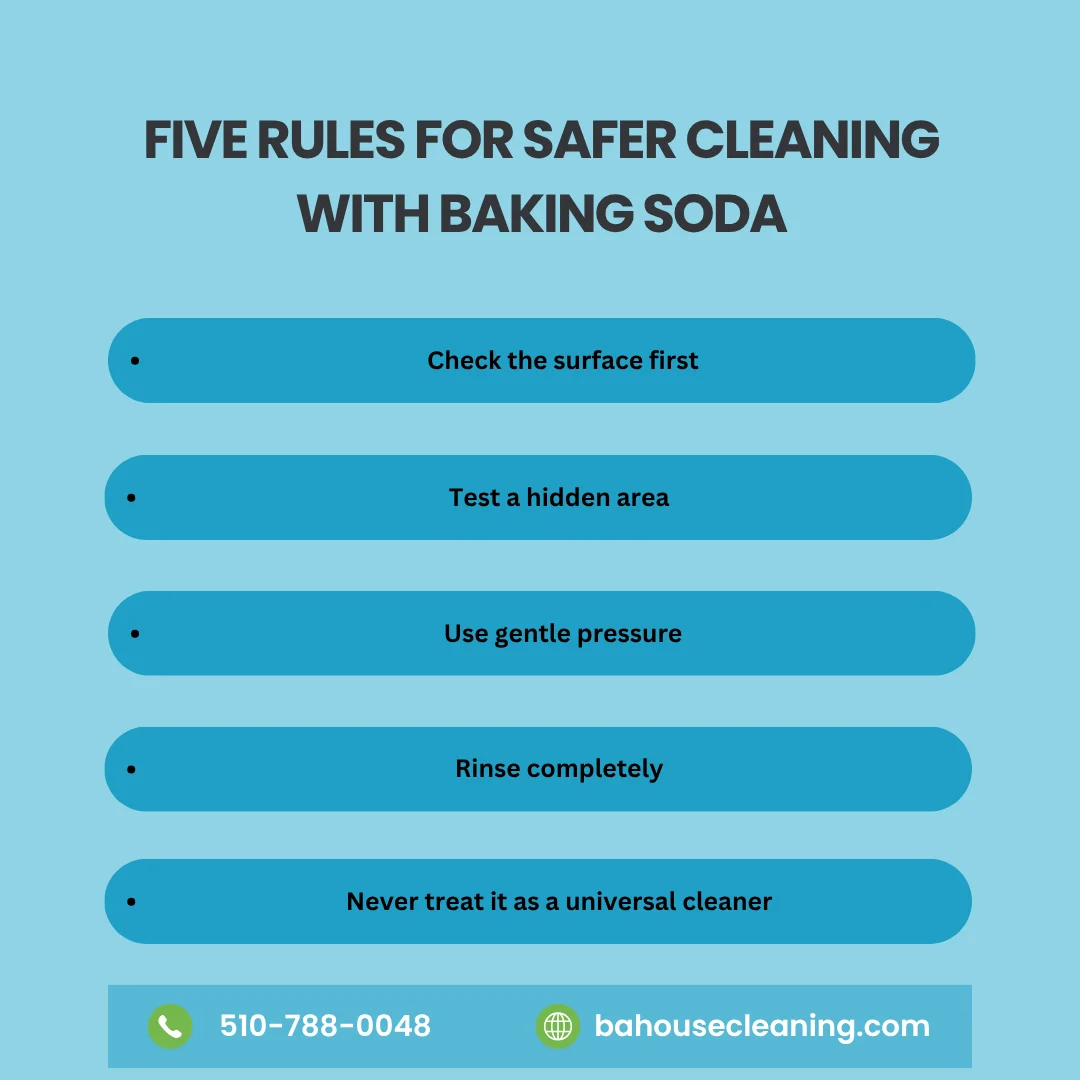
Five Simple Rules for Safer Cleaning with Baking Soda
1. Check the Surface First
Make sure baking soda is appropriate for the material.
2. Test a Small Area
Always test an inconspicuous area before cleaning a larger surface.
3. Use Gentle Pressure
Baking soda works best when you avoid aggressive scrubbing.
4. Remove All Residue
Wipe or rinse the surface completely after cleaning.
5. Know When to Call a Professional
Baking soda is useful for many small tasks, but deeper buildup may require professional cleaning methods.
Frequently Asked Questions About Cleaning with Baking Soda
What can you clean with baking soda?
Baking soda can help clean selected surfaces such as sinks, refrigerators, cookware, trash cans, and some bathroom areas. Always check the surface instructions before using it.
Can baking soda disinfect surfaces?
No. Baking soda can help remove some dirt and odors, but it is not a substitute for an appropriate disinfectant when disinfection is required.
Can you mix baking soda and vinegar for cleaning?
They react and create fizzing when mixed, but that does not automatically make them a stronger cleaning solution. Never mix homemade cleaners with bleach or store reactive mixtures in a closed container.
Does baking soda remove odors?
It can help reduce some light odors, especially after the source of the smell has been removed.
Can baking soda clean stainless steel?
It may be suitable for some stainless steel surfaces when used gently, but specialty finishes and coatings may require a different cleaner.
Can baking soda damage surfaces?
Yes. Because it is mildly abrasive, repeated or aggressive use may affect delicate, polished, painted, or coated surfaces.
Can I use baking soda on carpets?
Baking soda may help with light odors, but it is not a substitute for professional treatment of deep stains, moisture problems, or difficult contamination.
When should I use professional cleaning services?
Professional cleaning can be helpful when dirt, grease, stains, or buildup require more detailed attention or specialized equipment.