Kitchen cabinets can look clean from a distance but still feel sticky around the handles or show a film of cooking grease near the stove. Removing that buildup takes more than choosing a strong cleaner. The method must suit the cabinet material and its protective finish.
Effective kitchen cabinets cleaning starts with removing loose dust, using a compatible cleaner, limiting moisture, and drying the surface thoroughly. Wood, painted, laminate, and specialty finishes can react differently to cleaning products. Always check the manufacturer’s care instructions before treating the entire surface.
Choose a Cleaning Method That Matches Your Cabinets
Before reaching for a degreaser, identify the cabinet finish and check for peeling paint, swollen edges, lifting laminate, or other visible damage. If the surface is deteriorating, more intensive cleaning may make the problem worse.
Cabinet surface
Recommended starting method
Important precaution
Finished wood
Use a soft cloth and a compatible mild cleaner
Avoid soaking the wood or leaving moisture around joints and edges
Painted cabinets
Wipe gently with a cleaner approved for the coating
Strong solvents and vigorous scrubbing may dull or damage the paint
Laminate cabinets
Use a suitable mild cleaner and a non-abrasive cloth
Keep liquid away from seams and damaged edges
Thermofoil or specialty finishes
Follow the manufacturer’s specific care instructions
Heat, harsh chemicals, and excess moisture may affect the surface or adhesive
Glass-front cabinets
Clean the glass with an appropriate glass cleaner and the frame with a compatible product
Keep excess liquid away from joints and surrounding finishes
These are starting points rather than universal rules. If you cannot identify the material or finish, check the manufacturer’s guidance before cleaning.
For most routine cabinet cleaning, gather soft microfiber cloths, warm water, a mild dish soap solution if permitted, a separate cloth for removing residue, and a dry cloth. A soft brush or suitable vacuum attachment can help remove dust from accessible grooves and corners.
Avoid abrasive pads, scouring powders, untested degreasers, and products that promise to restore shine without specifying whether they are appropriate for your finish. Test unfamiliar cleaners on a small, hidden area and allow it to dry before checking for changes in color, sheen, or texture.
How to Clean Cabinet Doors and Handles
Cabinet doors collect fingerprints and splashes, while handles and drawer pulls receive frequent contact. Cleaning these areas methodically helps remove everyday residue without putting unnecessary stress on the finish.
1. Remove loose dust
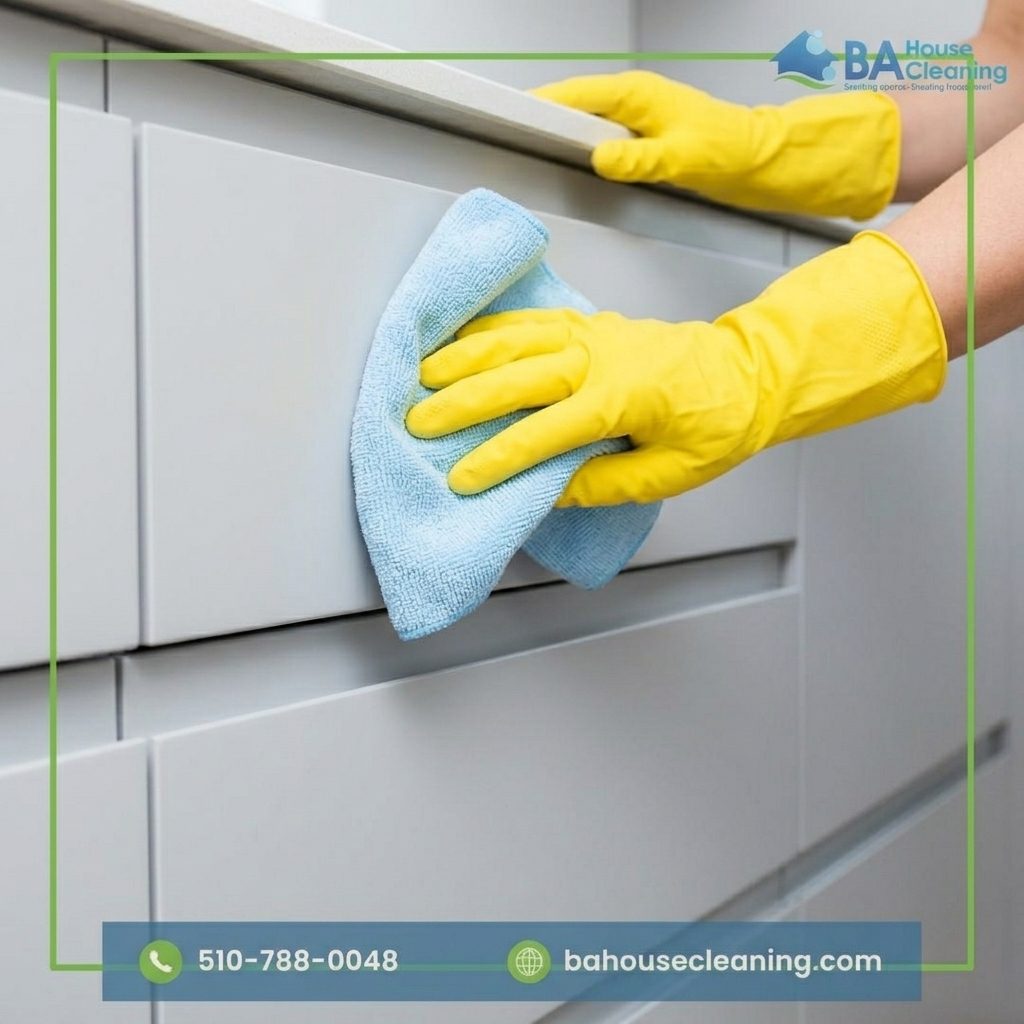
Wipe the doors, drawer fronts, frames, and accessible edges with a dry microfiber cloth. Removing loose particles first helps prevent grit from being dragged across the surface.
Pay attention to decorative grooves and the lower edges of doors. Use a soft brush only if it is suitable for the finish.
2. Wipe with a compatible cleaner
If the manufacturer permits mild soapy water, prepare a lightly diluted solution. Dampen a clean cloth and wring it out thoroughly so it is not dripping.
Work on one door or a small section at a time. Apply gentle pressure and avoid spraying cleaner directly onto the cabinet unless the manufacturer’s instructions specifically recommend it.
3. Clean around handles and edges
Wipe around knobs, pulls, and frequently touched areas where oils and grime tend to collect. Turn the cloth to a clean section as it becomes dirty.
If marks remain, repeat the gentle process rather than immediately switching to a stronger chemical. Avoid allowing liquid to accumulate around hardware openings, seams, or exposed edges.
4. Remove residue and dry
Follow the cleaner’s instructions for removing residue. When a separate wipe is appropriate, use a clean cloth lightly dampened with water.
Finish with a dry cloth, paying particular attention to seams and lower edges. Do not leave water sitting on the cabinet or allow it to pool around hardware.
How to Remove Sticky Grease From Kitchen Cabinets
Cooking oils can settle on cabinet doors and combine with dust, leaving a sticky film that ordinary dusting will not remove. The buildup is often more noticeable near the stove, range hood, and frequently handled doors.
The goal is to loosen the residue gradually without damaging the finish.
Start with a mild, compatible cleaner
Check that the cabinet surface is intact, then use a compatible mild cleaner on a soft, well-wrung cloth. Test it in a hidden area first, particularly on painted, glossy, older, or unidentified finishes.
Wipe the greasy area gently. Repeat with a clean section of the cloth if necessary rather than scrubbing harder.
Use a stronger product only when appropriate
If the residue persists, consult the cabinet manufacturer’s care instructions for a suitable degreaser. Check the product label and test it in an inconspicuous spot before applying it to a larger area.
Do not let cleaning solution remain on the surface longer than the product instructions allow. Avoid scraping grease with sharp tools or using rough pads to force it off.
Finish by removing residue and drying
Wipe away the cleaner as directed, then dry the cabinet thoroughly. Inspect the area after it has dried under good lighting.
If the surface remains sticky, becomes discolored, or develops an uneven sheen, stop and identify the cause before trying stronger chemicals. Persistent marks may indicate a damaged finish rather than removable grease.
Important: Vinegar, baking soda, bleach, and general-purpose degreasers are not automatically safe for every cabinet. Abrasive powders can scratch delicate surfaces, and unsuitable chemicals may affect certain coatings. Never mix cleaning products.
How to Clean Inside Kitchen Cabinets and Drawers
Interior cleaning is different from wiping the cabinet exterior. Shelves and drawers can collect crumbs, spilled food, dust, and residue beneath stored items. They must also be completely dry before you return dishes or food containers.
1. Empty one section at a time
Remove the contents of one cabinet or drawer and place them on a clean surface. Working in small sections makes it easier to finish the job without leaving multiple areas exposed or damp.
2. Remove crumbs and loose debris
Use a suitable vacuum attachment or a soft brush to collect crumbs and dust from corners, shelf edges, and drawer interiors. Avoid hard attachments that could scratch the surface.
3. Wipe with a suitable cleaner
Use a cleaner compatible with the interior material. If mild soapy water is permitted, apply it with a well-wrung cloth.
Focus on visible spills and sticky marks without saturating the shelf. Be especially careful around joints, unfinished edges, shelf holes, and damaged areas where moisture may penetrate.
4. Remove residue and dry completely
Follow the cleaner’s instructions for wiping or rinsing. Dry shelves, corners, and edges with a clean cloth, then allow the interior to dry fully.
Do not return dishes, pantry items, or containers while the surfaces are damp or have cleaning-product residue.
If a removable shelf liner is damaged or has trapped residue underneath, remove it only if it can be lifted without harming the cabinet. Clean and dry the surface before replacing it with a suitable liner.
Common Cabinet Cleaning Mistakes to Avoid
A few shortcuts can make cabinet cleaning less effective or increase the risk of damage.
Using rough scrubbers: Abrasive pads and powders may scratch or dull the finish.
Applying excessive water: Moisture can enter seams, exposed edges, or damaged coatings.
Trying untested degreasers: A product that works on one material may be unsuitable for another.
Mixing household cleaning ingredients: This can create safety risks and does not guarantee a better result.
Applying polish or wax automatically: Extra products may leave a film or change the sheen when they are not appropriate for the finish.
Scrubbing damaged paint or lifting laminate: More friction will not repair a deteriorating coating.
If cabinet paint starts peeling, the surface becomes unusually tacky, or the edges swell during cleaning, stop. Avoid additional moisture or stronger chemicals until you have identified the problem. Damaged coatings may require repair rather than further cleaning.
How Often Should You Clean Kitchen Cabinets?
The right schedule depends on cooking habits, ventilation, household activity, and how quickly residue builds up. Use the following as a flexible starting point.
Task
Suggested frequency
Wipe fresh splashes and visible spills
As soon as practical
Check handles and frequently touched areas
Weekly or when needed
Clean visible grease near the cooking area
As buildup appears
Wipe frequently used cabinet fronts
Every few weeks, adjusted to use
Inspect upper edges and less-used areas
Every few months
Clean cabinet interiors
When spills, crumbs, or accumulated dust make it necessary
Kitchens used for frequent frying may develop greasy residue faster than those used mainly for light meal preparation. Adjust the schedule to the actual condition of the cabinets rather than following a rigid calendar.
Removing fresh splashes promptly and addressing visible grease before it hardens can reduce the need for intensive scrubbing later.
When Professional Kitchen Cleaning May Help
Some homes need more detailed attention than routine maintenance can provide, particularly when several rooms need cleaning or cabinet exteriors have accumulated grease over time.
BA House Cleaning serves homes in Oakland and the East Bay. Depending on the selected cleaning level and confirmed scope, ourdeep cleaning service may include spot-cleaning cabinet exteriors as part of the kitchen cleaning process.
If you are moving into or out of a property and need cabinet interiors cleaned, ourmove-in and move-out cleaning service lists inside-cabinet cleaning as an available add-on. Confirm the tasks you need when requesting a quote rather than assuming every cabinet surface is included in every visit.
For a broader room-wide approach, read our guide toexpert kitchen cleaning tips. That article covers the kitchen as a whole, while this guide focuses on cabinet materials, grease, and finish-safe cleaning.
The safest cleaner depends on the cabinet’s material and finish. A mild dish soap solution may suit many washable surfaces, but the manufacturer’s instructions should guide your choice. Test unfamiliar products in a hidden area first.
How do you remove sticky grease from kitchen cabinets?
Start with a compatible mild cleaner and a soft, well-wrung cloth. Repeat gentle passes instead of scrubbing aggressively. If the residue remains, consult the manufacturer’s guidance before trying a stronger degreaser.
Can you use vinegar to clean kitchen cabinets?
Do not assume vinegar is suitable for every cabinet. Its acidity may affect some coatings and finishes. Check the manufacturer’s instructions and choose a compatible alternative when the surface’s tolerance is unknown.
Is baking soda safe for kitchen cabinets?
Baking soda can be abrasive when rubbed against a surface. Avoid using it as a universal cabinet scrub, especially on delicate paint or glossy finishes. Use it only if the manufacturer confirms that it is suitable.
How do you clean wood kitchen cabinets without damaging them?
Identify whether the wood is sealed, stained, painted, or unfinished. Use a compatible cleaner and soft cloth, limit moisture, and dry the surface promptly. Unfinished or damaged wood needs additional caution.
How do you clean kitchen cabinets without leaving streaks?
Use a compatible cleaner in the recommended amount, avoid excess soap, and remove residue as directed. Finish with a clean, soft cloth and inspect the surface after it dries.
Should you wax or polish kitchen cabinets after cleaning?
Not automatically. Some cabinet finishes do not need extra polish or wax, and certain products may leave residue or alter the sheen. Use a finishing product only when it is recommended for the specific finish.
What should you do if cabinet paint starts peeling during cleaning?
Stop cleaning the affected area. Avoid additional moisture, friction, or stronger chemicals. Peeling may indicate coating damage rather than removable dirt, so consult the cabinet manufacturer or a qualified repair professional.
A Safer Approach to Cleaner Cabinets
Successful cabinet care is not about using the strongest product or removing every mark at any cost. It is about choosing a method that suits the surface, loosening residue gradually, and avoiding unnecessary abrasion or moisture.
Start gently, test unfamiliar products, and dry each area thoroughly. When a mark does not respond to a compatible cleaning method, identify the cause before escalating. This approach helps keep kitchen cabinets looking cared for while reducing avoidable damage to their finish.
A room can look clean at first glance and still have dust along the upper edges, residue around frequently touched surfaces, or dirt collecting near furniture and baseboards. Getting a more thorough result depends on knowing which tasks to complete first, which products are suitable for each material, and when to move on to the next part of the room.
Learning how to clean your house like a professional means replacing random, repeated cleaning with a clear process. Instead of returning to the same surfaces several times, prepare the space, remove loose debris, clean systematically, and finish with a check for details that are easy to overlook.
This guide explains how to organize whole-house cleaning, choose suitable methods for different surfaces, avoid common mistakes, and use a final inspection to identify unfinished work.
A room can look clean at first glance and still have dust along the upper edges, residue around frequently touched surfaces, or dirt collecting near furniture and baseboards. Getting a more thorough result depends on knowing which tasks to complete first, which products are suitable for each material, and when to move on to the next part of the room.
Learning how to clean your house like a professional means replacing random, repeated cleaning with a clear process. Instead of returning to the same surfaces several times, prepare the space, remove loose debris, clean systematically, and finish with a check for details that are easy to overlook.
This guide explains how to organize whole-house cleaning, choose suitable methods for different surfaces, avoid common mistakes, and use a final inspection to identify unfinished work.
Step 6: Complete Kitchen and Bathroom Surface Cleaning
Kitchens and bathrooms often need more targeted attention than other rooms because they are exposed to food residue, oils, moisture, soap deposits, and frequent use.
Kitchen Surfaces
Clean food-preparation surfaces with products suitable for the material. Remove food residue, wipe accessible counters, and clean the sink and frequently used external appliance surfaces as required.
Use separate or properly cleaned cloths for different areas, especially when moving between food-preparation surfaces and dirtier household areas.
Detailed appliance interiors, specialty countertop materials, and persistent deposits may need a separate method. Do not assume a product suitable for one surface is suitable for every surface in the kitchen.
Bathroom Surfaces
Clean the sink, counter, toilet, and other relevant surfaces using appropriate products. Give additional attention to visible residue around faucets and areas where moisture accumulates.
Follow product instructions when treating soap buildup or mineral deposits. Acidic cleaners, bleach-containing products, and abrasive tools are not interchangeable and may be unsuitable for particular materials.
For room-specific methods, consult the manufacturer’s instructions for the fixtures and surfaces in your bathroom or kitchen. Avoid using a stronger product simply because a mark is difficult to remove.
Step 7: Clean Mirrors and Glass After Nearby Surfaces
Glass and mirrors are easier to finish after nearby dusting and surface cleaning have been completed.
Use a cleaner designed for the particular glass or mirror surface and a clean, lint-free cloth. Follow the manufacturer’s advice for coated glass or specialty finishes.
Check for fingerprints, streaks, and residue under good lighting. If the surface becomes dusty again while you are cleaning nearby furniture, finish it after the surrounding work is complete rather than wiping it repeatedly.
Exterior windows may require different tools and safety precautions depending on their height, design, and accessibility.
Step 8: Vacuum Carpets, Rugs, Upholstery, and Floor Edges
Once above-floor dusting and most surface work are finished, remove loose debris from floors and compatible soft surfaces.
Use a vacuum attachment suited to the material:
A floor head for compatible carpet or hard flooring.
A crevice tool for accessible corners and narrow gaps.
An upholstery attachment for suitable furniture.
Appropriate tools for rugs, following the manufacturer’s care instructions.
Pay attention to floor edges, corners, accessible areas beneath furniture, and spaces where crumbs, pet hair, and dust collect.
Do not use a brush or vacuum attachment aggressively on delicate fabrics. When in doubt, check the material’s care label.
Vacuuming at this stage helps collect much of the debris that fell during earlier cleaning.
Step 9: Mop Suitable Hard Floors Near the End
Mopping is generally best completed after loose dust, hair, crumbs, and other debris have been removed.
Before you begin, confirm which cleaning method is suitable for the floor material. Wood, natural stone, porcelain, vinyl, and other hard flooring types do not necessarily tolerate the same products or amount of moisture.
Use the recommended cleaner and dilution, and avoid leaving excess water on surfaces that are sensitive to moisture.
Change dirty mop water when needed. Follow the manufacturer’s directions for rinsing and drying, particularly when residue could leave streaks or affect the finish.
Work methodically so that you do not walk repeatedly over a freshly cleaned area. Allow the floor to dry safely before replacing movable items or walking across it.
Step 10: Inspect the Room Before Moving On
Before considering a room finished, take a moment to check the result from the doorway or another normal viewing position.
Look for details that may stand out after the main cleaning is complete:
Dust remaining on accessible edges or furniture.
Visible smudges on glass or mirrors.
Residue on frequently touched surfaces.
Debris along floor edges and in corners.
Items left out of place.
Cleaning supplies that have not been put away.
Correct small issues that can be addressed safely and efficiently. If an area needs a different cleaning method or more time, make a note rather than applying increasingly aggressive products.
A final inspection helps confirm that the room is genuinely finished instead of simply looking clean from one angle.
Common House Cleaning Mistakes to Avoid
A structured cleaning process can still produce poor results if unsuitable products or tools are used.
Mopping before removing dust: Loose debris can spread across the floor and create additional work.
Using one product on every surface: Materials have different care requirements, and a multipurpose cleaner may not be appropriate for all of them.
Ignoring product instructions: Dilution, contact time, ventilation, and rinsing requirements can affect both safety and results.
Using excessive force: Scrubbing harder can damage some finishes rather than remove the problem.
Disinfecting everything automatically: Choose cleaning and disinfecting methods according to the household situation and product instructions.
Using the same contaminated cloth across several areas: Change or clean cloths when necessary to avoid spreading soil from one surface to another.
Skipping the final inspection: Small marks and overlooked edges may become more noticeable after the main tasks are complete.
The goal is not to use more chemicals or spend more time on every surface. It is to choose the right method for the job.
A Final Whole-House Cleaning Checklist
Use this short checklist to review the work before finishing.
Supplies were selected for the materials being cleaned.
Accessible areas were cleared before detailed cleaning.
Higher surfaces were addressed before lower ones.
Furniture and frequently touched surfaces were cleaned appropriately.
Kitchen and bathroom products were used according to their labels.
Glass, floors, and other surfaces were checked for visible residue.
Loose debris was removed from floors and suitable soft surfaces.
Cleaning tools and products were put away safely.
The checklist is a final review, not a requirement to detail every surface during every cleaning session. Adjust the work to the condition of the home and the scope of the cleaning task.
When a More Thorough Home Clean Is Needed
A systematic cleaning method can improve routine maintenance, but it may not be enough when dirt and residue have accumulated across several rooms or hard-to-reach areas have been neglected for a long time.
If your home needs more detailed attention than routine cleaning provides, BA House Cleaning offersdeep cleaning services in Oakland and surrounding East Bay communities.
The tasks included depend on the selected service and the home’s condition. Confirm any specialized cleaning requirements when requesting a quote.
For homeowners who prefer ongoing support, ourrecurring cleaning services can help maintain the home between more detailed cleaning sessions.
Frequently Asked Questions About Professional House Cleaning
What is the best order to clean a house?
Prepare supplies and clear access first. Then clean higher surfaces, work through furniture and other accessible surfaces, complete appropriate kitchen and bathroom tasks, clean mirrors and glass, vacuum, and finish suitable hard floors near the end.
Why should you clean from top to bottom?
Dust and debris can fall from higher surfaces onto furniture and floors. Working downward reduces the risk of dirtying areas that have already been cleaned.
Should you vacuum or mop first?
For most whole-house routines, remove loose debris and vacuum suitable floors before mopping hard floors. The exact method depends on the floor material and its care instructions.
Should you disinfect surfaces every time you clean?
Not necessarily. Routine cleaning is sufficient in many ordinary household situations. Disinfection may be appropriate in particular circumstances, such as when someone is sick. Follow public-health guidance and product labels.
How can I avoid damaging surfaces during cleaning?
Identify the material, choose a compatible product, follow the manufacturer’s instructions, and test unfamiliar products in a small area when appropriate. Avoid harsh tools or chemicals unless they are specifically recommended for that surface.
When should I consider professional house cleaning?
Professional cleaning may be useful when several rooms require more detailed work, buildup has become difficult to manage, or you prefer to have regular household maintenance handled by a cleaning team.
Need Help With a More Thorough Home Clean?
A reliable cleaning process helps maintain your home, but some properties need additional attention to accumulated dirt, overlooked surfaces, and areas that require a more detailed clean.
BA House Cleaning provides residential cleaning services in Oakland and surrounding East Bay communities. Review ourdeep cleaning services to understand the available options, orcontact BA House Cleaning to discuss your home’s requirements and request a quote.
You can also use the location information on our contact page to find the business and confirm service details.