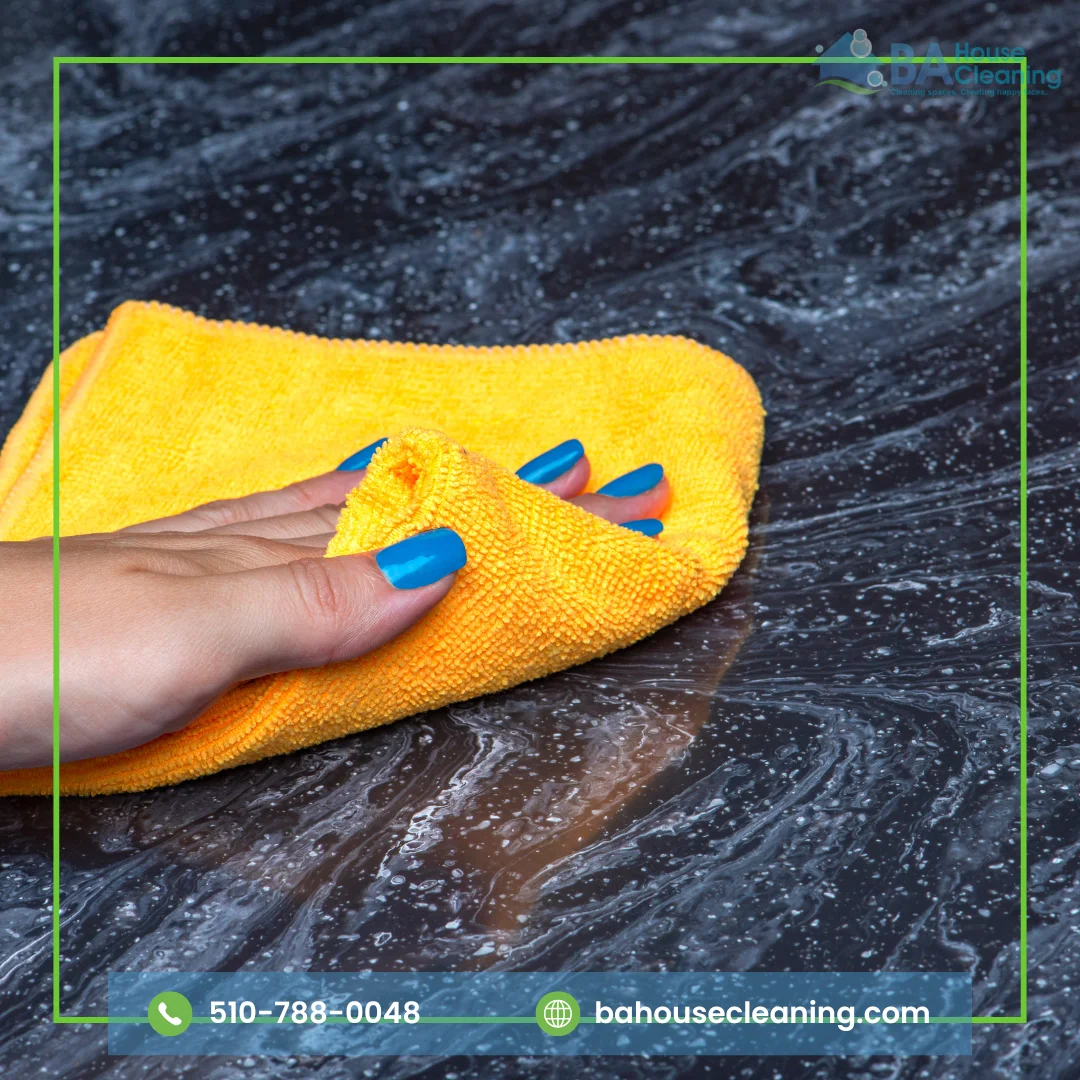
Marble countertops can instantly give a kitchen or bathroom a refined, timeless appearance, but keeping natural marble clean requires more care than simply reaching for an everyday multipurpose spray. Marble reacts differently from many manufactured countertop materials, and products that work perfectly well elsewhere in the home can leave a marble surface looking dull, marked, or uneven.
Learning how to Clean Marble Countertops correctly therefore starts with understanding the material itself. Daily crumbs and fingerprints are usually simple to handle, but cooking oils, coffee, cosmetics, hard-water residue, and acidic spills can create different problems. The safest cleaning method depends on what is on the countertop and whether you are dealing with ordinary dirt, a true stain, or damage to the stone’s finish.
That distinction matters because stronger cleaning is not always better. Vinegar, lemon-based products, abrasive powders, and other aggressive household cleaners may create more problems than they solve on marble. A countertop that appears stained may also be etched, and repeated scrubbing will not necessarily restore an etched surface.
At BA House Cleaning, we understand how much difference clean, well-maintained surfaces make to the overall appearance of a home. Marble deserves particular attention because the goal is not only to remove dirt, but also to clean the surface without unnecessarily affecting its finish.
This guide explains how to Clean Marble Countertops step by step, how to deal with spills and common stains, what products to avoid, how sealing affects maintenance, and when a countertop may need professional stone restoration rather than another round of household cleaning.
Why Marble Countertops Need Special Cleaning
Marble is a natural stone composed primarily of calcium carbonate. That composition is one reason acidic substances can react with the stone and alter its surface.
The Natural Stone Institute recommends neutral cleaners, stone soap, or mild liquid dishwashing detergent with warm water for routine natural-stone care. It also warns that products containing vinegar, lemon, and other acids may dull or etch calcareous stones such as marble.
That means cleaning marble should not be approached in the same way as cleaning every other hard surface in your home.
Common countertop materials can differ substantially in how they react to cleaning products. Porcelain, for example, has its own maintenance considerations. If you also have porcelain surfaces at home, our guide to Porcelain Tile Cleaning explains how to care for that material separately.
With marble, the safest routine focuses on quick spill removal, gentle cleaning, thorough rinsing when needed, and drying the surface rather than allowing water and cleaning residue to remain.
Understanding this is the foundation of how to Clean Marble Countertops without creating avoidable damage.
How to Clean Marble Countertops Step by Step
For everyday cleaning, you usually do not need a complicated collection of chemicals. A simple and consistent routine is often more useful.
Step 1: Remove Crumbs and Loose Debris
Before wet cleaning begins, remove crumbs, dust, and loose particles from the countertop.
Use a clean microfiber cloth or another soft material that will not unnecessarily abrade the surface. Pay particular attention around appliances, containers, backsplashes, and countertop edges where debris tends to collect.
Removing loose particles first also prevents you from dragging grit across the marble while wiping.
Step 2: Use Warm Water and a Marble-Safe Cleaner
For ordinary cleaning, use warm water with a mild cleaning product suitable for natural stone.
A pH-neutral stone cleaner is an excellent option when used according to its manufacturer’s instructions. Mild dishwashing detergent diluted properly in warm water may also be suitable for routine care.
Avoid assuming that more soap means better cleaning. Excess product can leave a film behind and make a polished surface appear streaky or cloudy.
Step 3: Wipe With a Soft Cloth
Dampen a microfiber cloth with the cleaning solution and wipe the countertop in manageable sections.
Do not aggressively scrub an area simply because it looks dirty. Give the appropriate cleaner time to loosen normal residue and use repeated gentle passes instead.
Pay extra attention to high-use areas near sinks, coffee makers, food-preparation zones, soap dispensers, and cooking appliances.
Step 4: Remove Cleaning Residue
If you used soap or a cleaner that requires rinsing, wipe the marble again with a clean cloth dampened with plain water.
This step is easy to overlook, but leftover detergent can produce streaks or a dull-looking film.
Step 5: Dry the Countertop
Use a clean, soft towel or microfiber cloth to dry the surface.
Drying helps prevent water spots and gives you a clearer view of whether any discoloration remains.
This simple routine is the starting point for how to Clean Marble Countertops in most kitchens and bathrooms.
Daily Marble Countertop Cleaning
Daily maintenance should be simple.
If the marble is used frequently for food preparation, coffee, drinks, cosmetics, or everyday household activities, clean visible spills and residue as they occur rather than allowing them to sit.
You do not need to deep clean the marble every time someone uses it.
A practical daily routine can include:
- Removing crumbs and loose debris.
- Blotting spills promptly.
- Wiping the surface with a damp microfiber cloth.
- Using a mild marble-safe cleaner when necessary.
- Removing leftover cleaner.
- Drying the countertop with a soft cloth.
These habits make How to Clean Marble Countertops much easier because residue does not have as much time to accumulate.
They can also help you notice changes early. A small dull spot, stain, or damaged area is easier to evaluate when the rest of the surface is already reasonably clean.
Blot Marble Spills Instead of Spreading Them
When something spills on marble, speed matters.
Instead of immediately wiping the spill across a wider area, blot up as much liquid as possible with an absorbent towel or cloth.
The Natural Stone Institute specifically recommends blotting spills rather than wiping them across the stone, followed by cleaning with water and mild soap and drying thoroughly.
This is particularly important for liquids such as:
- Coffee
- Tea
- Wine
- Fruit juice
- Soft drinks
- Cooking oil
- Sauces
- Cosmetics
- Liquid soap
After blotting, clean the area with an appropriate marble-safe product and dry it.
The quicker you respond to spills, the less likely you are to need more complicated marble stain removal later.
How to Clean Marble Countertops After Cooking
Kitchen marble sees more than ordinary dust.
Oil droplets, sauces, food residue, coffee, juice, and cooking ingredients can all come into contact with the stone.
If you are learning how to Clean Marble Countertops in a busy kitchen, the most important habit is preventing spills from sitting unnecessarily.
After cooking, remove crumbs first. Then clean food-preparation areas with a product suitable for marble. Pay attention to areas surrounding the stove, sink, coffee station, and countertop appliances.
Greasy residue may require more than plain water, but that does not mean you should immediately use a powerful degreaser designed for ordinary kitchen surfaces. Check that the product is explicitly suitable for natural stone or marble.
Once the residue is removed, wipe away remaining cleaner as directed and dry the countertop.
Cutting boards, coasters, and trivets can also reduce direct contact between marble and food, drinks, cookware, and utensils.
How to Remove Stains From Marble Countertops
Before attempting marble stain removal, determine whether you are actually looking at a stain.
A stain occurs when material enters the stone and changes its color.
An etch mark is different. It occurs when a chemical reaction alters the marble surface itself, often creating a dull, lighter, or differently textured area.
Understanding the difference can save a lot of unnecessary cleaning.
The Natural Stone Institute’s stain-removal guidance recommends identifying the type of stain before choosing a treatment. Deep or stubborn stains may require a poultice or professional attention rather than ordinary surface cleaning.
When dealing with an unidentified mark, ask:
What spilled here? How long has the mark been present? Is it darker than the surrounding stone, or does it look dull and lighter? Does it disappear temporarily when wet? Is the surface texture different?
Those clues can help determine whether additional cleaning is appropriate.
Oil and Grease Stains on Marble
Cooking oil, butter, cosmetics, and other oily products can create dark areas in marble.
Begin by removing fresh oil immediately with an absorbent material rather than rubbing it deeper across the countertop.
Then clean the surface with an appropriate natural-stone cleaner.
Older oil-based stains may penetrate below the surface and require a stain-removal process specifically designed for natural stone.
This is where How to Clean Marble Countertops becomes different from ordinary kitchen cleaning. Repeatedly spraying a standard degreaser may not solve a penetrated stone stain and could potentially affect the marble.
For stubborn staining, consult the stone manufacturer’s recommendations or an experienced natural-stone professional before experimenting with strong solvents or homemade chemical mixtures.
Coffee, Tea, Wine, and Food Stains
Coffee, tea, wine, fruit, and certain foods can create organic discoloration.
For a fresh spill, blot first, clean gently with a marble-compatible product, rinse as appropriate, and dry thoroughly.
If discoloration remains after ordinary cleaning, do not repeatedly scrub the area or add increasingly aggressive chemicals.
Some deep organic stains may need specialized treatment, and the correct approach can depend on the stone color, finish, sealing condition, and type of staining.
Knowing How to Clean Marble Countertops also means recognizing when basic housekeeping has reached its limit.
Etching and Staining Are Not the Same Problem
This distinction deserves special attention because homeowners frequently mistake one for the other.
Imagine lemon juice falls on polished marble. You clean the liquid immediately, but afterward there is still a cloudy or dull mark.
That remaining mark may not be dirt.
Because marble is sensitive to acids, acidic substances can react with the stone and affect its polished finish. The result is an etched area.
Trying another cleaner will not necessarily remove it because the problem is now the surface finish rather than residue sitting on top.
In contrast, a stain is discoloration caused by material penetrating into the stone.
A stain may require extraction or a poultice. Etching may require honing or polishing by someone experienced in natural-stone restoration.
This distinction is one of the most important things to understand when researching How to Clean Marble Countertops.
Can You Use Vinegar on Marble Countertops?
Vinegar is not recommended for cleaning marble countertops because its acidity can react with the calcium carbonate in the stone. Over time, this reaction may dull the finish or leave visible etch marks on polished marble.
The Natural Stone Institute advises avoiding vinegar, lemon-based products, and other acidic cleaners on calcareous natural stone such as marble. Even though vinegar is commonly used for general household cleaning, it is not a safe universal option for every surface.
For How to Clean Marble Countertops safely, choose a pH-neutral cleaner designed for natural stone or another product specifically approved for marble. This helps remove everyday residue without exposing the surface to unnecessary chemical damage.
Can You Use Lemon Juice on Marble?
No. Lemon juice creates essentially the same concern as vinegar.
It is acidic and can react with marble.
This also means you should pay attention to more than the cleaning products stored under your sink. Lemon slices, citrus drinks, salad dressings, wine, and other acidic foods can contact kitchen marble during normal use.
Use cutting boards and coasters, and clean acidic spills promptly.
Protecting marble from these substances is often easier than attempting to correct an etched finish afterward.
Can You Use Baking Soda on Marble?
Our guide to Cleaning with Baking Soda explains why baking soda is commonly used in household cleaning, but that does not mean it is automatically suitable for marble. Its mildly abrasive texture, especially when used in homemade pastes, can be a concern on polished natural-stone surfaces.
If a stain does not respond to routine cleaning, identify what caused it before trying a stronger DIY method. For How to Clean Marble Countertops safely, it is better to choose marble-compatible, nonabrasive products or a treatment specifically designed for natural stone rather than experimenting with abrasive pastes.
Avoid Abrasive Pads and Powders
A difficult mark can make aggressive scrubbing feel tempting.
Avoid that instinct.
Scouring powders, abrasive creams, rough scrub pads, wire brushes, and other aggressive tools can affect natural-stone finishes.
The Natural Stone Institute warns that scouring powders and creams often contain abrasives capable of scratching some stone surfaces.
Use clean microfiber cloths or other soft materials for routine marble countertop cleaning.
If a mark refuses to move after appropriate cleaning, identify the problem rather than simply increasing pressure.
How to Deal With Water Spots and Cloudy Marble
A cloudy countertop does not always mean the marble is permanently damaged.
First, determine whether the dull appearance comes from dried water, excess soap, cleaning residue, mineral deposits, or actual etching.
Start by cleaning the area with a suitable marble cleaner, removing all residue, and drying thoroughly.
If the cloudy area disappears, cleaning residue may have been the problem.
If a dull patch remains and it is located where acidic liquid was spilled, etching becomes more likely.
Hard-water deposits also require careful handling because many ordinary products marketed for mineral buildup contain acids that may not be suitable for marble.
Rather than using a generic lime or calcium remover, select a product specifically labeled for use on marble or seek professional advice.
How to Clean Marble Around the Sink
Countertop areas surrounding sinks tend to face frequent splashes, soap residue, cosmetics, toothpaste, and standing water.
Wipe splashes promptly instead of allowing water to repeatedly dry in the same areas.
Clean around the faucet base and sink edge with a marble-safe cleaner and a soft cloth. Avoid scraping hardened residue with metal tools or using acidic bathroom products that can contact the stone.
Pay attention to seams and the material around the sink itself.
If tile or grout is located behind the marble countertop, treat those materials according to their own cleaning needs. Our guide on How to Clean Grout explains how to approach grout joints separately without assuming that the same method should be used on the surrounding surface.
Does Sealed Marble Still Need Careful Cleaning?
Yes. Sealing can help slow the absorption of some liquids, but it does not make marble completely resistant to stains, scratches, heat, or chemical damage.
Even sealed marble can still react to acidic substances such as vinegar, lemon juice, and certain household cleaners. For that reason, the surface should still be cleaned with marble-safe products and protected from spills, abrasive materials, and excessive heat.
Good maintenance includes wiping up spills quickly, using coasters and cutting boards, choosing gentle cleaners, and drying the countertop after cleaning.
When learning How to Clean Marble Countertops, remember that sealing improves stain resistance, but it does not provide complete protection against etching or surface damage. Proper daily care is still essential for keeping marble looking its best.
How Often Should Marble Countertops Be Sealed?
There is no reliable one-size-fits-all calendar for every marble countertop.
Different stones have different absorption characteristics, installations vary, sealers differ, and kitchen countertops may see very different use from bathroom vanities.
Instead of assuming that marble must automatically be sealed every specific number of months, follow the stone fabricator’s and sealer manufacturer’s recommendations.
If you are unsure what product was originally used, a stone-care professional can evaluate the countertop before additional sealer is applied.
Over-maintaining a surface without knowing its existing treatment is not necessarily better than following a documented maintenance schedule.
How to Protect Marble Countertops Between Cleanings
Good prevention makes marble maintenance considerably easier.
- Use Coasters: Protect marble from acidic drinks such as citrus juice, wine, and soft drinks by placing them on coasters instead of directly on the surface.
- Choose Cutting Boards: Cutting boards help reduce direct contact with knives, food residue, oils, and acidic ingredients.
- Protect Against Heat: Place trivets under hot cookware and other heated kitchen items to avoid unnecessary direct contact with the marble.
- Clean Spills Quickly: Do not allow coffee, oils, sauces, cosmetics, or acidic liquids to sit unnecessarily.
- Keep the Surface Dry: After cleaning, remove excess water and dry the countertop with a soft cloth.
- Avoid Generic Cleaning Products: Choose products specifically compatible with marble or natural stone.
These small habits reduce how often you need to search for stronger answers to How to Clean Marble Countertops.
Common Marble Countertop Cleaning Mistakes
Many marble problems start with good intentions.
- Using Vinegar Because It Is “Natural”
A natural cleaning ingredient is not automatically safe for natural stone. Vinegar’s acidity is exactly what makes it unsuitable for marble.
- Spraying an All-Purpose Kitchen Cleaner Without Checking the Label
Products formulated for laminate, stainless steel, ceramic, or other surfaces may not be designed for marble.
- Leaving Soap Residue Behind
Too much detergent or poor rinsing can leave the surface looking streaky or cloudy.
- Aggressive Scrubbing
If ordinary dirt has been removed but a mark remains, additional pressure may not help. You could be dealing with staining or etching.
- Letting Spills Sit
Immediate blotting is easier than attempting stain removal days later.
- Assuming Sealer Prevents Every Kind of Damage
Sealers can improve stain resistance but cannot prevent all surface reactions or physical damage.
Avoiding these mistakes is just as important as knowing how to Clean Marble Countertops in the first place.
Marble Countertops vs Other Surfaces in Your Home
One of the biggest housekeeping mistakes is using one product everywhere.
A home may contain marble countertops, porcelain floors, ceramic shower tile, stainless-steel appliances, wood cabinetry, and grout—all within the same kitchen or bathroom.
Each material has different care requirements.
That is why BA House Cleaning’s surface-care content separates marble from our guides to Porcelain Tile Cleaning and How to Clean Grout, rather than treating every hard surface as interchangeable.
When cleaning a room, consider what each product will touch before spraying it.
This becomes particularly important around backsplashes, grout joints, sinks, faucets, and areas where several materials meet.
When Marble Needs Professional Help Instead of More Cleaning
Not every marble problem is a cleaning problem.
Professional stone evaluation may be appropriate when you notice:
- Persistent dull or etched areas.
- Deep stains that remain after appropriate cleaning.
- Scratches or damaged polished surfaces.
- Cracks or chips.
- Large areas of uneven finish.
- Problems that appeared after using an unsuitable chemical.
- Uncertainty about the stone or existing sealer.
Routine housekeeping can remove everyday dirt and residue, but it cannot restore every type of physical or chemical damage.
Stone honing, polishing, repair, stain extraction, and sealing are specialized processes that may require a natural-stone professional.
Recognizing that limit is an important part of how to Clean Marble Countertops safely.
When BA House Cleaning Can Help
Sometimes the marble is not the only part of the kitchen or bathroom that needs attention.
Grease may have accumulated around appliances, cabinets may need wiping, sinks may need detailed cleaning, floors may have buildup, and dust can settle throughout the surrounding room.
BA House Cleaning’s Deep Cleaning Services include detailed cleaning of kitchen surfaces, countertops, sinks, appliance exteriors, and other frequently missed areas. The service can be useful when your goal is a broader home reset rather than treatment of one isolated spot.
BA House Cleaning serves homeowners in Oakland and communities across the East Bay, providing professional home-cleaning support for spaces that need more detailed attention.
It is important, however, to distinguish professional house cleaning from marble restoration. If the countertop requires honing, polishing, chip repair, stain extraction, or structural work, a specialist in natural-stone restoration may be the right professional for that particular job.
5 Marble Countertop Care Rules to Remember
If you remember only a few things about how to Clean Marble Countertops, make them these five:
- Use gentle, marble-compatible cleaners. Start with warm water, mild soap, or a pH-neutral product designed for natural stone instead of harsh household chemicals.
- Blot spills quickly. Coffee, oils, wine, juice, sauces, and acidic liquids become more difficult to manage when they remain on the stone.
- Keep acids and abrasives away. Vinegar, lemon-based cleaners, abrasive powders, rough pads, and similar products can create unnecessary risk for marble.
- Know the difference between a stain and an etch mark. A stain changes the stone’s color, while etching affects its finish. Cleaning will not necessarily correct an etched surface.
- Know when cleaning is no longer the solution. Persistent stains, scratches, chips, etching, and damaged finishes may require a stone-restoration professional rather than stronger household cleaning.
Following these principles can help preserve the appearance of the countertop while avoiding many of the mistakes that turn routine maintenance into a restoration problem.
Keep Your Marble Countertops Clean Without Risking the Stone
The best approach to cleaning marble countertops is not based on one miracle product. It is based on understanding what marble needs and responding to problems appropriately.
Remove loose debris first. Clean routine soil with a gentle, marble-compatible product. Blot spills quickly. Rinse away cleaning residue when necessary and dry the surface afterward. Keep vinegar, lemon, abrasive cleaners, and aggressive tools away from the stone.
Most importantly, do not confuse staining with etching. If ordinary cleaning does not improve a mark, identify what you are dealing with before reaching for a stronger product.
Regular countertop maintenance can keep everyday dirt under control, while the rest of the kitchen and home also benefits from consistent cleaning. If your space needs more detailed attention, BA House Cleaning can help refresh frequently used surfaces and surrounding areas as part of a professional home cleaning service.
Want more practical cleaning tips for marble, tile, kitchens, bathrooms, and the rest of your home? Follow BA House Cleaning on Facebook for helpful home-care advice, cleaning ideas, and updates from our team.
Frequently Asked Questions
- What is the best thing to clean marble countertops with?
For routine cleaning, use warm water with a mild, pH-neutral product that is suitable for natural stone. A soft microfiber cloth is preferable to an abrasive pad. Remove any cleaning residue and dry the countertop afterward.
- How do I clean marble countertops without leaving streaks?
Avoid using too much detergent. Clean the surface with a properly diluted marble-safe product, wipe it again with clean water if needed, and finish by drying it with a clean microfiber cloth. Soap residue and water left to dry can contribute to streaking.
- Can I use vinegar to clean marble countertops?
No. Vinegar is acidic and can react with marble, potentially leaving dull or etched areas. Use a pH-neutral cleaner designed for marble or another product approved for natural stone instead.
- How do you remove stains from marble countertops?
First, identify what caused the stain. Clean the surface using an appropriate marble-safe method. Deep stains may require a specialized poultice or professional stone treatment rather than stronger routine cleaning products.
- How can I tell whether marble is stained or etched?
A stain typically changes the color of the stone because material has penetrated it. An etch mark changes the surface finish and may appear dull, pale, or cloudy. Etching often requires polishing or restoration rather than ordinary cleaning.
- Does sealing marble prevent stains and etching?
Sealing can improve resistance to some staining by slowing liquid absorption, but it does not make marble completely stain-proof and does not prevent acidic substances from etching the stone.
- How often should I clean marble countertops?
Remove spills and visible residue as they occur, and clean frequently used countertops as part of your regular kitchen or bathroom routine. The exact frequency depends on how heavily the surface is used, but gentle ongoing maintenance is preferable to allowing heavy buildup to develop.