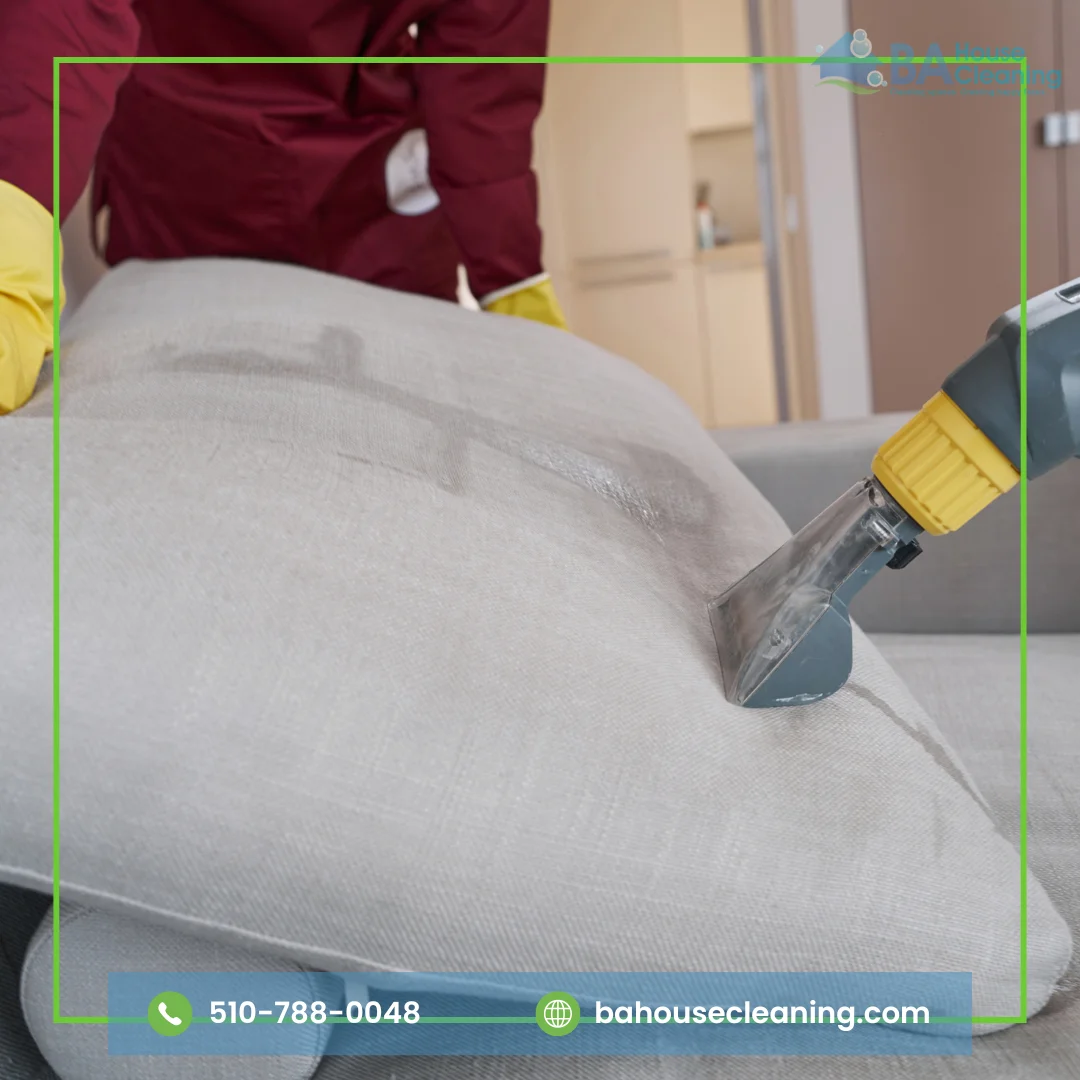
Couch cushions are used every day, yet they are easy to overlook during regular house cleaning. Crumbs disappear into the seams, pet hair settles across the fabric, dust collects beneath removable seats, and small spills can gradually turn into noticeable marks. Even when the rest of the living room looks clean, dull or stained cushions can make the entire sofa appear less fresh.
Learning how to Clean Couch Cushions properly starts with one important step: identifying the fabric and its care instructions before adding water, detergent, or any homemade cleaning solution. Upholstery materials do not all respond to moisture or cleaning products in the same way. A method that works well on one sofa may leave water marks, discoloration, or fabric damage on another.
At BA House Cleaning, we know that the family room often receives some of the heaviest daily use in a home. Furniture collects dust, pillows lose their shape, throws become untidy, and hidden crumbs can build up between cushions. A sensible couch-cleaning routine helps restore a cleaner appearance while also making the entire room feel more organized.
This guide explains how to Clean Couch Cushions safely, how to interpret upholstery cleaning instructions, how to vacuum and spot-clean different areas, what to do about spills and odors, and when a cushion may need more specialized upholstery care instead of another DIY cleaning attempt.
Check the Upholstery Care Instructions Before Cleaning
Before removing a single stain, look for the manufacturer’s care label. It may be attached underneath the sofa, beneath a cushion, or included in the furniture documentation.
Upholstery manufacturers often use cleaning codes to indicate which types of products are suitable for the fabric. For example, a W code generally indicates water-based upholstery products, while an S code indicates water-free solvent cleaning. SW fabrics may permit either method when the manufacturer’s instructions are followed.
Room & Board’s fabric and upholstery care guidance explains these cleaning codes and recommends checking the specific fabric requirements before spot treatment. La-Z-Boy similarly advises testing cleaning products in an inconspicuous location and avoiding oversaturation when treating upholstery.
These instructions should take priority over generic online cleaning recipes. Before deciding how to Clean Couch Cushions, determine what your particular couch can safely tolerate.
Do not assume that a removable cushion cover is automatically machine washable. Some manufacturers specifically advise against removing and laundering cushion casings because washing can affect the fabric, backing, stitching, fit, or finish.
Start With Dry Cleaning Before Adding Moisture
Many couch cushions look significantly better after a thorough dry-cleaning routine alone. Dust, hair, crumbs, lint, and dry soil can make upholstery appear dull even when there are no serious stains.
Remove loose cushions if the furniture design allows it. Vacuum the seat deck underneath them first, because this is where crumbs and debris often accumulate. Use an upholstery attachment and move carefully along seams, corners, and the edges of the cushions.
Vacuum both sides of reversible cushions when permitted by the manufacturer. For attached cushions, work carefully along the seams and use a crevice attachment to reach narrow spaces without pulling aggressively on the fabric.
Furniture manufacturers commonly recommend frequent vacuuming or light brushing as part of upholstery maintenance. La-Z-Boy, for example, recommends vacuuming frequently to remove dust and grime before more intensive care is considered.
This is why the first practical answer to How to Clean Couch Cushions is often simpler than people expect: remove as much dry debris as possible before introducing any liquid cleaner.
How to Clean Couch Cushions Step by Step
Once loose debris has been removed and you have checked the fabric instructions, you can decide whether additional spot cleaning is appropriate.
Step 1: Identify Stains and High-Touch Areas
Inspect the cushion in good light. Do not treat the entire surface as one large stain. Look for the specific areas that actually need attention, such as food marks, drink spills, greasy fingerprints, pet-related spots, or darkened fabric along the front edge.
Knowing what you are treating helps reduce unnecessary moisture and product use.
Step 2: Test the Cleaning Method
Even when the cleaning code permits a particular product, test it on a hidden or inconspicuous area first. Allow the test area to dry completely before deciding that the cleaner is suitable.
A wet fabric can temporarily look different from the same fabric when dry, so judging the result too early can be misleading.
Step 3: Blot Instead of Scrubbing Aggressively
For fresh spills, absorb as much material as possible using a clean, absorbent cloth. Blot gently rather than rubbing outward across the upholstery.
Aggressive rubbing can spread a spill, distort the surface texture, or push contamination deeper into the fibers. Manufacturer guidance from La-Z-Boy recommends working stains from the outside toward the center to reduce the chance of creating a visible ring.
Step 4: Use Only the Appropriate Cleaning Product
If the fabric permits water-based cleaning, use a suitable upholstery product according to its instructions. For solvent-only materials, do not substitute water simply because it seems gentler.
Avoid saturating the cushion. Upholstery contains more than the visible fabric. Moisture can reach padding, foam, batting, internal liners, or other materials that may take much longer to dry.
Step 5: Allow the Cushion to Dry Properly
Once the spot has been cleaned, give it enough time to dry completely before returning the cushion to normal use. Good airflow can help, but avoid applying intense heat unless the furniture manufacturer specifically approves it.
Do not place a damp cushion back against walls, other cushions, or enclosed furniture areas. Proper drying is a critical part of How to Clean Couch Cushions, especially when moisture has reached beneath the surface fabric.
How to Handle Fresh Spills on Couch Cushions
A quick response can make a large difference when something spills on upholstered furniture. The longer a liquid remains on the cushion, the more opportunity it has to spread through the fabric or reach the filling underneath.
Begin by removing any solid material carefully without smearing it across a larger area. Then blot liquid using a clean cloth or absorbent towel. Replace the towel section as it becomes wet rather than continuing to press contaminated material back onto the cushion.
Do not immediately pour water over the spill. First check the upholstery cleaning instructions. Water may be suitable for some fabrics but inappropriate for solvent-only upholstery.
Once the fabric code has been confirmed, use the appropriate spot-cleaning process and avoid oversaturation. Work patiently in small areas instead of soaking the entire cushion because of one localized stain.
Learning How to Clean Couch Cushions effectively often has more to do with restraint and correct product selection than with using a large amount of cleaner.
Cleaning Food and Drink Marks From Couch Cushions
Living-room furniture regularly comes into contact with coffee, snacks, sauces, juice, and other food-related residue. These marks can contain different combinations of moisture, sugar, oil, and coloring, which means there is no single homemade mixture that works safely on every sofa.
For a fresh spill, blot first. If dried food remains on the surface, carefully remove loose material before adding a cleaner. Then check the care code and use a fabric-compatible upholstery product.
Avoid creating complicated DIY mixtures simply because several household ingredients are individually known for cleaning. Upholstery fabrics, dyes, backings, and protective treatments can react differently.
If the mark remains after an appropriate spot treatment, repeated scrubbing may cause more harm than the original stain. A persistent or valuable-furniture stain may be better handled by an upholstery-cleaning specialist.
How to Clean Couch Cushions With Pet Hair and Dust
Homes with pets often need a slightly different cushion routine. Hair can collect across the fabric surface, while finer material becomes trapped around seams and between cushions.
Start with vacuuming. An upholstery attachment is usually more controlled than aggressively brushing the fabric. Work slowly in several directions where the upholstery manufacturer allows it, because embedded hair may not release on the first pass.
Remove cushions when possible and vacuum the hidden seat area too. Pet hair often collects beneath cushions even when the visible surface appears relatively clean.
For remaining hair, use a fabric-safe lint-removal method that does not pull or damage the upholstery. Avoid sticky products or rough tools unless you know they are appropriate for the fabric.
Regular vacuuming is one of the most useful habits in How to Clean Couch Cushions because it prevents dry debris from building up to the point where the furniture looks permanently dull.
How to Deal With Odors in Couch Cushions
An odor is usually a sign that you should look for its source rather than immediately trying to cover it with fragrance.
Remove the cushions where possible and inspect the sofa underneath. Crumbs, spilled drinks, pet residue, forgotten food, or moisture may be contributing to the smell.
Vacuum the furniture thoroughly and check whether any visible spot requires treatment according to the upholstery cleaning code. Allow anything that has been cleaned to dry completely.
Be careful with powdered deodorizing methods. Products such as baking soda are commonly recommended online, but not every upholstery manufacturer recommends applying powders or homemade mixtures directly to fabric. Powders can also settle beneath cushions or into seams if they are not completely removed.
If an odor remains after dry debris and visible contamination have been addressed, the source may be deeper inside the cushion or furniture. In those cases, professional upholstery cleaning may be more useful than repeatedly adding fragrance or household products.
Should You Remove Couch Cushion Covers for Washing?
A zipper can make a cushion cover look machine washable even when it is not.
This is one of the most serious mistakes to avoid when researching how to Clean Couch Cushions. Removable construction may exist for manufacturing or repair purposes rather than routine laundering.
Some furniture manufacturers specifically advise against machine washing or dry-cleaning cushion casings because the process can alter the fabric, stitching, backing, or fit. A cover that shrinks slightly may become extremely difficult to reinstall over the original foam insert.
Always look for explicit washing instructions. If the label says machine washing is permitted, follow the recommended cycle, water temperature, detergent, and drying method. If it does not clearly approve laundering, do not assume the zipper permits you.
When in doubt, use the upholstery cleaning code and manufacturer’s care guide as the deciding factors.
Cleaning Foam Cushions Requires Extra Caution
Foam holds moisture differently from surface fabric. Once a large amount of liquid reaches the cushion core, drying can take much longer than expected.
That is why ordinary spot cleaning should focus on controlling moisture rather than soaking the cushion. If a spill has penetrated deeply into the foam, surface wiping may not reach everything inside.
Remove excess liquid as quickly as possible and follow the manufacturer’s instructions for the cushion construction. Allow plenty of airflow during drying and do not return a damp foam cushion to regular use.
Persistent deep odors, extensive liquid contamination, or cushions that remain wet inside may require professional evaluation.
The correct approach to how to Clean Couch Cushions should protect both the visible upholstery and the material underneath it.
Can You Steam Clean Couch Cushions?
Steam cleaning is not automatically suitable for every couch.
Some upholstery fabrics and furniture manufacturers do not recommend hot-water extraction or steam-cleaning methods. La-Z-Boy’s guidance for some performance fabrics specifically states that steam cleaning or hot-water extraction is not recommended.
Before using a rented machine, handheld steamer, or upholstery extractor, check the sofa manufacturer’s instructions and cleaning code.
The common assumption that steam is safe because it does not require a harsh household chemical can be misleading. Heat and moisture are still part of the cleaning process, and both can affect certain fabrics, adhesives, backing materials, dyes, or internal cushion components.
If the upholstery instructions do not clearly support the method, choose an approved alternative or consult a professional.
How to Clean Attached Couch Cushions
Attached cushions cannot be carried to another area for cleaning, so moisture control becomes particularly important.
Vacuum the surface and seams carefully, then identify individual stains. Use the upholstery code to choose an appropriate spot treatment and apply small amounts instead of soaking the area.
Work from the outside of a stain toward the center where appropriate, then allow the area to dry with good airflow.
Avoid repeatedly pressing wet cushions against the sofa frame. Because the filling cannot be removed or positioned separately for drying, oversaturation can create a much more difficult problem.
For attached back cushions, gently smooth and reshape the filling after the fabric has completely dried.
Why Vacuuming Under the Cushions Matters
One of the biggest advantages of cleaning removable couch cushions is access to the space underneath them.
Coins, food crumbs, pet hair, dust, small toys, lint, and other debris can accumulate on the seat deck without being visible during normal use. Cleaning only the top of the cushions leaves this entire area untouched.
Remove everything loose first, then vacuum the surface carefully. Use a crevice attachment around seams and edges where debris becomes trapped.
This is also a logical moment to look around and beneath the sofa if access is safe. Dust can accumulate around furniture legs and along baseboards, making the living room feel less clean even after the cushions themselves have been refreshed.
For homes that need more than a quick furniture reset, BA House Cleaning’s Deep Cleaning Services focus on the wider buildup that routine maintenance can miss.
Fluff and Rotate Cushions After Cleaning
The original version of this article focused heavily on flipping and fluffing. That advice still has value, but it belongs after cleaning, not as the entire topic.
Once removable cushions are clean and completely dry, reshape soft filling with your hands. Push filling back toward empty corners and smooth the surface rather than aggressively beating the cushion.
If the cushion is designed to be reversible, flipping it can help distribute wear. Interchangeable seat cushions may also be rotated between positions, particularly when one part of the sofa receives substantially more daily use.
La-Z-Boy recommends fluffing and rotating applicable cushions to help retain shape and promote more even wear.
Combining this simple maintenance step with How to Clean Couch Cushions gives the sofa a more complete refresh: the surface looks cleaner, hidden debris is removed, and cushions return to a more balanced appearance.
Keep Couch Cushions Cleaner Between Deep Cleaning Sessions
Prevention usually requires less effort than stain removal.
Vacuum furniture regularly, especially in homes with pets or children. Deal with spills quickly rather than leaving them until the next scheduled house-cleaning day, and avoid eating particularly messy foods directly over light-colored or difficult-to-clean upholstery.
Throws can protect frequently used furniture areas when appropriate, but they should also be cleaned according to their own care labels.
Encourage family members to avoid placing dirty shoes, outdoor bags, or oily items directly on upholstered furniture. Small habits reduce the amount of contamination that reaches the cushions.
Regular household cleaning also matters. Dust from floors, nearby surfaces, and the rest of the room eventually reaches furniture. BA House Cleaning’s Recurring Cleaning Services help maintain kitchens, bathrooms, floors, surfaces, and living areas on a weekly, biweekly, or monthly schedule, reducing the overall buildup around furniture.
When Couch Cushion Cleaning Is Part of a Bigger Home Reset
Sometimes dirty cushions are only one visible sign that a room needs more attention.
Dust may have collected on furniture, floors may need detailed vacuuming, baseboards may look dull, and debris can accumulate around hard-to-reach areas. Cleaning the cushion while ignoring everything around it may improve the sofa without producing the fresh feeling you wanted from the room.
A broader deep clean addresses the space as a whole. The BA House Cleaning guide to Deep Cleaning a Home explains why upholstery, carpets, and less-accessible areas can contribute to accumulated dust and debris throughout the property.
BA House Cleaning’s home-cleaning approach also includes details in the family room such as dusting furniture, keeping the room tidy, fluffing pillows, and folding throws. Those small finishing touches work especially well when the rest of the home has also been properly cleaned.
Know When a Cushion Needs Specialist Upholstery Cleaning
Not every upholstery problem should be handled with another round of DIY cleaning.
Consider specialist help when a stain is large or persistent, the fabric is particularly delicate or valuable, the manufacturer specifies professional cleaning, an odor appears to come from deep inside the cushion, or significant liquid has penetrated the padding.
Color transfer, water rings, unknown cleaning codes, and previous damage are also good reasons to avoid experimentation.
BA House Cleaning can support the overall cleanliness of the room and home through professional house cleaning, but specialized upholstery restoration or advanced stain extraction may require a dedicated upholstery-care professional.
Understanding that distinction is an important part of how to Clean Couch Cushions safely. Knowing when not to apply another product can be just as valuable as knowing how to remove ordinary dirt.
Common Couch Cushion Cleaning Mistakes
Several common mistakes can turn a small furniture-cleaning task into a much larger problem.
- Using Water Before Checking the Cleaning Code
Some upholstery requires solvent-based care. Do not assume water is automatically the safest option.
- Soaking the Cushion
Excess moisture can move beneath the surface fabric into padding or foam where drying becomes more difficult.
- Scrubbing a Stain Aggressively
Hard rubbing can spread contamination or alter the fabric texture. Blotting and controlled spot treatment are generally better starting points.
- Machine Washing a Cover Because It Has a Zipper
A removable cover is not automatically washable. Follow explicit manufacturer instructions.
- Using a Steam Cleaner on Every Fabric
Heat and moisture are not suitable for all upholstery. Check the care instructions first.
- Hiding Odors With Fragrance
Find and remove the source instead of simply adding a stronger scent.
- Putting Cushions Back Before They Are Dry
Always allow cleaned upholstery and cushion interiors to dry completely before returning them to normal use.
Avoiding these mistakes makes How to Clean Couch Cushions safer and helps protect the furniture from preventable damage.
Before You Start Cleaning Couch Cushions
Before using any cleaner on your sofa, take a minute to check the cushion and the surrounding upholstery. A small amount of preparation can prevent water marks, discoloration, or unnecessary moisture from reaching the filling.
- Check the fabric label: Confirm whether the upholstery allows water-based cleaning, solvent cleaning, or professional treatment only.
- Remove dry debris first: Vacuum crumbs, pet hair, lint, and dust before working on stains or spills.
- Test the cleaner in a hidden spot: Let the test area dry completely before applying the product somewhere visible.
- Work on small sections: Treat the affected area instead of soaking the entire cushion, especially when the filling cannot be removed.
- Give the cushion enough drying time: Do not return damp cushions to the sofa or cover them with throws before the fabric and filling are fully dry.
These simple checks make How to Clean Couch Cushions much safer and help you avoid turning a small cleaning job into an upholstery problem.
Keep Your Sofa and Living Room Feeling Fresh
Learning how to Clean Couch Cushions is not about finding one universal spray that works on every piece of furniture. The safest process begins with the upholstery instructions, followed by thorough vacuuming, careful stain identification, and controlled spot cleaning only when the fabric permits it.
Regular maintenance also makes a difference. Removing crumbs before they settle deeply into seams, addressing spills while they are fresh, vacuuming pet hair, and reshaping removable cushions after they are completely dry can help the sofa look cleaner and more inviting between larger cleaning sessions.
Couch cushions are also only one part of a clean family room. Floors, furniture surfaces, baseboards, surrounding dust, throws, and the rest of the home all contribute to how fresh the room feels. If your property needs more detailed attention, BA House Cleaning offers professional house cleaning and deep cleaning services throughout Oakland and the East Bay.
Want more practical cleaning ideas for maintaining your home? Follow BA House Cleaning on Facebook for home-cleaning tips, useful maintenance advice, and updates from our team.
Frequently Asked Questions
- What is the safest way to clean couch cushions?
Start by checking the upholstery cleaning code or manufacturer’s instructions. Vacuum loose dirt first, then spot-clean only with a product approved for the fabric. Avoid soaking the cushion and allow it to dry completely before normal use.
- Can I wash couch cushion covers in a washing machine?
Only when the manufacturer specifically says the covers are machine washable. A zipper does not automatically mean the casing can be washed. Some removable covers can shrink, distort, or damage their backing during laundering.
- How do I clean couch cushions that cannot be removed?
Vacuum attached cushions carefully, including the seams, then spot-treat stains according to the upholstery cleaning code. Use controlled amounts of cleaner and provide adequate airflow while the area dries.
- Can I use a steam cleaner on couch cushions?
Not on every sofa. Some upholstery manufacturers specifically advise against steam or hot-water extraction for certain fabrics. Check the care instructions before using a steam-cleaning machine.
- How can I remove odors from couch cushions?
Begin by locating the source of the odor. Vacuum thoroughly, remove hidden food or debris, and treat visible contamination according to the fabric instructions. Persistent odors coming from inside the filling may require professional upholstery cleaning.
- How often should couch cushions be cleaned?
Vacuuming can be part of regular furniture maintenance, while spot cleaning should be done when spills or visible marks appear. The need for deeper attention depends on household use, pets, children, fabric type, and the manufacturer’s recommendations.
- Should I fluff couch cushions after cleaning?
Yes, when the cushion design and filling allow it. Wait until the cushion is completely dry, then gently redistribute soft filling and rotate or flip reversible cushions according to the furniture manufacturer’s instructions.