
To clean a dishwasher, empty it, remove and clean the filter if your model has one, check the spray arms, wipe the door gasket and edges, clean the interior, and run a dishwasher-cleaning cycle approved for your appliance. Regular maintenance can help reduce food residue, grease, odors, and mineral buildup while supporting better washing performance.
How to Clean a Dishwasher Step by Step
The best way to clean a dishwasher is to start with trapped food and removable components, then clean the spray arms, door gasket, interior, and exterior before finishing with an approved cleaning cycle.
Step 1: Empty the Dishwasher and Inspect the Bottom
Start with an empty dishwasher and allow it to cool before reaching inside.
Remove dishes and utensils, then take out racks or accessories only if the owner’s manual says they are removable.
Inspect the bottom of the dishwasher for food particles, labels, pieces of plastic, or other loose debris. Wear gloves when cleaning the bottom because small pieces of broken glass or sharp debris can sometimes collect near the filter or drain area.
Remove visible debris carefully without forcing or dismantling components that are not designed for user removal.
Step 2: Clean the Dishwasher Filter
Cleaning the dishwasher filter is one of the most important maintenance steps because the filter catches food particles that can otherwise contribute to odors, poor cleaning results, or drainage problems.
The filter is commonly located near the bottom of the dishwasher, often beneath or near the lower spray arm. However, filter designs and removal methods vary between models.
Remove the filter according to your owner’s manual. Rinse it under running water and use mild soap and a soft brush when necessary to loosen food residue.
Avoid knives, wire brushes, steel wool, and other abrasive or sharp tools that could damage the filter.
For model-specific instructions, review the official Bosch dishwasher filter cleaning guidance before removing the filter.
Before reinstalling the filter, make sure it is positioned correctly and securely locked.
Step 3: Check the Spray Arms
Dishwasher spray arms distribute water throughout the machine, so blocked openings can affect how thoroughly dishes are cleaned.
Rotate each accessible spray arm gently and make sure it can move freely without hitting dishes or utensils.
Inspect the small openings for visible food particles or mineral buildup.
When your dishwasher manual permits it, remove the spray arm and rinse it. A small soft brush or wooden toothpick can help loosen visible debris near the openings.
Do not use knives, needles, or other metal objects to clear the spray holes.
For additional model-specific guidance, see Bosch’s dishwasher cleaning and maintenance instructions.
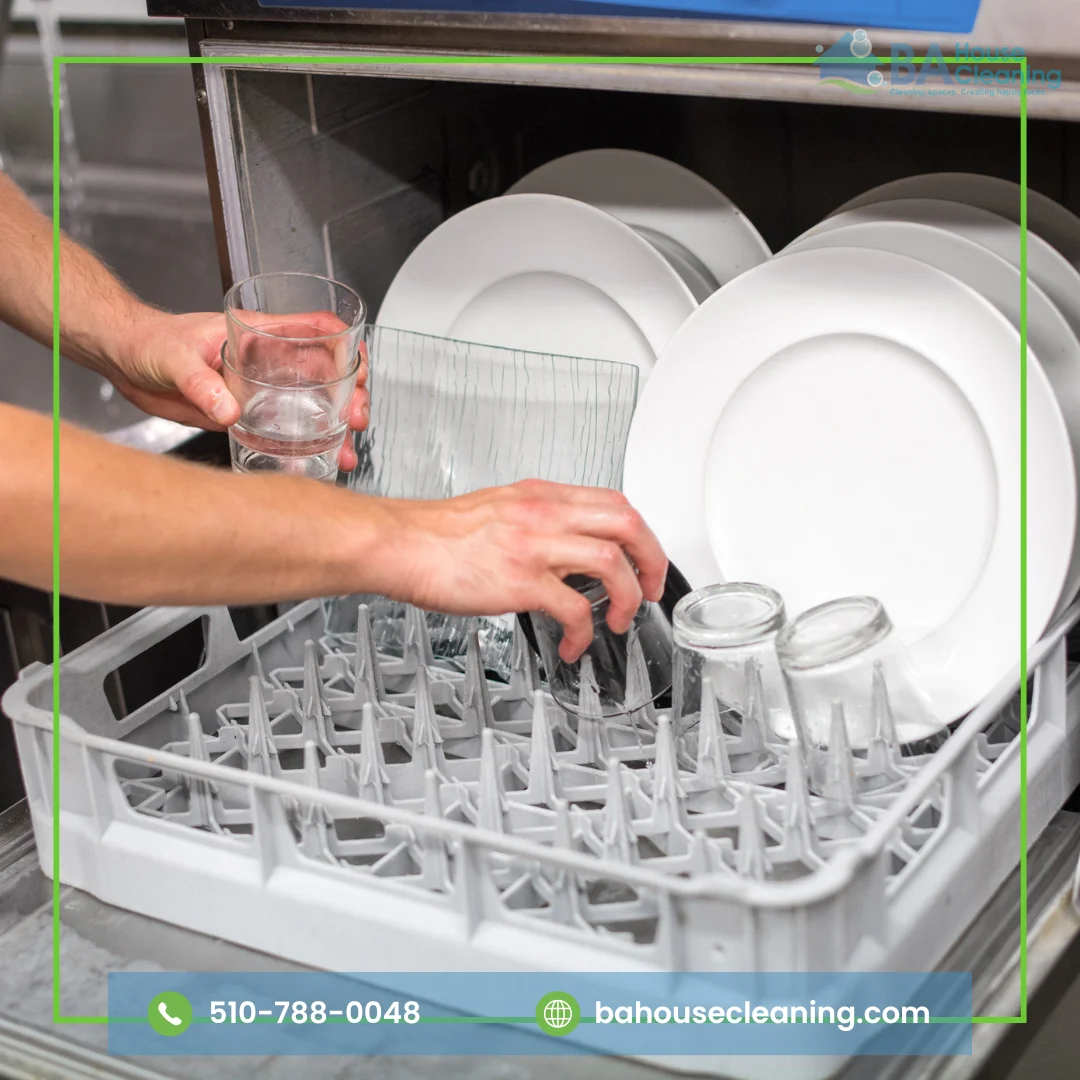
Step 4: Clean the Dishwasher Door Gasket and Edges
The dishwasher’s main cycle does not necessarily remove all residue from the rubber gasket, door edges, hinges, detergent compartment, or lower door area.
These areas can collect grease, food residue, detergent film, and moisture.
Use warm water and a small amount of mild dish soap on a microfiber cloth.
Wipe the gasket gently, including the folds and corners. Clean the inner door edges and other areas where food, grease, detergent film, and moisture collect.
Do not pull or stretch the rubber seal.
A clean gasket can also help you identify physical damage. If the seal is cracked, loose, or no longer closes properly, cleaning will not repair it.
Step 5: Clean the Dishwasher Interior
Once the filter, spray arms, and door gasket have been checked, clean visible residue from the interior walls, bottom, rack supports, and other accessible surfaces.
Use a soft cloth or sponge with mild soap or a dishwasher-safe cleaning product appropriate for your appliance.
Focus on grease, food residue, detergent film, and mineral deposits.
Do not aggressively scrape buildup with a knife or metal tool. Dishwasher interiors can contain stainless steel, plastic, coatings, and seals that require different care.
For heavier buildup, a dishwasher cleaner or descaler approved for your appliance is often a more predictable option than experimenting with strong household chemicals.
For guidance on cleaning the interior, Whirlpool provides official dishwasher cleaning instructions.
Step 6: Run a Dishwasher Cleaning Cycle
After cleaning the accessible parts, run an empty cleaning cycle using a dishwasher cleaner approved for your appliance.
Follow the dishwasher cleaner’s label and your dishwasher manufacturer’s instructions.
A dedicated dishwasher cleaner can help address interior grease, residue, and mineral buildup that ordinary wash cycles may not remove completely.
Some manufacturers also provide approved cleaning procedures using household ingredients such as vinegar or baking soda. Because appliance designs and materials vary, these methods should be treated as model-specific alternatives rather than universal rules.
Whirlpool currently describes separate vinegar and baking soda cleaning cycles for applicable dishwashers in its official dishwasher cleaning guide.
Step 7: Clean the Dishwasher Exterior
Finish by cleaning the outside of the dishwasher.
For plastic or painted surfaces, use a soft cloth with warm water and mild soap when appropriate.
For stainless-steel exteriors, follow the manufacturer’s care instructions and use a product approved for stainless steel when needed.
Avoid abrasive powders, steel wool, rough sponges, and unsuitable chlorine-based products that may damage some finishes.
Do not spray cleaner directly into electronic controls. Apply the cleaner to the cloth instead.
For additional guidance, see Consumer Reports’ dishwasher cleaning advice.
Where Is the Dishwasher Filter?
The dishwasher filter is commonly located at the bottom of the dishwasher tub, often beneath or near the lower spray arm.
The exact filter design and removal process vary by model. Some filters twist and lift out, while others use different locking systems.
Always check the owner’s manual before removing the filter. Forcing a filter or using tools that are not recommended can damage the locking mechanism or filter assembly.
Bosch provides official dishwasher filter instructions, while Samsung also explains that filter designs and cleaning procedures vary by model in its dishwasher maintenance guidance.
How Often Should You Clean a Dishwasher?
A practical dishwasher-cleaning routine is to inspect the filter regularly, clean it whenever food debris or buildup accumulates, wipe the gasket periodically, and deep-clean the dishwasher about monthly unless the manufacturer recommends another schedule.
A simple maintenance schedule looks like this:
| Task | Practical Frequency |
| Remove visible food debris | After loads when needed |
| Check the filter | About weekly |
| Clean the filter | When buildup is visible or according to the owner’s manual |
| Wipe the gasket and door edges | Weekly or as needed |
| Check spray-arm openings | Monthly or when dishes are not cleaning properly |
| Deep-clean the dishwasher | About monthly or according to manufacturer guidance |
There is no single schedule that applies to every dishwasher. Manufacturer recommendations vary according to appliance design, model, usage, and water conditions.
For example, Bosch provides