Cleaning with Baking Soda: Safe Uses and Mistakes to Avoid

Professional Cleaning Services

Click here to schedule your cleaning and enjoy a spotless space.

Baking soda is a familiar kitchen ingredient, but many households also keep it nearby for small cleaning and deodorizing tasks. It can help lift light residue, absorb certain odors, and add gentle scrubbing action when mixed with water. However, it is not suitable for every surface, and using more of it does not automatically produce better results.

Successful cleaning with baking soda depends on understanding what the product can do, how much to use, and when another cleaning method would be safer. Baking soda is mildly alkaline and slightly abrasive, which makes it useful for selected washable surfaces. Those same properties also mean it may dull, scratch, or leave residue on delicate finishes when used carelessly.

At BA House Cleaning, we understand that homeowners often want practical ways to manage small messes between professional appointments. This guide explains how to use baking soda in kitchens, bathrooms, refrigerators, trash cans, cookware, and other household areas while avoiding misleading cleaning hacks and potentially damaging combinations.

Cleaning with baking soda

What Is Baking Soda and How Does It Help with Cleaning?

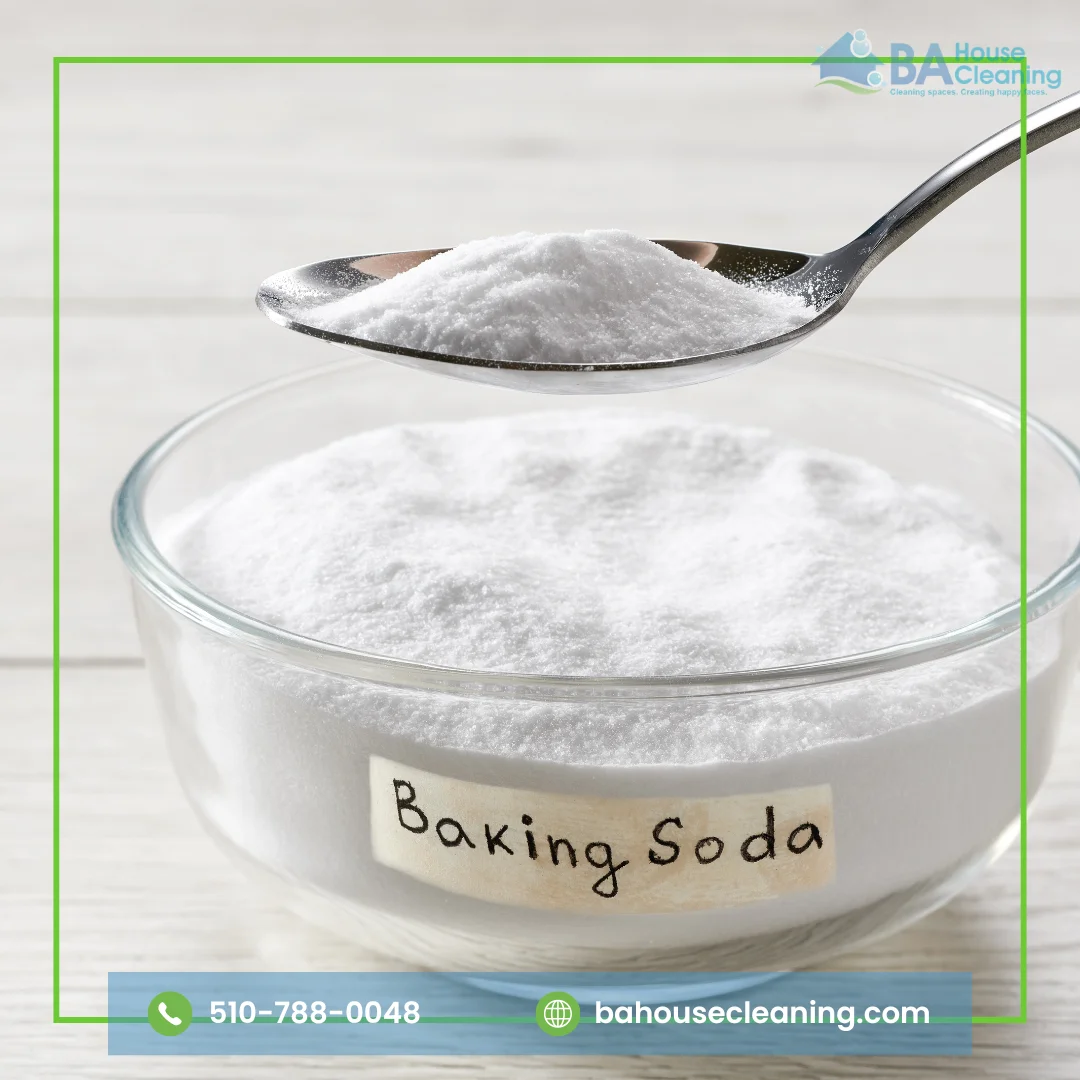
Baking soda is sodium bicarbonate, a mild alkaline substance commonly used in cooking and household care. When mixed with a small amount of water, it forms a soft paste that can help loosen light grime and provide gentle scrubbing action.

Its alkaline nature may also help address some acidic-smelling residues, while the dry powder can absorb certain odors rather than simply covering them with fragrance. This makes baking soda useful for refrigerators, washable trash cans, food containers, and some other odor-prone areas.

However, baking soda is not a universal cleaning product. It does not dissolve every type of grease, remove every stain, or safely clean every finish. It also should not replace manufacturer-approved products when cleaning appliances, specialty flooring, natural stone, electronics, or coated surfaces.

Cleaning Is Different from Disinfecting

Baking soda can help remove visible dirt, residue, and odors, but it should not be presented as a disinfectant.

The CDC’s guidance on cleaning and disinfecting explains that cleaning removes dirt and many germs from surfaces, while disinfecting uses appropriate products to kill remaining germs. In most ordinary household situations, cleaning with soap and water may be sufficient, but disinfecting can become necessary when someone is ill or when a particular contamination risk exists.

When a surface requires disinfection, first remove visible dirt and then use a product that is registered and labeled for the intended surface and purpose. Follow the product’s required contact time and safety instructions.

Do not rely on baking soda, vinegar, or a homemade mixture as a substitute for an approved disinfectant.

What You Need Before Cleaning with Baking Soda

Most small household tasks require only a few basic supplies:

  • Baking soda
  • Warm water
  • Mild dish soap
  • A soft microfiber cloth
  • A non-abrasive sponge
  • A small bowl
  • A soft-bristled brush
  • Clean water for rinsing
  • A dry towel

Keep a separate sponge or brush for bathrooms and food-contact areas. Do not use the same cleaning tool across toilets, counters, sinks, and appliances without washing or replacing it.

Before applying baking soda, read the surface or appliance care instructions. Test the method in a small hidden area when you are uncertain about the finish.

How to Make a Baking Soda Cleaning Paste

A basic paste works well for small, accessible areas with light residue.

Place a small amount of baking soda in a bowl and add water gradually. Stir until the mixture develops a spreadable consistency. The paste should remain moist enough to move across the surface without scattering dry powder.

Apply a thin layer to the affected area and allow it to sit briefly. Use a soft cloth or non-abrasive sponge to work gently over the residue, then rinse the surface thoroughly and dry it.

Avoid allowing the paste to harden completely on porous, textured, or difficult-to-rinse surfaces. Dried baking soda can leave a white film that becomes more noticeable after the surface dries.

Cleaning Kitchen Sinks with Baking Soda

Baking soda can help remove light residue and odors from many stainless steel, porcelain, and ceramic sinks. The correct method still depends on the manufacturer and finish.

Rinse away loose food first. Sprinkle a small amount of baking soda onto a damp sponge or create a soft paste with water. Wipe gently around the basin, drain area, and faucet base without applying excessive pressure.

Rinse thoroughly so no powder remains, then dry the sink with a clean cloth. Drying helps reduce water spots and reveals any residue that still needs removal.

Be cautious with composite, coated, colored, polished, or specialty sinks. Use the product recommended by the sink manufacturer when baking soda is not listed as an approved option.

Using Baking Soda on Stainless Steel

Some appliance manufacturers recommend a baking soda-and-water paste for selected stainless steel stains. When the method is approved, use a soft cloth and wipe in the direction of the grain rather than scrubbing in circles.

After cleaning, remove all residue with clean water and dry the stainless steel completely. Water and cleaning residue may leave marks when allowed to air-dry.

Not every stainless steel appearance is a traditional uncoated finish. Fingerprint-resistant, black stainless, painted, and coated appliances may require different care. Check the model instructions before applying baking soda or vinegar.

Never use steel wool, hard brushes, or excessive pressure on stainless steel.

Cleaning the Inside of a Refrigerator

Baking soda and water can provide a low-odor option for cleaning many refrigerator interiors. Remove food and detachable shelves according to the appliance instructions, then wipe away crumbs and spills before applying any solution.

Mix baking soda with warm water and apply it with a soft cloth. Clean accessible walls, shelves, drawers, and food residue, then wipe everything again with clean water and dry it before returning food.

GE and Whirlpool both publish refrigerator-care instructions that include diluted baking soda and water for selected interior surfaces and odor control. Always follow the instructions for the specific refrigerator model.

Do not pour baking soda into vents, drain openings, electrical components, ice-making systems, or control panels.

Deodorizing the Refrigerator with Baking Soda

A container of baking soda may help absorb some food odors inside a refrigerator, but it cannot compensate for spoiled food, hidden spills, dirty drip trays, or blocked drainage.

Begin by locating and removing the source of the smell. Check drawers, shelves, containers, door seals, and areas beneath removable parts.

After cleaning and drying the refrigerator, place an open box or designated refrigerator deodorizer inside according to the package instructions. Replace it regularly rather than leaving the same open box indefinitely.

Do not use refrigerator deodorizing baking soda for cooking after it has absorbed household odors.

Cleaning Cookware and Burned Food Residue

A baking soda paste may help loosen light burned residue from certain pans, baking dishes, and cookware. Allow the item to cool first, then add warm water and mild dish soap to soften the food.

Apply a paste only after checking that the material can tolerate mild abrasives. Work gently with a non-scratch sponge, rinse thoroughly, and repeat rather than increasing pressure.

Exercise caution with:

  • Nonstick coatings
  • Aluminum
  • Copper
  • Seasoned cast iron
  • Painted cookware
  • Decorative finishes
  • Specialty ceramic coatings

These materials may require specific care. Follow the cookware manufacturer’s instructions instead of applying a universal cleaning hack.

Cleaning Ovens and Microwaves

Baking soda may work on selected oven and microwave interiors when the appliance manufacturer permits it. A paste can help loosen light residue on accessible surfaces, while baking soda dissolved in water may assist with odors.

Do not apply paste to:

  • Heating elements
  • Fans
  • Electrical openings
  • Oven door gaskets
  • Microwave vents
  • Control panels
  • Self-cleaning oven components unless approved

Whirlpool includes baking soda among possible household materials for selected oven and microwave cleaning methods, but its guidance still depends on the appliance type and specific instructions.

Remove every trace of paste before operating the appliance again. Dried powder can produce residue, odors, or smoke when heated.

Cleaning Bathroom Sinks, Tubs, and Tiles

A damp sponge with a small amount of baking soda may help lift light soap residue from certain porcelain, ceramic, and tile surfaces.

Rinse the area first, then apply the product gently. Pay attention to corners, faucet bases, drain covers, and areas where soap residue commonly develops. Rinse thoroughly and dry metal fixtures to prevent spotting.

Do not assume that all tubs and shower walls can tolerate abrasion. Acrylic, fiberglass, refinished, painted, and coated surfaces may scratch or lose their shine.

Always test a hidden section or use the cleaner recommended by the surface manufacturer.

Can Baking Soda Clean Grout?

A paste of baking soda and water may help remove light surface residue from some unsealed grout. Apply it with a soft brush, scrub gently, rinse, and dry the area.

Baking soda cannot repair cracked grout, reverse permanent discoloration, or remove contamination that has penetrated deeply into porous material.

Colored grout, sealed grout, epoxy grout, and stone installations may require specialized products. Test the method first and avoid aggressive brushing that could erode the grout lines.

Persistent dark marks may indicate mildew, embedded staining, water intrusion, or another issue that requires more than surface cleaning.

Surfaces That Require Extra Caution

Baking soda is often described as gentle, but it still creates friction. That can affect glossy or delicate finishes.

Avoid using it without manufacturer approval on:

  • Natural stone countertops and floors
  • Polished marble
  • Lacquered or waxed wood
  • Acrylic and glossy plastic
  • Painted surfaces
  • Glass and mirrors
  • Electronic screens
  • Gold- or silver-plated finishes
  • Aluminum
  • Antique or delicate items
  • Coated appliance exteriors

The Natural Stone Institute recommends using neutral cleaners, stone soap, or mild dishwashing detergent for routine care of natural stone. A specialized poultice may contain baking soda for particular stone stains, but that is different from routinely scrubbing the whole surface with dry powder.

Using Baking Soda on Carpets and Rugs

People often sprinkle baking soda on carpets to manage light odors, but the method has limitations.

Fine powder may settle deep into carpet fibers or backing, especially when too much product is applied. Repeated use may also make complete vacuum removal difficult. Baking soda does not remove the source of pet urine, moisture, mold, food contamination, or deeply embedded stains.

Before using it:

  • Check the carpet or rug care instructions.
  • Test a hidden area.
  • Keep the powder dry.
  • Apply only a light amount.
  • Keep children and pets away.
  • Vacuum thoroughly.
  • Avoid using it on wet contamination.

For persistent smells, widespread staining, or heavily soiled fibers, professional Carpet Cleaning Services may provide a more appropriate solution than repeatedly adding dry powder.

Deodorizing Trash Cans

Baking soda can help manage light odors in washable trash cans after the actual waste and residue have been removed.

Empty the container, wash it with appropriate soap and water, rinse it, and let it dry. Sprinkle a small amount of baking soda into the dry base or use a diluted cleaning solution if the material allows it.

Do not use baking soda to cover leaking food, liquid, mold, or spoiled waste. Odor control works best after physical cleaning.

ARM & HAMMER includes trash cans, refrigerators, drains, and selected appliances among its published baking soda cleaning and deodorizing applications.

Can You Mix Baking Soda and Vinegar?

Baking soda is alkaline, while vinegar is acidic. Combining them causes fizzing and produces carbon dioxide gas. The visible reaction may help move loose debris in some situations, but the two ingredients also neutralize each other as the reaction proceeds.

That means the mixture is not automatically stronger than using either product appropriately on its own.

Never mix or store baking soda and vinegar in a sealed bottle or container because pressure can build as gas forms. Use them only in an open, ventilated area and only when the surface instructions allow both ingredients.

More importantly, do not combine homemade ingredients with bleach, ammonia, drain cleaners, disinfectants, or unidentified commercial products.

Never Mix Household Cleaning Products Randomly

A safe rule is to use one cleaning product at a time and follow its label.

Poison Control’s cleaning safety guidance advises against mixing household cleaning products because unexpected chemical reactions may produce irritating or dangerous gases. Bleach should never be combined with vinegar, ammonia, or other acidic or ammonia-containing cleaners.

Baking soda itself is generally mild, but that does not make every mixture containing baking soda safe.

Rinse the surface and allow it to dry before changing to another cleaning product. Keep products in their original labeled containers and store them away from children and pets.

Is Baking Soda Safe Around Children and Pets?

Baking soda should still be stored and used carefully.

Small amounts used correctly for cleaning are different from swallowing a large quantity. Poison Control notes that excessive ingestion of baking soda can cause serious toxicity because it contains sodium and bicarbonate.

Keep open containers, pastes, and freshly treated areas away from children and animals. Do not sprinkle baking soda directly onto a pet’s fur or bedding without veterinary guidance.

After using it on a household surface, rinse or vacuum thoroughly as appropriate. Store the package securely after use.

Common Baking Soda Cleaning Mistakes

Baking soda becomes less useful when it is applied without considering the surface or the type of mess.

Avoid these common mistakes:

  • Treating baking soda as a disinfectant
  • Scrubbing delicate surfaces with dry powder
  • Applying it to natural stone without guidance
  • Combining it with unidentified cleaning chemicals
  • Mixing it with bleach
  • Storing baking soda and vinegar in a sealed container
  • Using excessive amounts on carpets
  • Leaving dried paste inside appliances
  • Pouring powder into vents or drains without checking instructions
  • Using the same sponge in kitchens and bathrooms
  • Skipping the rinse step
  • Assuming every “natural” method is automatically safe

A successful method should remove residue without creating scratches, chemical exposure, white film, or damage to the surrounding material.

When a Home Needs More Than a Baking Soda Paste

Baking soda can help with an isolated sink mark, refrigerator odor, or small area of surface residue. It cannot replace detailed cleaning when grease, soap buildup, dust, debris, and grime extend across several rooms or hard-to-reach areas.

BA House Cleaning’s Deep Cleaning Services provide a more thorough option for Oakland and East Bay homes that need additional attention beyond routine maintenance. Deep cleaning can help reset kitchens, bathrooms, floors, baseboards, and other frequently overlooked areas.

For ongoing maintenance, Recurring Cleaning Services can help homeowners follow a weekly, biweekly, or monthly cleaning schedule rather than waiting for buildup to become difficult to manage. BA House Cleaning lists deep cleaning, recurring cleaning, and carpet cleaning among its residential services.

Five Rules for Safer Cleaning with Baking Soda

Using a simple routine can reduce the risk of scratches, residue, and unsuitable product combinations:

  • Check the surface first: Read manufacturer instructions and identify whether the material is coated, polished, porous, painted, or otherwise delicate.
  • Test a hidden area: Apply a small amount in an inconspicuous location and allow it to dry before treating a larger section.
  • Use gentle pressure: Let moisture and time loosen residue instead of relying on aggressive scrubbing.
  • Rinse completely: Remove every trace of baking soda to prevent white film, gritty residue, or powder entering appliance openings.
  • Never treat it as a universal cleaner: Choose another method when the surface requires a neutral cleaner, specialty product, disinfectant, or professional treatment.

Following these five rules makes cleaning with baking soda more practical while protecting the materials and finishes throughout the home.

Cleaning with baking soda

Create a Cleaner Routine for Your Entire Home

Small cleaning methods can make everyday maintenance easier, but they work best as part of a consistent routine. When kitchens, bathrooms, floors, and frequently used surfaces receive regular attention, isolated spills and odors are less likely to develop into widespread buildup.

Connect with BA House Cleaning on Facebook to discuss professional house cleaning in Oakland and the East Bay. Choose dependable support for routine upkeep, detailed cleaning, and the areas of your home that need more attention than a simple household cleaning paste can provide.

Frequently Asked Questions

  • What can you clean with baking soda?

Baking soda may help clean selected stainless steel, porcelain, ceramic, refrigerator interiors, washable trash cans, cookware, sinks, tubs, and tile surfaces. Always check the manufacturer’s instructions and test a hidden area before treating the complete surface.

  • Can baking soda disinfect surfaces?

No. Baking soda can help remove dirt, residue, and some odors, but it is not an EPA-registered disinfectant. Use an appropriate labeled product when a surface requires disinfection.

  • How do you make a baking soda cleaning paste?

Place a small amount of baking soda in a bowl and add water gradually until the mixture becomes spreadable. Apply a thin layer, clean gently with a soft cloth or sponge, rinse thoroughly, and dry the surface.

  • Can you mix baking soda and vinegar for cleaning?

The combination produces fizzing as the acid and alkaline ingredients react. The reaction may move loose debris, but it also neutralizes both ingredients over time. Never store the mixture in a closed container or combine it with commercial cleaners.

  • Can you mix baking soda with bleach?

Do not create homemade mixtures involving bleach. Use bleach only according to its product label, and never combine it with vinegar, ammonia, acids, or unidentified cleaning products.

  • Is baking soda safe for natural stone?

Routine scrubbing with baking soda is not the preferred care method for natural stone. Use a neutral cleaner or stone-specific product unless a stone professional recommends a controlled poultice for a particular stain.

  • Can baking soda scratch stainless steel?

Some manufacturers allow a baking soda paste for traditional stainless steel when applied gently in the direction of the grain. Coated, fingerprint-resistant, black stainless, and other specialty finishes may require different care.

  • Can I leave baking soda on a carpet overnight?

Check the carpet manufacturer’s instructions first. Fine powder may settle deeply into fibers and become difficult to remove. Avoid applying it to wet stains, delicate rugs, or pet accidents, and keep children and animals away from the treated area.

  • Does baking soda remove every household odor?

No. It may absorb some light odors, but it cannot correct spoiled food, pet urine, mold, moisture, plumbing problems, smoke damage, or residue hidden beneath a surface. Remove the source of the smell before attempting to deodorize the area.

  • How often can I clean with baking soda?

Use it only when appropriate for the surface and type of residue. Frequent abrasive cleaning may gradually affect some finishes, so gentle routine cleaning with the manufacturer-recommended product is often more suitable.

Professional Cleaning Services

Click here to schedule your cleaning and enjoy a spotless space.

GET A CLEANING ESTIMATE 

WAIT, THERE'S MORE!